
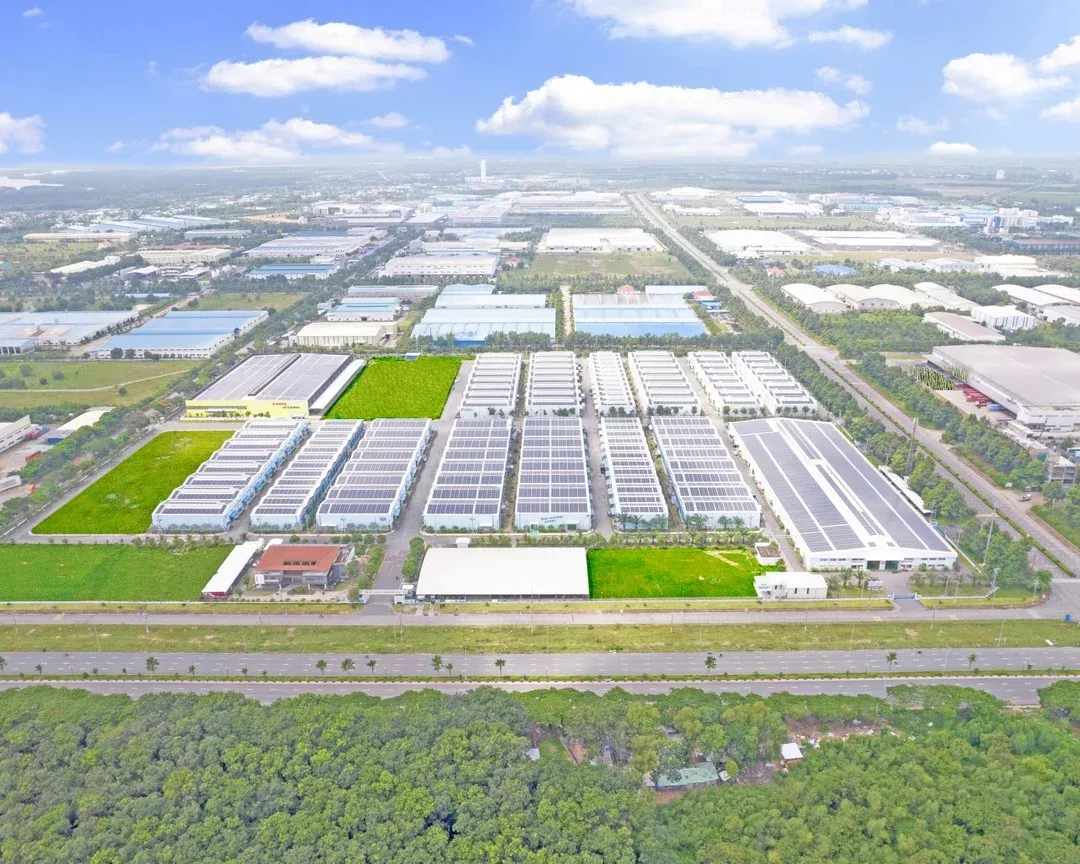

Sonadezi Corporation (ticker SNZ on UPCoM) has sent the State Securities Commission (SSC) and the Hanoi Stock Exchange (HNX) an extraordinary disclosure stating that it does not meet the conditions of a public company. According to the shareholder list dated October 8, 2026, compiled by the Vietnam Securities Depository and Clearing Corporation, Sonadezi has 484 shareholders. The Dong Nai City People's Committee holds 99.54% of voting shares, while the other 483 shareholders together own just 0.46% of charter capital.FireAnt
New investors often ask: how can a company earning hundreds of billions of dong every half year, and paying regular cash dividends, be "ineligible"? Put simply, this has nothing to do with profit or loss. It comes from how the shares are divided among holders, and the steps below show how wide the gap is.

What the law requires, and where Sonadezi falls short
Under the 2019 Securities Law (amended by Law 56/2024/QH15), a joint-stock company is a public company when its paid-in charter capital and equity are at least VND 30 billion. In addition, at least 10% of voting shares must be held by 100 or more investors who are not major shareholders.Thị trường Tài chính Tiền tệ Both tests must be met at once.
Sonadezi clears the capital test easily. The second test is the sticking point: the number of small shareholders is far above 100, but the share of stock they hold is far below the line.
Here is the arithmetic. Sonadezi has about 376.5 million shares outstanding, so 10% equals roughly 37.65 million shares. Today's 0.46% is only about 1.73 million shares. The gap is 9.54 percentage points, or about 35.9 million shares that would have to move into the hands of non-major investors (calculated from FireAnt data).FireAnt That is about 21 times everything the 483 small holders own combined. At the October 12 closing price of VND 22,000, those shares are worth roughly VND 790 billion.Tin nhanh chứng khoán

So a few hundred retail investors buying on the market cannot close the gap. A block this large has to come from a large source: either the state shareholder sells down, or the company issues new shares to the public. Both routes hinge on the plan for state capital at Sonadezi.
The origin of 0.46%: the 2015 IPO
This concentrated structure dates back to equitization. Sonadezi's IPO auction took place on December 30, 2015 on HOSE, offering more than 131 million shares, or 34.88% of charter capital, at a starting price of VND 10,500 per share. Only a little over 1.3 million shares found buyers, about 1% of the offer.Báo Đấu thầu
The unsold portion stayed with the state. By the time SNZ moved to UPCoM on November 20, 2017, the near-total state ownership was already set, and almost nine years later it remains largely intact.

Why the disclosure comes now
Sonadezi registered for trading before 2021, so it benefited from a transitional rule. Under SSC Official Letter 1474/UBCK-GSĐC dated February 24, 2026, companies whose shares were listed or registered for trading before January 1, 2021, and that still fail the new conditions on January 1, 2026, will lose public company status.Thị trường Tài chính Tiền tệ The transition date has passed, and this is not Sonadezi's first such disclosure: the previous one was reported by the press in mid-January 2026.VnEconomy
The SSC's letter sets out a multi-step procedure. Within 15 days of ceasing to meet the conditions, a company must send a notice with its shareholder list, and it must keep meeting all public company obligations until the SSC formally responds. If the problem is not fixed after 1 year, the company must file to cancel its public company status. Once it receives the SSC's cancellation notice, it has 7 days to disclose the news and then begin the procedure to cancel its trading registration.Thị trường Tài chính Tiền tệ
There is, however, a notable exception. Law 68/2025/QH15 on managing and investing state capital in enterprises provides that while an approved restructuring plan is being carried out, a state-owned enterprise converted from a 100% state-owned company into a listed or trading-registered joint-stock company will not lose public company status even if its shareholder structure falls short.Thị trường Tài chính Tiền tệ
Whether Sonadezi falls under this exception is a legal question that, as of October 13, 2026, no published SSC or HNX document on SNZ has answered. SNZ shares still trade on UPCoM. This article does not conclude that SNZ will be removed from trading, because that decision belongs to the SSC (on public company status) and HNX (on trading registration).
State capital: from the 2025 deadline to the 2030 proposal
The exception hinges on one kind of document: an approved restructuring plan. For Sonadezi, the most recent plan is Prime Minister's Decision 1479/QĐ-TTg of November 29, 2022, under which the state keeps its 99.54% stake through 2025.VnEconomy That deadline has expired.
The new phase starts with Decision 40/2026/QĐ-TTg of August 5, 2026 on criteria for classifying enterprises for state capital restructuring. Under it, Sonadezi filed Report 792/BC-SNZQTTH on September 29, 2026 reviewing its 2026–2030 strategy. In that report, the state capital representative proposed maintaining state ownership in Sonadezi through the end of 2030.Tin nhanh chứng khoán The Dong Nai City People's Committee and the city Department of Finance are reviewing the proposal.FireAnt
This is a proposal, not a decision. If approved, share supply is the first thing affected: with the state holding 99.54%, no block of state-owned shares would be sold over the next five years, and the 0.46% would have no path to 10%. A divestment route would effectively be closed through 2030.
The paperwork side is a separate matter. An approved state capital plan is exactly the kind of document the Law 68/2025 exception refers to. Whether it is enough to let Sonadezi keep its public company status depends on how the SSC applies the exception to this specific case, and no public answer exists yet.
Weaker business, steady dividends
The legal thread is separate from operating results, but SNZ holders need to read both. In the first half of 2026, Sonadezi booked revenue of VND 2,751.8 billion, down 25.7% year on year. Net profit was VND 727.28 billion, down 43.9%. Gross margin fell from 49.1% to 37.4%, which is why profit dropped faster than revenue.Tin nhanh chứng khoán

The decline came mainly from industrial parks: segment revenue fell 69% to just over VND 487 billion, while port services rose 9% to more than VND 815 billion and became the largest contributor.Fili Industrial land leasing revenue tends to swing with handover timing and recognition rules, so one weak half-year is not enough to judge the full year. Sonadezi's Q3 2026 figures have not been published.
On debt, as of June 30, 2026, total borrowings were VND 4,175.6 billion, equal to 33.4% of equity, of which long-term loans were VND 3,043.1 billion.Tin nhanh chứng khoán That is modest relative to equity, so debt risk is not the main story for SNZ today.
Dividends are what small holders see most clearly. Sonadezi set a record date of October 6 for its 2025 cash dividend of 14.4%, or VND 1,440 per share, expected to be paid on October 21, 2026. The total payout is about VND 542 billion, of which the Dong Nai City People's Committee receives about VND 539.6 billion.FireAnt Under the 2026–2030 plan the company shared, Sonadezi expects investment of about VND 36 trillion, with an annual net profit target of VND 1,300 to 1,500 billion.Fili That is a plan, not a result.
Where SNZ holders stand
The risk SNZ holders feel every day is liquidity. Over the last 60 sessions through October 12, SNZ's total traded volume was about 96,900 shares, averaging about 1,600 shares per session, with 10 sessions seeing no trades at all. A free float this thin means buying or selling a meaningful amount can move the price far.

For new investors, Sonadezi is a clear example of a risk that rarely shows up in financial statements. A company can be profitable, pay steady dividends and carry moderate debt, yet its stock can still be hard to trade and its exchange status still depends on the state shareholder and regulators.
The thesis here: if the proposal to hold 99.54% through 2030 is approved, the free float will almost certainly stay as thin as it is now, because no supply would come from the state. What could change that picture is an approval that includes a schedule for selling down state capital. Two documents are worth watching next: the decision approving the 2026–2030 state capital plan at Sonadezi, and the SSC's notice on Sonadezi's public company status (followed, if issued, by an HNX notice on trading registration). Until they appear, any claim that SNZ is about to leave UPCoM is speculation.