
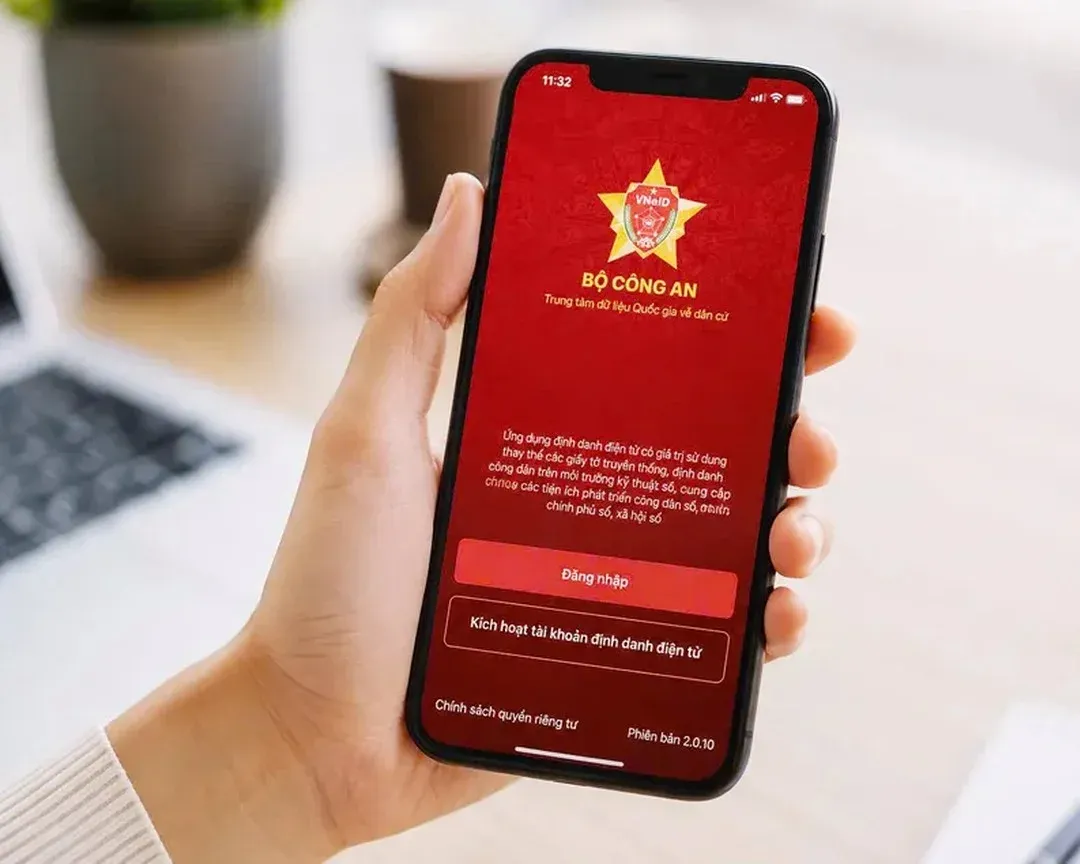

Every securities account opened before 28 September 2026 must be linked and verified with a VNeID electronic identity account by 31 December 2026 at the latest.CafeF Brokerages have started rolling out the function in their apps. According to CafeF on 12 October, VNDIRECT has published detailed instructions for its DGO app.CafeF
This is not a trade, and it does not change the cash or shares in your account. But the account holds your assets, so it is worth finishing early. If your records are clean, it takes a few minutes. If your personal details differ from the population database, it gets harder. This article follows the order in which you will actually do things.
Do you have to link?
Decree 320/2026/ND-CP was issued by the Government on 13 August 2026 and amends Decree 69/2024 on electronic identification and authentication.LSVN It takes effect on 28 September 2026. Article 19 adds a requirement: electronic transaction accounts on digital platforms in 12 sectors must be linked and verified with an electronic identity account. Securities is on the list, alongside education, telecoms, banking, e-commerce, e-invoicing, transport, tourism, pharmacy, healthcare and social media.CafeF
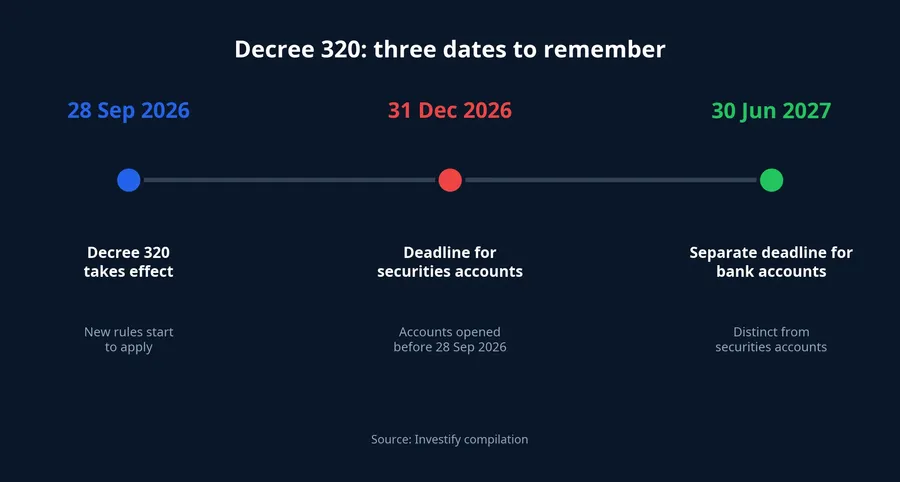
Clause 3 of Article 20 is the transitional provision. Mandatory accounts created before 28 September 2026 must complete linking by 31 December 2026, except bank accounts, which have until 30 June 2027. The sources I read do not explain why banks get six extra months. What matters is that the banking deadline does not extend to securities: brokerage accounts still follow the 31 December date.
So the first question is simple. If your account was opened before 28 September, you have to do it. If you hold accounts at several brokerages, note that linking happens between the account on each platform and your electronic identity account.CafeF Finishing at one firm does not cover the others. Each one has to be done separately, following that firm's own instructions.
What to prepare before you tap "link"
According to VNDIRECT's instructions as relayed by CafeF, there are two ways to verify.CafeF The first is through the VNeID app, which requires a level-2 electronic identity account that has been verified in person and fully activated. The second uses a chip-based ID card: you photograph the card and read the chip through your phone's NFC feature. A phone without NFC cannot use this method.
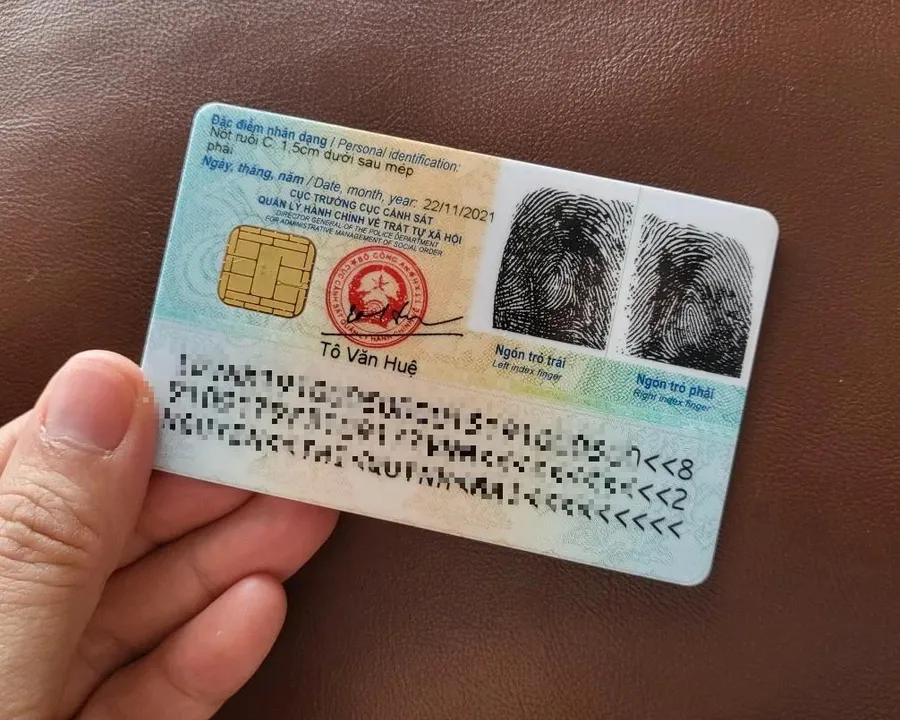
Whichever you choose, the most important check happens before you tap anything. Compare four details registered with your brokerage against the National Population Database: full name, citizen ID or ID card number, date of birth, and gender.
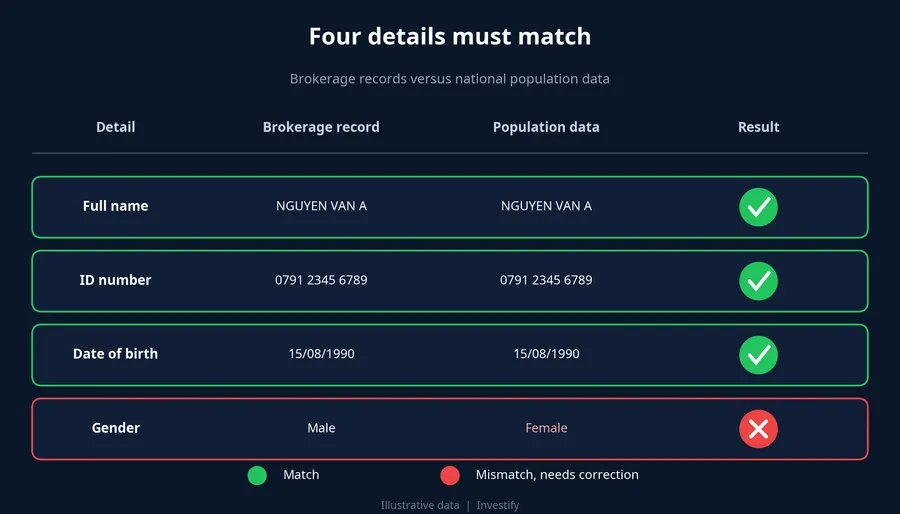
If anything differs, you must update your details at the brokerage first, and only then can you link. This is where most people will get stuck. A record opened in the era of the old identity card will list the old document number, which differs from the ID you hold now. People who have changed ID cards, or whose old records have a wrong birth date or a name missing diacritics, fall into the same group. Checking first tells you whether you need to fix your record, and fixing a record usually takes longer than the linking itself.
One more thing: open VNeID and make sure the account still works. According to CafeF, from 28 September 2026 a VNeID account can be locked automatically if the electronic ID is locked, or if the registered phone number has changed and is no longer in the owner's name.CafeF If you have changed numbers, check this before choosing the VNeID route.
The steps in the app: a VNDIRECT example
On VNDIRECT's DGO app, the process goes like this.CafeF Open the app, tap "Account", go to "Customer verification", then choose "Link and verify with electronic identity account". The screen shows your ID number. Check it, tap "Continue" if correct, and pick one of the two methods.
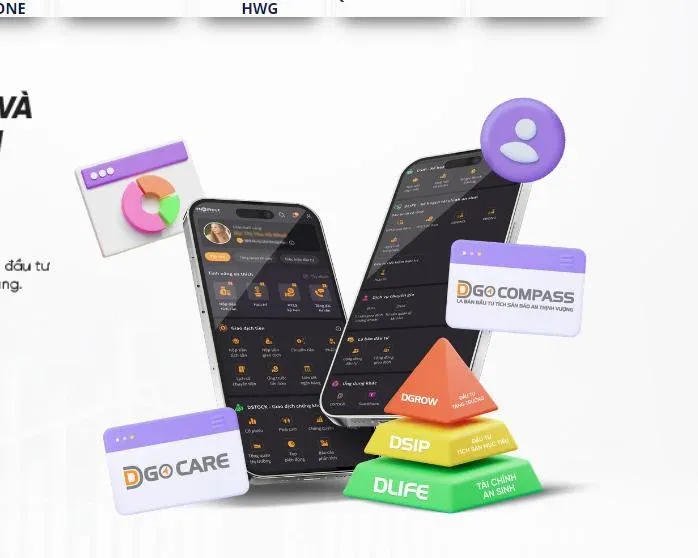
If you choose VNeID, tap "Confirm" on the data-sharing screen in DGO so the system sends a request to VNeID. Then open VNeID, sign in, go to "Notifications", select the verification confirmation, tap "Confirm sharing" and enter your PIN. If you choose the chip-based ID card, photograph the card and scan the chip as instructed on screen. When finished, the linking section in DGO shows "Verified".
Interfaces at other brokerages may differ. I have no basis to say which firms have or have not rolled this out. The surest approach is to check the account or customer-verification section of your own brokerage's app, or call its hotline.
Reading the three error statuses
Besides "Verified", VNDIRECT explains three other statuses, and each points to a different fix.CafeF
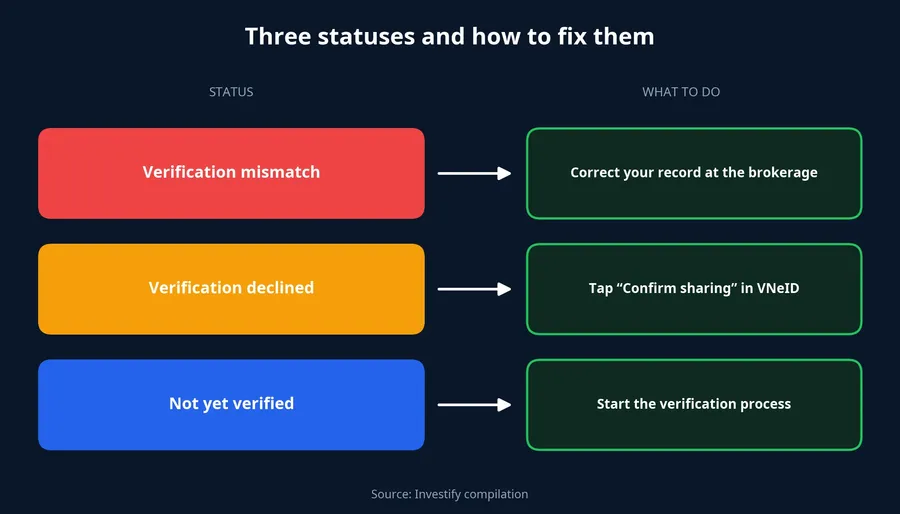
"Verification mismatch" means the four personal details at the brokerage do not match your electronic identity account. The fix is at the brokerage: update the details, then repeat the process. Retrying in the app will not resolve it.
"Verification declined" means you have not agreed to share data. The fix is in VNeID: start over and this time choose "Confirm sharing" when asked. "Not yet verified" simply means you have not run the process. Nothing is wrong.
Reading the status correctly saves time. A mismatch means contacting the brokerage to correct your record. A declined status means the problem lies in the VNeID steps, not your record.
What the sources do not say
The obligation and the deadline are clear. What is not clear is what happens to accounts that remain unlinked after 31 December 2026. The sources I read, including articles summarizing the decree and VNDIRECT's instructions, name no penalty or specific consequence. None says accounts will be locked, blocked from placing orders or barred from withdrawals. Social media posts asserting such consequences should be checked against official notices before you believe them.
Who should act first
The worry is time, not difficulty. The group that should act first is people whose details differ: records still carrying an old identity card number, a changed ID card, a wrong birth date or a wrong name. They face two steps, correcting the record and then linking, and the first depends on how fast the brokerage processes it. The second group is people with accounts at several firms, since each is a separate linking. The third is people who changed phone numbers and need to confirm VNeID still works.
One safety rule: link only through your brokerage's official app and the VNeID app. When a shared deadline hits many account types, calls and messages impersonating "linking support" tend to appear. No one needs your VNeID PIN or password to help you link.
The deadline is 31 December, and no source yet describes the consequence for unlinked accounts. While waiting for official notices from each brokerage, the "Verified" status in the app of every firm where you hold an account is the one thing you control.