
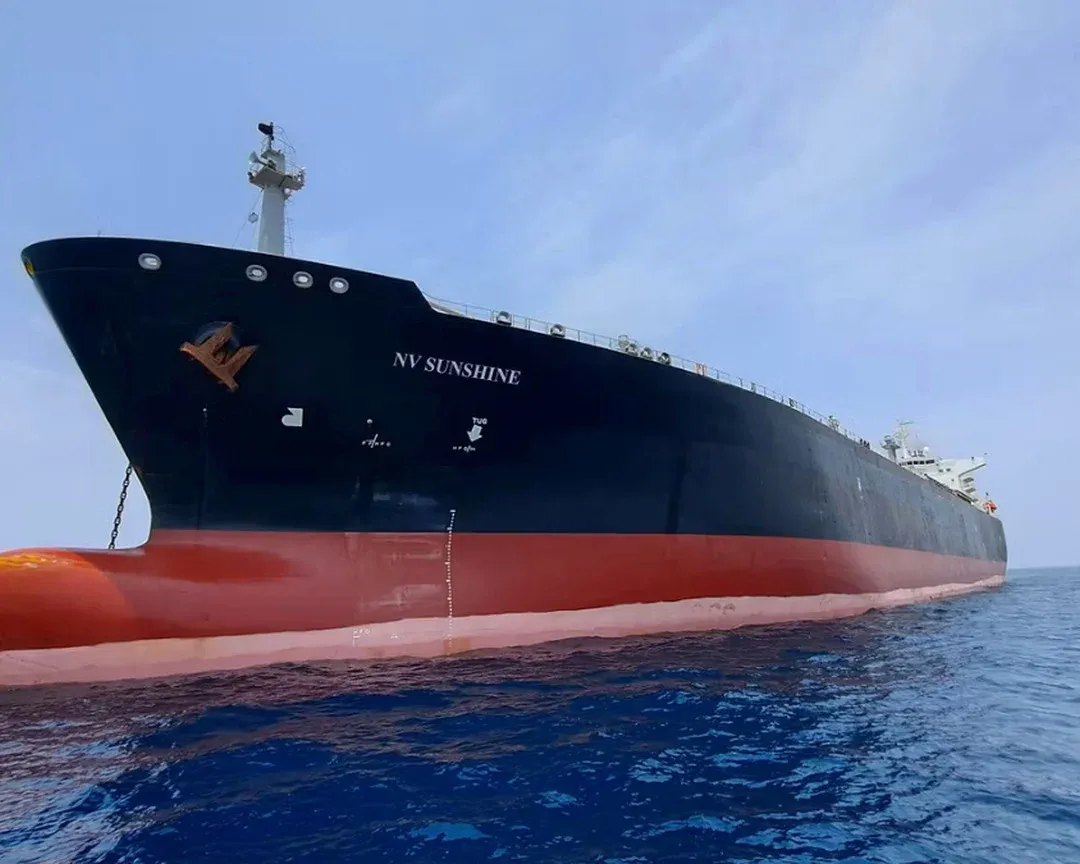

On October 9, the navy of Iran's Islamic Revolutionary Guard Corps said the liquefied gas carrier NV Sunshine had been hit and set on fire in its engine room while passing south of the Strait of Hormuz. A day later, PetroVietnam Transportation Corporation (PVTrans, ticker PVT on HOSE) announced that the vessel had not been attacked. For a PVT shareholder, the denial removes worry about one ship. It does not answer the bigger question: how closely PVTrans' sharp profit growth is tied to the Gulf.
The thesis here is simple. The denial rests on more concrete evidence than the original claim, but it only closes the safety question for one vessel. How much profit depends on the strait will have to wait for the Q3 report.
Where the story came from
The claim came from the IRGC, was relayed by the semi-official Tasnim agency, and spread to international outlets on October 9. According to Mehr News, Iran's side said the ship, "belonging to the Natwit company," was hit a few hours earlier while trying to cross what Iran called an "illegal" route south of the strait.Mehr News The statement named no weapon and gave no circumstances. As of the evening of October 10, no independent third party had published images or confirmed the incident.
Some Vietnamese outlets repeated the claim on October 9, raising concern about the safety of the ship and its crew.Báo Đầu tư Chứng khoán
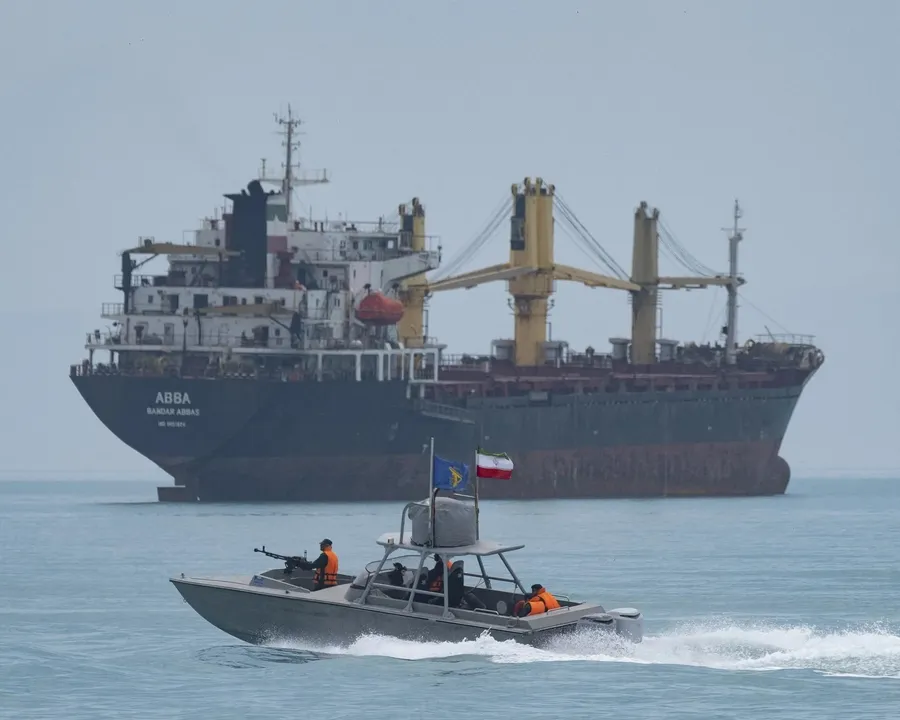
How PVTrans checked
According to the notice PVTrans posted at 17:35 on October 10, the company instructed Nhat Viet Transportation JSC (NVTrans) to check immediately. NVTrans is the subsidiary that directly owns, manages and operates the NV Sunshine. After contacting the captain and other parties, NVTrans confirmed that the report of an attack was untrue.Báo Đầu tư Chứng khoán
PVTrans' notice read: "The NV Sunshine was not attacked. The crew and cargo are all safe. The vessel is operating stably and as planned." NVTrans issued its own notice the same day, calling the report "fake news" and asking media to verify and correct the articles already published.NVTrans
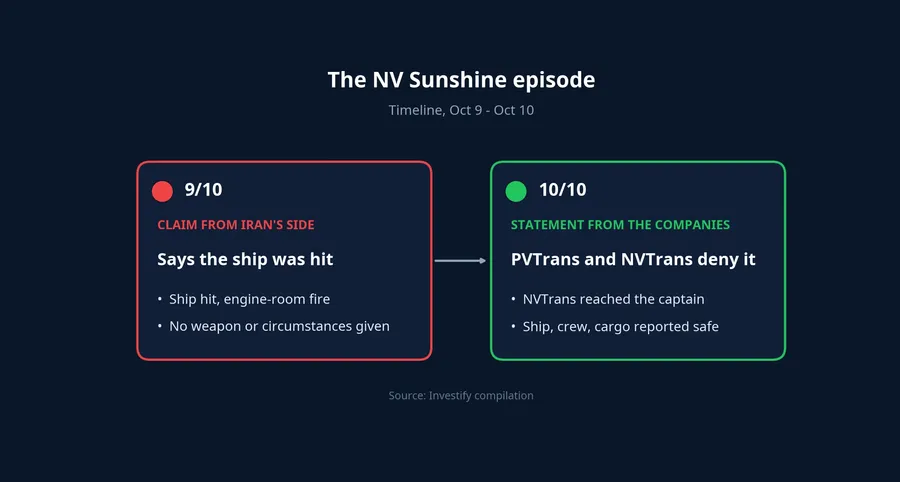
The two sides tell opposite stories. The owner spoke directly with the captain and put its position in writing. The other side offered no detail that can be checked. On the evidence available, the owner's account is the more concrete one, though it remains the account of an interested party.
The notice also does not say which waters the ship is in, which route it runs or whom it carries cargo for. For a reassurance notice that is normal. It is also why the denial answers only the safety of one vessel.
Which profits the fleet is producing
The rumor hit PVTrans while its results were strong. According to the consolidated report:
- In Q2 2026, revenue was above VND 5,713 billion, up 32.4% year on year. Net profit was above VND 678.3 billion, up 88.39%.
- In H1 2026, revenue was above VND 9,892 billion, up 39.2%. Consolidated net profit was above VND 1,065 billion, up 67.3%.
As of June 30, 2026, total assets stood at above VND 23,021 billion and equity at above VND 12,180 billion.Báo Đầu tư Chứng khoán
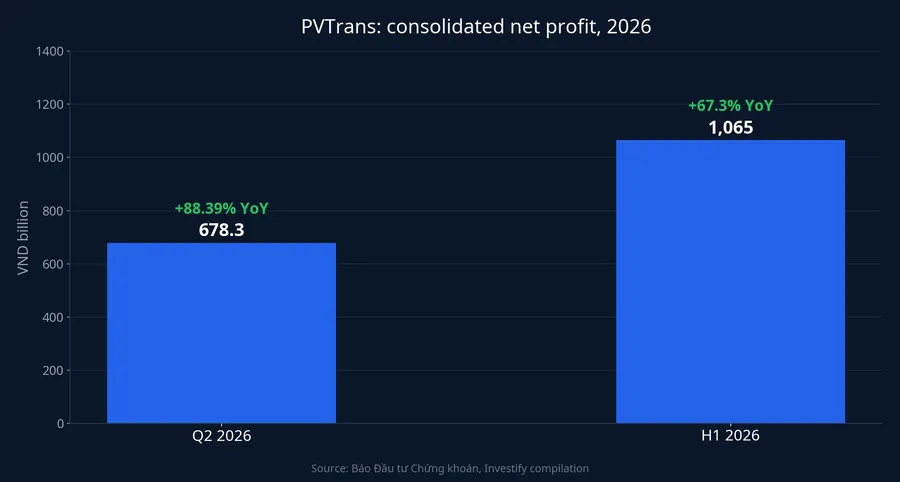
PVTrans attributes the profit rise mainly to extra earnings from vessels added in 2025 and more efficient fleet operation. The word Hormuz does not appear in the company's explanation.
Two explanations for one increase
Brokerages read the numbers differently. An October 7 article, "Finding opportunities in the Q3 reporting season," says that ships rerouting or spending longer on each voyage on some strategic lanes has cut effective global fleet capacity and pushed freight rates up fast, especially for large crude tankers. It names PVTrans as a notable case. The same article cites an SSI forecast: PVTrans' Q3 2026 profit of about VND 595 billion, up 71% year on year. That is a brokerage forecast, not a figure the company has reported.Báo Đầu tư Chứng khoán
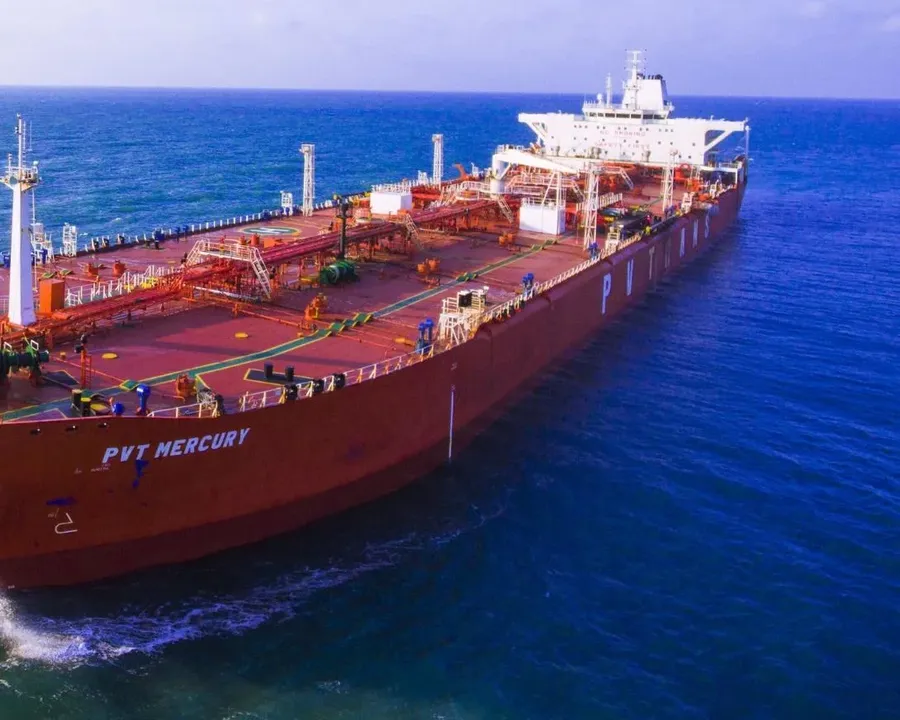
The two explanations are not mutually exclusive. New vessels add ships that can be chartered. Higher rates raise what each ship earns. The extra profit likely comes from both. The gap is that no source says how much each contributes, or how many ships operate in or near the Gulf.
That gap decides how the risk should be read. If most of the extra profit comes from new ships on long-term charters, the main risk is the safety of individual vessels. If most comes from freight rates, profit depends on how long tension around the strait lasts, and could fall once the lanes reopen.
The stock before Monday
On October 9, PVT closed at VND 25,200, down VND 350. The VN-Index fell 0.22% to 1,735.09 the same session. No source ties PVT's decline to the ship report. Monday, October 12, is the first session after the denial. Brent stood at USD 103.08 a barrel on October 9, still reflecting tension around Hormuz, but it should be read as general backdrop only.
Two risks for a shipping company near a conflict zone
The NV Sunshine episode shows that an oil and gas shipper with vessels operating near a conflict zone faces two risks at once. The first is the real safety of ships and crews. The second is rumor risk: an unverified claim from a party to the conflict is enough to put the company's name in international headlines and worry crew families.
This time PVTrans handled the second risk fairly quickly: the claim spread on October 9, the denial came on October 10, with a concrete check, contacting the captain. No notice can resolve the first risk as long as the fleet operates in the region.
What to watch
The question of Gulf dependence will get more data when PVTrans publishes its Q3 2026 financial statements. Two places are worth reading.
First is Q3 net profit, set against SSI's forecast of about VND 595 billion. A result near or above it would suggest high freight rates are still flowing into the books. A clearly lower result is when the notes to the statements need to explain why.
Second is the explanation of profit changes. If PVTrans keeps citing new ships and operating efficiency, growth rests on fleet size. If it mentions freight rates or contracts renewed at higher prices, growth is tied more closely to events in the strait. Any extra disclosure on route mix and the number of ships operating in the Middle East would speak directly to the question the October 10 denial leaves open.