

On January 30, 2026, world silver prices closed down 26.91% in a single session.Baomoi No silver mine shut down that day. No solar panel factory stopped production. No inventory report shocked anyone. The one thing that changed was a technical number few people track: the margin requirement on the CME.
What matters here isn't that silver fell. Any metal falls sometimes. What matters is that the mechanism behind that drop can repeat at any time, and most people holding silver, including Vietnamese investors trading through the Vietnam Mercantile Exchange (MXV), have no idea they're exposed to it.
One year, from $121 to $55 and back halfway
Silver started 2026 at $72.62 an ounce.Baomoi In just the second half of January, the price shot up almost vertically, touching an intraday high of $121.64 on January 29, a record that surpassed even the peaks of 1980 and 2011.24h Its highest close was $116.58 on January 28. Two days later, silver crashed nearly 42%.
After the crash, silver staged a technical bounce to the $88-94 range in early February, then slid through the second quarter. Its lowest close was $55.50 on July 16, a 52.4% drop from the peak in under six months. From that trough, silver recovered more than 20% to reach $66.75 at the most recent session, still about 43% below the peak.Công Thương
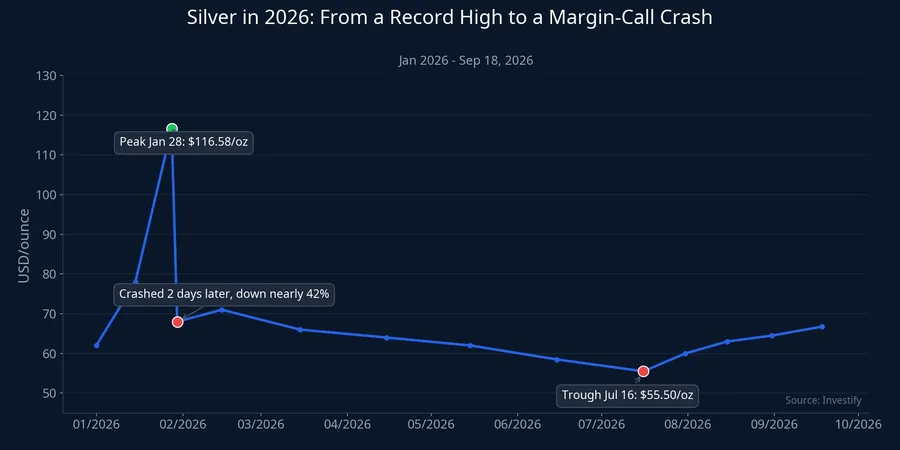
Anyone glancing only at the roughly 6-8% year-to-date decline would assume 2026 was just a dull, slightly negative year for silver. That single number hides the entire journey anyone holding silver actually lived through.
What the headlines missed: margin was the trigger
The fundamentals behind the early-year rally were real. About 60% of global silver demand comes from electronics, solar panels and microchips, with photovoltaics alone accounting for roughly 17% of total demand, while about 73-75% of mined supply is only a byproduct of lead, zinc, copper and gold mining and can't respond quickly to price.Baomoi The market is in its sixth straight year of supply deficit, around 46.3 million ounces, according to the Silver Institute.Baomoi
But the speed was the suspicious part. Silver gained more than 60% in a single month, and an analysis at the time noted that market enthusiasm had outrun actual liquidity, as retail money poured into physical silver in Vietnam, China and India as one of the drivers.MarketTimes A price built on leveraged positions like that is fragile the moment lending conditions shift. And they shifted fast.
CME Group raised margin requirements on silver futures twice within 72 hours: on January 27, from 9% to 11% of contract value, then on January 30, up again to 15% for standard accounts and 16.5% for high-risk accounts. Combined, margin rose 67% in three days.Fili

The mechanism is straightforward. Margin is the deposit a trader must post to hold a contract. When an exchange raises that ratio, everyone holding a leveraged long position has to post more cash on very short notice. Anyone who can't pay in time gets liquidated immediately — sold exactly as the price is sliding — and that forced selling pushes the price down further, triggering another round of margin calls. Traders don't get to choose whether to pay; it's a contractual obligation, categorically different from factors that work only through market sentiment.
To be fair to the data, margin wasn't the only cause of the January 30 session. At the same time, a Reuters report incorrectly stated that the Trump administration had abandoned a plan to guarantee price floors for strategic minerals, triggering an additional wave of selling, while speculation swirled that Kevin Warsh would be picked to chair the U.S. Federal Reserve's Board of Governors, stoking fears of tighter policy and pushing up the dollar and yields.Fili Warsh was formally nominated on March 4 and sworn in on May 22, 2026.Fed Three factors hit at once, but only the margin decision worked through a binding contractual obligation. The other two worked only through sentiment.
Silver isn't a smaller version of gold
Gold also peaked on January 28 and also bottomed in mid-July, but the magnitude was completely different. Year-to-date, gold is up 0.93% to $4,372.41 an ounce, while silver is down roughly 6-8% depending on the starting point. Gold's worst single-day drop was 9.11%; silver's was 26.91%. Gold's maximum drawdown from peak was 26.64%; silver's was 52.40%. Silver's average daily volatility of 2.97% is more than double gold's 1.42%.
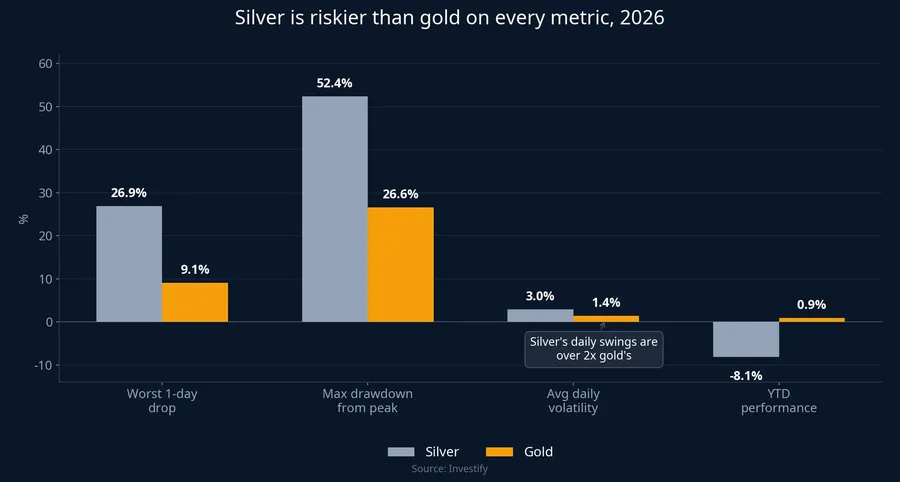
The structural difference lies in silver's dual nature. Gold is almost purely a monetary asset, while silver is both a precious metal and an industrial input, so silver prices have to absorb two kinds of shocks at once: financial shocks from margin, interest rates and speculative flows, and industrial shocks from solar technology, production costs and substitute materials. Add in an inelastic supply, and every shift in demand has to be absorbed through price, with no other release valve.
The very industrial demand that props up silver is also creating a risk of its own. When prices touched $94 in January, Chinese manufacturers began exploring silver-coated copper paste to cut silver content in solar panels by 30-50%.CafeF Silver priced too high starts eating into its own demand, a feedback loop gold never has to face.
Where Vietnamese investors stand
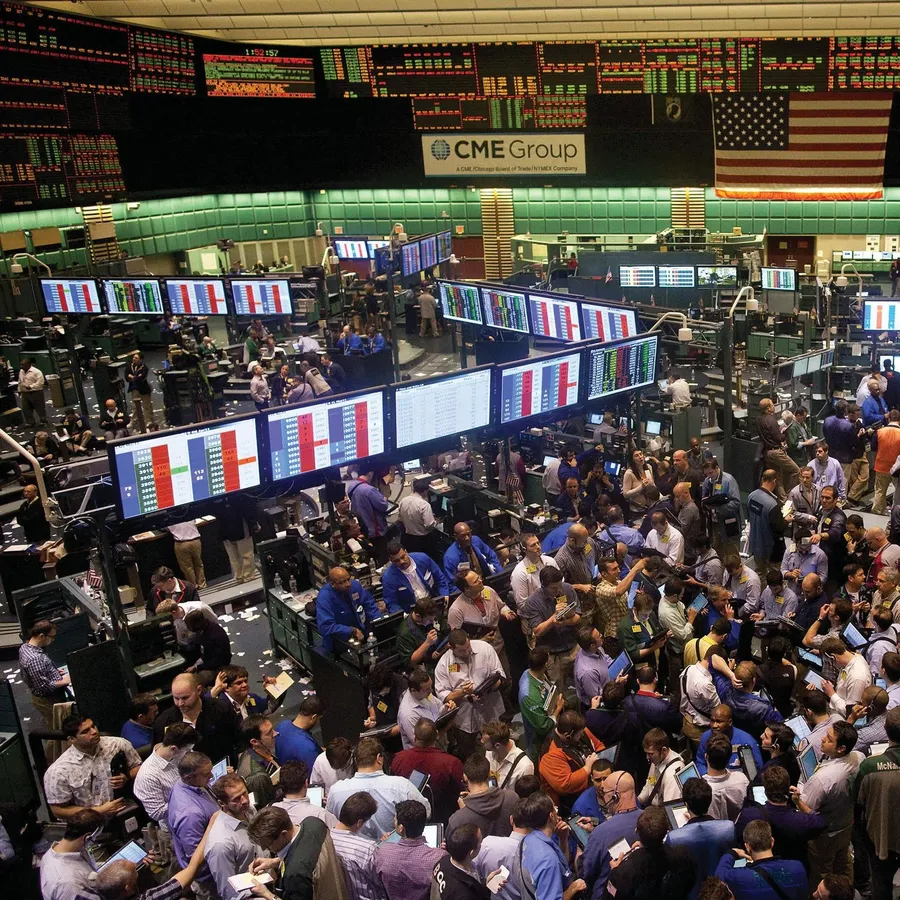
There are two ways to access silver in Vietnam, and both carry a piece of the risk described above.
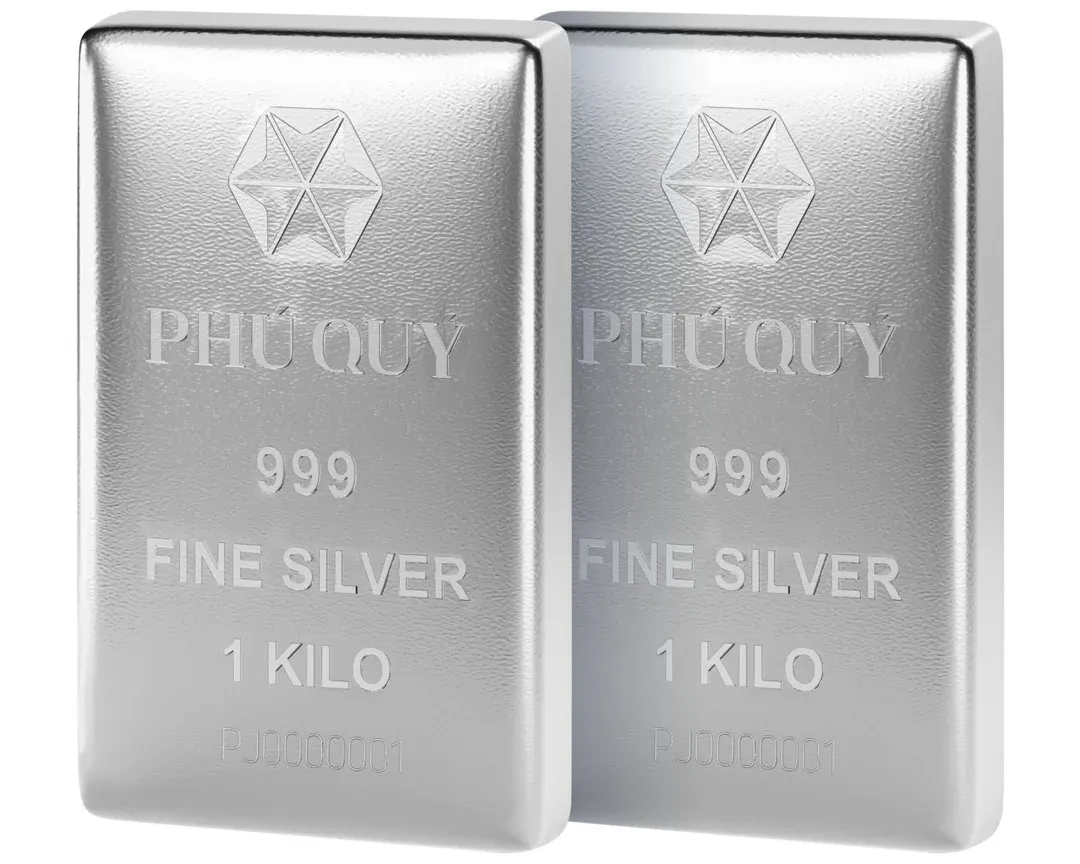
The first is physical silver. On September 19, Phú Quý listed 999 silver bars at VND 2,254,000 buy and VND 2,324,000 sell per tael, a VND 70,000 spread equal to about 3% of the selling price.Vietbao That means the world price has to rise roughly 3% just for a buyer to break even. During the price frenzy earlier in the year, some stores told customers to wait up to 60 days for delivery. Waiting two months in a market with nearly 3% average daily volatility is a separate risk entirely from price risk.Fireant

The second path is futures contracts through MXV. Here's the part few people notice: silver futures on MXV are directly linked to COMEX, under ticker SIE: the margin Vietnamese investors have to post is set by the CME itself, the same exchange that raised margin 67% in three days at the end of January. MXV cut the initial margin on COMEX silver contracts from $41,605 to $37,919 effective June 9, 2026, roughly VND 1 billion for a standard contract, and that figure changes multiple times a year.Baomoi That's the variable investors need to track, not the price level.
One legal point needs to be stated clearly, since it's where many investors get confused: silver falls outside the scope of Decree 24/2012 on gold trading management. It has no national brand like SJC, no price-stabilization mechanism, and no authority steps in during extreme price swings. The Ministry of Industry and Trade and MXV have been studying a domestic silver bar contract since March 2026, but no such product has launched yet.Baomoi In other words, anyone holding silver in Vietnam is holding an asset with no dedicated legal safety net.
Vietnam's commodity derivatives market is also growing fast: total trading volume is up more than 80% year-over-year in the first eight months of 2026, with the metals group accounting for over 57% of volume in Q1 and silver leading liquidity within that group. The more participants join, the more people need to understand the margin mechanism before placing an order.
What to watch
Current forecasts put silver in the $65-70 range going forward, roughly where it's trading now.Thời báo Tài chính Việt Nam But for an asset with silver's range, a price-band forecast isn't the most reliable thing to anchor on.
What's worth watching is the CME's margin notices. 2026 has shown that every margin hike preceded a price drop, and this is a variable published publicly — no guessing required. The real risk isn't that silver is a bad asset; it's that most silver buyers don't realize a technical decision from an exchange in Chicago can decide the fate of their position faster than any macro headline.
Worth considering: for an asset with double gold's daily volatility, the appropriate approach is a small position with no borrowed capital, rather than expecting silver to behave like a stable safe haven. For physical silver, factor the bid-ask spread and delivery wait time into the risk calculation. For futures through MXV, the COMEX margin level, published periodically, is a more useful indicator to track than any price forecast.