
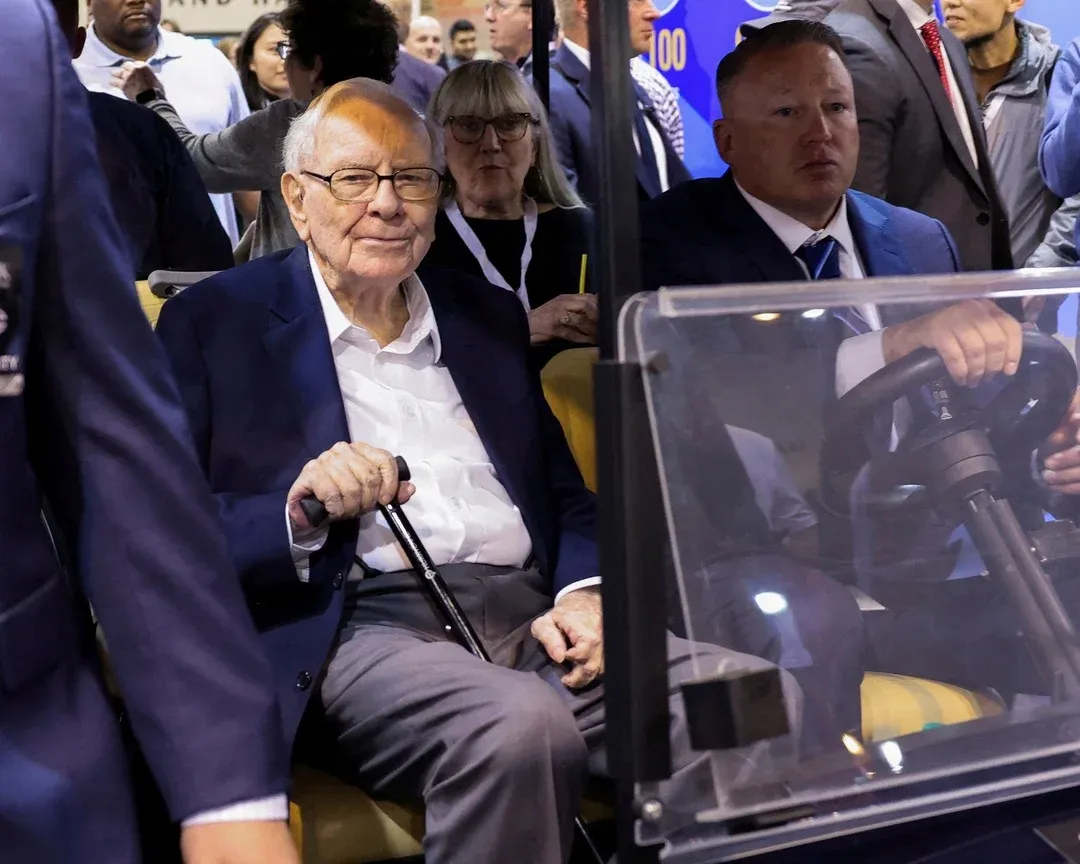

On September 18, 2026, Warren Buffett wrote to Berkshire Hathaway shareholders announcing he was stepping down as Chairman, effective immediately. He becomes Chairman Emeritus while keeping his board seat. His successor is his son Howard Buffett, 69, a Berkshire board member since 1993.Local10 The Chairman seat Buffett held since 1970 changed hands for the first time in 56 years.
What's worth reading closely isn't the handover itself, but how Buffett defined the seat he just left. In the letter, he wrote: "Greg runs the company; Howard will guard its culture and values, both of which are worth more than any line item on the balance sheet. Think of Howard as an insurance policy that shareholders own and hope never to have to claim." That metaphor deserves more than a passing glance, because it amounts to an admission that the non-executive Chairman seat has almost nothing to do — unless something goes wrong.
What does a non-executive Chairman actually do
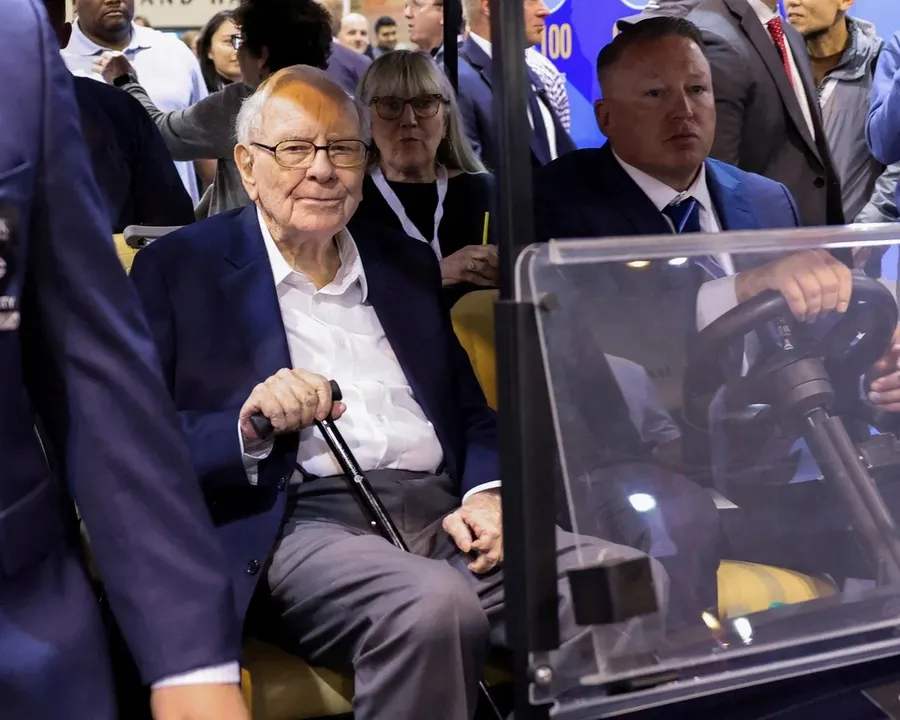
Howard Buffett has been explicit about the boundaries of his role: "I will not run the company as non-executive Chairman. My job is to support Greg Abel in every way I can."Yahoo Finance He doesn't decide which businesses to buy, doesn't allocate capital, doesn't sign contracts.
The one substantive power the seat carries is the power to replace the CEO if needed. Warren Buffett explained this years ago: Howard sits in the Chairman's chair not to run Berkshire, but to make a CEO change possible if that ever becomes necessary.Arbiterz Put next to the insurance metaphor, the story closes on itself: that policy has exactly one clause, and "filing a claim" means removing the person running the company.
That's why power at Berkshire now splits cleanly into two branches. Greg Abel, 64, holds all operating authority and final say on capital allocation, something Buffett stated outright at the May 2025 annual meeting.Vietstock Howard only oversees the person holding that authority. Neither man holds both at once.
A 16-month rollout with a 9-month gap in the middle
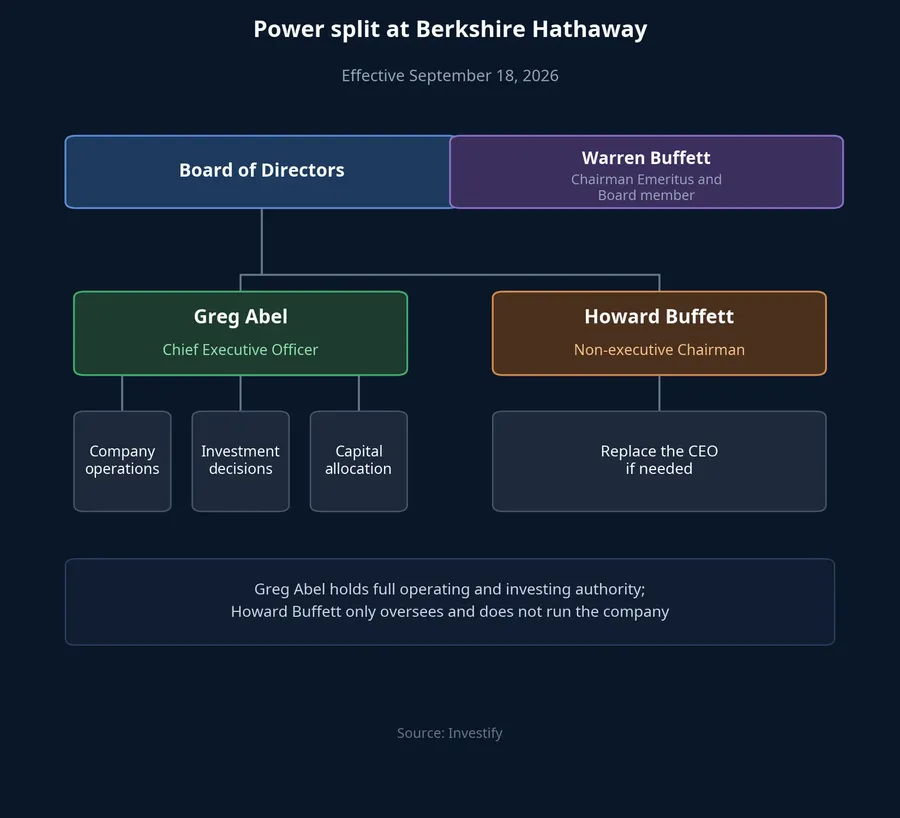
This handover didn't happen in a single day. It moved through a traceable sequence of milestones. In early May 2025, at the annual shareholder meeting, Buffett announced he would step down as CEO by year-end and had chosen Greg Abel as his successor. Two weeks later, news that Howard Buffett would become non-executive Chairman to preserve the company's culture surfaced in the press on May 18, 2025.CafeF In other words, the entire structure in place today was drawn up more than a year in advance, not a sudden call.
On September 30, 2025, Berkshire's board voted to amend the bylaws to formally separate the Chairman and CEO roles, effective immediately.Vietstock On January 1, 2026, Abel formally became CEO, closing out an era in which Buffett had delivered a return of roughly 6,100,000% since 1965, versus 46,000% for the S&P 500 over the same span.Vietstock
Buffett then held the Chairman seat for nine more months: the most interesting stretch of the whole timeline. During that window, Abel sent his first shareholder letter in February 2026, pledging financial discipline and no dividend unless every retained dollar generates more than a dollar of value.Vietstock In May 2026, he chaired his first annual meeting, reporting Q1 operating profit up 18% to $11.35 billion and record cash reserves of $381.1 billion.Vietstock In Q2 2026, Abel put a net $19.8 billion into stocks, ending more than three years of net selling under Buffett.Vietstock
Only after that string of decisions did Buffett hand over the final seat. The September 18 letter had this to say about Abel: "My expectations for him were very high from the start, and he has exceeded them."CNBC
The most natural reading of this sequence is that the nine months served as an observation window: the person who held the power to replace the CEO only relinquished that power after watching the new CEO make real decisions himself. But it's worth being precise here: this is a reading, not something Buffett stated outright. Two other explanations are equally plausible and could both be true at once: age, which Buffett himself cited with the line "Father Time always wins" at 96; and a plan that was already fixed as of May 2025, with September 18 simply being the final scheduled step. The available evidence isn't enough to rule either one out. But the fact that Abel's entire run of capital-allocation decisions fits neatly inside those same nine months is a notable coincidence.
The market priced in this risk long ago
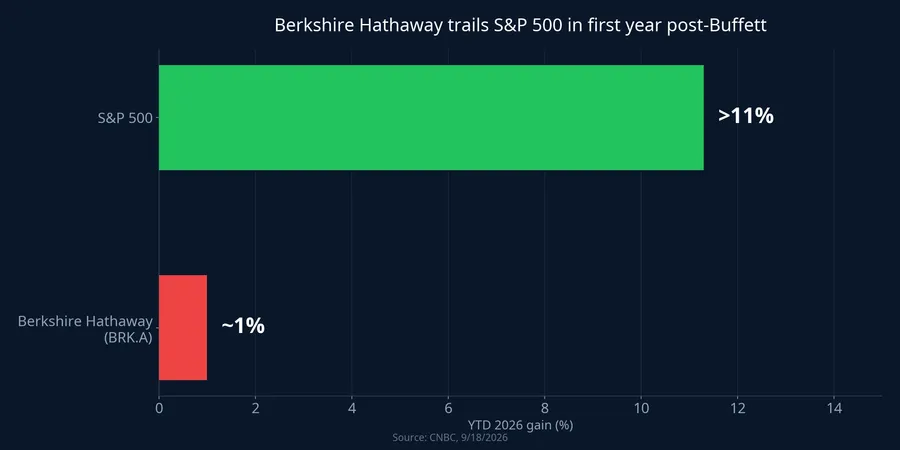
What the headlines don't spell out, the share price already has: investors didn't wait for today to react to succession risk. In 2026, Berkshire's stock rose about 1%, while the S&P 500 gained more than 11%.CNBC Before that, the Class A shares gained just 10% in 2025, trailing the S&P 500's 16.4%.Vietstock
The valuation premium the market once assigned to Berkshire for Buffett's presence has been shrinking for more than a year. In October 2025, an analyst issued a rare sell rating on Berkshire and cut the Class A price target from $740,000 to $700,000, citing concern that GEICO's insurance margins may have peaked and that lower short-term rates would erode income from the company's cash pile.Vietstock
In other words, key-person risk was priced in over multiple quarters. Today's title change on the Chairman seat adds no new information about operating capability, because operating authority left Buffett's hands nine months ago.
A governance lesson for Vietnamese investors
Vietnam split these two titles in law long ago. Decree 71/2017, and later the 2020 Law on Enterprises, bar the Chairman of a public company's board from simultaneously serving as General Director (CEO), effective August 1, 2020.Tạp chí Tài chính The rationale cited at the time is exactly what Berkshire just illustrated: avoid a setup where the same person plays both referee and player, so the board can actually hold management accountable.
But here's where investors tend to get complacent: separating titles on paper doesn't mean separating power. The real question isn't whether the two roles carry different names: it's whether the Chairman's seat at a given company can actually remove the General Director in practice. If the Chairman and General Director are family, or if the Chairman is also a controlling shareholder who hand-picked the management team, that insurance policy exists on paper with no one able to file a claim.

The broader picture shows the gap is still fairly wide. In the 2024 ASEAN Corporate Governance Scorecard, Vietnam broke 60 points for the first time but still ranked lowest among the six participating countries, with only 69 companies assessed against a regional benchmark of 100.Tin nhanh Chứng khoán
For long-term shareholders, this is a criterion you can check without any complex valuation model. In the personnel proposals and corporate governance reports published every AGM season, three things are worth looking up: family ties between the Chairman and General Director, the number of independent board members, and the ownership stake held by the group of shareholders connected to the Chairman.
Berkshire just showed that a succession structure prepared over 16 months still ends with putting one person in an oversight seat holding exactly one power. That power was only handed over after the successor had proven himself across several quarters of real decisions. Next year's AGM season in Vietnam will show whether the companies in your portfolio have an equivalent oversight seat, or just a title that was separated on paper.