
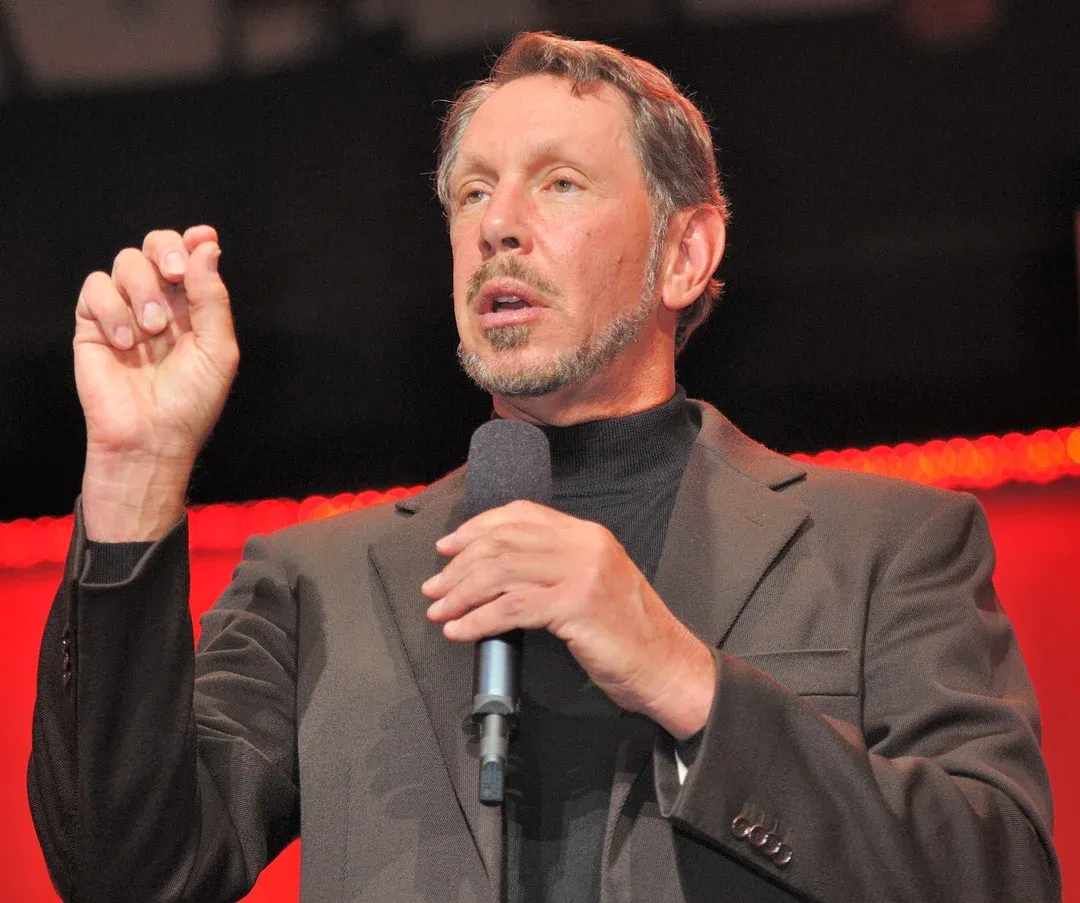

Over the weekend, two insider-trading stories broke on opposite sides of the world. In the US, Larry Ellison, Executive Chair of the Board and Chief Technology Officer of Oracle Corporation, cancelled his entire plan to sell up to 50 million Oracle shares. In Vietnam, Nguyen Hong Nam, a board member at SSI Securities Corporation, finished buying 5 million SSI shares. The reflex most retail investors reach for with this kind of news is simple: insiders selling is a bad signal, insiders buying is a good one.
That reflex isn't entirely wrong. People sitting on a board know about orders, cash flow and company plans before the market does, and when they put their own money on the line to buy, they're taking real risk, not just talking. But what the headlines don't say is how wide the gap can be between a filed intention and an actual trade. Put side by side with market-wide data, these two weekend stories show that the buy-good, sell-bad reflex misses most of the information that actually matters.

A sell plan that sold nothing
On September 11, 2026, a quarterly filing with the US Securities and Exchange Commission revealed a striking detail: Ellison had set up a pre-arranged Rule 10b5-1 trading plan on June 22, 2026, allowing him to sell up to 50 million Oracle shares through October 24, 2026.CNBC Less than a day later, Oracle put out a statement saying Ellison had cancelled the entire plan, that no shares were sold under it, and that he had no other sell plans in place.PR Newswire
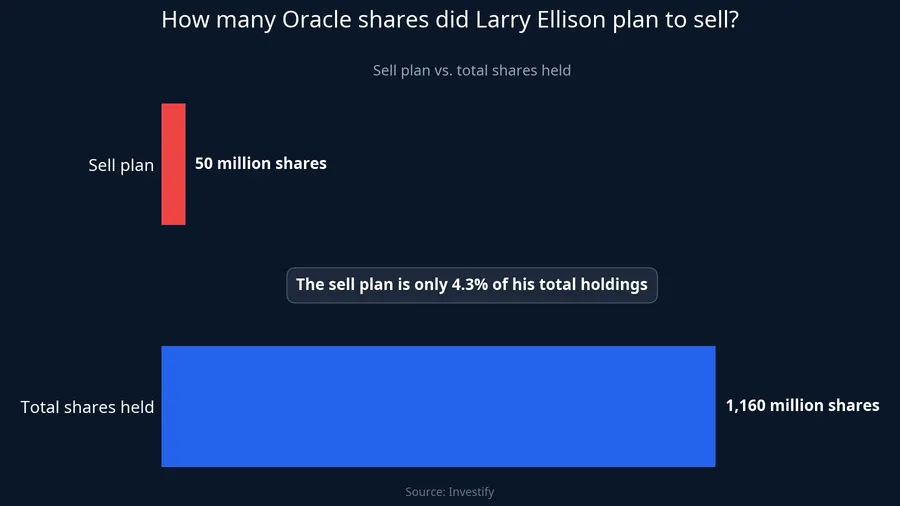
The real risk here is that the $7.5 billion headline number feels much bigger than the substance behind it. The shares in the plan were worth roughly $8.75 billion when it was set up on June 22, and about $7.5 billion by the time the filing surfaced, after the stock had dropped 16%.Yahoo Finance Ellison holds roughly 1.16 billion shares, close to 40% of Oracle's stock, so 50 million shares is only about 4.3% of what he actually owns. He has also funded personal spending for years by borrowing against his shares rather than selling them, which makes a plan this small hard to read as any kind of statement about Oracle's prospects.
The other side of the story needs to be said just as clearly, because the available evidence isn't enough to settle on a single explanation. Cancelling the plan could reflect a belief that the current price is too low to sell at, but it could just as easily reflect a wish to hold his ownership stake steady, tax planning, or simply a reaction to the plan leaking out right as the stock came under pressure. As of the September 10 session, Oracle stock was down 22% year-to-date while the S&P 500 was up roughly 11%, even though the company's freshly reported fiscal Q1 2027 results showed $19.35 billion in revenue and 62% cloud revenue growth.CNBC Cancelling one plan also doesn't stop a new one from being set up later.
The SSI case: news arrives sooner, but with less certainty
The SSI case runs on an entirely different logic. Nguyen Hong Nam filed to buy 5 million SSI shares between August 25 and September 22, with the stated purpose in the filing listed as restructuring his personal investment portfolio.VnEconomy He completed the full purchase through market orders between August 26 and September 11, raising his stake from 10.36 million shares (0.41% of SSI's capital) to 17.43 million shares (0.58%).CafeF At the September 11 closing price, the purchase was worth more than VND 100 billion.Tuoi Tre
During that buying window, SSI shares traded between VND 20,300 and VND 21,650, a multi-year low after the stock fell roughly 46% over twelve months. Nam is the younger brother of SSI Chairman Nguyen Duy Hung and served as SSI's CEO until August 2025.

The most notable difference between these two stories isn't the direction of the trade. It's when investors find out about it. Ellison decided to set up his plan on June 22, but the market only learned about it on September 11, almost three months later, through a routine filing. By the time the news reached investors, everything was already settled. In Vietnam it works the other way around: Circular 96/2020 from the Ministry of Finance, as amended by Circular 18/2025, requires insiders and related parties to disclose planned trades at least three working days in advance.Thoi Bao Tai Chinh Viet Nam Vietnamese investors know before the trade actually happens.
That sounds like an advantage, but it's really a trade-off: news arrives earlier, so it's also less reliable, because what gets disclosed is still just an intention, not yet a completed fact.
The number that breaks the reflex
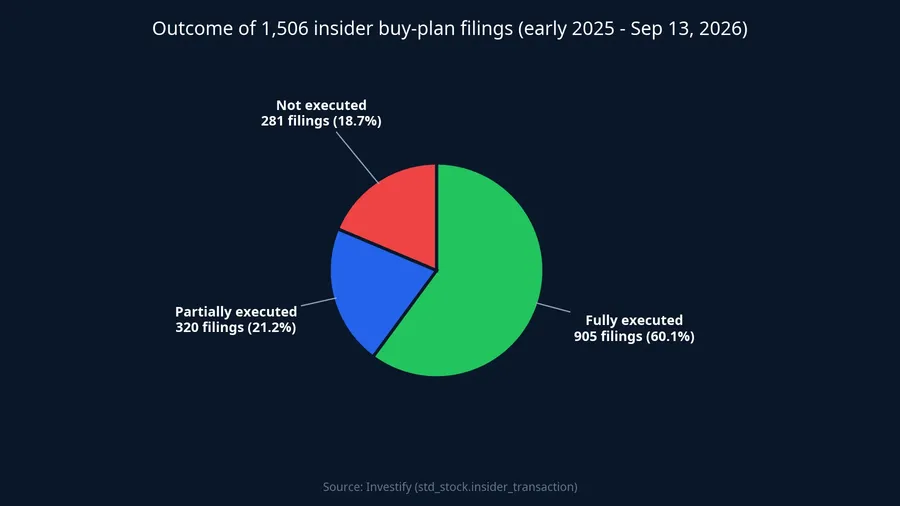
This is the data point that matters most, because it shows just how wide the gap between intention and action really is across the whole market. From the start of 2025 through September 13, 2026, 1,506 insider buy filings reached the end of their trading window. Of those, 601, or 39.9%, didn't purchase the full amount they had registered for. A subset of 281, or 18.7%, ended without buying a single share.
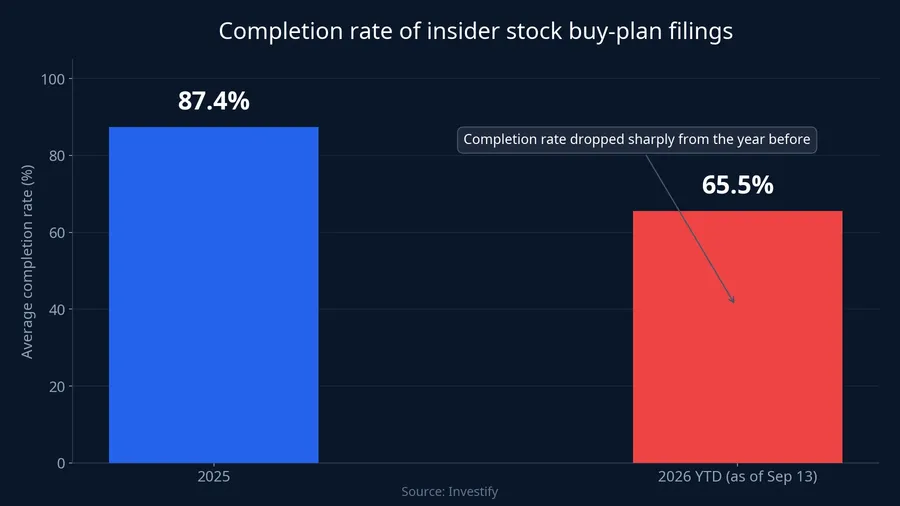
The completion rate by volume tells an even more uncomfortable story. In 2025, buy filings were executed at an average of 87.4% of the registered volume. From the start of 2026 through September 13, that figure dropped to 65.5%. In other words, precisely in the year the market has fallen the hardest, exactly when "insider registers to buy" headlines tend to get read as the strongest bottom-fishing signal, is when completion rates have been at their lowest.
This pattern shows up at the largest companies too, not just at smaller, less-watched names. Tran Vu Minh, son of Hoa Phat Group Chairman Tran Dinh Long, filed to buy 50 million HPG shares but only managed to purchase 33.29 million, or 66%, between March 12 and April 9, 2026, citing unfavorable market conditions as the stated reason.Tuoi Tre That case happened months ago, but it illustrates exactly the pattern the market-wide data now confirms: a public filing is not the same thing as a firm commitment.
Three things worth reading instead of buy-or-sell
Here's the more accurate picture: the direction of a trade carries almost no information on its own. Three other factors do.
Completed versus merely filed. A filing announcing an intended purchase and a report confirming an executed trade are two very different levels of reliability. With almost 40% of buy filings falling short, a filing should be read as an intention, not a fact. Nam bought 100% of his registered volume and finished eleven days ahead of the September 22 deadline — that's an actual completed fact.
Size relative to the person's own existing stake. Ellison's plan amounted to roughly 4.3% of the shares he holds, too small to say anything meaningful about his confidence in Oracle. Nam's trade raised his stake from 0.41% to 0.58% of SSI's capital, a change meaningful to him personally but nowhere near large enough to shift the company's ownership structure.
The time gap and the stated purpose in the filing. The US filing surfaced almost three months after the fact. The Vietnamese filing arrived at least three working days ahead of time. And the purpose Nam listed was restructuring his personal portfolio, not a view on the company's prospects. That line is always present in the disclosure, and retail investors routinely skip over it.
A reading framework for retail investors
Based on the available evidence, the default framework should be this: treat an insider trade as supporting evidence for a thesis you already hold only once it's completed and sizable relative to that person's own stake. A bare filing announcing an intended purchase, no matter how senior the filer, isn't reason enough on its own to open or close a position — not when nearly 40% of similar filings over the past two years never played out as announced.
Ellison's old plan was set to expire on October 24, 2026. Between now and then, here's what's worth watching: if no filing shows up indicating a new sell plan, then the line "no other plans to sell any of his Oracle stock" in Oracle's statement holds up as true. If a new plan does appear before or shortly after that date, this cancellation was most likely a matter of timing the announcement, not a lasting shift in how Ellison manages his personal wealth.