
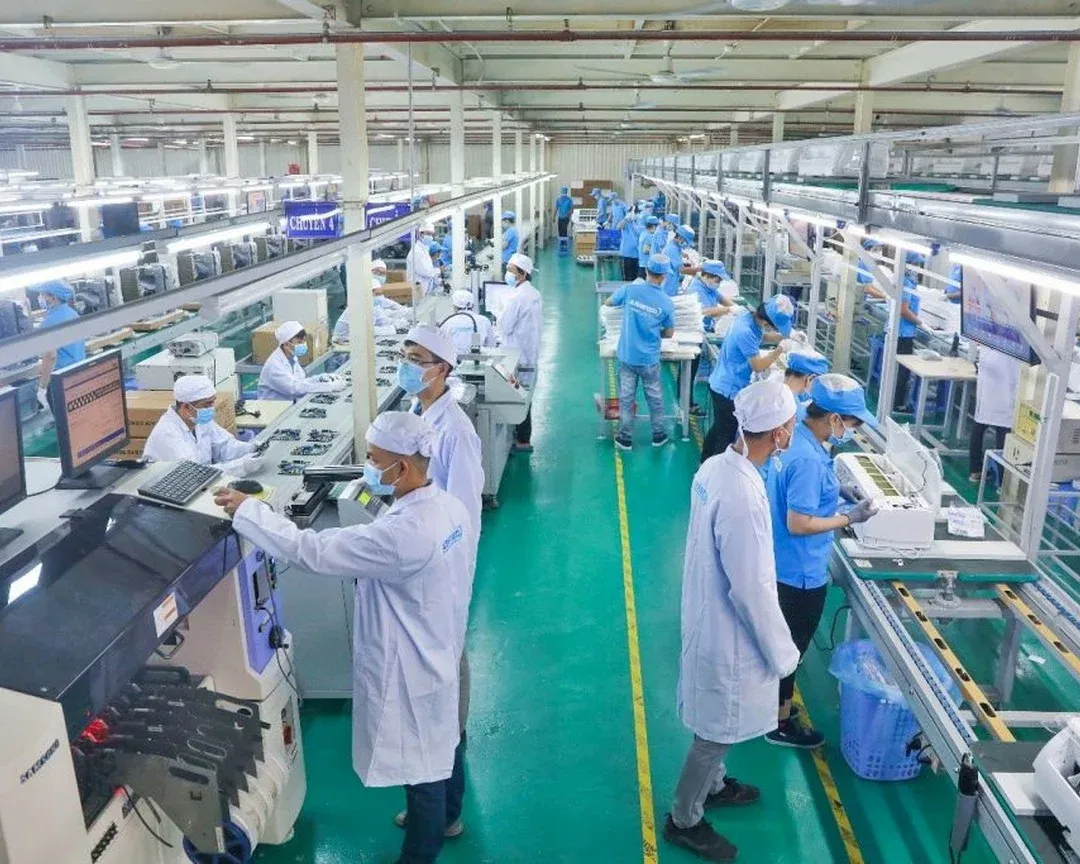

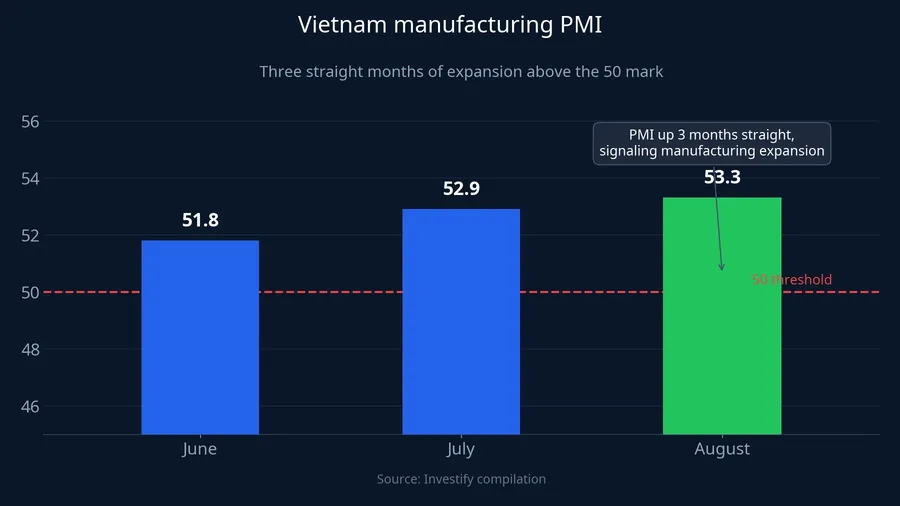
Vietnam's manufacturing PMI, compiled by S&P Global, hit 53.3 in August 2026, up from 52.9 in July and marking a 14th straight month above the 50-point expansion line.Fili It's the sharpest improvement in business conditions since February. But the engine that produced that headline number changed between the two months, and that's the part worth reading if you hold manufacturing or export-linked stocks.
Three months, three different states
June 2026 was the trough of the quarter. PMI came in at just 51.8, down from 52.8 in May.Fili Output and new orders both rose, but only mildly: the sector was still expanding, just slowly.
July was the export month. PMI jumped to 52.9, a five-month high, with the bright spot sitting squarely in overseas demand.Nguoi Quan Sat New export orders rose at the fastest pace since July 2024, pulling output and purchasing activity up with them.Fili Employment rose for the first time in five months, a sign firms expected the order pipeline to hold.
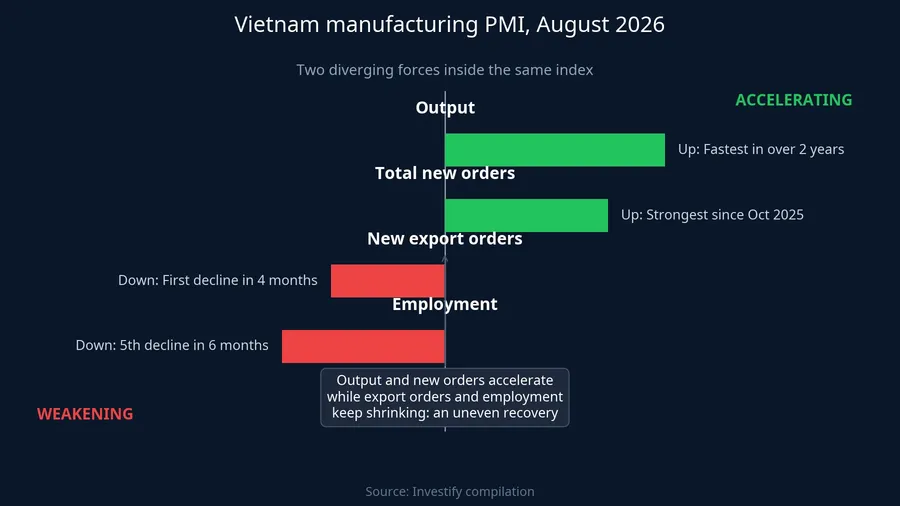
August reversed course on exactly those two fronts. New export orders fell for the first time in four months, a small decline, with survey respondents citing geopolitical uncertainty.Fili Employment fell again too, the fifth decline in six months, driven by resignations, retirements and the trimming of temporary contract labor.
Yet the headline index still rose above July. The offset came from two other places: output rose for a 16th straight month at the fastest pace in over two years, while total new orders grew at the strongest rate since October 2025. In other words, domestic orders and overall local demand carried the load that the export channel dropped.
The mechanism: cooling costs cleared the runway for output
This is where a good month and a good month for durable reasons diverge. The August report cites three tailwinds for output: firms developing and launching new products, raw material supply arriving more readily, and eased price pressure.
The cost side has the clearest numbers. Input cost inflation slowed to an 11-month low, running slightly below the survey's historical average.Fili Selling prices also rose more slowly, marking a fourth straight month of decelerating price increases. On the supply side, supplier delivery times were still stretched but only mildly: one of the two shortest lags in two years, on par with April 2025.
Put the three pieces together and a fairly clean chain emerges: materials arrived faster, input costs eased, and factories that received new orders could meet them by ramping output instead of turning business away. Andrew Harker, Economics Director at S&P Global Market Intelligence, framed the result in terms of efficiency: growth was achieved despite a renewed dip in headcount, indicating firms had become more efficient at producing more.
Three signals worth reading alongside the headline
The August report contains a few counter-signals that summaries tend to skip. First, inventories were drawn down on both ends. Purchased stock kept falling even as firms bought more, and the decline was the steepest in five months. Finished-goods inventory also fell at the fastest pace since April, as products were shipped straight out to customers. Part of August's high output, then, came from drawing on existing stock rather than entirely new capacity.
Second, backlogs of work rose for a second straight month. Factories are taking in more orders than they can process right away, while headcount keeps shrinking. That combination can run for a few months. It can't run indefinitely if the two lines never meet again.
Third, business confidence about output over the next year eased slightly from July and remains below the level recorded before the outbreak of conflict in the Middle East. The headline index speaks to the present; confidence speaks to investment and hiring intentions further out, and the two don't necessarily move together.
PMI splits stocks by revenue structure, not by sector label
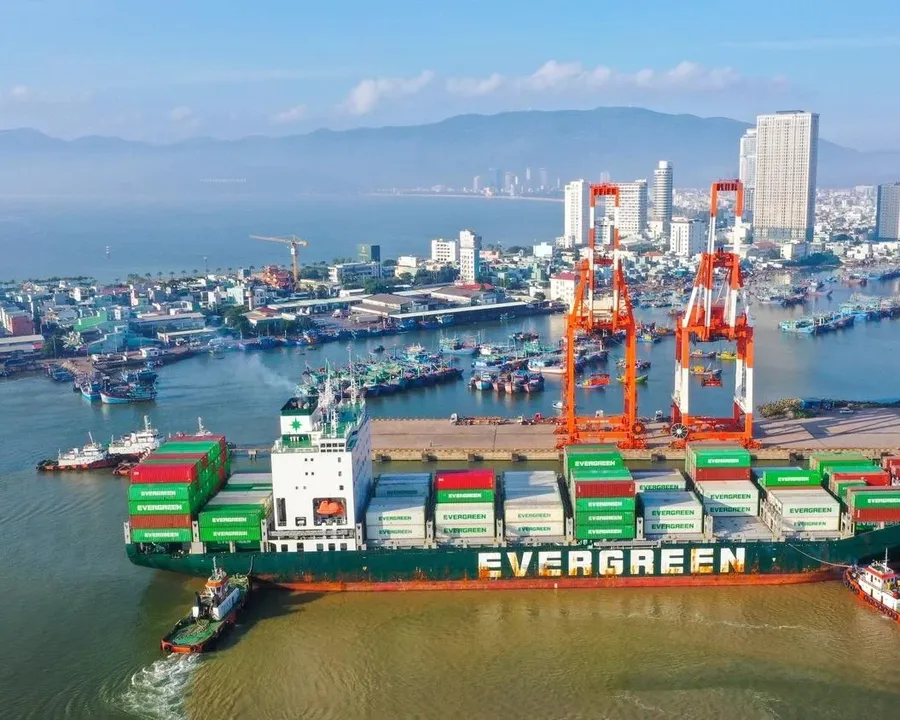
PMI is an industry-wide gauge; it doesn't measure any single company's results. What it does show is which direction the wind is blowing for which group. The August report draws a clear line between two demand channels moving in opposite directions: listed companies with most of their revenue tied to overseas orders — garment makers and seafood exporters are the clearest examples — sit on the cooling side of that split, while companies tied to domestic demand and public investment, steel being the clearest example, sit on the stronger side.
Stock prices through the most recent session on August 28 already reflect some of this divergence, though the read needs care. Year-to-date through August 28, TCM fell 28.85% and ANV fell 33.07%, while the VN-Index rose 2.67%. On the other side, GMD gained 34.12% while HPG fell 6.23%, a far shallower drop than the two exporters above.
That gap can't be pinned on a single cause, and the PMI report doesn't have the granularity to allocate exact contributions. ANV faced rising raw material costs, rising interest expense, and an anti-dumping tax disadvantage in the US market all at once: three factors entirely outside what PMI measures. GMD's rally is tied to cargo throughput at its ports, but a large share of its most recent quarterly profit came from a one-off financial income item rather than purely port operations. PMI explains the sector's general wind direction; it doesn't explain the full price path of any single ticker.
The variable for September's survey window: oil
One detail in the August report is worth flagging for comparison next month. S&P Global noted that rising oil prices were still pushing up fuel, plastics and shipping costs, even as overall input cost inflation cooled to an 11-month low. That's because the survey window closed within August.
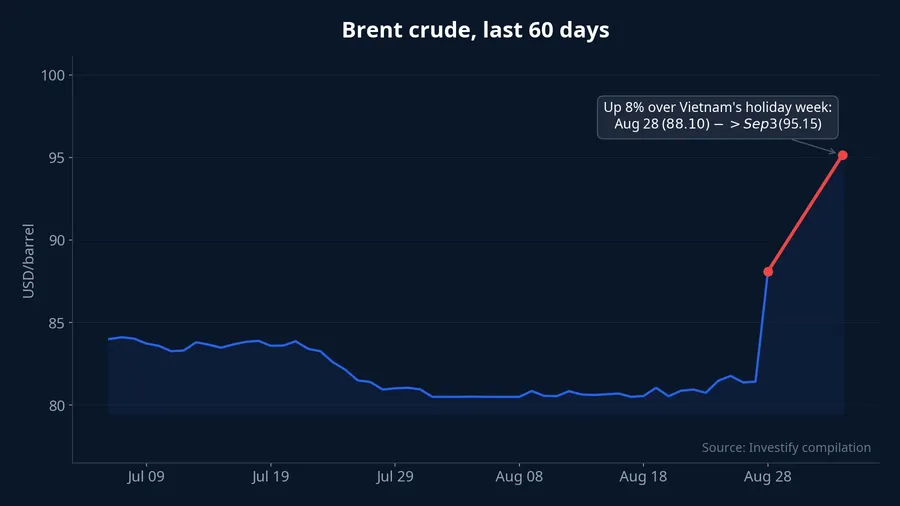
Since then, Brent crude climbed from $88.10 a barrel on August 28 to $95.15 on September 3, a gain of about 8% over the span of Vietnam's holiday week alone. If that level holds through September, the "eased price pressure" tailwind the August report named will likely weaken by the time the early-October release comes out, as the fuel and shipping cost pressure survey respondents already flagged carries more weight in September's data.
What to watch
Over the past three months, PMI has climbed steadily, but the source of that lift shifted from overseas orders to domestic demand plus factory efficiency. That's a real advance, backed by cost and supply fundamentals rather than pure order-catch-up. It's also an advance currently running on thinning inventory and a shrinking workforce.
The evidence so far isn't enough to say whether this expansion broadens or narrows from here. For the early-October release, three lines are worth reading first: whether new export orders keep falling or turn back up, whether employment stops declining, and how input costs respond to the new oil price level after August's 8% jump. Those three lines will say more than the headline number about how far this summer's acceleration can run.
The VN-Index entered the September 3 session from an August 28 close of 1,832.12 points, capping a 5.55% gain over the prior month. For investors holding manufacturing or export stocks, the question isn't whether PMI looks good. It's which demand channel that strength is coming from, and whether that channel is improving for the portfolio they actually hold.