
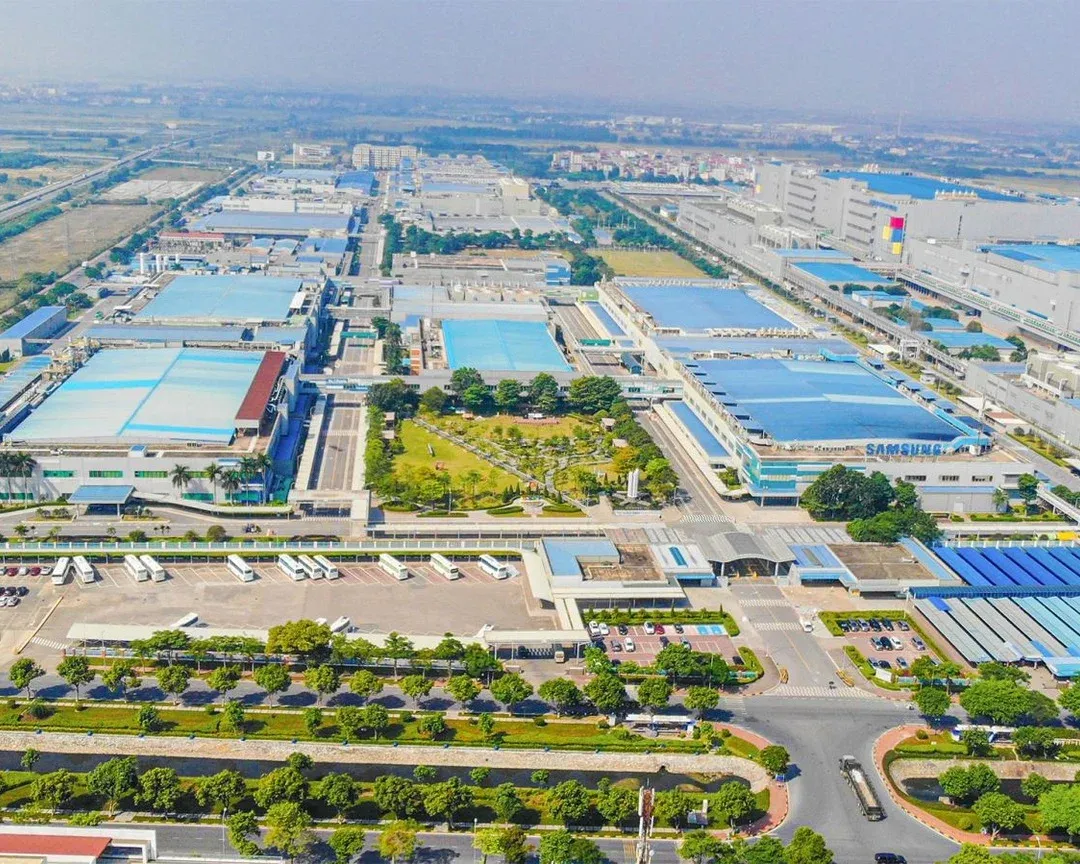

On September 2, 2026, South Korean media cited an environmental permit filing that Samsung Vietnam Semiconductor (SVS) submitted to Vietnamese authorities. The filing contains a remarkably specific list: 1,612 pieces of manufacturing equipment made in South Korea, all of it new, to be installed at the semiconductor plant under construction in Thái Nguyên.Tuổi Trẻ
Four months ago, this same project was just a number in a news brief. The gap between those two moments is where the real story sits: a plan has turned into a legal commitment specific down to individual machines.
Timeline: from a $100M entity to a $4.08B filing
In March 2026, Samsung established SVS in Thái Nguyên with an initial charter capital of $100 million.Người Quan Sát In April, Bloomberg reported Samsung was considering roughly $4 billion for a chip-packaging facility there, with neither the value nor the timeline confirmed.Dân Trí In May, Samsung announced a $1.5 billion plan to build its first chip-testing plant in Vietnam, targeting operations from November 2027.Vietstock By September, the environmental filing put total registered capital at $4.08 billion.CafeF
Skim the sequence and it looks like capital nearly tripling in four months. Read closely and it isn't: the May report already noted that beyond the initial $1.5 billion, Samsung could reinvest up to $2.5 billion more if the project turned profitable, which adds up to roughly the same $4 billion range. What's new in September isn't the size of the money. It's the degree of commitment: a plan has become a legal filing with named machines, quantities, and a delivery schedule.
What the capital structure reveals
According to the filing, the $4.08 billion breaks down as:
- $100 million in the investor's own capital.
- $1.41 billion raised from subsidiaries within the Samsung Group.
- $2.57 billion in future reinvested profit.
The filing records no loans from any financial institution.
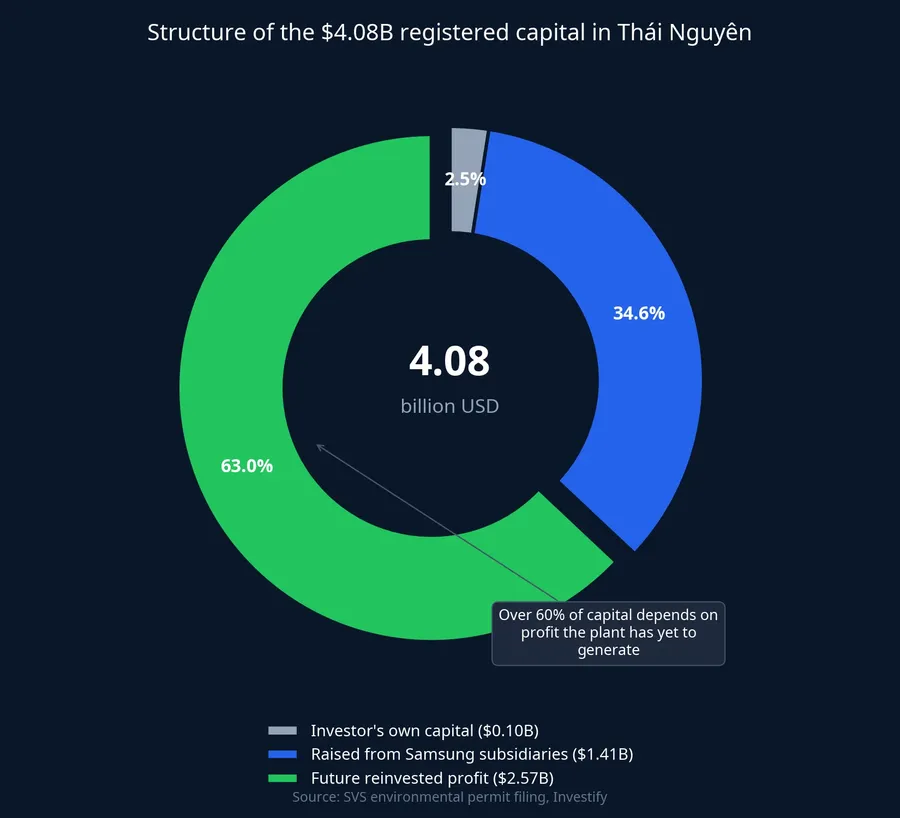
The capital that's certain to arrive right away is only about $1.51 billion, close to the figure announced in May. Over 60% of the total depends on the plant itself generating profit and retaining it for expansion. Samsung isn't betting on borrowed money. It's betting that the plant will fund its own growth. For investors tracking FDI flows, the $4.08 billion figure is registered capital, not capital actually disbursed.
What the plant will actually do
The project focuses on the back end of semiconductor manufacturing: packaging and testing, not wafer fabrication. The equipment list fits that scope: nearly 1,500 memory burn-in test chambers, sorting machines, and chip handlers, totaling roughly 2,000 tons, with a designed capacity of about 153.3 billion Gb of DRAM and 255.6 billion Gb of NAND per year.
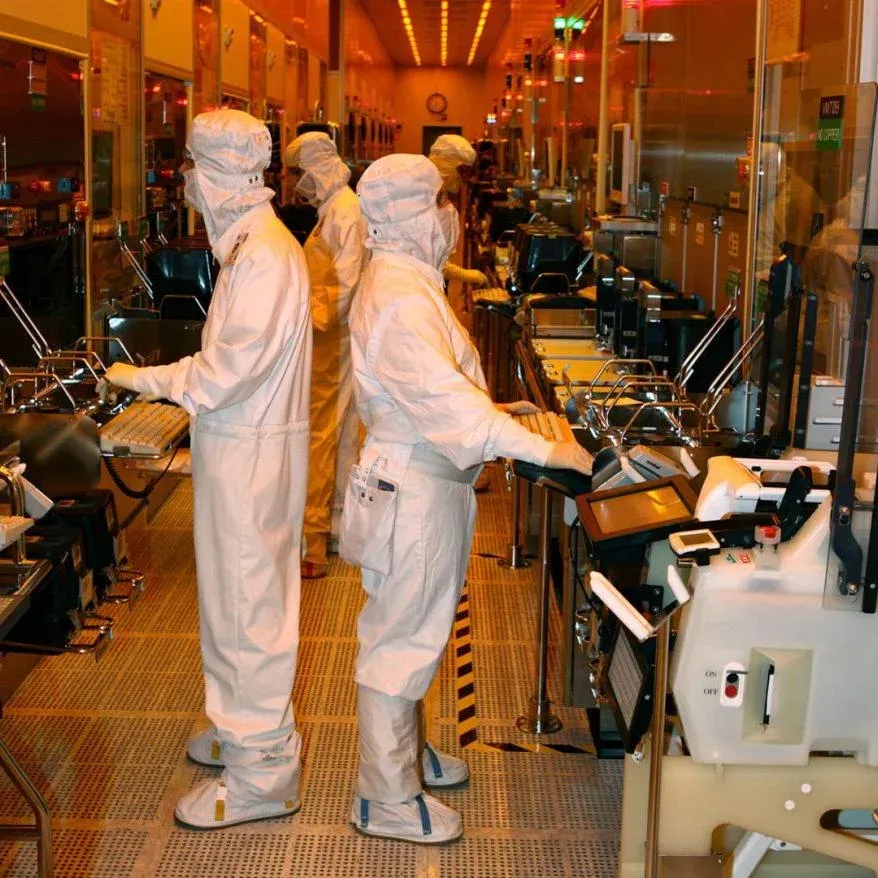
At full scale, the plant is expected to employ around 3,750 workers. Phase 1 comes online in November 2027, and the second tier follows in October 2028.
Why Samsung is moving now
The obvious explanation is the memory chip price cycle. Samsung, SK Hynix, and Micron are directing roughly 93% of production capacity toward HBM for AI, leaving a large gap in commodity memory chips and pushing forecast DRAM contract prices up about 30% in the third quarter of 2026, with NAND up more than 20%.FiliThanh Niên
But high prices aren't the only explanation, and probably not the strongest one, since the plant won't run until late 2027, after the current cycle's peak by the industry's own forecasts. Carrying at least as much weight is a capacity-allocation problem: reports suggest Samsung is considering shifting commodity DRAM and NAND packaging and testing from South Korea to Vietnam to free up domestic capacity for HBM, though this hasn't been officially confirmed.FireAnt Thái Nguyên also already has the infrastructure and electronics workforce in place, sitting within a cluster where Samsung had poured in roughly $24 billion in cumulative registered capital through the end of 2025.Người Quan Sát
The "100% new equipment" detail leans toward the second reading. If price alone were driving the decision, the fastest path would be shipping over used machines. Ordering 1,612 brand-new machines from South Korea is the decision of a supply chain being restructured for the long term, not a short-term reaction to a price spike.
The paradox sitting in Thái Nguyên itself
The memory chip boom is taking money out of Samsung's own Vietnam operations. In the second quarter of 2026, Samsung's four Vietnam plants posted $17.3 billion in revenue, up 20% year over year, while profit fell 16.7% to $996 million: for every $100 of goods sold, profit was $5.80, down from $8.30 in the same quarter last year.Tuổi Trẻ
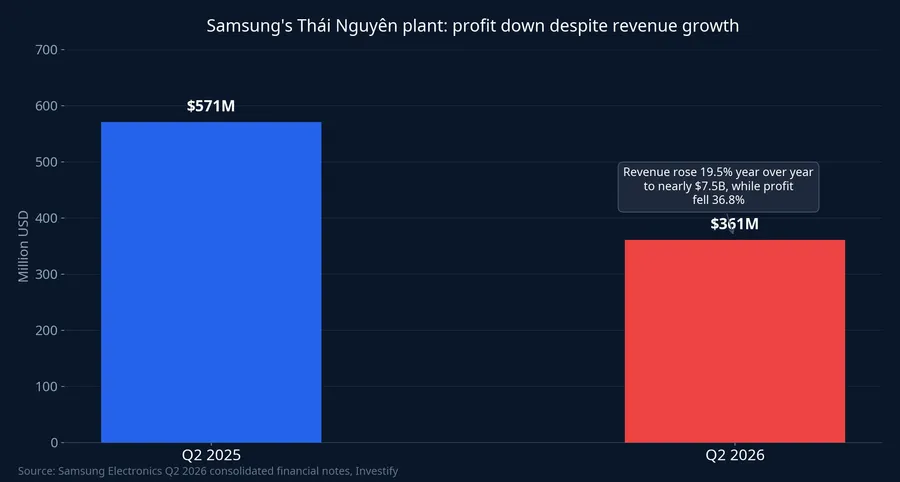
The Samsung phone plant in Thái Nguyên alone sold nearly $7.5 billion of goods, up 19.5%, while profit dropped from $571 million to $361 million. Pricier memory chips are precisely the input cost driving up phone production. In the same province, the thing eroding the phone plant's margin is exactly what the new plant will soon be testing and packaging for other customers.
Where Vietnam stands in the chain
Vietnam participates in the semiconductor chain at assembly, testing, and packaging, a segment estimated at roughly $95 billion globally, with Vietnam's share rising from about 1% in 2022 to a forecast 8-9% by 2032.VnEconomy For scale: Intel has raised its total commitment at the Saigon Hi-Tech Park to $4.1 billion, and Amkor has invested $1.6 billion in Bắc Ninh.FireAnt A single Samsung project in Thái Nguyên is registered for more than both of those combined.
High-tech capital flows are shifting the same direction: in the first half of 2026, Thái Nguyên was repeatedly recorded as the country's top destination for newly registered FDI, most of it tied to Samsung's projects.VietnamNet On the domestic side, FPT broke ground on the first chip testing and packaging plant owned by a Vietnamese company at Yên Phong II-C in February 2026, but phase 1 spans just 1,600 square meters with six functional test lines. The capability gap between foreign and domestic capital in the same segment shows up more clearly here than in any commentary.Báo Đầu Tư
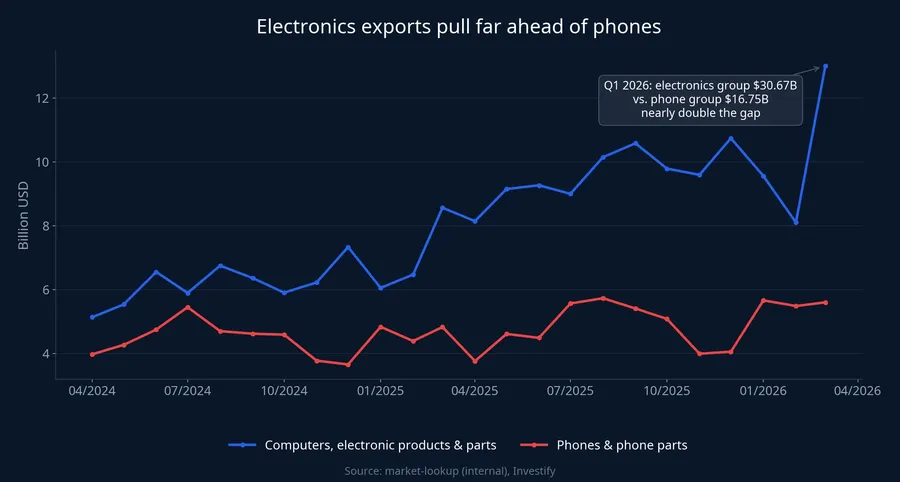
The shift also shows up in export data. In the first quarter of 2026, exports of computers, electronic products, and parts reached $30.67 billion, up 45.4% year over year, while phone and phone-parts exports reached $16.75 billion, up 19.2%. The electronics group is now nearly double the size of the phone group, versus a gap of just 1.5x in the same period of 2025.
Entering the chain, not yet climbing it
The biggest risk in the back-end model is customer concentration. In May 2025, Hana Micron had to request cutting its registered capacity in Bắc Giang to a third after orders from Samsung fell.Công Luận A testing plant depends on the volume of chips its client hands down, and that volume swings with the parent company's own cycle, entirely outside the subcontractor's control.

Vietnam is being slotted into the back end of the memory chip chain: labor-intensive, lower-margin than fabrication, and dependent on capacity-allocation decisions made by parent companies abroad. This is entering the chain, not yet climbing it. Domestic value added in the semiconductor industry is currently only about 6%, and more than 90% of digital tech export value still belongs to the FDI sector.FireAnt That position only shifts once fabrication or chip-design projects land in Vietnam, or once domestic firms can take on testing orders at a scale of thousands of machines rather than a handful of lines.
What to watch
The project has no officially announced groundbreaking date, no completion percentage, and its environmental permit is still at the proposal stage. Every figure above comes from corporate filings and press reporting; no capital-adjustment document has yet been issued by regulators.
Four specific signals worth tracking over the next 12 months:
- Whether the environmental permit is granted, and at what scale.
- Whether Samsung officially confirms shifting memory chip back-end operations from South Korea.
- Whether the July 2027 equipment-delivery timeline holds.
- When hiring begins for the roughly 3,750 positions, since recruitment is usually the earliest sign that the November 2027 operating date is real.
For domestic investors, this project carries no near-term impact on the stock board: the plant won't run until late 2027, Samsung isn't listed in Vietnam, and there's no pure-play semiconductor company on the exchange either. The closest link, and an indirect one, runs through industrial park infrastructure: Kinh Bắc (KBC) has been approved to develop the Phú Bình Industrial Park in Thái Nguyên, spanning 675 hectares with total capital of roughly VND 11,500 billion. The link runs through land bank and leasing progress, not direct chip revenue.Người Quan Sát