
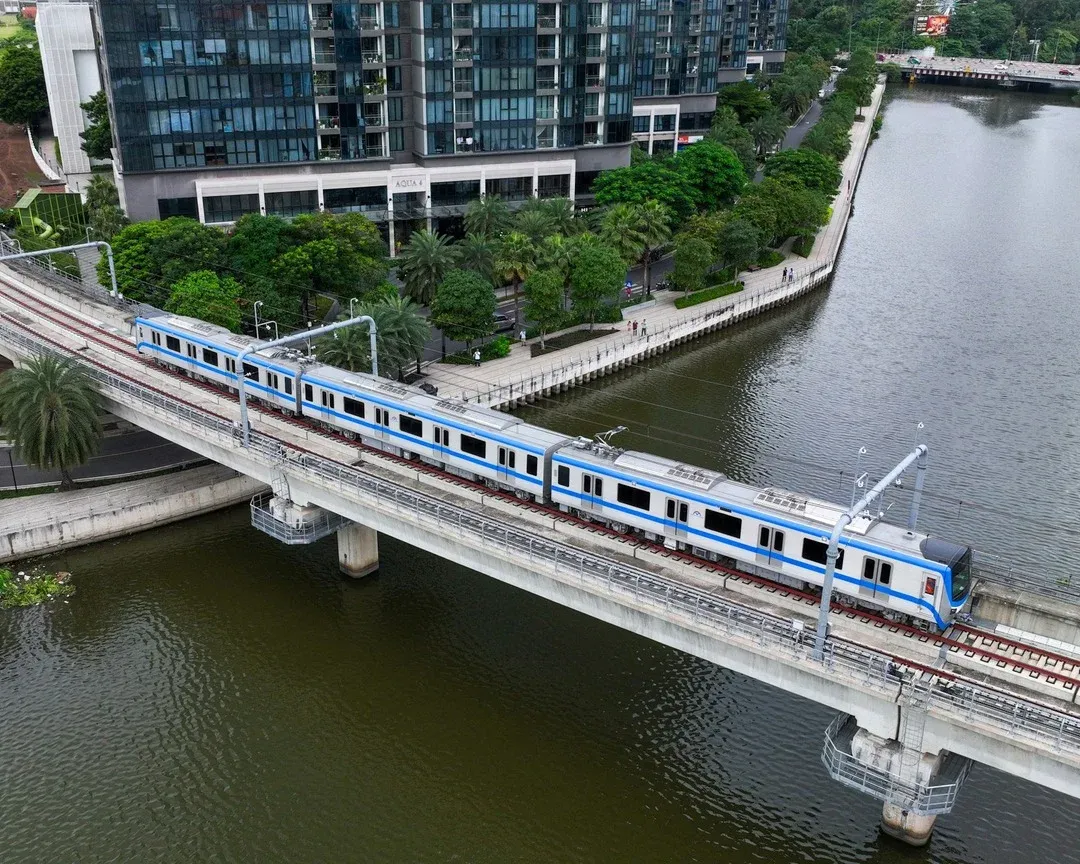

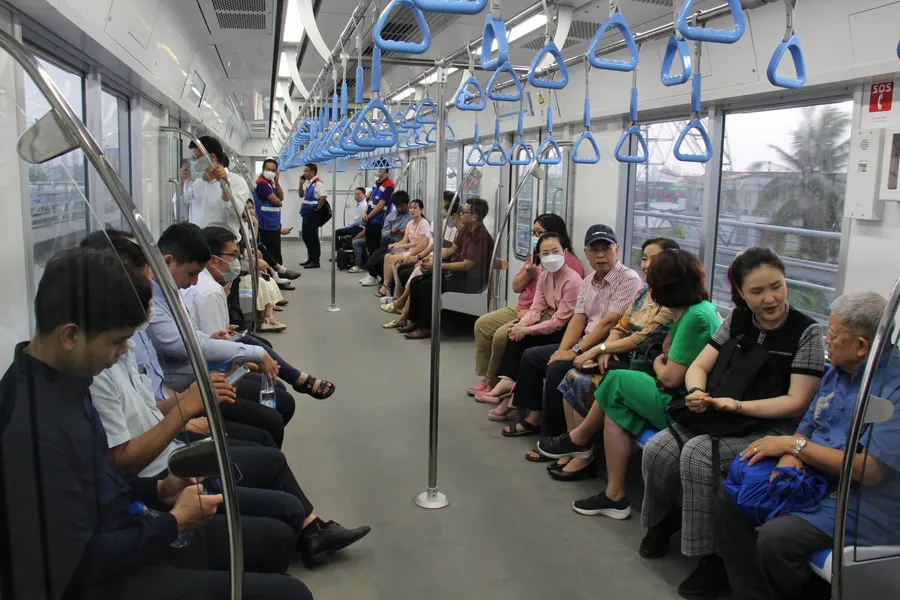
Among Vietnamese property investors, "buy near a metro station, then wait for the infrastructure to push up the price" has become close to a default formula. Metro Line 1 (Ben Thanh - Suoi Tien), which began commercial operation on December 22, 2024, is the case cited most often to prove it. But now that two full years of data exist, the same line shows the formula only held for a narrow window, and that window has already closed.
Two numbers swap places
Per data platform Biggee, published March 17, 2026, in the period from March 2024 to March 2025 (the year that fully captures the line's launch), sale prices for apartments near stations rose 23.4%, while projects without that proximity advantage rose only 13.2%.Biggee That gap of more than 10 percentage points was, at the time, the clearest evidence of an infrastructure premium.
In the following period, March 2025 to March 2026, the two figures reversed completely: the near-station group grew just 14.3%, while the farther group jumped to 19.5%. Biggee defines "near station" as projects within 1 km in a straight line, measured from Thao Dien station to Suoi Tien station, excluding the city center; the dataset covers roughly 800 apartment projects along the corridor.
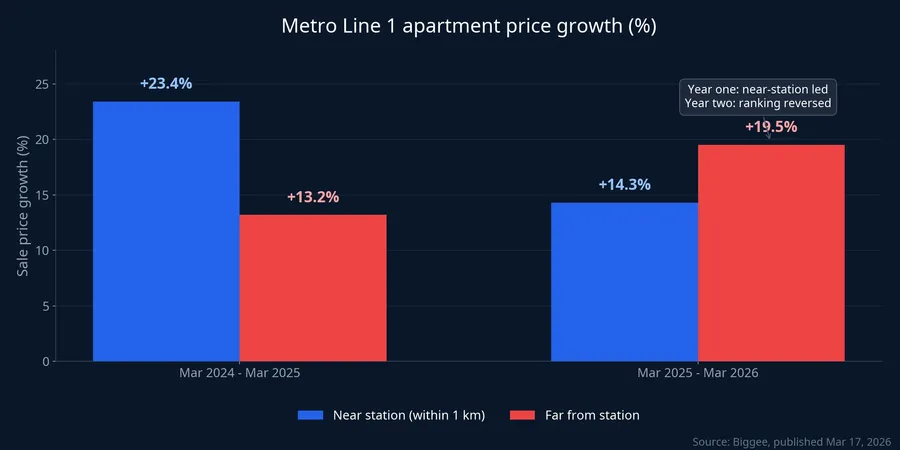
One clarification matters here: the near-station group did not lose. Cumulatively over two years, it still grew about 41%, versus roughly 35% for the farther group, so near-station buyers remain nearly 6 percentage points ahead. What changed is when the market paid for that advantage, not whether the advantage exists.
Why the near-station group slowed down
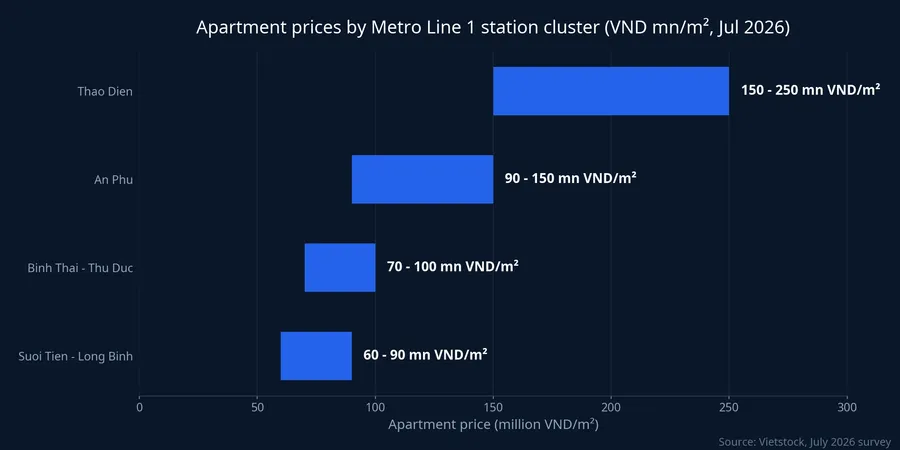
The first mechanism is the starting price base. Real estate near stations was already listed 10-20% above the broader market, while satellite areas typically sit 25-40% below city-center prices.MarketTimes On an already-high base, every additional percentage point translates into a much larger absolute sum. A July 2026 pricing survey along the line shows this slope clearly: Thao Dien at VND 150-250 million/m², An Phu at VND 90-150 million/m², around Binh Thai and Thu Duc stations at VND 70-100 million/m², and the Suoi Tien - Long Binh area at VND 60-90 million/m².Vietstock The same 19.5% growth rate is far easier to hit in Suoi Tien than in Thao Dien.
The second mechanism is supply structure. The corridor has more than 40 apartment towers, mostly upper-mid and luxury segment, but primary supply is nearly exhausted, so most transactions now happen on the secondary market.VietstockVietstock No new launches means no mechanism to reset the price floor. Secondary prices stay anchored around whatever the previous seller settled for, and thin liquidity makes pushing prices higher even harder.
The third mechanism, and the most persuasive piece of evidence, comes from the rental market.
Demand hasn't weakened, it has moved elsewhere
If the metro effect were genuinely cooling, rents near stations should be cooling too. The opposite is true: in the same period, projects near the metro logged average rent growth of 5.7%, versus 3.5% for other projects, and that gap has held steady since 2024.Biggee
Put the two indicators together and the dataset's sharpest conclusion emerges: rental yield across the whole market is nearly identical, averaging around 3.5%, regardless of proximity to the metro. Buyers near stations pay a higher price, collect a proportionally higher rent, and ultimately land on the same yield as buyers farther away. Biggee describes this with a folksy phrase: "the grass is equally green" on both sides.
That is the textbook definition of an advantage already priced in. Being able to reach the metro within ten minutes is real value, and tenants are willing to pay extra for it every month. But sale prices ran ahead and already captured that premium, so buyers stepping in now no longer get paid extra by the market for the location edge.
Is there another explanation
At least two competing explanations deserve consideration before settling on a conclusion.
The first is a pure arithmetic effect: 19.5% growth on a VND 60 million/m² base is still less money than 14.3% growth on a VND 200 million/m² base. This is true, but it only explains the size of the gap, not why the ranking flipped specifically in year two rather than year one.
The second is that capital across the whole Ho Chi Minh City market is shifting toward the outskirts, lifting every far-flung area rather than just the metro corridor specifically. That force is real, but rental data helps distinguish between the two explanations: if capital spillover were the sole cause, rents in both groups should converge, not keep diverging in favor of the near-station group. The 5.7% versus 3.5% gap shows genuine demand near stations remains stronger. What stalled is the sale price, not the value of the metro line itself.
Policy is paving the way for the next lines to avoid the same trap
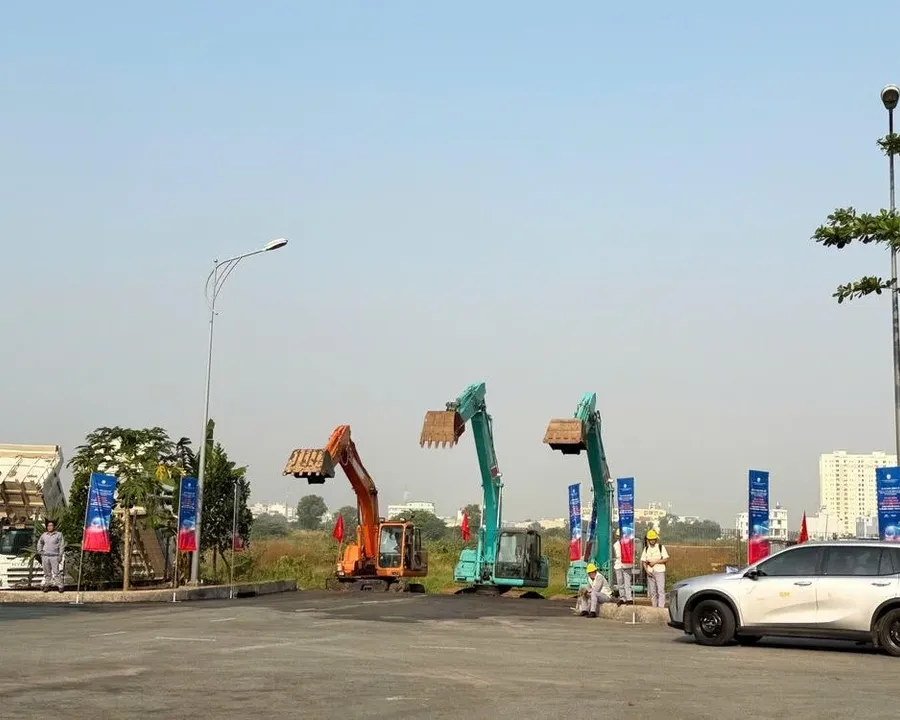
Three new metro lines are entering exactly the stage Metro Line 1 already passed through, but this time the policy framework looks different. Ho Chi Minh City broke ground on Metro Line 2 (Ben Thanh - Tham Luong) on January 15, 2026, with total investment above VND 47.8 trillion, plans to start construction on stations along the entire line from August 2026, targeting completion by 2030, and has already approved zoning for five TOD urban districts around the line.TTBC HCMCVietstock In Hanoi, five metro lines broke ground on June 22, 2026, bringing the total number of lines either under construction or operating to eight.Biggee
The key difference lies in the institutional framework. The amended Resolution 98, passed in late 2025, lets Ho Chi Minh City keep 100% of revenue from land-fund exploitation in TOD zones for infrastructure reinvestment, and lets the city raise the maximum gross land-use ratio by 1.5x within TOD areas.VietstockNguoiQuanSat Around the new stations, supply will be allowed to grow denser rather than staying as scarce as it is along Metro Line 1 today, and denser supply typically means the price floor is harder to lock in place, the very mechanism that once kept near-station prices on Metro Line 1 from correcting.
There's one more factor few people account for: the scarcity of the "near station" label itself is shrinking. Per Biggee's calculations, published August 19, 2026, within the Ring Road 3 boundary, Ho Chi Minh City spans roughly 904 km², of which the planned 1 km metro coverage radius reaches about 574 km², or 63% of the area; inside the future Metro Line 6 corridor alone, 97% of the land falls within 1 km of some station.Biggee When most of the urban area counts as "near a station," standing near one is no longer a scarce advantage the market will pay up for, unlike Metro Line 1, a single line running through an already dense, established residential and job corridor.
A monitoring framework, not a buy-sell tip
For anyone weighing property purchases ahead of infrastructure, Metro Line 1's two years of data suggest a monitoring framework rather than a ready-made formula.
First, the biggest gap between the near-station and far-station groups showed up in the year that fully captured the commercial launch date, not afterward. For lines still under construction, the distance to the launch date is the variable worth tracking, not the distance to the station.
Second, rental yield is the metric that reveals how far ahead the sale price has run. Once yields near a station fall back in line with the broader market, the location premium has already been baked into the purchase price.
Third, remember the underlying characteristics of this asset class: liquidity is low, resale typically takes 1-3 months or longer, minimum capital in Ho Chi Minh City usually starts at several billion VND, and transfer fees run around 2% of value. Growth figures of 14.3% or 19.5% are basket averages across many projects, while a buyer owns exactly one unit, so dispersion between individual stations and projects is far wider than the gap between those two averages suggests.
The signal worth watching over the next 12 months sits not in Ho Chi Minh City but in Hanoi, where Biggee data shows low-rise property prices around metro stations still decline in an almost linear pattern with distance from the city center, meaning the urban-core factor still dominates the station-proximity factor.Biggee If that pattern starts to soften as Hanoi's new lines near completion, the capital's market will likely repeat the exact cycle Metro Line 1 just went through. If it doesn't, the Ho Chi Minh City metro effect may turn out to be the special case of one line running through a corridor that already had residents and jobs in place, not yet a general rule for Vietnam's urban rail infrastructure.