
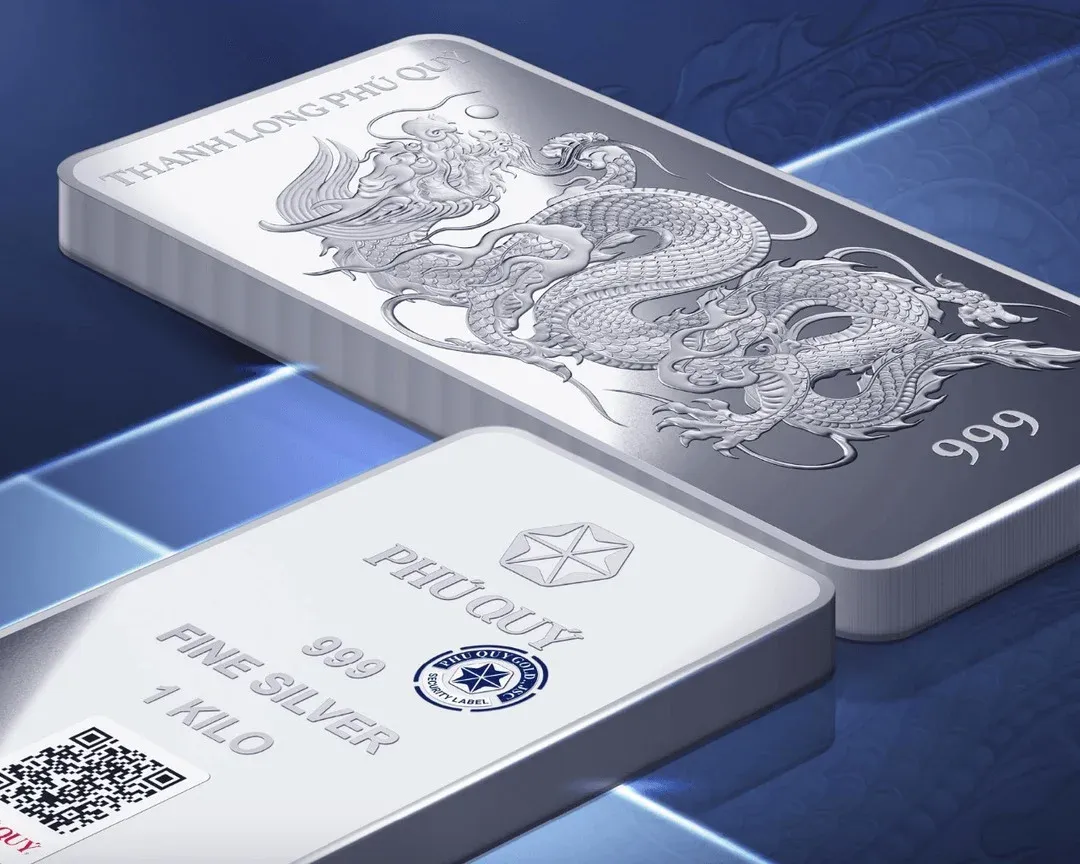

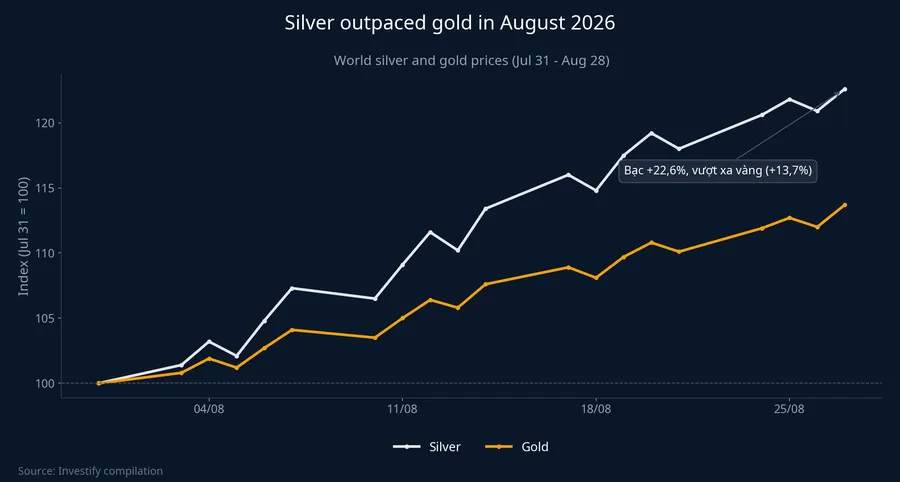
August 2026 closed with a gap that's easy to spot on the precious metals board. World silver went from $57.62/troy ounce on July 31 to $70.63/troy ounce on August 28, a 22.6% gain. Over the same window, world gold moved from $4,042.97 to $4,596.29/troy ounce, up 13.7%.VietnamNet The gold-to-silver ratio compressed from 70.2x to 65.1x.
The most repeated explanation for that gap sounds convincing: silver isn't just a safe-haven asset like gold, it's also an industrial input for AI, data centers, EVs, and solar panels, so it has an engine of its own that gold doesn't. The first half of that claim is true. The second half is exactly what the price data doesn't support.
The part of the industrial story that's true
Silver really is structurally different from gold on the demand side, and by a wide margin. Industrial demand makes up roughly 55-60% of total global silver demand, with electronics alone consuming about 445 million ounces a year.Fili Gold runs the opposite way: most of it sits as jewelry, investment bars, and central bank reserves.
The supply side is genuinely tight too. About three-quarters of world silver output comes as a byproduct of copper, lead, zinc, and gold mining, so supply can't expand quickly just because price rises. The Silver Institute forecasts 2026 as the sixth straight deficit year, a shortfall of 46.3 million ounces, 15% wider than the year before.VietnamBiz Most of the silver sitting in London vaults has also already been allocated to physical-holding funds, thinning out free-floating supply and making price swings sharper.CafeF
That's a real foundation, but a foundation and a launchpad aren't the same thing. The foundation explains why silver is generally more volatile than gold. It does not explain why silver specifically outran gold this particular August.
Three clues in the price data
Look at the numbers, and three points are hard to reconcile with the "silver has its own industrial engine" story.
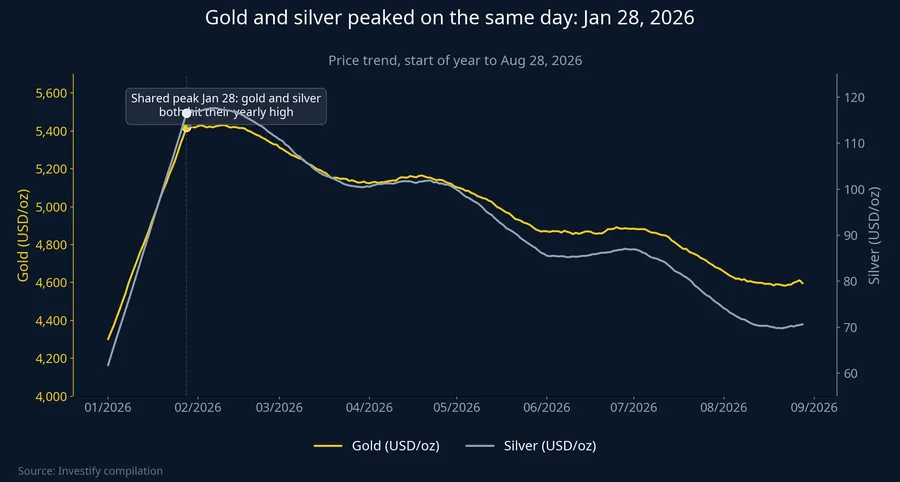
First, gold and silver hit their 2026 highs on the exact same session. On January 28, gold closed at $5,419.83/troy ounce, its highest level of the year to date. That same session, silver closed at $116.58/troy ounce, also its yearly high. If silver really ran on an industrial cycle while gold ran on rate expectations, the two price lines had no reason to peak on the same trading day.
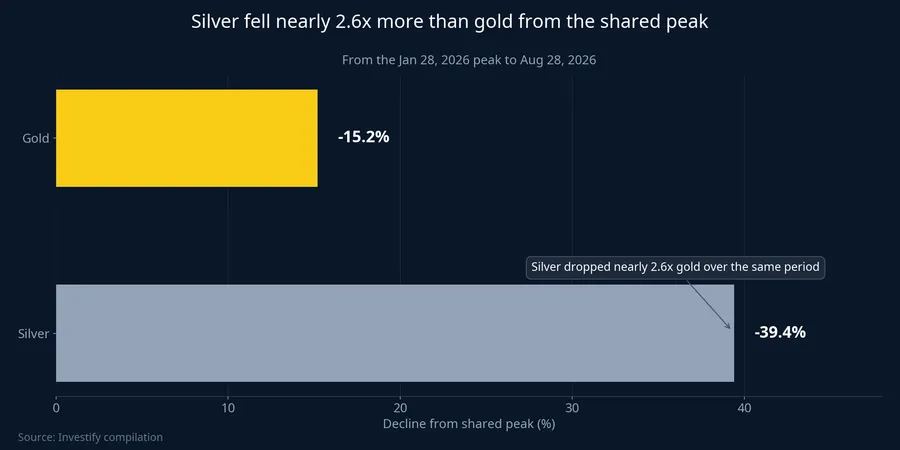
Second, from that shared peak, silver fell nearly 2.6x deeper than gold. As of the August 28 session, gold sat about 15.2% below its January 28 peak, while silver sat 39.4% below. Over those seven months in which silver lost nearly four-tenths of its value, no industrial fact deteriorated: the supply deficit persisted, data centers kept expanding, solar panels kept getting installed. What changed over those seven months was the interest-rate outlook and global risk appetite, not industrial demand.
Third, within August itself, the two metals moved almost in lockstep session by session. The market traded 20 sessions from August 3 to August 28. On 16 of those sessions, gold and silver closed in the same direction, either both up or both down. The four mismatched sessions were all cases where one of the two metals barely moved, under 1%. Two consecutive mid-month sessions make the correlation obvious: on August 18, gold fell 1.84% and silver fell 3.72%; on August 19, gold rose 4.22% and silver rose 5.70%. Same direction, same day, amplitude one-and-a-half to two times larger.
Industrial demand this year is shrinking, not expanding
The least-discussed detail turns out to be the most important one. Silver's industrial demand in 2026 is forecast to fall about 3% to 639.6 million ounces, a four-year low.Dân Trí The largest consuming sector, solar panels, is forecast to drop from 186.6 million ounces last year to about 151 million ounces this year, a 19% decline.
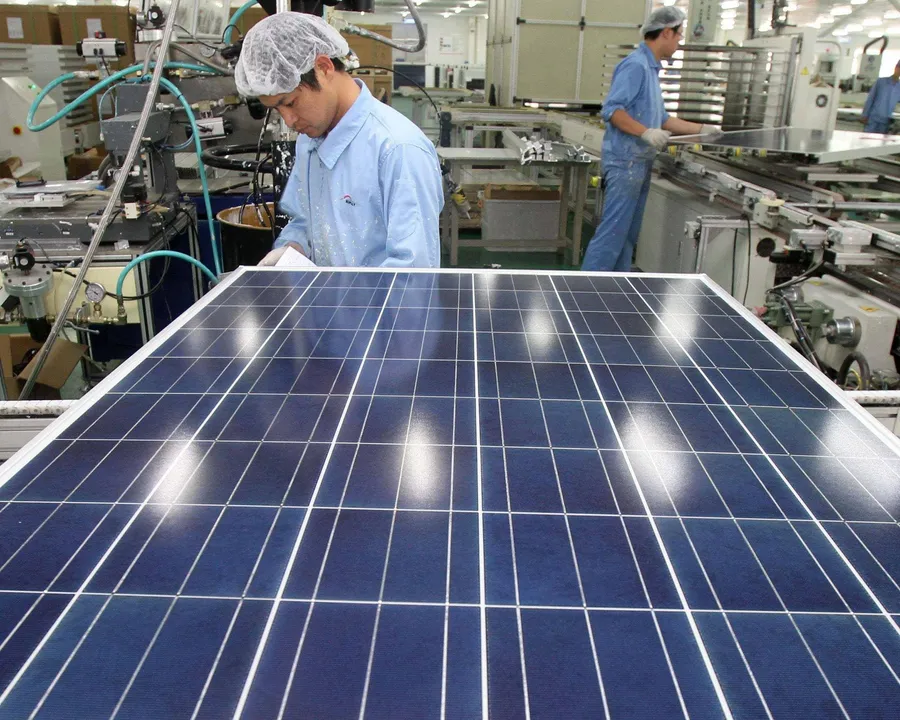
The reason for that decline is the high price of silver itself: panel makers are printing thinner circuits, cutting silver use per photovoltaic cell, and searching for substitute materials.Dân Trí That's the normal mechanism for an industrial metal: the higher the price, the harder users work to use less of it. Demand from data centers is offsetting most of that gap, but offsetting a decline isn't the same as pushing price up. In other words, in the exact month silver's price ran fastest, industrial demand did not accelerate. What accelerated was financial flow.
Is there another explanation
August's silver rally converges on at least three forces: a macro backdrop generally favorable to precious metals as the dollar weakened, speculative and physical-fund buying amplifying a market far smaller than gold's, and the industrial story serving as the reason that money felt comfortable buying in.
The data leans clearly toward the first two forces, evidenced by the session-by-session correlation in August and the shared peak back in January. If the third force were truly the driver, silver should have held up better than gold over the past seven months, a period when every industrial fact stayed intact while price still lost nearly 40%. That didn't happen.
Why this matters right now
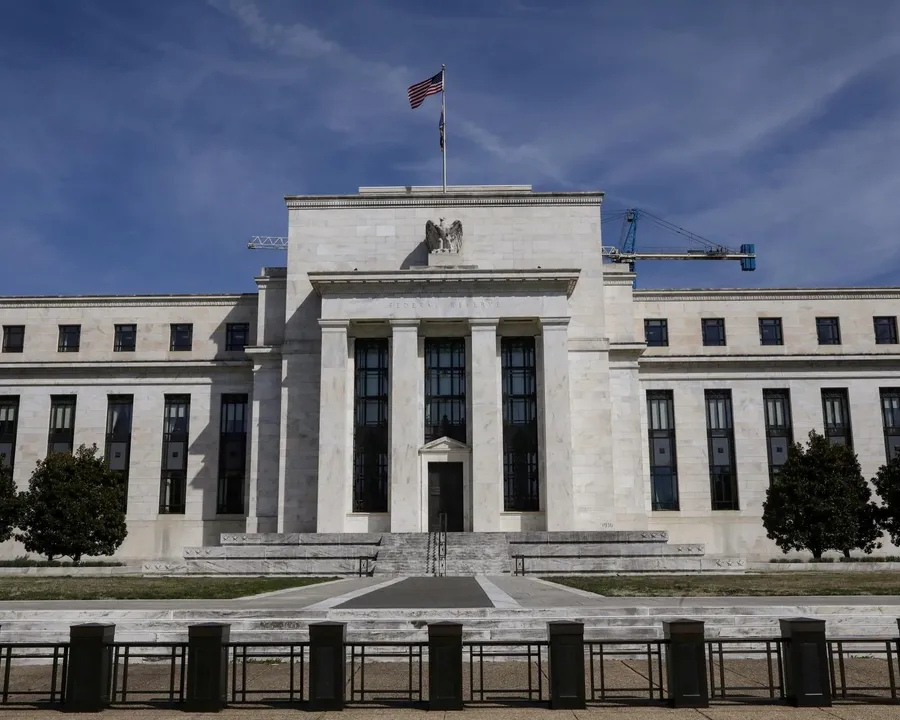
On August 28 at Jackson Hole, Fed Chair Kevin Warsh stated that inflation hasn't cooled and the central bank still has work to do if prices don't come down faster, a tougher message than July's.Dân Trí Gold reacted immediately that session, losing the peak it had set on August 25, and domestic SJC gold bars slipped to VND 148.7 million per tael on August 29.
If silver ran on its own engine, this is the moment it should decouple from gold. If silver is simply gold's amplified version, this is the moment it should feel more pressure than gold. The entire seven-month price history leans heavily toward the second possibility.
How Vietnamese investors are approaching the silver channel
Domestically, silver prices tracked the world market on August 29, with Phú Quý Jewelry Group quoting VND 2.332 million on the buy side and VND 2.404 million on the sell side per tael, while other dealers priced around VND 2.121 million and VND 2.188 million.Doanh Nghiệp Hội Nhập
Compared with gold bars, silver buyers need to factor in a few extra costs before committing money. The bid-ask spread means a buyer is underwater the moment they purchase, and that spread varies by dealer rather than following a common benchmark. Raw silver also lacks a dedicated legal framework the way gold bars do under Decree 24/2012 and Decree 232/2025, so quality and liquidity depend heavily on each seller's reputation. Finally, there's storage cost: silver takes up far more volume than gold for the same amount invested, and it can oxidize if not stored properly.
A portfolio framework
The more accurate picture isn't two precious metals with two separate engines, but one shared monetary engine with two different gear ratios. Gold is the low gear, silver the high gear. Industrial demand and the supply deficit are a long-term floor under silver's price, not a launchpad for a one-month rally.
The portfolio implication follows directly. Silver isn't a hedge against Fed policy risk. It's a leveraged version of that exact risk. For investors who already hold gold, adding silver doesn't reduce monetary-policy risk in the portfolio; it increases it. The usual standard is to size a silver position by the drawdown you can actually tolerate, not by a one-month return: the 39.4% seven-month decline already happened this year, it isn't a hypothetical scenario.
The signal worth watching over the coming weeks isn't solar installation data. It's rate expectations heading into the Fed's September meeting. If silver falls harder than gold in sessions where markets reprice the odds of a rate hike, the 22.6% versus 13.7% gap from August will be read for what it actually is: the same shock, two different amplitudes.