

The big picture for August 2026 looks simple at first glance: world gold prices climbed from $4,042.97/troy ounce on July 31 to $4,596.29/troy ounce on August 28, up 13.69% in four weeks. SJC gold bars in Vietnam edged up too, to VND 150.2 million/tael, 5.85% higher than end-July. The most common explanation circulating on investor forums goes: the US economy is weakening, the Fed is about to cut rates, cheap money is coming back, so gold rallies.
Global capital, however, doesn't move on rumor. It moves on data, and the 2026 data tells a different story entirely: there is no rate-cutting cycle to wait for.
The US rate table has no cut scenario this year
The Fed's policy rate sits at 3.50-3.75% and has stayed there since December 2025.fedratecalc At the July 28-29 meeting, the Federal Open Market Committee voted 9-3 to hold.Federal Reserve The notable detail: the three dissenting votes weren't calling for a cut. They wanted a hike.
The backdrop is that US inflation remains well above the 2% target. The PCE price index, the Fed's preferred inflation gauge, rose 3.7% year-on-year in July, 0.1 percentage point above forecast.Yahoo Finance Core PCE rose 3.3%. In other words, the real debate in US markets this year isn't "how many cuts," it's "does the Fed need to hike again." That hike-probability number, not any cut expectation, is what drove gold through August.
Gold reacted to hike odds, not cut hopes
Early summer, markets priced a fairly high chance of a Fed hike. Then inflation cooled for two straight months: July CPI rose just 0.1% month-on-month, with the annual rate slipping from 3.5% to 3.4%.FiLi Hike pressure eased accordingly, and the market-implied probability of a September hike fell from over 60% to roughly 39% by August 23.Vietstock
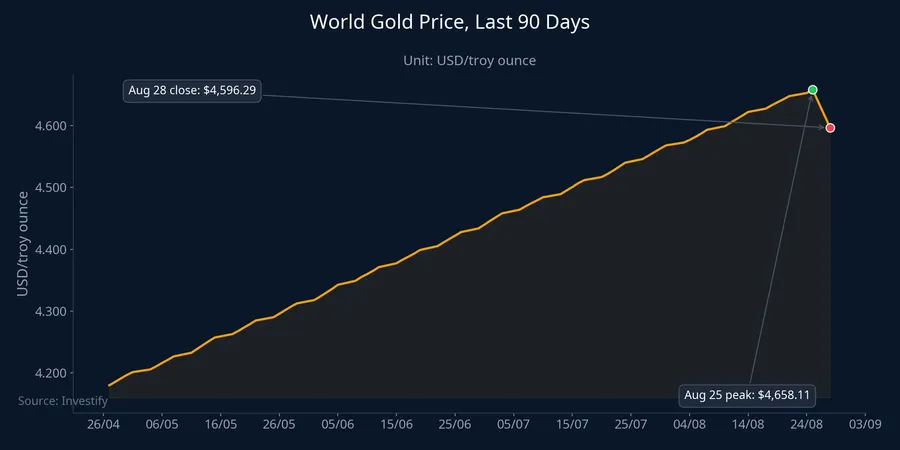
Gold tracked that shift closely. From $4,334.92/troy ounce on August 18, gold climbed to $4,658.11/troy ounce on August 25, up 7.5% in just six sessions and the sharpest run of the month. That stretch lines up precisely with the period when hike fears eased, not with any easing signal from the Fed.
The difference between "gold is rising because the Fed is about to cut" and "gold is rising because hike risk is fading" sounds like semantics, but it determines which variable an investor should actually watch. Under the first reading, good news for gold is a weakening US economy. Under the second, good news for gold is cooling US inflation, and bad news is inflation staying sticky. That distinction is the key to reading the next part of the story correctly.
August 28: the variable flipped
On the morning of August 28 at the Jackson Hole symposium, Kevin Warsh, Chair of the US Federal Reserve, delivered his first major speech since taking office. He said the summer's softer inflation readings weren't enough to convince him the underlying trend had improved, and that the Fed "still has more work to do."NPR He also kept the approach he's followed since taking the chair: no forward guidance on the rate path, letting markets read the data themselves.FireAnt
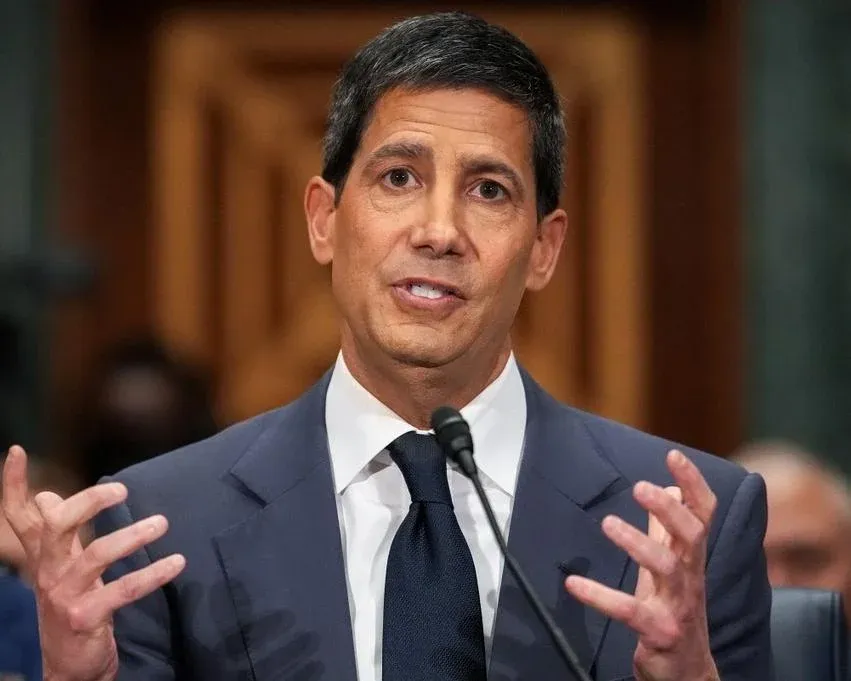
This was a speech at a public conference, not a policy decision. The Fed hasn't hiked, and hasn't committed to hiking. But market pricing reacted almost instantly: per the CME FedWatch tool, the odds of a 25-basis-point hike at the September 15-16 meeting jumped sharply on the morning of August 28 versus the prior session. CNBC now calls the September meeting a coin flip.CNBC The 2-year US Treasury yield rose 9 basis points to 4.32%, a one-month high.
The very number that had pushed gold higher through August just reversed back toward where it started.
Gold didn't fall, and that's the part worth reading closely
What stands out is that gold barely moved despite this reversal in rate expectations. The August 28 session closed at $4,596.29/troy ounce, down just 0.09% from the prior day, even though gold dipped intraday to $4,571.67 and both gold and bitcoin faced selling pressure right after the speech.
The honest reading is that rate expectations explain only the month's swing, not the entire price level. Two other forces are propping up the floor. Global gold ETFs bought a net 93 tonnes in the first three weeks of August, pushing total holdings to nearly 4,161 tonnes as of August 21.MarketTimes Central banks bought 289 tonnes in Q2 2026, five times the Q1 pace.MarketTimes This is buying tied to multi-year reserve plans, not weekly rate-probability tables.
So a Fed hike, if it happens, would be a headwind for gold, not a knockout blow. But it would be enough to end the near-vertical climb seen this past month.
For gold bar buyers, the domestic cushion has thinned
There's a separate layer of risk that Vietnam's market just created for itself. In early August, SJC's sell price sat 10.83% above the converted world price, a gap of nearly VND 13.9 million per tael. By August 28, that gap had narrowed to just 3.86%, or about VND 5.6 million.
That's exactly why world prices rose 13.69% while SJC rose only 5.85%: the shrinking domestic premium absorbed most of the gain coming from abroad.
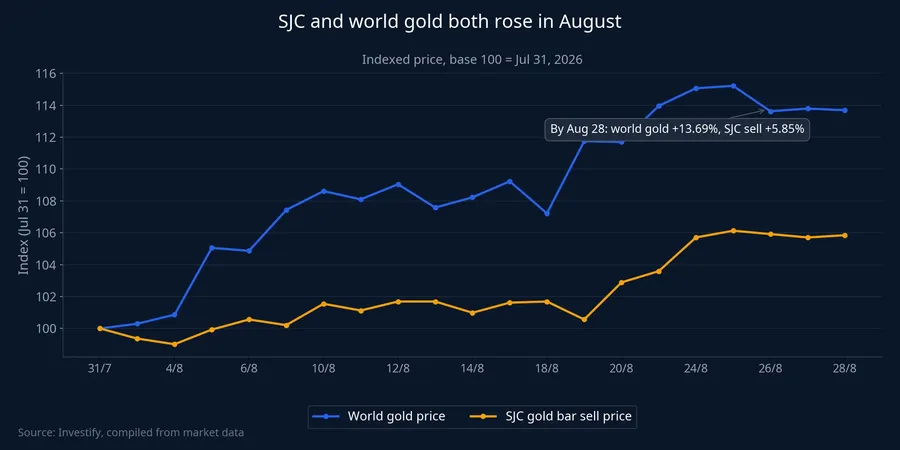
That mechanism runs both ways. For months, whenever world gold fell, the domestic premium widened and cushioned SJC's decline. That cushion has now thinned considerably. If world prices correct following a Fed decision, SJC prices this time would absorb nearly the full brunt of it, instead of being shielded by the premium as before.
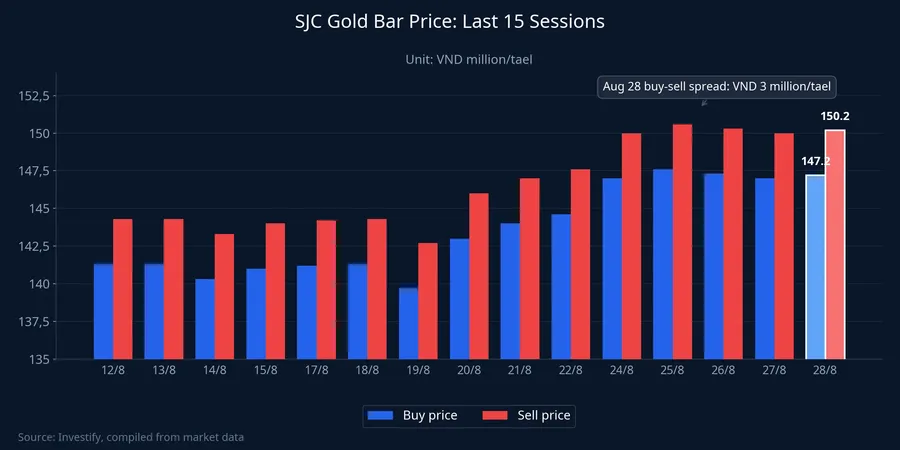
Add the buy-sell spread of VND 3 million per tael on August 28, roughly 2%, and anyone buying today needs prices to rise that much just to break even.
The clearer picture, and what to watch
To sum up: gold rose in August because fear of a Fed hike faded, not because any easing cycle is approaching. The August 28 speech brought that very fear back, so the current price level now depends far more on US inflation data for August than on anything the Fed says out loud. Warsh made clear he won't lead expectations with words.
For those who treat gold as a long-term defensive holding, the buying from central banks and ETFs remains intact, and a rate hike doesn't undo that case. For those who bought in August chasing momentum, the picture has changed: the domestic premium cushion is nearly spent, the round-trip cost has risen to roughly 2%, and the decisive variable now sits outside the daily view of Vietnam's domestic market.
Two dates are worth marking clearly. First, US CPI data for August, due out mid-September. Second, the FOMC meeting on September 15-16, right after Vietnam's National Day holiday. If US inflation cools again, hike odds will fall and August's rally has grounds to repeat. If not, gold will have to stand on structural buying from central banks and ETFs alone. That kind of buying grows slowly and steadily, unlikely to produce a breakout session like the one seen on August 19.