

World coffee prices have just gone through three straight sessions of declines: from a monthly peak of 341.65 US cents/pound on August 24, prices slid to 335.50 (August 25), 322.15 (August 26), then 311.40 US cents/pound on August 27, a drop of nearly 9% in just three sessions. The slide continued into the August 28 session, with September Arabica futures on the New York exchange losing another 3.72%, while average raw bean prices in Vietnam's Central Highlands fell to around VND 96,300/kg, down VND 800/kg.Báo Lào Cai
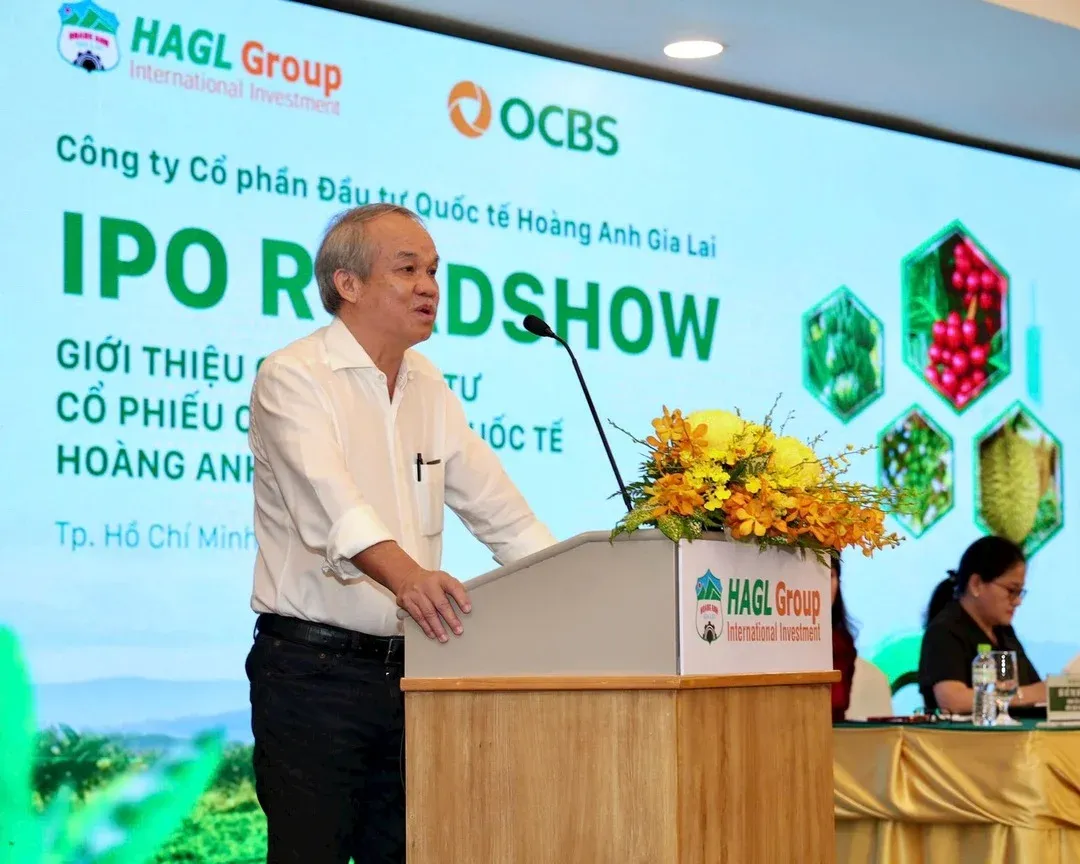
In these same days, the subscription book for HGI shares is open. Hoang Anh Gia Lai International Agriculture Joint Stock Company is offering 18.8 million shares at VND 60,600 each, aiming to raise up to VND 1,139 billion, with subscriptions open until 5:00 p.m. on September 7.VnEconomy Doan Nguyen Duc, Chairman of Hoang Anh Gia Lai Joint Stock Company, explained at an investment briefing on August 18 that the price is roughly 2.5 times book value, and coffee was the most-mentioned crop in the growth narrative.CafeF
Placed side by side, these two facts look contradictory. But separating today's cash flow from tomorrow's growth story, they're running on two different clocks. Untangling those clocks is the most important work for anyone weighing whether to subscribe.
Coffee is falling on oversupply, not a single bad session
August's decline didn't come from one shock. It's built on months of accumulating oversupply forecasts: Brazil's 2026-27 crop is projected by Conab at 66.2 million bags, up 17.2%, while the global market could see a surplus of up to 10.5 million bags in the 2026-2027 crop year.Tạp chí Công Thương Vietnam is also entering a new crop year with output projected at 32.5 million bags.
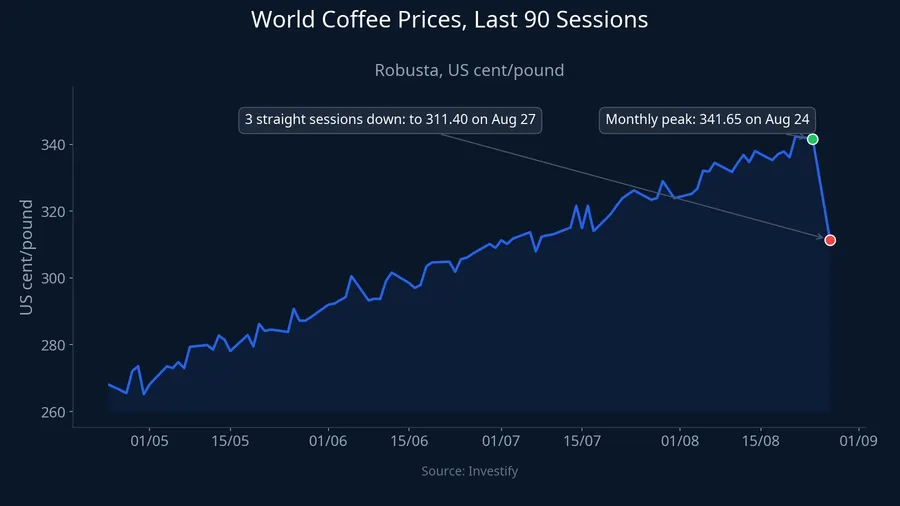
Layered on top of that oversupply is inventory. ICE-certified Robusta stocks rose to 4,722 lots on August 22, the highest in nearly nine months, while funds took profit after the sharp rally on August 24 and a weaker Brazilian real pushed local farmers to sell more.Tạp chí Công Thương Notably, ICE Arabica stocks are sitting near a three-year low, yet Arabica still fell in the August 28 session. That points to broad-based selling across the whole coffee complex this month, driven by crop expectations and financial flows, not just one bean's inventory story.
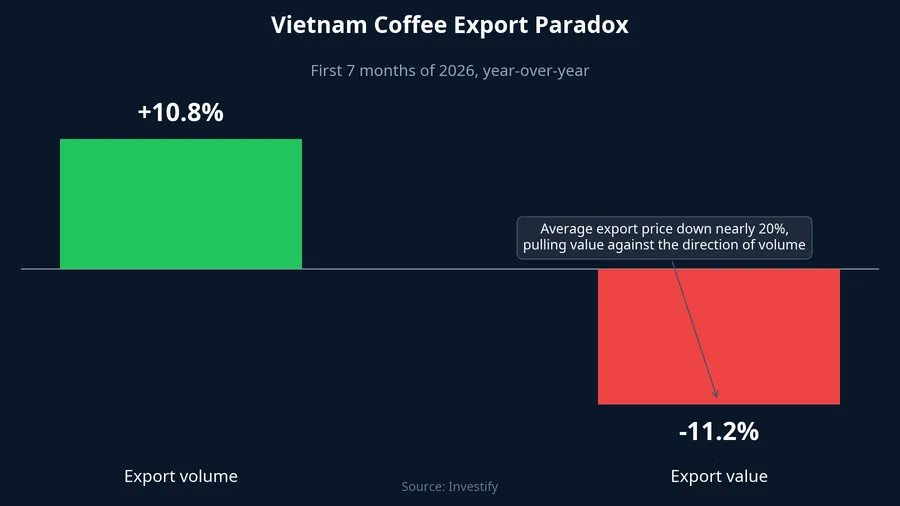
The impact already shows up in export data. In the first seven months of the year, Vietnam sold about 1.2 million tonnes of coffee, up 10.8% by volume, but export revenue reached only $5.45 billion, down 11.2%, as the average export price fell nearly 20% year-over-year. Selling more and earning less: that's the shape of an oversupplied market.
HGI investors are buying the banana orchard first, the coffee orchard later
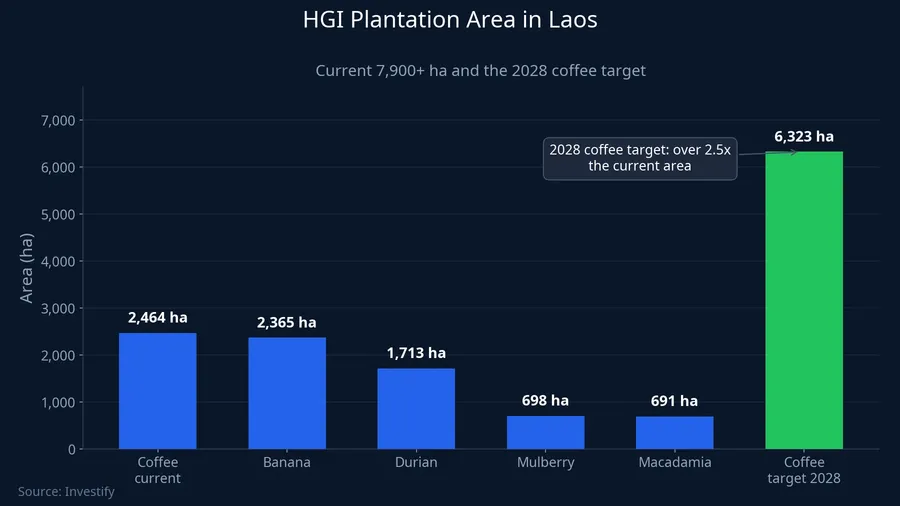
This is where the two clocks split apart. HGI currently manages more than 7,900 hectares of plantations in Laos, including 2,365 ha of banana, 2,464 ha of coffee and 1,713 ha of durian, plus macadamia and mulberry.Người Quan Sát Coffee's planted area is already close to banana's, but its revenue is nowhere near it.
In 2025, bananas brought in more than VND 3,661 billion, 74.95% of HGI's revenue, with trading operations adding another VND 852 billion, or 17.45%.Nông Nghiệp Môi Trường Coffee hasn't shown up in that revenue mix yet for a simple reason: the processing plant is expected to be completed this October, while the first commercial harvest isn't slated to begin until October 2027.
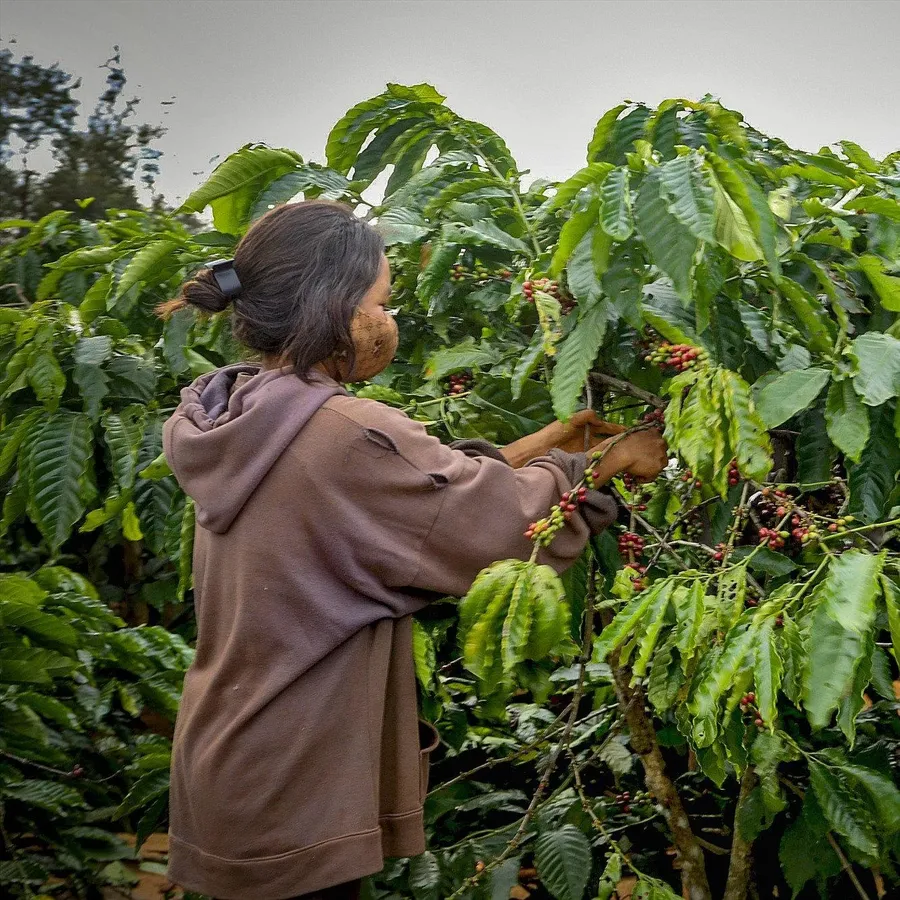
In other words, the VND 60,600 per share price is being paid for a company whose cash flow today comes from bananas, with the coffee piece functioning as an option on the 2028-and-beyond period. August's coffee price decline therefore barely touches HGI's 2026 earnings. It touches something else instead, and that something runs deeper.
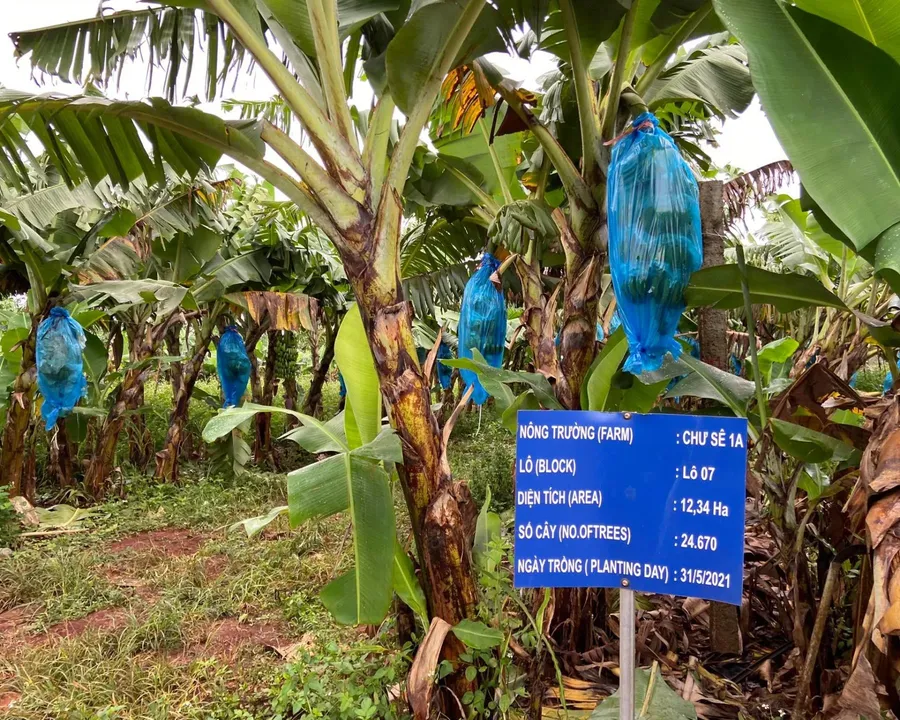
The Arabica price assumption is the whole story's load-bearing wall
The appeal of the coffee plan rests on a specific price gap. Arabica grown in the Paksong highlands of Laos is expected to sell around VND 200,000/kg, nearly double the Robusta price of roughly VND 96,000-100,000/kg.CafeBiz The entire payoff for planting Arabica instead of Robusta is packed into that price gap.
This is the point worth watching more closely than any single session's move. Forecast models show world coffee prices could recover slightly to around 317.69 US cents/pound by the end of Q3 2026, then gradually fall toward the 300 range by end-2026 and below 290 in the first half of 2027. If that trajectory holds, HGI's first harvest in October 2027 would land in a lower price environment than today's. A forecast is a forecast, not an outcome, but it's enough to say the high price plateau of 2024-2025 shouldn't be used as the default benchmark for 2028.
Two figures that are easy to conflate also need separating: the 20,000-hectare coffee ambition, including 15,000 ha of Arabica, with total investment of VND 14,000-15,000 billion, is the target Duc announced for the whole Hoang Anh Gia Lai group.Doanh Nghiệp Thương Hiệu HGI's own plan, the entity actually selling shares, is only to raise coffee area to 6,323 ha by 2028 and build two wet-processing plants in Laos, a much smaller number than the group-wide ambition.
Where the IPO proceeds actually go
The offering prospectus answers plainly what the expansion plan will be funded with. Of the total capital expected to be raised, VND 1,063 billion, or 93.33%, is earmarked to repay debt to credit institutions, bondholders and related-party loans. The remainder covers agricultural input contracts, seedlings and fertilizer.VnEconomy
That isn't automatically a red flag, since cutting debt lowers financing costs and cleans up the balance sheet ahead of listing, something media outlets have called a paradox running through many recent IPOs.Tin nhanh chứng khoán But it does change how the story should be read: most of this offering's proceeds don't flow directly into planting more coffee. Capital for the plantation still has to come from retained earnings, bonds, or cash flow from bananas and durian over the coming years.
Same industry, two very different levels of exposure
The listed market already offers a useful comparison. Vinacafé Bien Hoa (VCF) closed the August 27 session at VND 293,900/share, nearly flat through August despite the sharp drop in raw coffee prices. In Q2 2026, VCF posted VND 613.15 billion in revenue and VND 103.14 billion in net profit, a 16.82% net margin.
The reason is fairly clear: VCF processes branded consumer products, so bean prices only flow into input costs, and cheaper beans can even widen gross margins in later quarters. Growers and raw bean traders sit on the opposite side, with revenue tied directly to the commodity price. HGI's coffee segment belongs to that second group, at least until its two wet-processing plants and roasting chain reach meaningful scale.
Parent company HAG closed the August 27 session at VND 14,200/share, with a market cap of about VND 18,000 billion. The subsidiary's IPO is therefore also a test of how highly the market is willing to price Lao agricultural assets.
Three layers of signals to watch
For anyone weighing whether to subscribe, a reasonable monitoring framework has three layers, in order of time horizon.
Nearest-term is the offering's own calendar: the subscription deadline of 5:00 p.m. on September 7, distribution results to follow, and plans to register for UPCoM trading in Q3-Q4 2026.
Next are the signals that will set the 2027-2028 coffee price floor: Brazil's harvest progress in the August-to-October window, the trend in ICE Robusta inventories, and Vietnam's actual crop-year output.
Last is HGI's internal execution: whether the processing plant is completed on schedule this October, and whether coffee acreage actually grows toward the 6,323-hectare target by 2028, against a backdrop where most of the IPO proceeds are already earmarked for debt repayment.
The underlying commodity price is falling while the growth story is being told through a bean that hasn't been harvested yet. That isn't a contradiction to dismiss. It's two separate risks that need to be priced separately: the operating risk of a long-horizon agricultural project, and the price risk of a commodity entering an oversupply cycle. The processing plant's progress report this October will be the first checkpoint for the first of those two risks.