
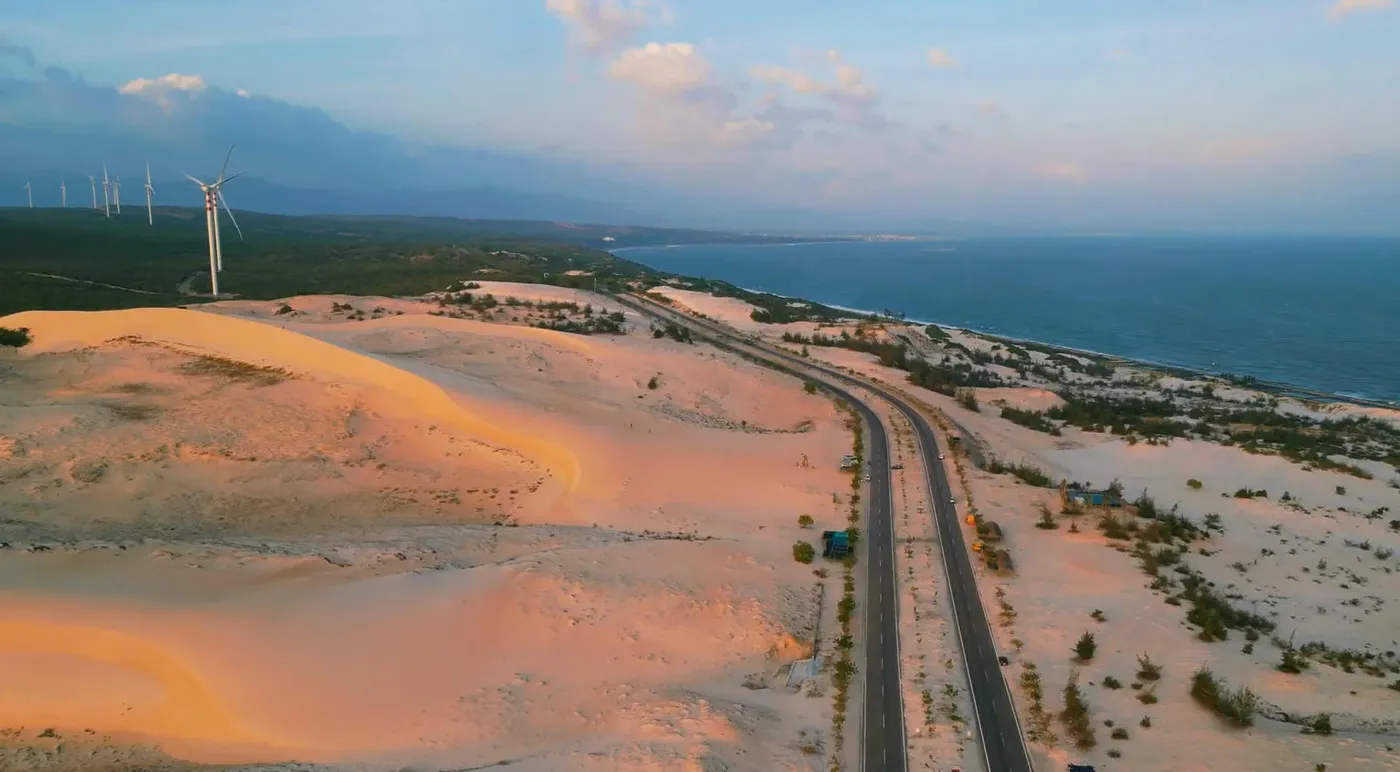

On the afternoon of August 21, 2026, a consortium made up of Ho Chi Minh City Infrastructure Investment JSC (CII), CII PPP, and IMIC Construction met with the Lam Dong provincial government to propose a scenic coastal road along the province's southern coast: a roughly 34km study, 6-8 lanes wide, with preliminary total investment of about VND20 trillion.CafeF The payment source is not budget cash but roughly 500 hectares of land along the route.TheLEADER
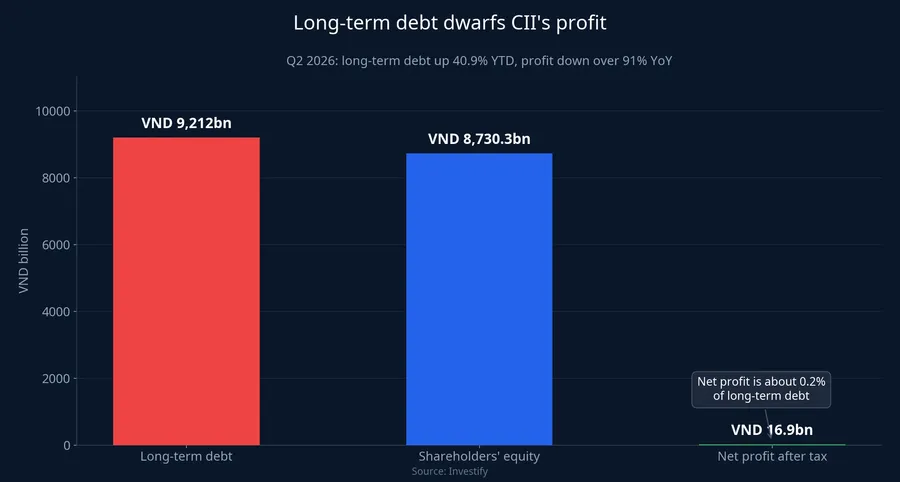
Set that number against CII itself and the scale becomes clear. At the August 25 close, CII shares finished at VND14,600, down 2.67%, putting market cap at roughly VND9.8 trillion; shareholders' equity at the end of Q2 2026 stood at VND8,730.3 billion.Thời báo Tài chính Việt Nam A VND20 trillion project is more than double both the market cap and the equity of the company proposing it. That's the first thing CII shareholders need to look at squarely.

What stage is this proposal actually at
This is where it's easiest to misread the story. The build-transfer (BT) contract has not been signed, the investment policy has not been approved, and the consortium hasn't even been designated as the investor. Lam Dong's provincial government is expected to let the investor prepare a formal investment proposal over a four-month window,Báo Lâm Đồng and even once that's approved, investor selection still has to follow the PPP Law and the Bidding Law. The timeline the investor itself proposed — legal procedures completed from October 2026 to December 2027, groundbreaking in January 2028 — is a proposed plan, not an approved schedule.
Why land-for-infrastructure swaps are back
BT contracts were dropped from the list of PPP contract types under the 2020 PPP Law, effective January 1, 2021, after numerous BT projects were found to price the land used as payment far below market value while construction costs were approved at inflated levels.Tuổi Trẻ The gap between the two prices never went back to the state budget. The mechanism was revived through Law 57/2024/QH15 (passed November 29, 2024, effective July 1, 2025 for BT provisions),LuatVietnam along with a series of implementing decrees issued in 2025.LuatVietnam CII's proposal is among the first BT projects to surface after this legal framework took shape, meaning there's no track record yet to measure it against.
The Thu Thiem precedent: why the model is attractive
CII already has a real BT contract to compare against, not a hypothetical: infrastructure for the northern residential area and the North-South axis in the new Thu Thiem urban area, total capital around VND2,641 billion, paid via nine land lots covering 9.6 hectares, provisionally signed in April 2015.CafeF
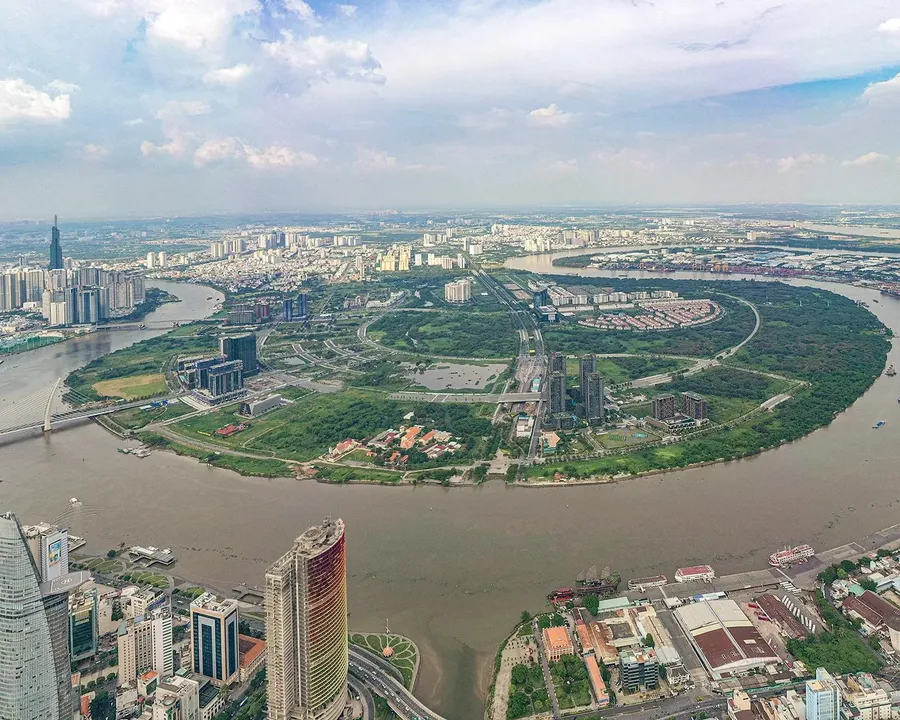
The sticking point for years was when the land price got locked in. Decree 91/2025/ND-CP set the payment land value at the unit price on the contract-signing date — the 2015-2016 price level — and by March 2026, CII received construction handover and unlocked the 9.6-hectare land bank at a decade-old cost basis.CafeF CII's average cost basis works out to roughly VND27.5 million/m², while a recent land auction in Thu Thiem carried a starting price of nearly VND295 million/m².CafeF
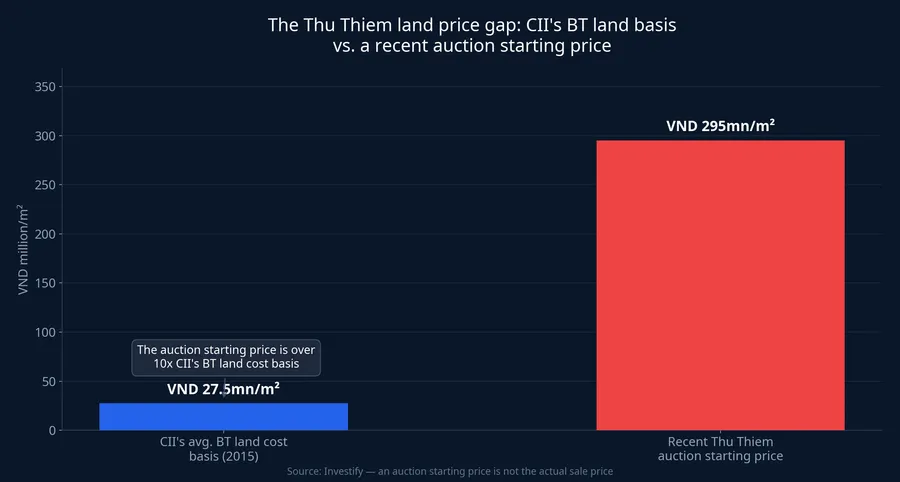
An auction starting price is not the actual sale price, and it's not the book value CII carries either. But that more-than-tenfold gap explains why a land-swap contract signed at old price levels was so attractive to an infrastructure company. The question isn't whether Thu Thiem repeats itself exactly in Lam Dong: it's whether the new legal framework has actually tightened the specific step that created that gap in the first place.
The new framework closes that gap, but not entirely
The current BT mechanism sets land prices differently: the expected price is calculated from the land price schedule at the time the project is formulated, the official payment price is set when the state actually hands over or leases the land, and the value of the payment land bank can't exceed the approved total investment of the BT project. A decade-long gap like Thu Thiem's is therefore harder to reproduce the same way, even though investors still get land without an auction. The Ho Chi Minh City Real Estate Association (HoREA) is still petitioning for clearer rules on when the payment land price gets fixed, a sign this remains contested, not settled.
How much can CII's balance sheet actually take
This is the part shareholders need to read most carefully, because it doesn't depend on whether the project gets approved. Of the VND20 trillion total investment, the preliminary plan expects roughly VND17 trillion — 85% — to come from bank loans, and the province's finance authority has asked for clarity on the company's ability to raise capital and secure credit at this scale.Vietstock
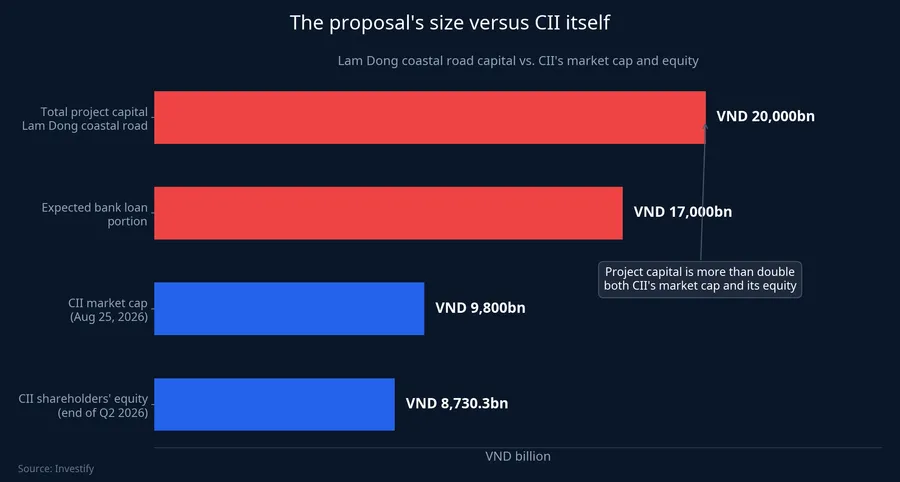
The expected loan portion for a single project is already nearly double CII's entire current equity. The base to carry that debt is also thin: in Q2 2026, CII posted net profit after tax of VND16.9 billion, down more than 91% year-on-year, mostly due to provisioning for an investment in a subsidiary and rising administrative costs, while total liabilities climbed to VND12,744.7 billion (up 22% from the start of the year) and long-term debt rose 40.9% to VND9,212 billion.Thời báo Tài chính Việt Nam
The 2026 plan calls for VND3,720 billion in revenue and VND225 billion in parent-company net profit, down 34% from the prior year, plus a continued dividend suspension to funnel resources into a project pipeline worth nearly VND540 trillion.CafeFVietstock The Lam Dong road isn't a one-off: in May 2026, Dong Nai approved the investment policy for an elevated road along National Highway 51, worth over VND16.4 trillion, also proposed by CII.Vietstock The pipeline of proposals is ballooning far faster than shareholders' equity, and the question isn't whether CII is ambitious: it's whether actual cash flow can keep pace with how fast that pipeline is expanding.
Three specific risks unique to this road
Lam Dong's finance department flagged two routing issues during its review: about 16.4km of the 34km overlaps with two public-investment projects already in preparation (the Tan Thang-Thang Hai coastal trunk road and the La Gi coastal road), while about 5km runs through the Son My industrial zone, which isn't in the province's 2021-2030 planning (with a vision to 2050) and would need its own planning study.
The third risk is the valuation of the 500 hectares. The larger the land bank, the more weight a valuation error carries: if the land price at handover comes in higher than expected, the actual area received shrinks below the 500-hectare figure now on the table; if it comes in lower, the gain accrues to the investor but carries inspection and audit risk down the line. At this stage, 500 hectares is a preliminary estimate, not a locked commitment.
What the stock actually reacted to
Separating the sources of the move matters here rather than folding them into one story. CII shares rose 3.89% on August 21 and 2.04% on August 24, then fell 2.67% on August 25. Before that, on August 17, the stock had already jumped 5.73%, coinciding with market chatter about Ho Chi Minh City re-auctioning Thu Thiem landCafeF — before the Lam Dong meeting even happened — and over that same window the VN-Index also rose 1.95% on August 21 and 1.17% on August 24. Attributing the recent price action entirely to the Lam Dong BT news, then, is a loose read: the available data leans toward the Thu Thiem story and the broader market rally as bigger contributors, since the month's strongest gain came before the consortium's meeting with the province, not after it.
Signals worth watching
Over the next roughly four months, the milestone to watch is Lam Dong's formal document allowing the investor to prepare its investment proposal, followed by the content of the financial-plan appraisal. The decisive question isn't how many kilometers the road runs: it's whether any bank actually commits to the VND17 trillion loan, and what the 500 hectares gets valued at when land is finally handed over.
With a proposal pipeline running into the hundreds of trillions of dong against a most-recent-quarter profit of just VND16.9 billion, the gap between the plan and actual cash flow is the single biggest variable for this stock. At the policy-approval stage, a BT proposal is best read as an option: worth something if every legal and financial step clears, worth close to nothing if it stalls. The financial-plan appraisal report, once published, will answer that more clearly than any number currently in circulation.