

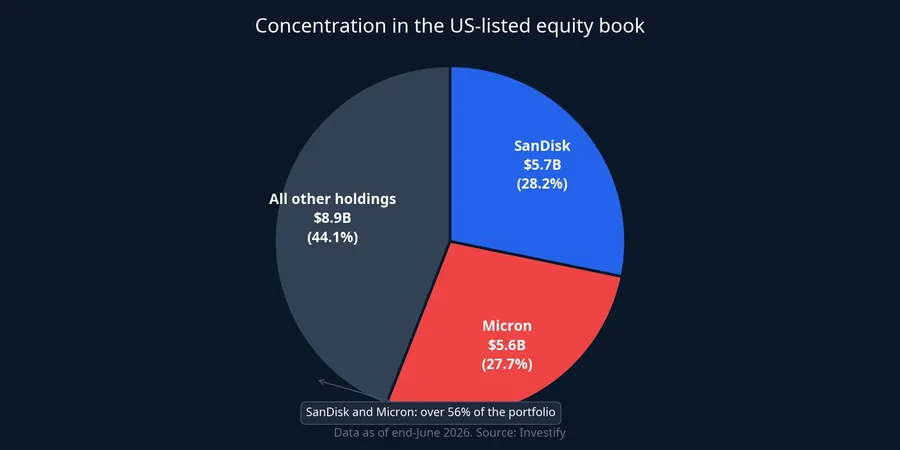
At the end of June 2026, the two largest positions in hedge fund Situational Awareness's US-listed equity book were $5.7 billion of SanDisk stock and $5.6 billion of Micron stock, together more than 56% of the entire portfolio.Yahoo Finance In July, SanDisk fell nearly 47% and Micron dropped about 29%.Yahoo Finance The banks that had lent the fund money immediately demanded more collateral, and by July 30 the entire listed-equity book, valued at roughly $16 billion, had to be sold to rival fund Citadel at a discount of about 10%.CryptoBriefing The portfolio lost roughly 67% of its value in one month, while the S&P 500 stayed near record highs the entire time.CNBC
The striking part isn't that the fund was wrong. It's that the fund was largely right, and still got wiped out over the course of four weeks.
The AI call itself wasn't wrong
Situational Awareness was founded in 2024 by Leopold Aschenbrenner, Founder and Chief Investment Officer of the fund. Born in Germany in 2001, he graduated valedictorian from Columbia University at age 19 and worked on OpenAI's Superalignment team before leaving the company in 2024.Wikipedia His 167-page essay, "Situational Awareness: The Decade Ahead," argued that artificial intelligence would be the dominant driver of global market returns over the coming decade.
That thesis produced strong early results. The fund returned 439% in the first half of 2026 and assets under management approached $45 billion by early July, run by a team of only about 12 people.CNBC More importantly, the thesis itself has not been disproven. After selling off its listed positions, the fund still held about $10 billion in assets and remained up roughly 80% year-to-date, driven mostly by unlisted holdings it kept, including a stake in Anthropic.CryptoBriefing
That raises a harder question than "was the fund wrong": if being right about a trend still isn't enough to stay in the game, what actually determines who survives?
Three risks stacked on top of each other
The collapse is usually summarized in one line: too much leverage. That's part of the story, and it misses two other layers that mattered just as much.
The first layer was the borrowing ratio. For every dollar of its own capital, the fund borrowed another three to four dollars to size its positions.Yahoo Finance At that level of borrowing, a 25% drop in collateral value doesn't produce an ordinary loss. It wipes out nearly all of the thin equity cushion sitting underneath the loan, because the loss lands entirely on that cushion.
The second layer, and the actual trigger, was a broken hedge. The fund was long AI infrastructure stocks and short software stocks, on the view that software would be disrupted by the very AI technology it was betting on.CNBC In July, that relationship flipped: infrastructure names fell sharply while software rallied. Both legs of what was supposed to be an offsetting hedge lost money at the same time, instead of one cushioning the other as designed. Leverage only amplified the damage from this broken hedge; it wasn't what set the collapse in motion.
The third layer was concentration. More than half of the listed portfolio sat in exactly two semiconductor names. When both fell in the same month, there was nothing else in the book healthy enough to offset the damage.
Together, the three layers formed a closed loop: falling prices thinned the equity cushion, banks demanded more collateral, the fund was forced to sell, the selling pushed prices down further, and that triggered the next round of margin calls. Brian Moynihan, CEO of Bank of America, called the episode a warning shot for markets running on borrowed money, and said banks' lending standards would tighten somewhat as a result.CNBC

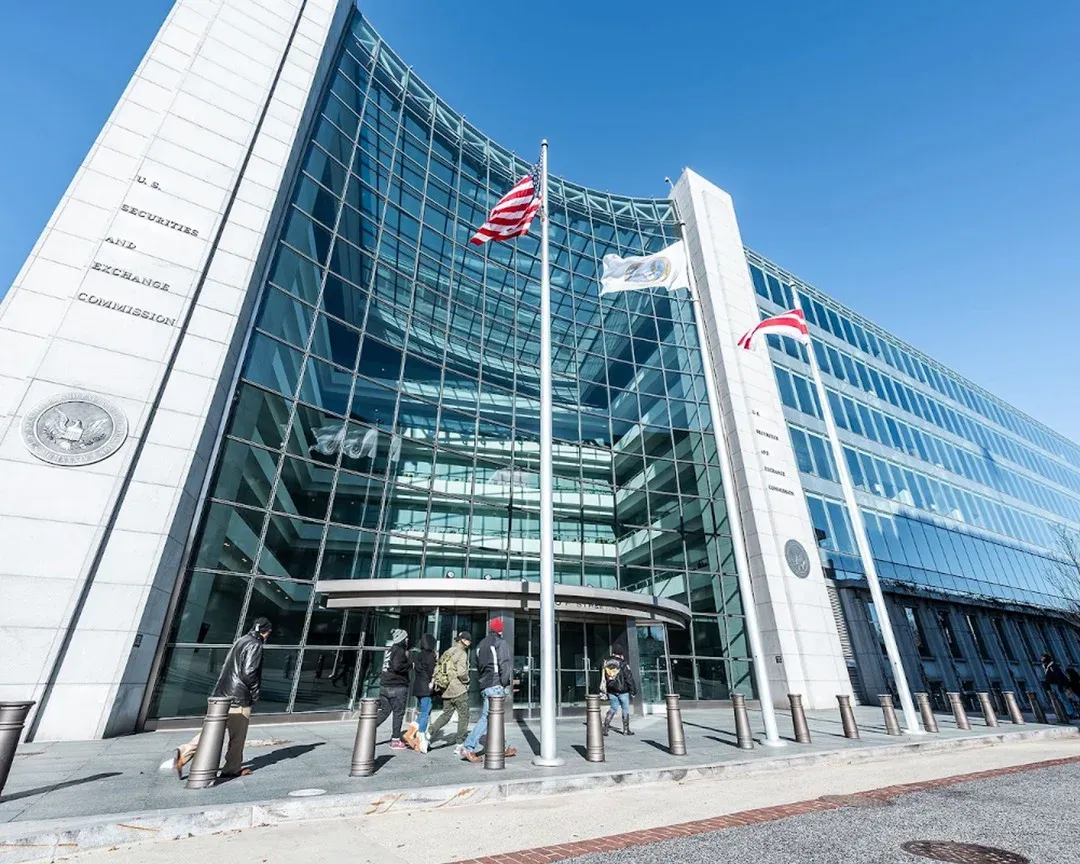
The SEC steps in
On August 24, per the New York Times, citing three people with knowledge of the matter, the US Securities and Exchange Commission subpoenaed Bank of America, Citi, Goldman Sachs and JPMorgan Chase.Yahoo Finance The requests focus on the timing of the fund's orders and its communications with lenders around the loans. Regulators also asked all four banks to preserve related documents.
All four banks and the SEC declined to comment. The fund said it's normal for regulators to scrutinize funds with unusually large gains or losses, and that it would fully cooperate. The investigation is at a very early stage: no wrongdoing has been alleged, and it isn't yet clear whether the focus is market conduct, disclosure obligations, or how the banks extended credit.
The buyer came out ahead. Per an August 21 letter to clients from Ken Griffin, Founder and CEO of Citadel, cited by the Financial Times, Citadel had already worked off more than 80% of the risk from the acquired portfolio through more than 100 block trades worth over $4 billion over three weeks.Yahoo Finance Citadel's flagship Wellington fund returned 5.94% in July, its best month since 2022.
Reading this story from Vietnam
Individual investors in Vietnam can't borrow at anything close to this ratio. Current regulations set a minimum initial margin requirement of 50%, meaning a brokerage can lend at most an amount equal to the investor's own capital, with a minimum maintenance margin of 30%. Borrowing three to four times equity simply isn't available to a domestic retail account.
But the mechanism underneath is uncomfortably similar. When the net asset ratio drops below the maintenance threshold, the brokerage issues a margin call, and if the investor can't top up in time, the position gets force-sold. The chain runs exactly the same way it did in the US. Only the scale and the permitted leverage differ. The VN-Index closed the August 24 session at 1,788.78 points, up 1.17%.
What actually decides who survives
The Situational Awareness story makes an uncomfortable point: being right about a trend doesn't mean surviving long enough for that trend to play out. This fund called AI correctly and still lost roughly 67% of its portfolio's value, because its lenders had the power to end the game before the thesis had time to prove itself. High leverage, a broken hedge, and heavy concentration weren't three separate risks. They were three layers stacked on top of each other, and it only took one layer breaking at the moment the other two were already stretched thin for all three to collapse together.
For individual investors, a simple two-question check answers this with numbers. First: if your single largest position dropped 30% in a month, would your account fall below the maintenance margin threshold? Second: what percentage of your portfolio do your two largest positions represent? At Situational Awareness, that second number was over 56%, and that's exactly what left the first question with no way out.
The risk was never about forecasting wrong. It's about a portfolio running out of room to wait for a correct forecast to pay off. That's the line between an investor with a good thesis and an investor who survives long enough for that thesis to deliver. How domestic margin balances and trading flows move over the coming months will show which direction local leverage levels are actually heading.