
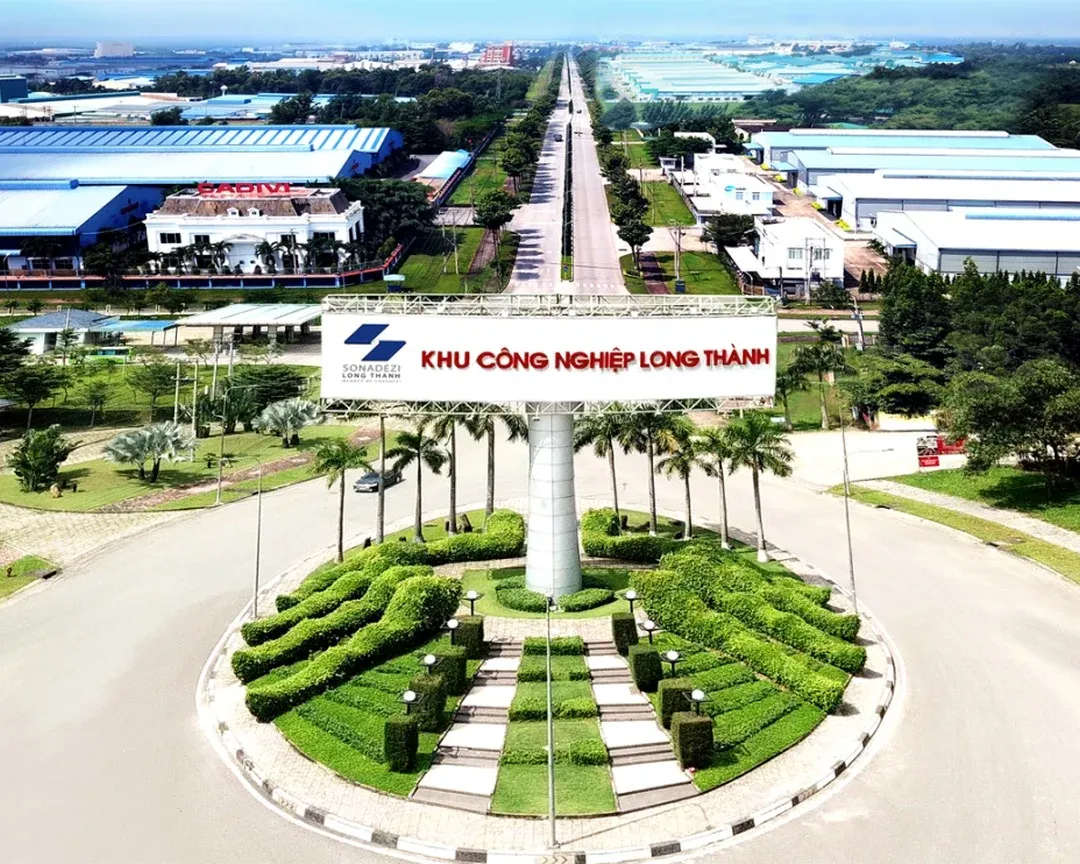

Thirty companies go ex-dividend during the trading week of August 24-28, 2026, all paying in cash.NguoiQuanSat The highest headline rate belongs to SDV, Sonadezi Services Corp on UPCoM, with a 2025 dividend rate of 25%.NguoiQuanSat That 25% is the first number that catches your eye, and it's also the easiest one to misread: the denominator behind it isn't the price you actually paid for the stock. The announced rate and your actual return are two different calculations, and the gap between them affects your wallet directly.
Dividend rate is measured against par value, not your purchase price
Every dividend rate a listed company announces is calculated against the par value of the share, a fixed VND 10,000. So SDV's 25% simply means each share receives VND 2,500 in cash, regardless of what you paid to own it.
What you actually paid for a share of SDV is a separate matter: VND 33,000, based on the closing price on August 21. Divide VND 2,500 by VND 33,000 and the real dividend yield comes out to 7.58%, the cash you actually receive on the capital you actually committed. The gap between 25% and 7.58% isn't a company error; it's the direct consequence of SDV trading at 3.3 times its par value.
Apply the same math to the other stocks going ex-dividend this week, and the attractiveness ranking flips completely versus the announced-rate table.
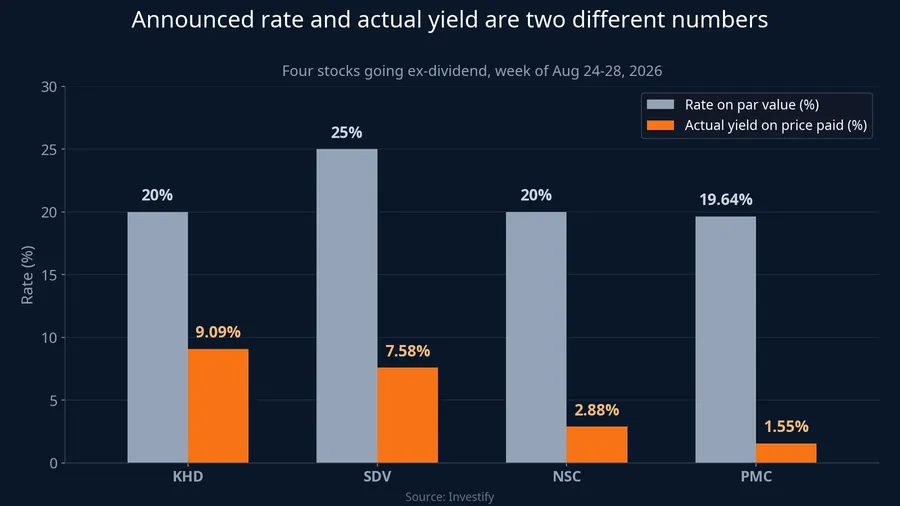
KHD, from Hai Duong Mineral Mining and Processing JSC, announced a 20% rate, lower than SDV's.NguoiQuanSat But its share price is only VND 22,000, so the real yield reaches 9.09%, 1.51 percentage points higher than SDV. In the opposite direction, PMC (Pharmedic) announced a 19.64% rate, close to KHD's, yet its real yield is just 1.55% because PMC shares trade near VND 126,800.
In other words, the announced-rate table cannot rank how attractive a dividend actually is. It only tells you how much a company pays out per unit of charter capital, not how much you had to spend to receive it.
Even the real yield isn't extra profit
This is the second layer new investors tend to miss, and last week's market played it out clearly.
On the ex-dividend trading date, the exchange automatically subtracts the exact dividend amount from the stock's reference price. The logic is simple: that cash is about to leave the company's coffers for shareholders' accounts, so the value of each share drops by the same amount right at that moment.
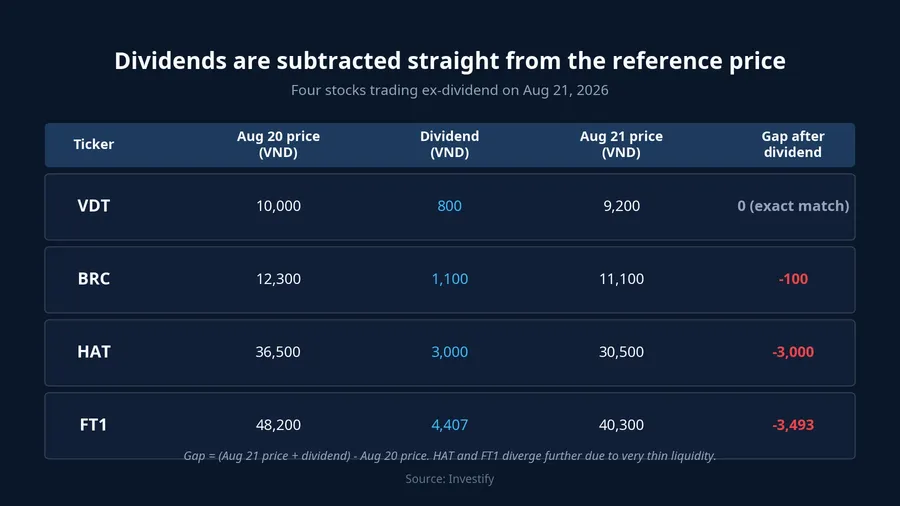
August 21 was the ex-dividend date for four stocks with complete price data. VDT (Binh Tay Steel Wire) paid VND 800 per share; its price went from VND 10,000 to exactly VND 9,200, matching the dividend to the dong. BRC (Ben Thanh Rubber) paid VND 1,100; its price fell from VND 12,300 to VND 11,100, a VND 1,200 drop for VND 1,100 in cash.
HAT (Hanoi Beer Trading) paid VND 3,000 per share.CafeF Its price dropped from VND 36,500 to VND 30,500. An investor who bought HAT on August 20 to qualify for the dividend now holds VND 30,500 in share value plus VND 3,000 in incoming cash, VND 33,500 total, VND 3,000 short of what they paid. Notably, HAT had climbed from VND 31,400 on August 17 to VND 36,500 on August 20, a 16.2% run in just three sessions right before the ex-dividend date, a clear sign of investors buying ahead of the payout.
FT1 (Machine Parts No. 1) is the sharpest case. The company paid a cash dividend of VND 4,407 per share, a 44.07% rate, the highest in two weeks.Vietstock FT1's price fell from VND 48,200 on August 20 to VND 40,300 on August 21, a VND 7,900 drop for VND 4,407 in cash.
One caveat matters here so these four cases aren't misread: the price drop exceeding the dividend amount at HAT and FT1 isn't entirely caused by the payout itself. Both stocks trade extremely thin, with matched volume on August 21 of just 700 shares for HAT and 6,400 for FT1, so wide bid-ask spreads and a handful of sell orders can push the price further than the mechanical adjustment alone. What's certain across all four stocks is the mechanical cut: exactly equal to the dividend, independent of supply and demand. Anything beyond that is the market's doing.
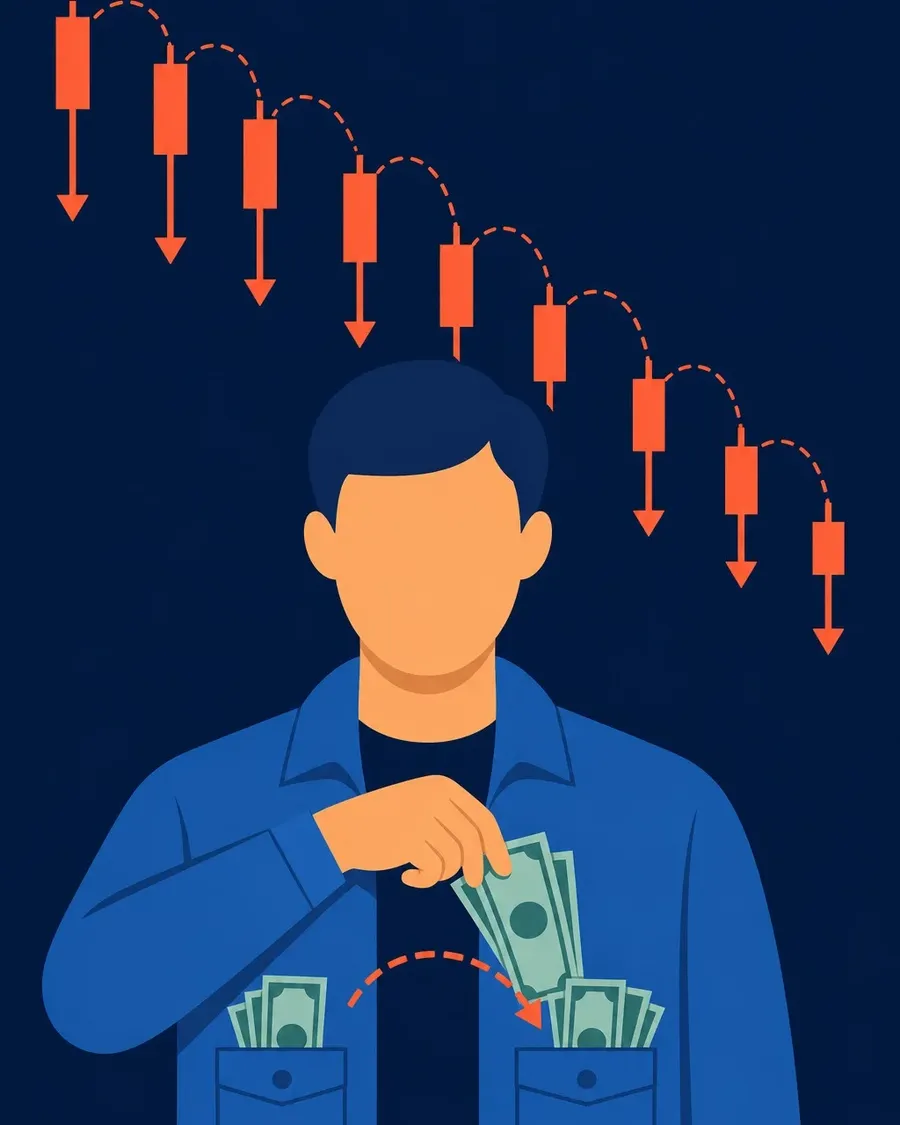
The practical takeaway: a cash dividend doesn't create new money for shareholders at the moment it's declared. It simply moves value from the share price into cash in your account. Buying right before the ex-dividend date purely to capture the payout, then, is like moving money from one pocket to the other, plus price risk while you wait.
The gap between the record date and the payment date
KHD sets its shareholder record on August 25 and pays out on September 15.NguoiQuanSat SDV records on August 26 and pays on September 30. Across those 3 to 5 weeks, the price has already been marked down on the board while the dividend cash hasn't reached your account yet.

For these two UPCoM names, that waiting period carries real liquidity risk. SDV traded 70,000 shares on August 20, then saw zero trades over the next three sessions. KHD is worse: no trades at all in its last five sessions. At that level of liquidity, selling isn't entirely up to you, it depends on whether anyone shows up to buy.
How to calculate this before you place an order
The formula fits in one line: real dividend yield equals cash dividend per share divided by the price you actually paid. For SDV, that's VND 2,500 divided by VND 33,000, or 7.58%.
Once you have that number, three more checks matter before you place an order.
Is this payment annual or a single installment? SDV's VND 2,500 dividend covers all of 2025, so 7.58% is a full-year yield.NguoiQuanSat KHD's VND 2,000, meanwhile, is only the first installment of 2026, so its 9.09% is just a floor, with more possibly coming later in the year. These two figures aren't on the same time basis if compared directly.
Compare against deposit rates. As of August 22, the Big Four state banks, Agribank, BIDV, Vietcombank and VietinBank, listed 5.9% to 6.0% annually for 12-month terms, while the market's highest rate was 7.5% at Shinhan Bank.VOH SDV's 7.58% yield beats the highest deposit rate by only about 0.08 percentage points, while an equity buyer also takes on price volatility and liquidity risk that a depositor simply doesn't face. A gap under 0.1 percentage point isn't fair compensation for those two extra risks.
Look at payout history, not a single installment. HAT has held a 30% cash rate for three straight years, and FT1 hasn't paid below 30% in any year since listing on UPCoM in 2017.CafeFVietstock A consistent multi-year payout track record is what turns a stock into a reliable income source; a single high payout says nothing about the future.
A framework for deciding
For investors targeting steady cash flow, the sensible default this week is not to buy ahead of the ex-dividend date. The dividend is already subtracted from the reference price at the moment of record, so buying right before that date creates no benefit beyond price risk during the wait for cash.
A dividend stock is only genuinely worth holding when it clears three conditions: the real yield on your purchase price clearly beats the 12-month deposit rate, not just edges past it by a few tenths of a point the way SDV does; the company has an unbroken multi-year payout history, so the dividend is a repeating cash flow rather than a one-off; and the stock is liquid enough to sell when you need to, since the cash arrives weeks after the record date while the price keeps moving in the meantime.
Measured against this week of August 24-28, the highest-rate stocks each fail at least one of these three conditions: SDV and KHD on liquidity, NSC and PMC on real yield that's too thin.
Worth watching this week: SDV's reference price on the morning of August 25 and KHD's on the morning of August 24 will each be marked down by exactly VND 2,500 and VND 2,000. Anyone still reading a 25% rate as a 25% return will see the answer right there on the board.