


On July 30, 2026, Amata VN completed the sale of its entire stake in the entity developing the Amata Township Long Thanh project. One day later, on July 31, Dong Nai City's inspection agency signed its finding on that exact project. The finding was made public on August 17, 2026 — roughly two and a half weeks after the deal had already closed.Vietstock
That one-day gap is why the story got attention. But for retail investors, the more useful part is elsewhere: what the finding says about the legal status of a 722-hectare project after a decade, and what actually changes — or doesn't — when the project's shareholder changes its name.

A decade-old project that still has no land
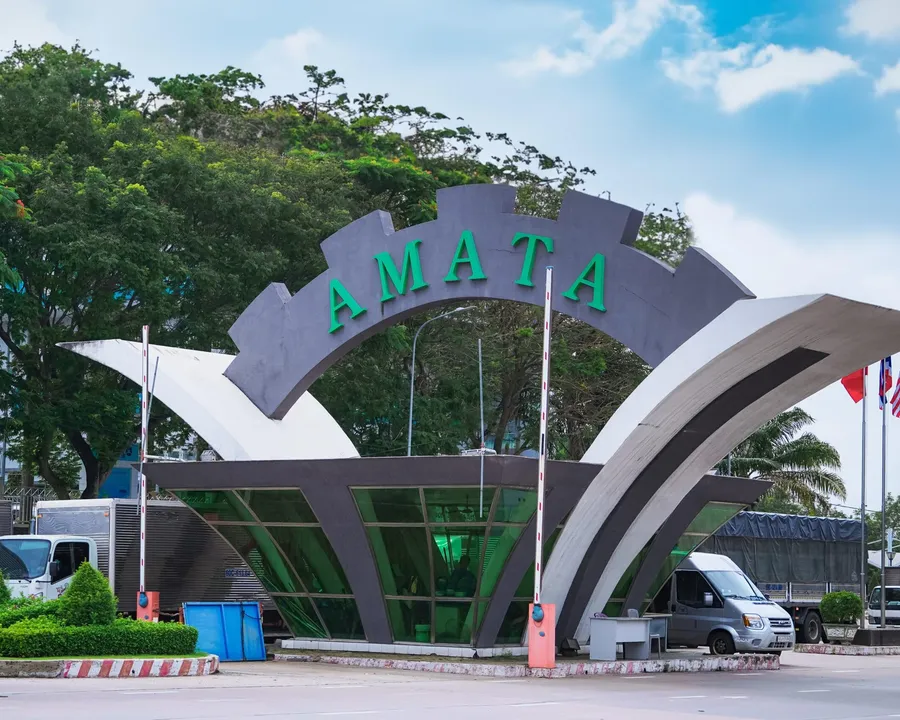
Amata Township Long Thanh was designed as an urban services district on nearly 722 hectares in An Phuoc commune, with registered investment capital of roughly VND 6,600 billion. It received in-principle investment approval back in June 2016, with an execution timeline running to 2028. The registered investors include Amata VN Public Company Limited; Vikrom Kromadit, founder and chairman of Amata Corporation PCL in Thailand and also chairman of Amata VN; Somhatai Panichewa, CEO of Amata VN; and Amata Bien Hoa Urban Development JSC. The operating entity is Amata Township Long Thanh Co., Ltd, known as ATLT.Vietstock
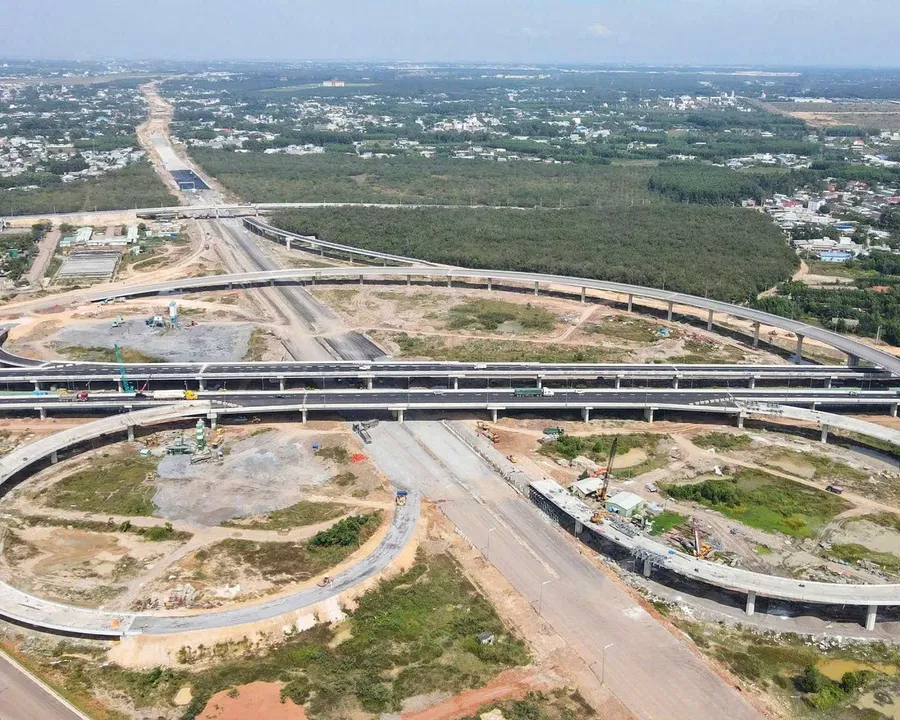
What stands out is how little has moved in more than 10 years. ATLT has not been allocated or leased any land, and has not been permitted to convert land use. Because no land has been allocated, the company has no outstanding land-related financial obligations and holds no land use rights certificate. The land has not been compensated for, not cleared, and construction has not begun.
The real bottleneck runs deeper than paperwork. Following a State Audit Office finding from late 2020, Dong Nai has repeatedly ordered a review of commercial housing projects approved after July 1, 2014; this project is among them. Because of that unresolved issue, the submission to the Prime Minister requesting approval to convert rice-farming land has still not been completed. Until that step clears, the entire downstream chain — land recovery, compensation, clearance, allocation, and construction — stays frozen.
The finding also flags violations from the 2016 licensing stage: the developer had not prepared an approved environmental impact assessment at the time the investment decision was issued; the Department of Planning and Investment recommended the provincial approval without organizing a competitive investor-selection process; and the Department of Construction gave no opinion on whether the project required competitive bidding, nor did it guide the investor through proper registration.
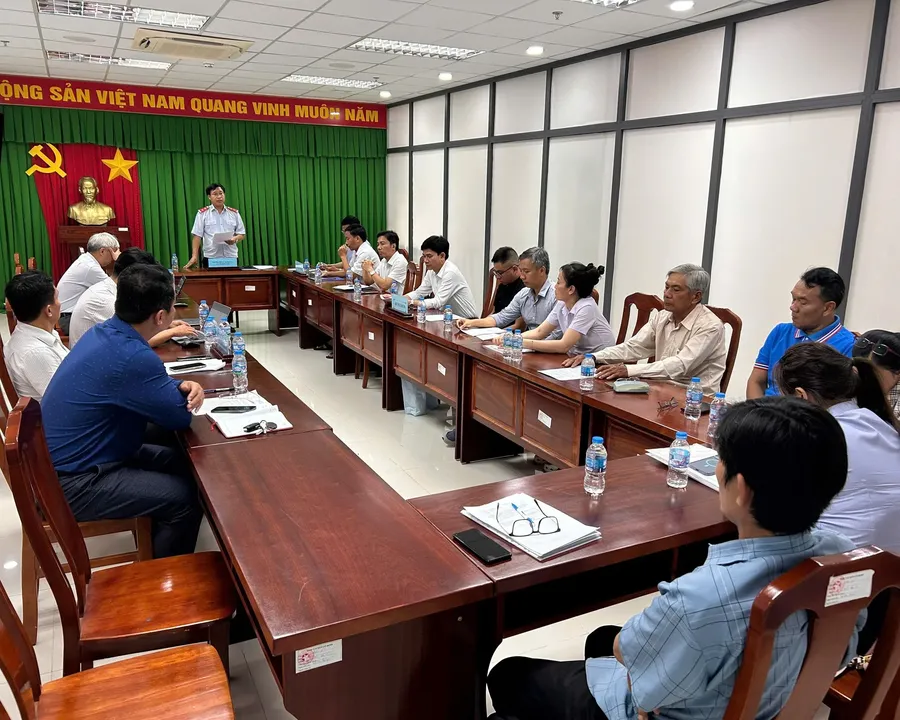
On next steps, Dong Nai City's inspection agency recommended An Phuoc commune tighten oversight of the land while the city decides on a resolution plan, specifically to prevent encroachment, unauthorized construction, or illegal land transfers. For ATLT, the finding states the company is responsible for completing the required procedures, fulfilling its financial obligations in full, and complying with whatever measures the state authorities decide.
A VND 492 billion deal and a 28-day-old buyer
Amata VN announced it had divested its full 93.4% economic interest in ATLT for more than VND 492 billion, with the transaction completed on July 30, 2026.Vietstock The 93.4% figure is an effective economic stake, not a number that appears directly on the shareholder register. Since May 2020, Amata VN has held 33.819% of ATLT directly, with the remaining 66.181% held by Amata Bien Hoa Urban Development JSC, itself a subsidiary roughly 90% owned by Amata VN. Adding the direct and indirect holdings together gives Amata VN's 93.4% economic interest in the project.
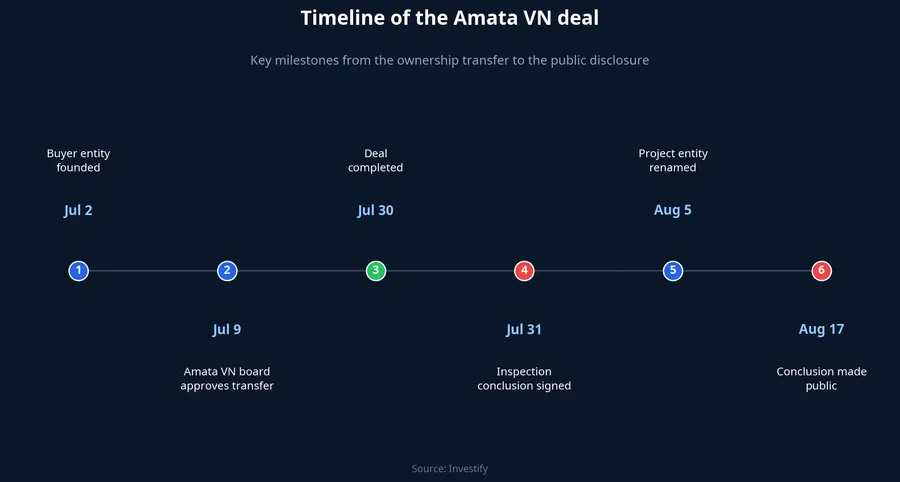
The buyer, Long Thanh Riverside Investment Co., Ltd, was founded on July 2, 2026, headquartered in Tran Bien ward, Dong Nai, with charter capital of VND 1,000 billion.Stockbiz Its owner, chairman, and director is Lam Gia Huy, born in 2002 in Dak Lak. From the date of incorporation to the date the deal closed, the entity had existed for just 28 days.
The sequence of events is dense: the buyer was incorporated on July 2; seven days later, Amata VN's board approved the transfer; the deal closed on July 30; and by August 5, ATLT had filed a corporate name change, becoming Long Thanh Riverside Urban Construction Investment Co., Ltd, with Lam Gia Huy taking the CEO and legal-representative seat as well. The project entity's charter capital was unchanged, at just over VND 1,390 billion.
Placing the two figures side by side reveals a notable price gap. At a charter capital of just over VND 1,390 billion, the corresponding 93.4% stake would be worth roughly VND 1,300 billion. The actual transfer price, however, was just over VND 492 billion, or about 38% of the stake's charter-capital value.
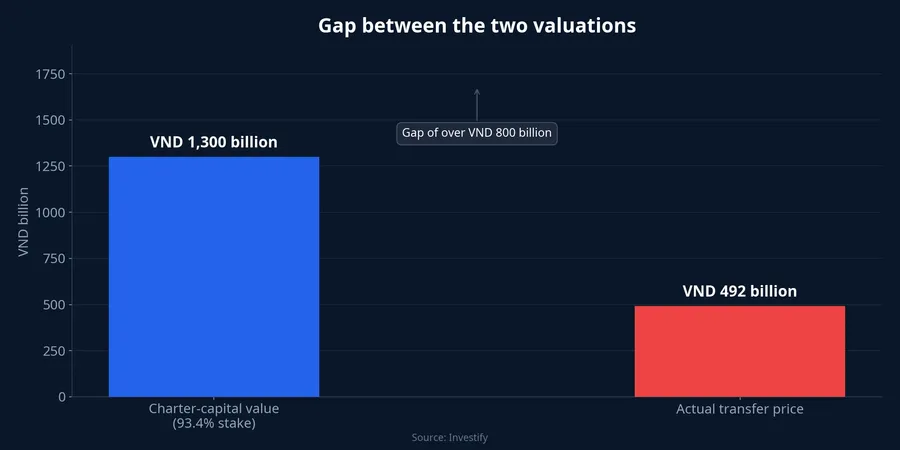
ATLT's actual book value may well have diverged from its charter capital over 10 years, so this is not a precise loss figure. But the gap suggests the seller priced a project with no land at a fraction of what had originally been registered as contributed capital.
Three ways to read the timing
The fact that the divestment closed exactly one day before the finding was signed is real, but it isn't enough on its own to establish motive. The question is whether the seller knew the contents of the finding in advance. At least three explanations coexist, and the available evidence isn't sufficient to settle on just one.
First, this could be the final stage of an exit that began earlier and has nothing to do with the finding itself. Amata VN has said it divested all its stakes in the Long Thanh urban service projects to optimize its portfolio and improve governance efficiency. Ahead of this deal, on May 20, 2026, Amata VN completed the sale of its investment in Amata Long Thanh Urban Services 2 Co., Ltd, booking a gain of 442 million baht that was the main driver of Q2 net profit of more than 394 million baht, up nearly 347% year-on-year.Vietstock
Second, the date a finding is signed is not necessarily when the inspection began. Inspections typically run for months, and the parties involved often know the scope under review well in advance. Selling one day before signing, therefore, does not necessarily mean selling because the contents of that finding were known.
Third, pure coincidence in timing remains on the table. The finding is framed as a resolution measure for a project in a known problem category under local authority, not as a decision to revoke the project.
What is certain is simpler: legal obligations attach to the entity carrying out the project, not to whoever owns that entity. The finding places responsibility for completing procedures and fulfilling financial obligations on the project company itself. That company still exists. It has only changed its name and its owner. The buyer inherits both the rights and the obligations, including the bidding and environmental-assessment issues named in the finding.
What retail investors should take from this
The first lesson applies to any real estate stock: "in-principle investment approval" does not mean "the land has been secured." A 722-hectare project sounds enormous in a corporate press release, but if it hasn't been allocated, hasn't been cleared, and has no land use rights certificate, that land bank generates no cash flow and carries real legal uncertainty. When reading a listed company's land-bank disclosures, the legal status of each project deserves closer scrutiny than the hectare figure.
The second lesson concerns counterparty information. A newly formed entity with no operating history and no disclosed funding source gives the market no basis to judge its capacity to execute a project worth nearly VND 6,600 billion. That is an information gap, not evidence of wrongdoing. The right response is to wait for data rather than to speculate.
A monitoring framework fits this situation better than an action framework. Three signals are worth watching: the city's decision on a resolution plan for the project; progress on the submission to the Prime Minister for approval to convert rice-farming land, since this is the bottleneck blocking the entire downstream procedural chain; and any further corporate filings from the buyer's entity, particularly changes to charter capital and ownership structure.
Until the land-use conversion step is complete, the project remains exactly where it has stood for the past 10 years — regardless of whose name is on the registration papers.