
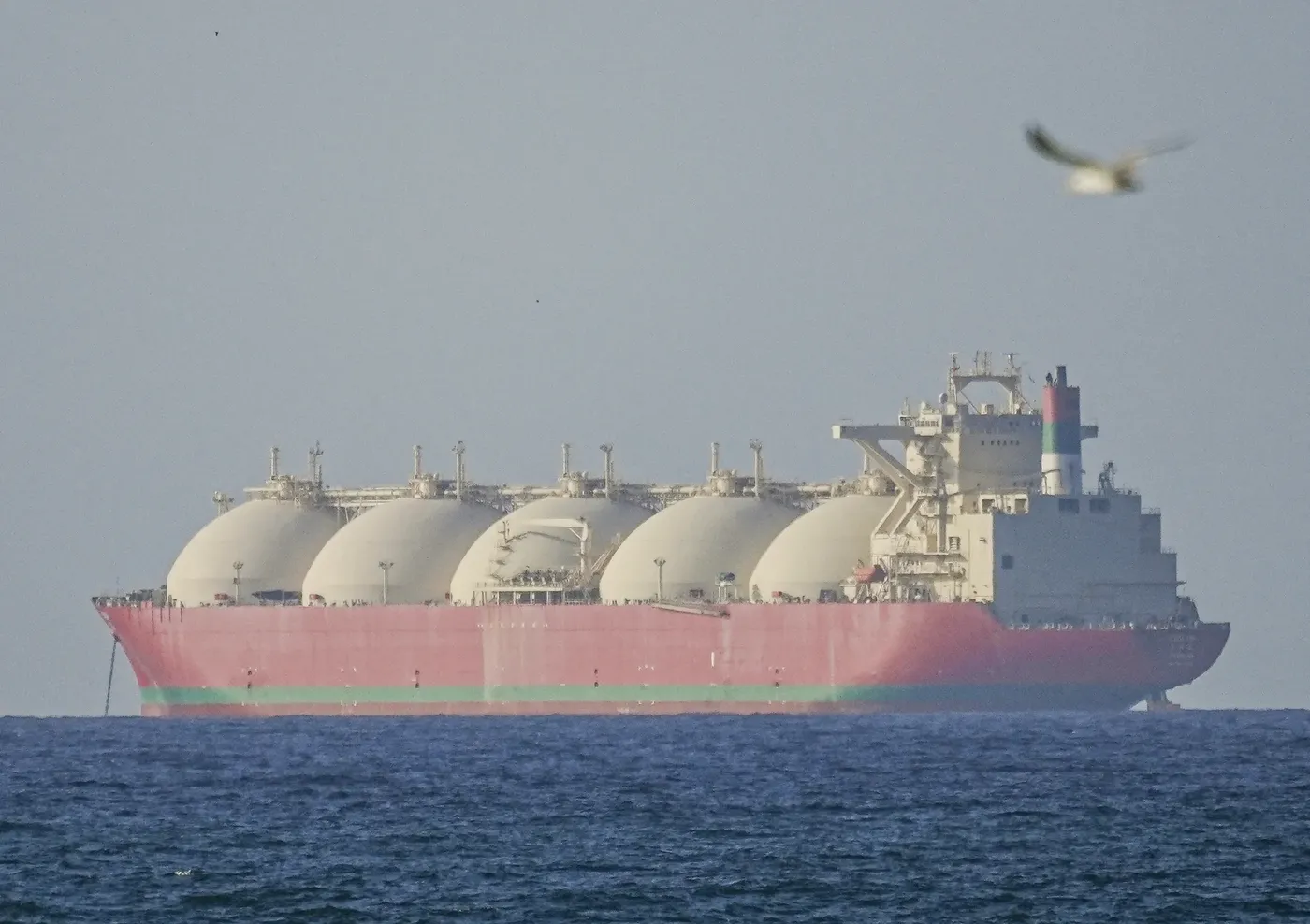

The Strait of Hormuz is sending an unmistakable shipping signal: publicly visible traffic has dropped sharply. That signal is not, however, a verdict on global oil supply. The bigger picture separates two very different events: disruption to vessel movements and oil that genuinely fails to reach end markets.
That distinction explains why crude has not traded as though a supply shock were already complete. Kpler data cited by Reuters showed five cargo vessels crossing Hormuz on August 15, compared with 31 across the preceding weekend; none was scheduled to cross on August 16.OilPrice “None scheduled” is not the same thing as saying that no oil moved through the strait.
The central argument here is straightforward: Hormuz is adding a risk premium to oil, but investors should call it a supply shock only when vessel flows, physical deliveries, and Brent point in the same direction. The expiry of the US-Iran memorandum is a political marker worth tracking, not an automatic switch for shipping or oil prices.
Fewer visible vessels do not automatically mean less oil
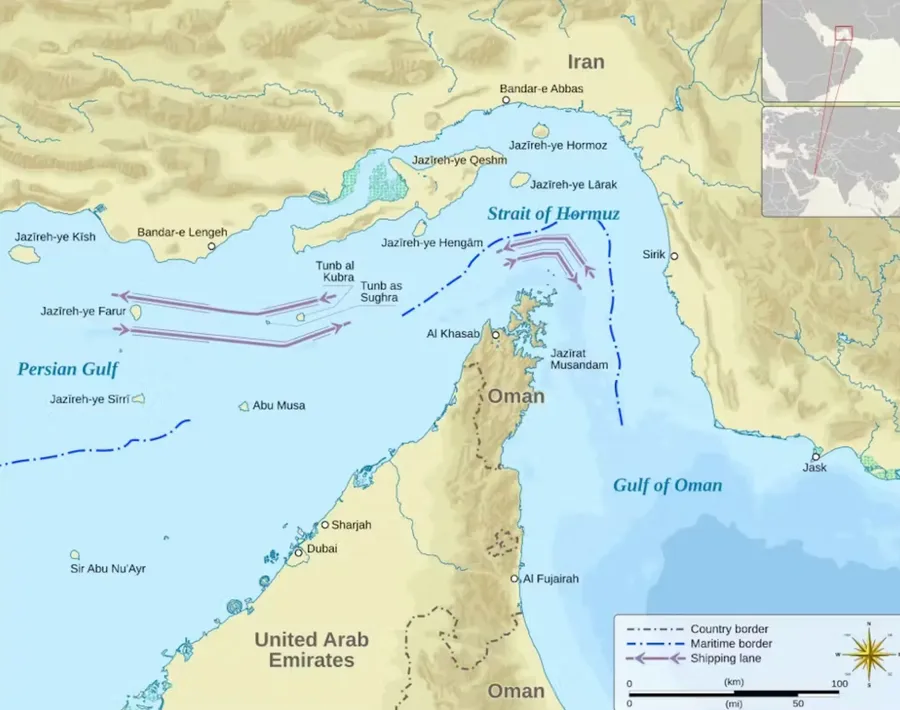
Hormuz connects the Persian Gulf with the Gulf of Oman. When public vessel counts fall, the first observable effects are greater uncertainty around schedules, insurance costs, and the ability to organise transport. What cannot be inferred at once is how many barrels have disappeared from the market: tracking data do not fully capture vessels that disable their transponders, reroute, or transfer cargo at sea.
This distinction matters especially for newer investors. A map with fewer vessel dots tells us that the shipping channel is abnormal; it does not directly measure barrels loaded, departed, or received. Ignoring that data gap turns a warning sign into an unjustifiably certain shortage call.
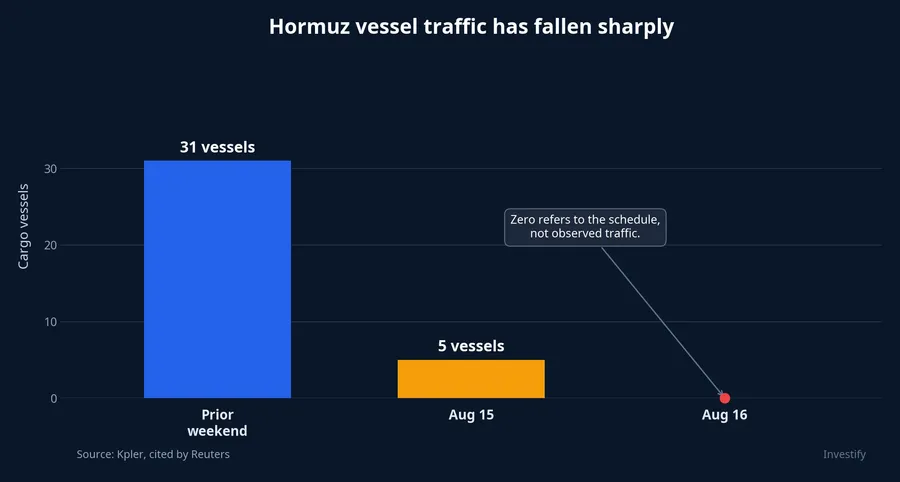
The chart also needs careful reading. The figure of 31 is a total for the preceding weekend, five is the count on August 15, and zero on August 16 refers to a schedule rather than a complete observation of cargo flows. These points show a rapid deterioration in visible shipping. They cannot be converted directly into lost oil production.
August 17 does not automatically open or close a sea route
The US-Iran memorandum was signed on June 17 with a 60-day negotiation period and expired on August 17, without a replacement agreement between the parties.Al Jazeera Yet this is a milestone in diplomacy. Whether ships return also depends on owners’ safety assessments, insurance terms, port operations, and the credibility of information on the ground.
The memorandum’s expiry should therefore not be treated as the sole cause of an oil move. Conflict had already resumed in the source article’s context, meaning the agreement’s practical effect had weakened before August 17. Conversely, another round of talks would not restore normal shipping if operators still judged the passage unsafe.
This is where markets often move ahead of physical data. Traders can pay extra to insure against a future disruption, then remove that premium when the probability of disruption falls. That mechanism explains why a constructive diplomatic development can cool oil prices before vessel counts or delivered volumes have fully recovered.
Oil prices show uncertainty, not a confirmed shortage
Brent settled at USD 88.90 a barrel on August 17, up 1.35% from August 10, while WTI finished at USD 82.61 a barrel.OilPrice The weekly gain matters, but it does not by itself resemble a market that has confirmed a comprehensive supply cut. Brent also remained clearly below its recent high of USD 100.69 a barrel on July 23.OilPrice
That does not mean the market considers the risk minor. It suggests buyers and sellers are still weighing competing possibilities: oil may still be finding a route out; demand may not be strong enough to turn shipping disruption into a shortage; or inventories and supply risks elsewhere may be moving prices at the same time. Those figures do not allow us to allocate the move precisely among these explanations.
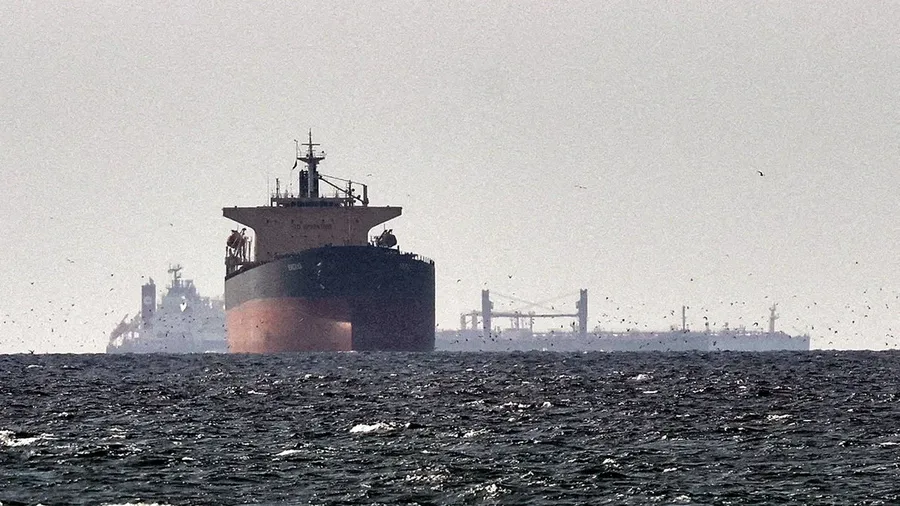
In this setting, looking only at a Brent chart can create a familiar error: assigning the entire move to Hormuz. Oil also responds to inventories, demand, and supply risks outside the region. Hormuz becomes the dominant driver only when shipping, physical deliveries, and price deteriorate together in the same observable window.
Three states to monitor instead of one forecast
The first state is a shipping recovery. A credible sign is not one day with more vessels, but a sustained improvement in visible traffic, higher loading volumes at ports, and lower insurance costs. If those signals arrive together, the premium attached to disruption has a basis to fall. Oil can ease before output returns to normal because the market assigns a lower probability to future disruption.
The second state is prolonged disruption. Public vessel flows remain weak, transport and security costs stay elevated, but evidence is still insufficient to say that oil cannot reach consumers. In that case, Brent may remain high and swing sharply with negotiation headlines. If freight costs rise while crude does not move in parallel, the shock may be concentrated in transportation rather than aggregate delivered supply.
The third state is a physical oil shortage. This requires the strongest evidence: persistently lower port loadings, shut-in production, falling inventories at consuming hubs, and a rise in spot crude alongside freight costs. Brent moving back above USD 100.69 a barrel becomes more meaningful only when it coincides with those physical data, rather than simply crossing a familiar number.OilPrice
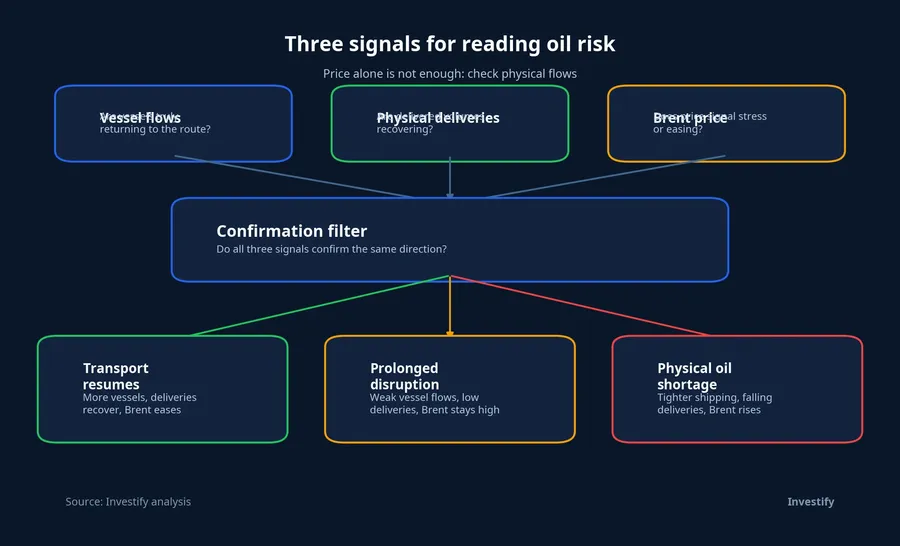
This diagram is not a price forecast. It is a filter meant to prevent a category error between a political event, a transport signal, and a supply-demand shock. One data point can change quickly; a conclusion becomes more reliable when several independent measures agree.
Vietnam feels the effect through costs, not directly through share prices
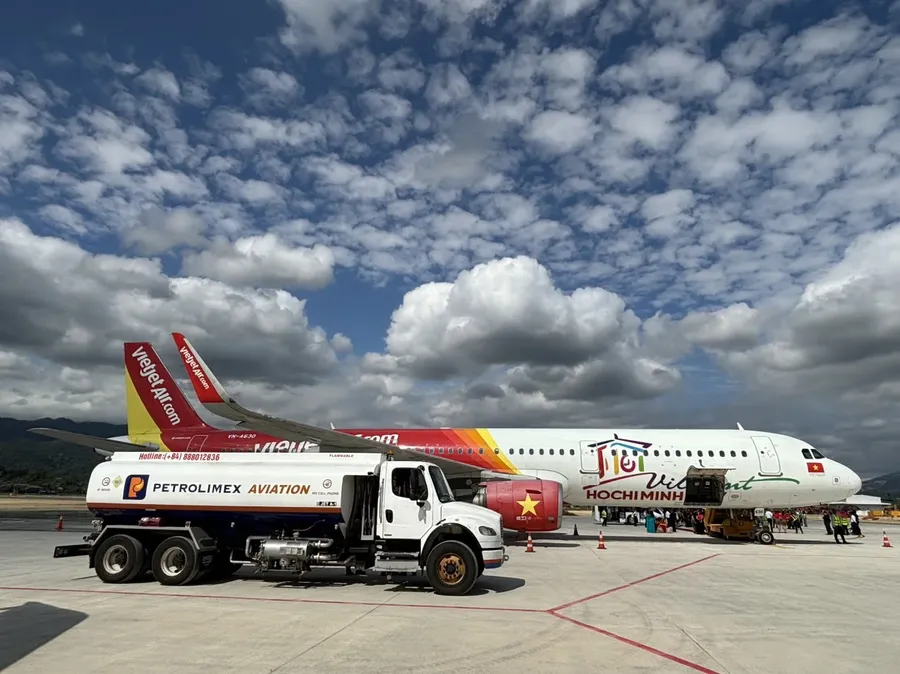
When transport disruption persists, companies with heavy fuel consumption can face higher input and logistics costs. Aviation, road transport, plastics, and chemicals are intuitive examples, but the actual effect depends on fuel contracts, inventories, foreign-exchange rates, and the ability to pass costs through. Oil prices alone cannot determine which listed sector will rise or fall.
On the other hand, a recovery in shipping and a lower risk premium can ease fuel-cost expectations. Energy-driven inflation pressure may also soften, although Vietnamese retail fuel prices do not adjust instantly: the operating cycle, taxes, exchange rates, and domestic inventories all matter. For bonds and equities more broadly, the transmission also runs through inflation and interest-rate expectations, so the response will not be uniform.
Gold may receive support when demand for risk protection rises, but Hormuz is not a complete explanation for gold either. The US dollar and bond yields can move in the opposite direction. A cross-asset reading should therefore begin with transmission mechanisms, rather than an immediate search for a single security or asset that is labelled a beneficiary.
Conclusion: wait for data convergence
The present thesis is not that oil will certainly move in either direction. It is that the available evidence is insufficient to call the situation at Hormuz a physical oil shortage. The strongest evidence this week is disruption to public shipping. What is still missing is confirmation from actual deliveries and physical indicators at ports, storage facilities, and consuming hubs.
Over the coming sessions, the key signals are the pace of vessel recovery on the route, loading and delivery volumes, and Brent’s response relative to freight costs. If all three worsen together, the narrative will shift from a risk premium to a supply shock. If shipping and deliveries recover, the August 17 diplomatic milestone will gradually become less central to the way the market prices oil.