


A company may not have paid a dollar under a guarantee. For a bondholder, that does not make the risk zero. Bloomberg estimates that financing structures around artificial-intelligence infrastructure now carry nearly USD 70 billion in potential credit backstops.Bloomberg
Think of a balance sheet as a photograph of debt already recorded, and a guarantee as a folded umbrella. In dry weather it sits there and costs nothing. When conditions turn, meaning a tenant cannot pay or an asset cannot be sold for enough, it opens and the guarantor may have to spend real cash. The central point is straightforward: for bond investors, reported debt is only the starting point; the trigger points that can turn an off-balance-sheet commitment into a cash outflow also matter.
Cash flows through a project vehicle
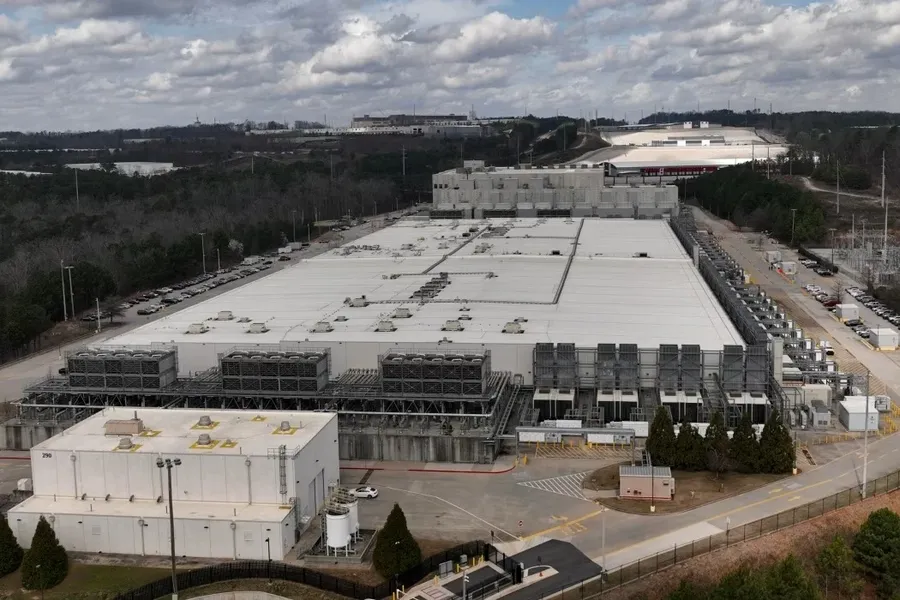
Many data-center projects are not financed directly on a technology company’s balance sheet. A separate project vehicle borrows to build infrastructure or buy chips, then leases those assets to the operating company. Periodic lease payments are intended to service interest and principal for lenders.
When the arrangement works as designed, the technology company pays rent. The guarantor does not repay the project vehicle’s borrowing and may not have to record the full commitment as present debt. That is the important gap between accounting recognition and the resilience a bond investor needs to assess.
Risk follows a sequence rather than arriving with one isolated event. If the tenant misses payments or leaves early, the asset can first be re-let or sold. The guarantor covers a shortfall only if those recoveries still do not repay the debt. A residual-value guarantee is therefore not the same thing as an immediate promise to repay the entire loan.

When two risks arrive together
The difficult feature of this structure is that adverse variables can move together. Softer computing demand can make it harder for a customer to sustain lease payments. At the same time, used servers or chips can lose value quickly, reducing what lenders can recover.
An umbrella only helps if there is enough material in it. When rental cash flow falls while resale values also weaken, the guarantor’s potential shortfall becomes larger. Bondholders should therefore ask not only whether a guarantee has been called, but also what the underlying asset could realistically fetch.
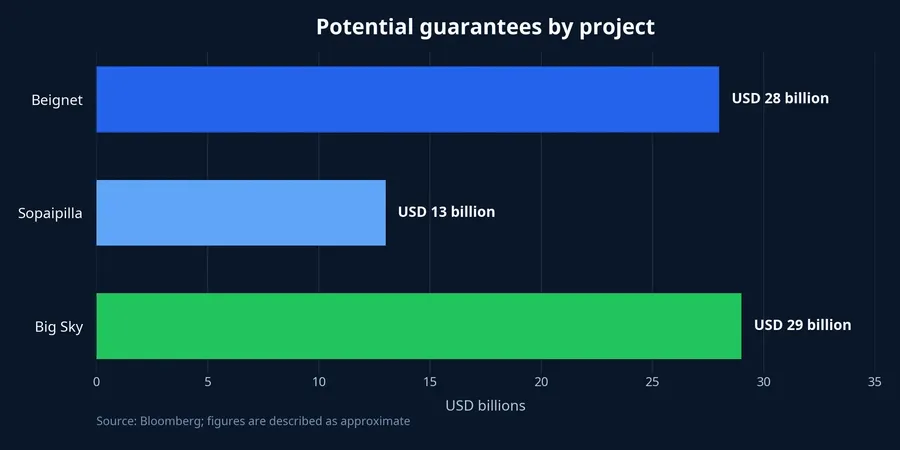
Among the transactions Bloomberg discusses, Meta-linked Project Beignet has a guarantee of about USD 28 billion, while Sopaipilla has about USD 13 billion. Big Sky, a chip-financing structure serving Anthropic, has about USD 29 billion guaranteed by Broadcom within financing of roughly USD 35 billion.Bloomberg Those amounts describe conditional commitments, not debt that has simultaneously appeared on each company’s financial statements.
The path to a bill differs across guarantees
It would be wrong to add those figures together and conclude that Meta and Broadcom have nearly USD 70 billion of additional current debt. Beignet and Sopaipilla relate to a scenario in which Meta leaves a lease early and residual data-center value fails to cover the debt. For Big Sky, the path also depends on the chip user’s ability to pay, the ability to re-lease or sell the assets, and then the remaining shortfall.
Time horizon changes the analysis as well. Bloomberg describes Beignet’s data-center lease as running for about 20 years, while chip financing is typically repaid over about five years.Bloomberg Amortising debt can reduce the potential shortfall. But chips also face faster technological obsolescence than physical infrastructure, so a shorter term does not automatically mean lower risk.
The relationship with a bond is conditional, not an automatic causal conclusion. A guarantee does not by itself ensure a ratings downgrade. The outcome also depends on customer quality, debt still outstanding, recoverable asset value, and the guarantor’s own financial resources.
Why credit analysis goes beyond accounting
Accounting asks whether an obligation is sufficiently likely and estimable to recognise now. Credit analysis asks a broader question: if the adverse case occurs, how much of the resources protecting lenders could this commitment consume? Different questions can legitimately produce different debt measures.
Bloomberg reports S&P Global Ratings’ view that Broadcom’s support in Big Sky has debt-like characteristics as a contingent obligation and should be included in adjusted-debt calculations.Bloomberg If adjusted debt rises, debt-to-EBITDA can deteriorate even when reported borrowing has not changed. Interest coverage and the cash buffer available to existing bondholders can also narrow if the guarantee is triggered.
This is why yield is not a reward that stands on its own. A higher yield is generally compensation investors demand for greater credit risk. If new information makes a contingent obligation appear more significant, investors may require a higher yield and the price of outstanding bonds can come under pressure. That describes the pricing mechanism; it is not a forecast that every bond linked to these projects will fall.
Four pages to read before looking at yield
For newer investors, the practical task is not to predict the exact amount that a commitment will become. Start with financial-statement notes and the terms for guarantees, lease commitments, residual-value support, and related project entities. These sections often explain the risk that a headline total for borrowings does not.
First, identify the precise trigger. Does the obligation arise when a customer defaults, when a lease ends early, or only after the asset has been disposed of and the proceeds are insufficient? The distance from commitment to cash outflow depends on that answer.
Second, assess the tenant and the asset together. A weak customer raises the chance of a trigger; a rapidly depreciating asset raises the loss after recovery. If both are sensitive to the artificial-intelligence investment cycle, that correlation belongs in a reasonable downside scenario.
Third, consider how additional adjusted debt would change debt-to-EBITDA and interest coverage. You do not need a complicated model to see the point. A company with low reported debt does not necessarily have fewer obligations if its commitments are large and readily callable.
Finally, compare yield with the risk being described rather than comparing it in isolation with a bank deposit rate. In Vietnam, privately placed corporate bonds are available only to professional investors. Whatever channel is used to access a fixed-income product, the principle holds: an attractive yield is meaningful only after understanding what else the issuer may have to fund.
The conclusion is not that nearly USD 70 billion will certainly become debt. It is that bondholders should treat it as a second layer of obligation alongside recognised debt, then assess the trigger probability and recoverable value. That discipline is especially useful when a familiar technology story makes the financing structure look simpler than it is, and it keeps the yield question tied to credit capacity. The next signals to monitor are tenants’ payment quality, the market value of technology assets, and how rating agencies reflect these commitments in credit metrics.