


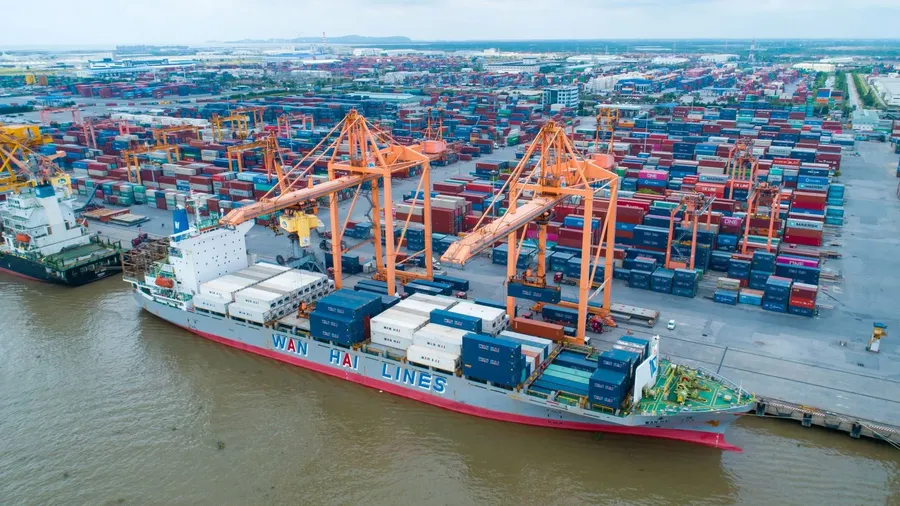
A ship arriving at port can tell two very different stories. If it carries machinery, components and materials that move quickly onto production lines, its cargo may expand productive capacity. If demand slows, those same boxes can become cash tied up in a warehouse and a burden on working capital. That is why the useful question behind a trade deficit is not immediately whether it is “good” or “bad,” but where imported goods are actually going.
This distinction is easy for new investors to miss. The trade balance measures the gap between the value of exports and imports over a period. It does not directly measure corporate profit, nor does it show whether a new production line has been installed or whether an order has been delivered. Understanding a deficit means following the journey of the input rather than stopping at the headline number.
A trade deficit is a starting point, not a verdict
Think of the economy as one very large workshop. Imports are the materials, components, fuel and equipment entering the workshop. Exports are the finished goods leaving it. When more value enters than leaves during a period, the trade balance records a deficit. But the workshop may be adding capacity, or it may simply be accumulating unsold stock.
The same deficit can therefore arise in two opposing settings. In the first, companies buy equipment or materials before production rises. That lag is normal: equipment has to be installed, workers trained, and orders converted into revenue. In the second, companies order against expectations that demand fails to meet. Inventory then rises and working-capital funding can become the real problem.
It is a mistake to force these possibilities into a quick conclusion. The composition of imports reveals an initial purpose, while production, deliveries and financial statements reveal the outcome. An economy can import a great deal of productive equipment and still retain little domestic value if assembly depends heavily on foreign technology, components and customers.
Read the import basket correctly
Before worrying about the scale of a deficit, ask what Vietnam is buying. Imported consumer goods point to a story about household spending. Machinery, equipment and components often point to investment plans or ongoing production. Materials and fuel are shaped at the same time by output, global prices and stockpiling needs. Treating all of them simply as “imports” hides these important differences.
Put simply, a newly purchased machine does not create revenue on its own. It only creates the ability to make more goods or make them more efficiently. To turn that ability into business results, a company needs orders, power, labour, supply chains and a market for its output. Investors should therefore not jump from equipment imports to a profit forecast for a sector or a particular company.
Components deserve the same care. An electronics plant may raise component purchases weeks or months ahead of a delivery season. That gap is not automatically negative. But if purchases keep rising while new orders, production and deliveries do not improve, the risk changes direction. Goods in a warehouse still have to be financed with cash, bank credit or supplier payment terms.
This is also where value and volume need to be separated. Import values can rise because companies are buying more, but they can also rise because fuel, materials or freight have become more expensive. Without separating those drivers, it is easy to mistake an input-price shock for an expansion of productive capacity.
From the factory gate to customer delivery
The second link is real production. Sector activity indicators, manufacturing output, industrial power use and order surveys do not replace financial statements, but they help answer an earlier question: are inputs being put to work?
When production rises alongside purchasing activity, the signal is generally more constructive than a case where imports rise alone. If new orders and export orders continue to improve, companies have a clearer reason to buy materials. When finished-goods inventory falls because products are delivered to customers, the chain from input to revenue is functioning. That chain should be observed across several reporting periods, not one monthly release.
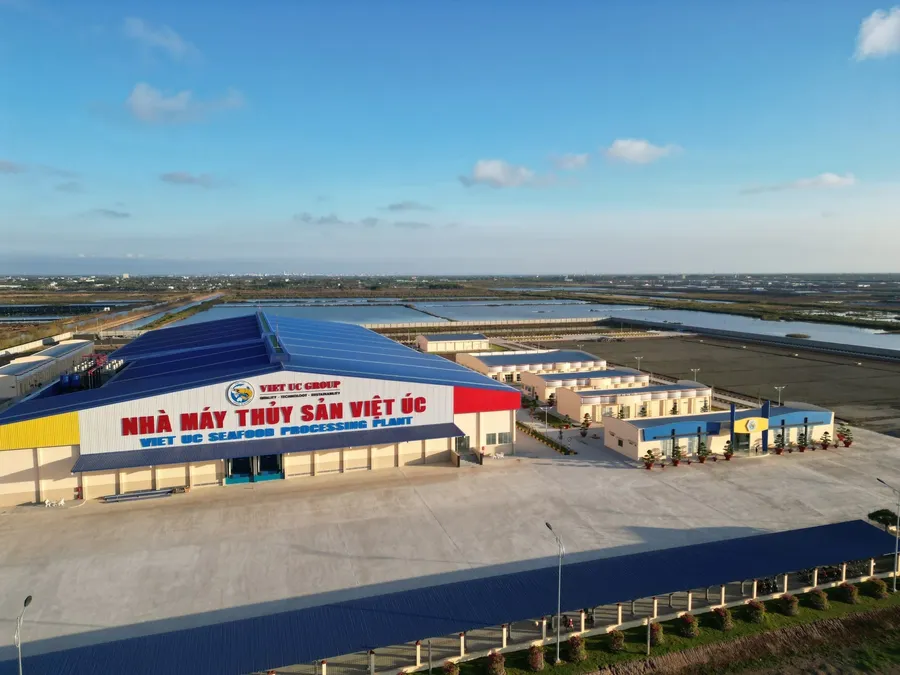
Timing alone, however, does not establish causation. Strong production data may reflect orders signed earlier, inventory replenishment or a narrow set of industries. A company buying more components may be preparing for future orders rather than reporting current output. Good analysis keeps the question open until several indicators confirm the same explanation.
For new investors, a practical habit is to avoid reading one indicator in isolation. Put at least three layers of evidence together: the type of goods being imported, whether production is rising in line with it, and whether orders or exports in the related industry are keeping pace. When all three improve over several periods, the argument for investment in productive capacity becomes stronger. When they diverge, the conclusion should remain cautious.
Retained value is the harder question
An economy can post large trade flows without retaining a comparable share of value domestically. That can happen when companies import components, assemble them and export the finished product with limited local content. Export revenue is still recorded, but payments for technology, components, licences, freight and foreign suppliers can account for a substantial share of the value.
For that reason, a trade deficit is not only a macroeconomic story. It is also a story about where Vietnamese businesses sit in the supply chain. Companies that participate in design, materials, tooling, components, technical services or logistics have more scope to retain value than firms confined to a single assembly stage. This is a trend to test through contracts, productive capacity and actual margins, not through an attractive industry label.
Exchange rates matter as well. When the local currency weakens, the cost of foreign-currency inputs can rise before a company has time to adjust selling prices. Some exporters earn foreign currency but still face pressure when their imported-input share is high. The net effect depends on the structure of revenue and costs and on risk management, so it cannot be inferred simply because a company “exports.”
The warehouse is where expectations are tested
Inventory is not always bad. Many industries build material stocks ahead of peak seasons or ahead of input-price volatility. The issue arises when inventory grows faster than revenue for several periods, turnover slows and operating cash flow weakens. At that point, reported profit may not fully describe the pressure on cash.
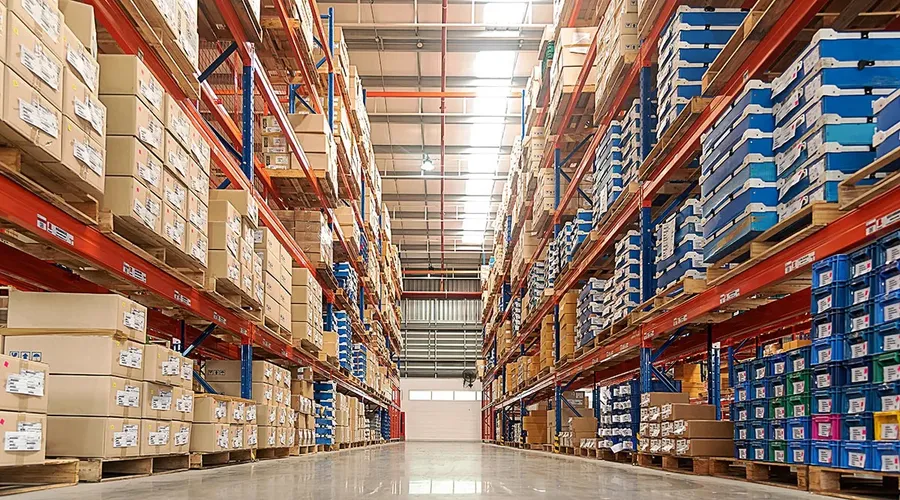
This matters especially for businesses that rely heavily on imported materials. Investors should read inventory notes together with payables, receivables and short-term borrowings. Rising inventory alongside firm orders, controlled receivables and stable operating cash flow is one story. Rising inventory alongside overdue receivables and expanding debt is another.
There is no need to turn that exercise into a buy-or-sell prediction. Its purpose is to identify the quality of growth. Revenue that rises because more goods are sold is different from revenue that rises while cash is stuck with customers or in a warehouse. The difference becomes clear only when the income statement, balance sheet and cash-flow statement are read together.
A more useful monitoring list
Rather than betting on the label of a “positive” or “worrying” trade deficit, follow a chain of confirmation. Start with the import mix: are machinery, materials or consumer goods leading the move? Next come production and orders: are factories becoming more active, are delivery conditions improving, and are finished goods leaving the warehouse? Finally, look at the companies: do revenue, margins, inventory, receivables and cash flow tell the same story?
The thesis is not that a trade deficit is inherently good. It is a signal that has to be decoded through output. When inputs become production, orders and domestic value added, a deficit can be part of a transition into expansion. When that conversion breaks down in inventories or cash flow, the same phenomenon means something very different.
The quantitative July figures in the original sources are now outside the permitted freshness window for a current conclusion. The appropriate stance is to wait for updated trade, production and corporate-results releases, then test whether those three layers of confirmation still align. That is the signal worth watching, rather than a rushed verdict based on the trade balance alone.