
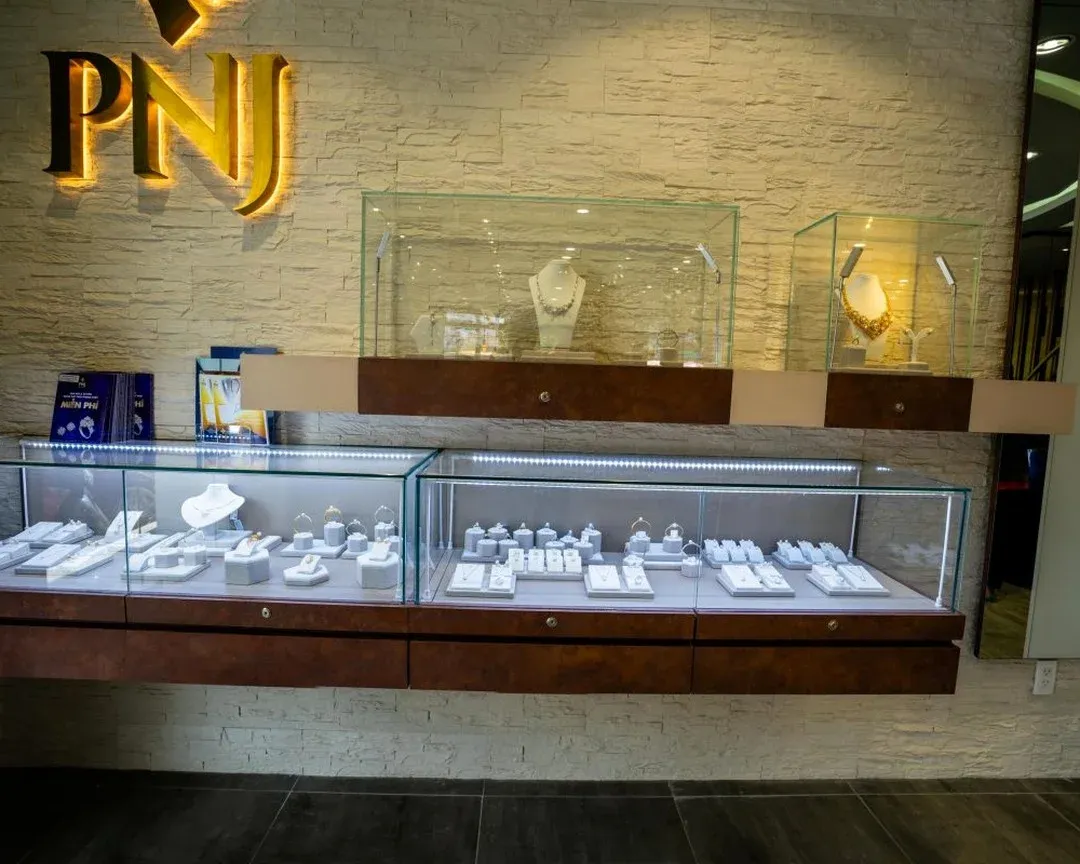

By mid-morning on August 14, PNJ shares were up 3.40% at VND 36,500. Global gold was down 0.72% at USD 4,318.25 per ounce, while the VN-Index had fallen 1.10%.PNJ PNJ HOSE Those prices appeared on the same screen at the same time, but they do not describe the same asset or the same economics. Gold is a precious metal; PNJ is a retailer and manufacturer that must turn inputs, design, brand and store operations into earnings.
That distinction matters. The opposing moves do not prove that a softer gold price caused PNJ to rise. A more defensible reading is that the market is reassessing company-specific variables while gold reflects demand for the metal, interest rates, exchange rates and safe-haven demand. The central thesis is simple: for PNJ now, earnings quality and inventory quality matter more than a one-session move in gold.
Owning PNJ is not the same as owning gold
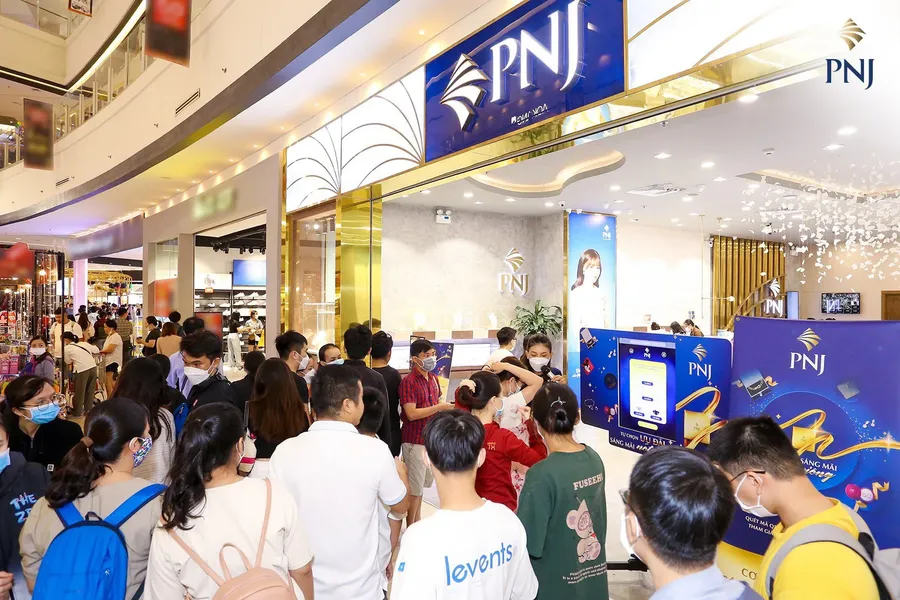
Someone buying a gold ring or bullion bar normally focuses on resale value, the bid-ask spread and the holding period. When gold rises, the nominal value of that holding rises with it. A PNJ shareholder, by contrast, owns part of a business that retails, manufactures and distributes jewellery. Gold is a key input, but it is not the business model in its entirety.
The revenue mix helps explain why sales and profit can move in different directions. High-purity gold products can lift reported sales when input prices rise even when unit volumes are unchanged, but their gross margin is usually thinner than that of finished jewellery. Jewellery also earns from design, brand, workmanship and the in-store experience, which can support a better margin.
The trade-off is that jewellery demand is more exposed to household income and consumer confidence. A fast gold rally can push customers toward hoarding or deferment of discretionary purchases. A steep fall can also make consumers wait for a lower entry point. Large swings in either direction can therefore slow jewellery demand.
This is why a simple gold-price chart is an incomplete analytical tool for PNJ. It captures the value of an input, but not the mix of products sold, the value added through workmanship, or the pace at which customers walk into stores. It also says little about costs and provisions. A retailer's equity value ultimately depends on its ability to convert the whole operating model into sustainable earnings and cash.
Higher revenue, less profit retained
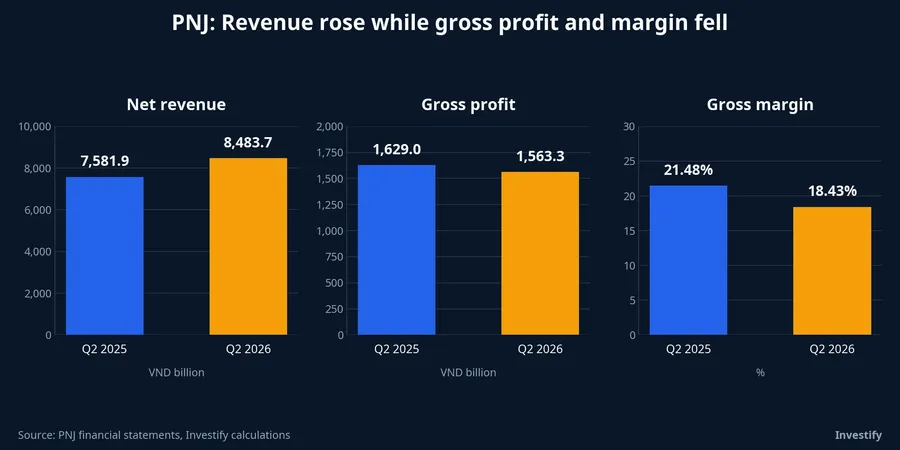
PNJ's second-quarter 2026 accounts are not a straightforward growth story. Net revenue reached VND 8,483.7 billion, up 11.89% year on year. Gross profit, however, fell 4.03% to VND 1,563.3 billion.PNJ That is the difference between selling more in value terms and retaining more after the cost of goods sold.
Gross margin consequently narrowed to 18.43% from 21.48% a year earlier.PNJ The margin change does not establish one exclusive cause, but it requires investors to look at product mix, input costs and retail execution. If revenue growth is driven mainly by a higher gold price or a larger share of low-margin products, the headline sales figure can look healthy while earnings quality does not improve.
A net loss of VND 283 billion in the second quarter of 2026, compared with a profit of nearly VND 437 billion a year earlier, adds a second layer of risk beyond commodity prices.PNJ Higher administrative expenses and provisions related to product repurchases after disruption in the diamond market weighed on the accounting result. A rising share price on one day, therefore, cannot by itself confirm that operations have recovered.
For a first-time investor, the key distinction is between a headline and a diagnosis. Revenue is useful because it describes the scale of selling activity. Gross profit and gross margin show how much is left after direct costs; they provide a better starting point for judging whether that activity is becoming economically stronger. The net result then incorporates the additional costs and provisions that a business must recognise when risks materialise.
Inventory is both supply and a management test
At the end of the second quarter of 2026, PNJ's inventory after provisions stood at VND 15,149.4 billion, or about 72.1% of total assets.PNJ For a jeweller, that scale reflects the need to hold raw materials and finished products for a retail network. It does not mean that a higher gold price immediately turns the whole inventory balance into profit.
The cash value of inventory can rise because materials have become more expensive, even when physical volumes have not. Management must also control product age, turnover, mix and repurchase terms. An unfashionable piece of jewellery or a difficult-to-resell diamond does not have the same liquidity as a bullion bar.
The inventory impairment provision at the end of the second quarter was about VND 410.4 billion, substantially above VND 45 billion a year earlier.PNJ This does not determine the value of every item on hand, but it points to the right question: can the company recover the expected value from the product groups requiring provisions? For shareholders, that question carries more weight than gold's daily direction.
Inventory should therefore be read alongside the margin data, rather than in isolation. A large balance is not automatically a warning sign for a jewellery retailer, nor is it automatically a source of upside when gold is higher. Its meaning depends on the speed and quality of conversion into sales, cash and ultimately profit. That is why the provision line is an important companion to the inventory balance.
A share-price rebound needs liquidity context
PNJ recovered about 18.70%, from VND 30,750 on July 24 to VND 36,500 by mid-morning on August 14.HOSE Yet turnover by mid-morning on August 14 was about 2.33 million shares, far below the 41.56 million shares traded on July 24.HOSE The comparison suggests that trading pressure has changed, but it is not enough to assign a single cause to the rebound.
Several explanations can coexist: forced selling and panic may have eased; bargain buyers may have entered; or the market may be responding to expectations about the company's next steps. The available price and volume data cannot allocate the contribution of each factor. A cautious interpretation is that supply and demand for the shares are finding a new balance, not that the underlying business has already completed a durable turnaround.
That distinction also prevents a common mistake: treating an intraday quote as a closing verdict on a company. A price rebound can be meaningful, especially after an unusually active sell-off, but it can also be fragile. The next earnings release, the evolution of provisions and operating cash generation provide evidence that a single session cannot supply. Price action can signal a question worth investigating; financial statements are where the answer must be tested.
What deserves attention after the price move
The useful exercise is not to turn every session into a long-term forecast. Watch whether gross margin stops narrowing, whether inventory provisions keep rising and whether jewellery demand improves in subsequent reports. Cash flow from operations should also be considered alongside repurchase obligations to assess the business's real capacity.
The thesis remains that profitability quality, rather than gold's intraday price, will decide the PNJ story. The share-price recovery may extend or reverse with short-term supply and demand, but the case strengthens only if margin stabilises and provision pressure does not worsen. The next quarterly report will be the important test of whether revenue is being converted into profit and cash flow, rather than simply making the sales base look larger.