

A waste-to-energy plant can solve two jobs at once: take in waste and generate electricity. That sounds straightforward, with waste entering at one end and revenue leaving at the other. Yet for a heavily financed project, the central question is whether cash actually moves through each link in time to service interest and principal.
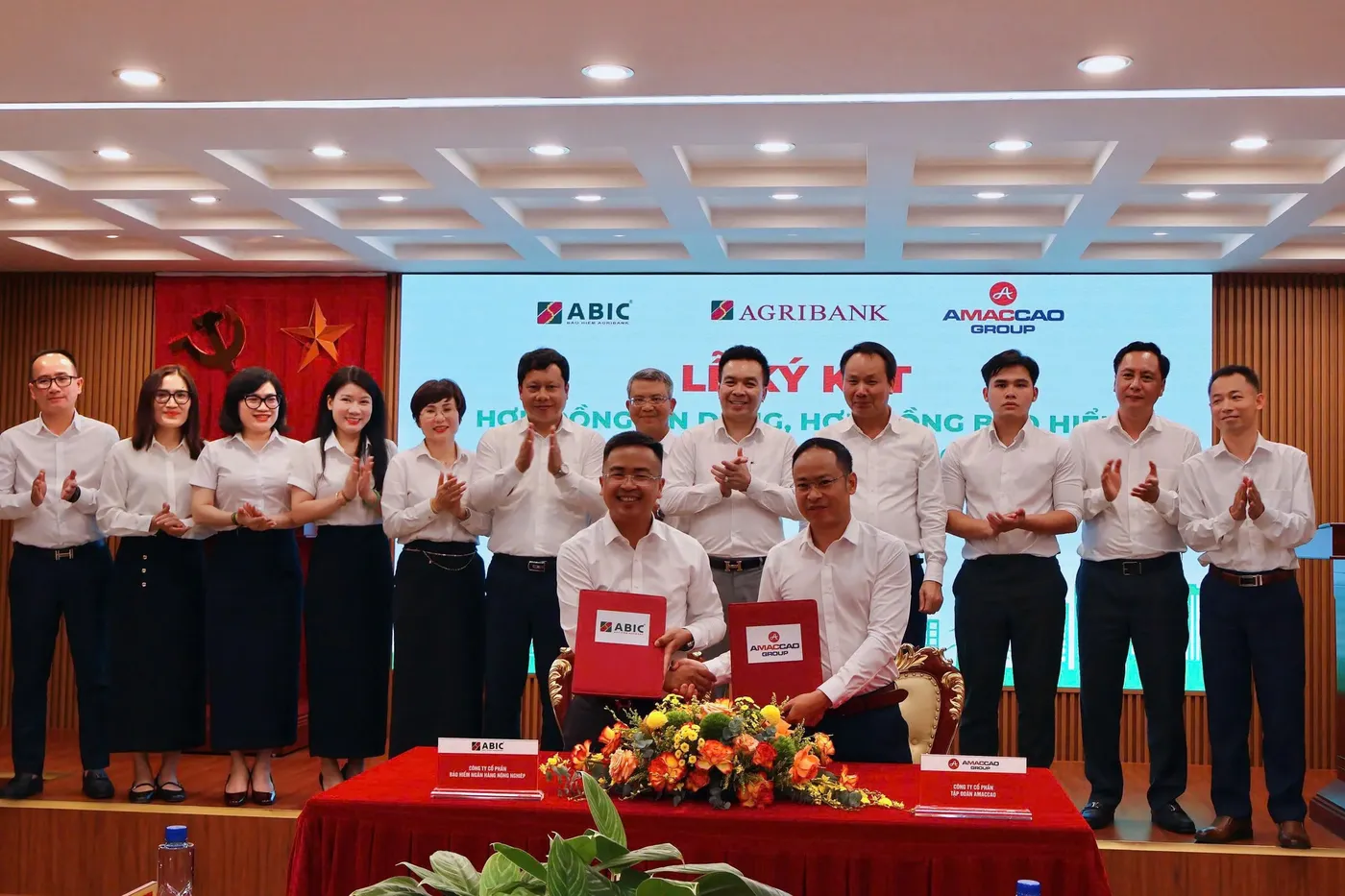
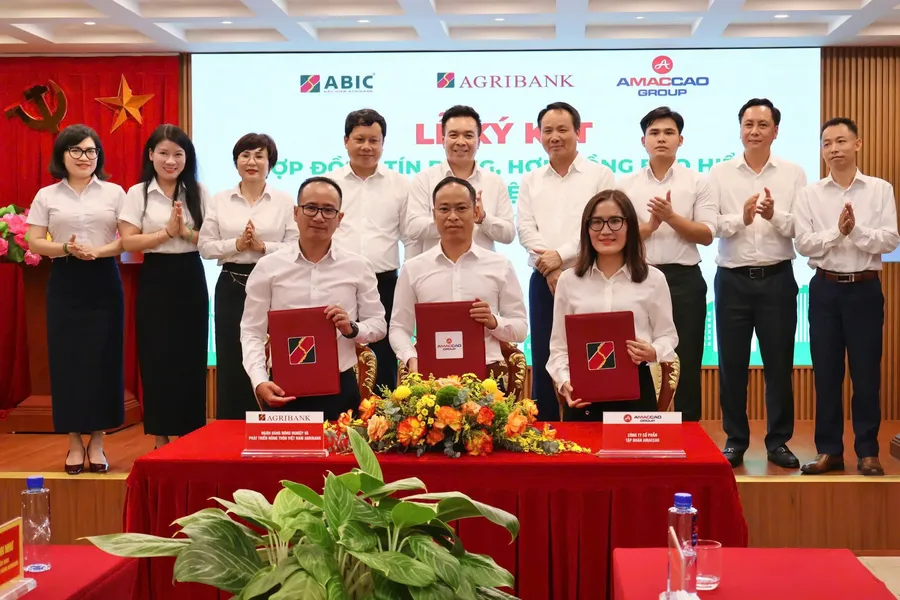
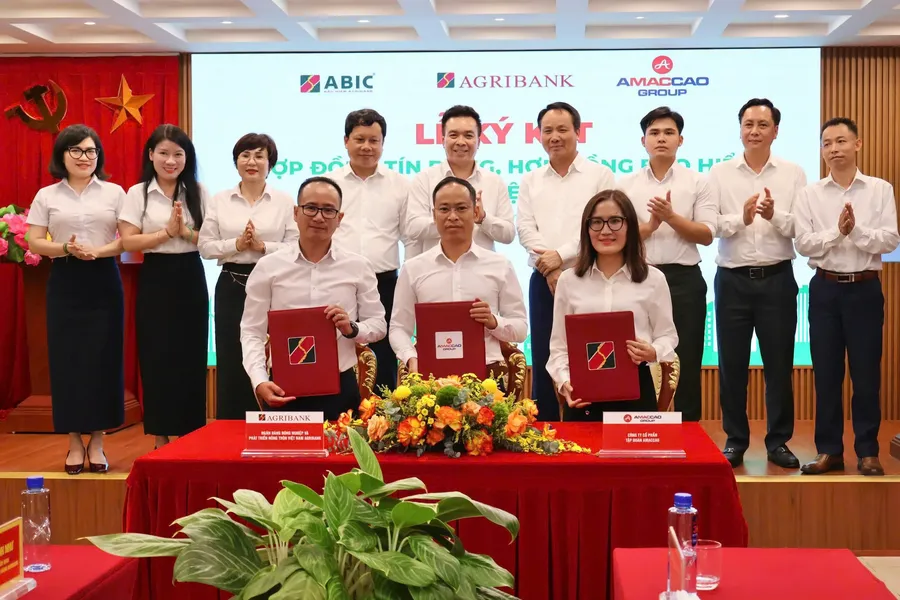
On August 10, Agribank and Amaccao Group signed a credit agreement for the Nghe An Waste-to-Energy Project. The maximum facility is VND 2,975 billion against announced total investment of VND 4,000 billion, or about 74.4% of project funding.Agribank At that proportion, the project’s own ability to generate cash deserves close attention.
The point is simple: a loan agreement does not establish that a project is either strong or weak. Public information is not yet sufficient to judge the security of the cash flow. What matters next is whether waste supply, collection contracts, operating performance and the repayment schedule line up.
What the credit facility does and does not say
A credit limit is the maximum financing a lender has committed to make available subject to agreed conditions. It does not mean that all VND 2,975 billion has been disbursed, nor does it turn VND 4,000 billion of total investment into revenue or profit. It is closer to having approval for a home-construction budget: the full amount may not have been drawn, and the house is not yet producing cash for its borrower.
Agribank’s announcement confirms the facility size, total investment and design capacity of 1,500 tonnes of waste per day using incineration for power generation.Agribank Those facts establish project scale, not the cadence of cash arriving in the plant’s account.
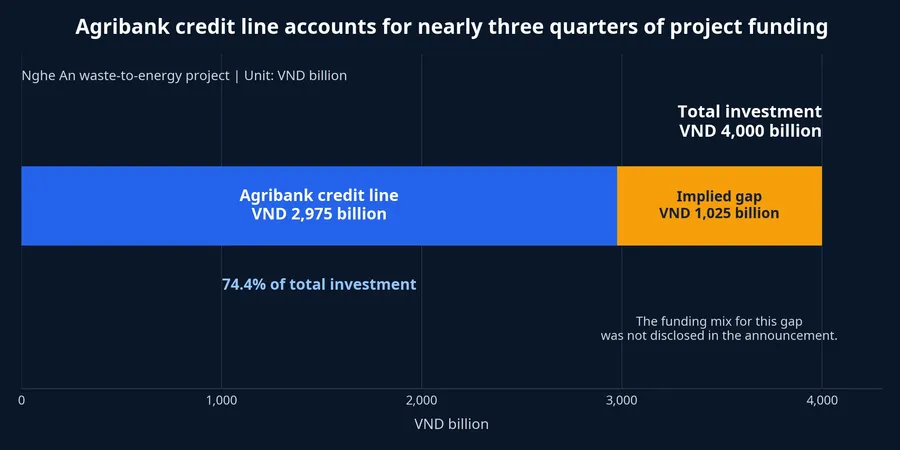
The chart leaves an implied VND 1,025 billion gap between announced investment and Agribank’s facility. That is arithmetic based on two published figures, not a disclosed funding breakdown. It should not be assumed to be equity, another loan or any specific source until the announcement says so.
Waste supply is where revenue starts
Design capacity of 1,500 tonnes a day is technical capacity, not a promise that exactly that quantity of waste will arrive every day. Steady operations require reliable deliveries, clear acceptance arrangements and a workable payment process for treatment services. If deliveries run below design capacity, some equipment and staffing costs remain while service revenue can fall.
That is why later disclosures should be read for the entity committed to supply waste, any minimum contracted volume, the treatment fee and how the fee changes over time. These details may sound administrative, but they govern how predictable a revenue stream can be. A capacity number becomes financially meaningful only when it is paired with an input volume backed by contracts or a specific delivery mechanism.
Collection is as important as volume. Waste may have been accepted, but treatment fees can still be subject to verification and payment. When collection arrives after a debt-service date, reported revenue and cash on hand can tell different stories. This is why project analysis asks not only how much is earned, but when it is collected.
Electricity sold is not the same as waste fed into the furnace
The second potential revenue source is electricity produced through incineration. It is not sound to convert tonnes of waste directly into power revenue. High moisture content or low calorific value can reduce output relative to the original assumption. The plant also consumes some power itself, while only billable commercial electricity creates sales revenue.
To assess this revenue stream, investors need actual generating capacity, commercial output, the power purchase price and the collection timetable under the contract. The August 10 announcement does not disclose these variables.Agribank Their absence is not a negative signal. It simply means an outside reader cannot yet build a dependable revenue model.
Operating performance connects the two income lines. A furnace shutdown for maintenance could reduce both waste acceptance and electricity supplied to the grid. Stable operations, in contrast, are what translate engineering design into actual output. That is the difference between a paper model and cash that can meet scheduled debt service.
Revenue is not debt-service cash
After treatment fees and electricity receipts arrive, the project still needs to pay for labour, furnace maintenance, materials, emissions-control chemicals, internal power use, leachate and ash management. These are not peripheral costs. They are what allow the plant to run safely and preserve the two revenue streams upstream.
The useful sequence is: cash from waste treatment and electricity sales, less cash operating expenses, taxes and compulsory outlays, then compare the remainder with interest and principal due dates. If costs rise or collections slow, cash available for debt service narrows even if reported revenue rises. The same framework is useful for infrastructure projects beyond waste-to-energy.
Construction progress belongs in the calculation as well. The facility may be disbursed against conditions and technical milestones, so the signing date is not automatically the date the project receives all funding or begins to earn revenue. Delays in approvals, construction or acceptance push back the start of cash generation. Additional construction-period costs could then alter funding needs.
What needs to be disclosed next
The official source does not currently identify the project-company entity, precise location, construction milestone, treatment fee, minimum waste-supply commitment, electricity price, expected electricity output, disbursement timetable, collateral, loan tenor, interest rate or repayment schedule.Agribank This list is not a verdict on risk. It marks the boundary between what has been disclosed and what an external reader cannot yet test.
For new investors, a simple sequence can make later updates easier to read. First, check whether committed waste volumes fit plant capacity. Next, examine how treatment fees are set and collected. Then look for commercial electricity output, the power price and collection timing. Finally, put those receipts alongside operating costs and scheduled debt repayments.
For the Nghe An project, the evidence supports an explicit wait rather than a verdict: a large credit facility is notable, but it cannot yet establish repayment capacity or investment returns. The most useful next signals will be contracts and operating figures that connect incoming waste to actual cash receipts. Once those links are public, readers can test whether debt is being serviced by project cash flow or another source of support.