
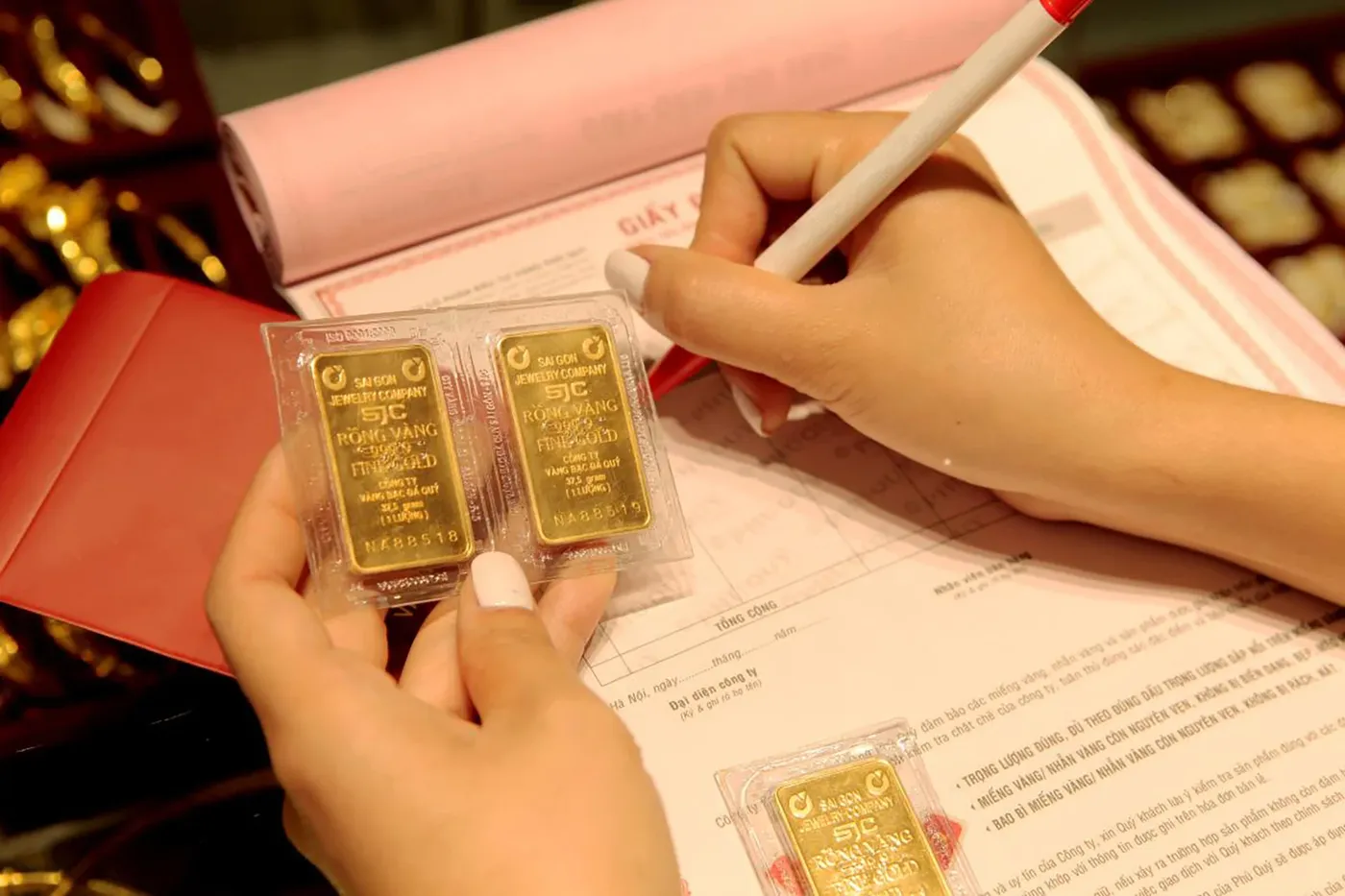

A gold purchase can be completed across a counter in minutes. If you later need to resell the item, verify the transaction or resolve a disagreement, though, the gold itself is only part of what matters. You also need a file that shows which item was bought, from whom, on what terms and through which payment trail.
The inspection news released on August 8 is a useful reminder. The Government Inspectorate transferred information indicating possible violations in gold-trading activity to the Ministry of Public Security for consideration within its authority. One group of information concerned seven individuals who sold raw gold of unclear origin, with transactions worth approximately VND 2,084 billion. Another concerned six companies showing signs of incorrect declarations of tax and retained profits, involving a provisional VND 93.733 billion.CafeF
That distinction matters. This was a transfer of information about possible violations for review by the competent authority, not a conclusion that the individuals or companies had committed crimes or were liable. For individual buyers, the practical takeaway is not to speculate about anyone's responsibility. It is to stop treating documentation as an afterthought once an attractive price has been found.
A sound transaction should form one coherent file
Think of the gold as the asset and the paperwork as its travel label. The purchase price tells you what you paid. The file answers different questions: who sold it, which item was delivered, which payment relates to it, and which terms apply if you later want to sell it back.
Not every transaction turns into a dispute. Even in ordinary circumstances, clear records reduce friction. When you want to resell, they make it easier to match the item with the information retained at purchase. When you need to contact the seller, both parties have the same date, item reference and documents instead of relying on memory.
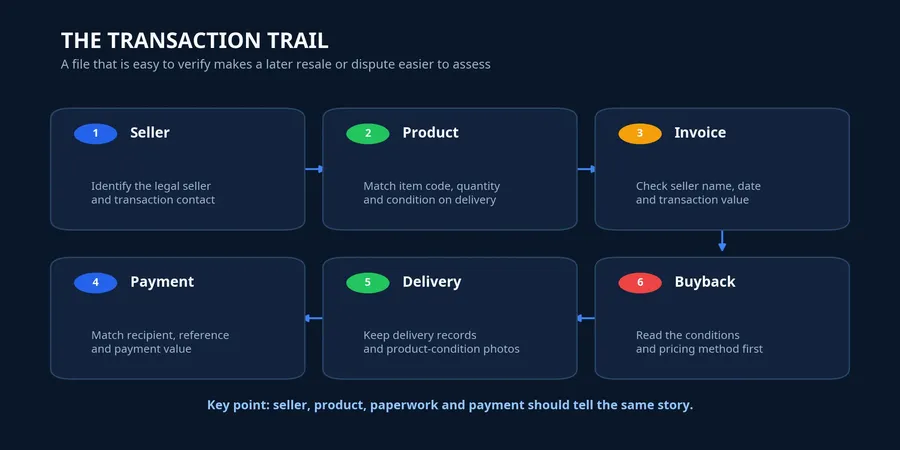
The point is not to collect paper for its own sake. The documents need to agree with each other. The entity on the invoice, the payment recipient, the item characteristics and the delivery time should all be reconcilable. If one link differs from the others, ask while the transaction is still fresh and easily checked.
Start by identifying the seller
At a gold counter, price is usually the first question. A more careful first question is who is selling to you. Identify the legal entity issuing the invoice, the transaction address, an official contact channel and the account that will receive payment. A shop sign, a social-media account and an invoice may not use identical names; that is not automatically a problem, but it should have a clear explanation.
When a purchase begins through social media or a messaging app, convenience should not replace verification. Ask which entity will issue the invoice and which account receives the money. A chat can help place an order, but it is a weak substitute for transaction information you can check later.
A reliable seller is not merely one with an attractive showroom or a fast-moving price board. It should also be able to explain the product, records and post-sale policy clearly. If a staff member avoids questions about the legal entity, invoice or buyback conditions, pause the transaction. Pausing before payment is far easier than trying to reconstruct the facts afterwards.
Read the gold through details you can match
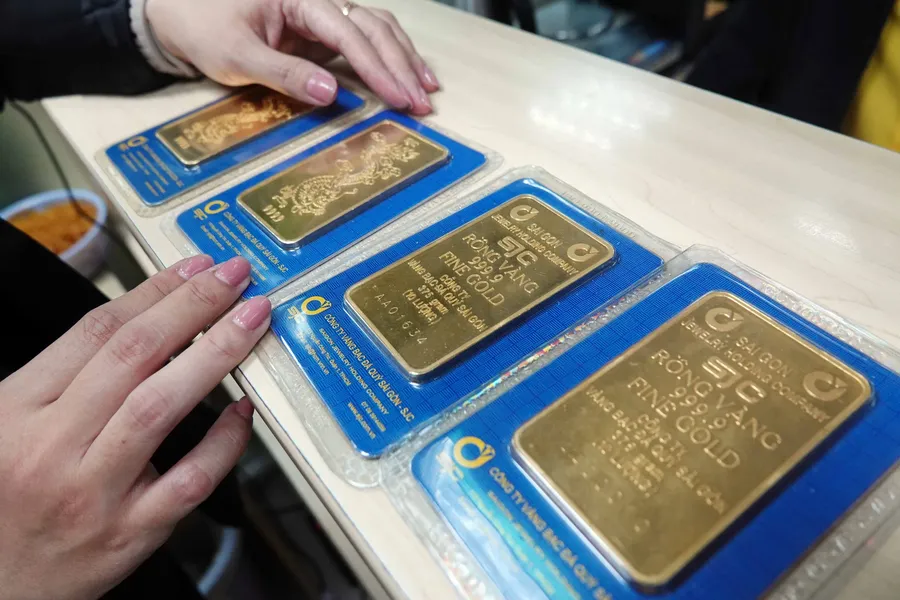
Gold bars, rings and jewellery serve different purposes and can carry different identifying features and trading terms. Do not rely only on a distant photo. At delivery, inspect what appears on the item, packaging or accompanying records: product type, weight, markings, brand, product code and serial number where applicable.
The purpose is not to judge quality by eye. Buyers do not need to become assay experts. The practical task is to check whether the item description matches what the seller records. An invoice that simply says “gold” is less useful than a file that lets you identify the exact item in your hand.
This is also the moment to retain photos of the product and its packaging condition. The photos should capture identifying features, not just the item's shine. If there is a delivery record or guarantee document, check it before leaving the counter. Doing so at handover lets you request a correction when both parties still have the same information available.
Invoice and payment must tell the same story
An invoice is more than something to place in a drawer. It is the seller's record of the transaction. A payment record shows where the money came from, where it went, when it moved and under what reference. When the two align, a buyer has a much simpler evidence trail than when only one survives.
Before leaving the counter or confirming an online payment, review the seller name, item description, transaction value and date on the documents. For a transfer, check the recipient name before confirming; the reference should be enough to recognise the payment later. If you are asked to send money to an account that does not match the selling entity, ask for the reason through that entity's official channel.

After the transaction, retain the original electronic invoice where available, plus a readable copy or image. Put the payment record, delivery note and product photos in the same folder. A separate backup on another device or storage service means the file does not depend entirely on the phone you use every day.
Asking about buyback after buying is too late
Many people buy gold assuming that they can simply bring it back when they need to sell. In practice, buyback conditions can differ by product type, packaging condition, the seller's ability to identify the item and the policy of each business. That is why the buyback question belongs before money changes hands, not only when liquidity is needed.
Ask the seller to explain how it determines a buyback price, which documents you should bring and which product conditions may affect acceptance. If the answer is only verbal, request an official link, written terms or wording on the delivery record. This is not an unusual demand; it is a way for both sides to understand the same condition.
Missing an invoice does not automatically mean that the person holding gold has no claim to the item. It does, however, make the transaction harder to evidence: the purchase date, price, seller and product condition may be more difficult to establish. Any later verification or policy discussion can take longer and will depend on what evidence remains.
The core point: managing gold starts when you pay
With physical gold, risk is not limited to a price board that changes every day. There is a specific risk that buyers can reduce themselves: leaving a transaction without a clear enough trail. The August 8 inspection news is not evidence that every gold transaction is problematic. It is a timely reminder that origin, documentation and payment should be assessed alongside price.CafeF
The thesis is straightforward: a sound gold purchase leaves a file that can be checked. Prices can move daily and no buyer controls all of that volatility. What a buyer can control at the time of payment is verifying the seller's identity, matching the product, retaining the invoice and keeping the payment evidence. The next time you stand at a gold counter, the signals worth watching are not only the spread between buying and selling prices, but also the clarity of every link in the transaction.