


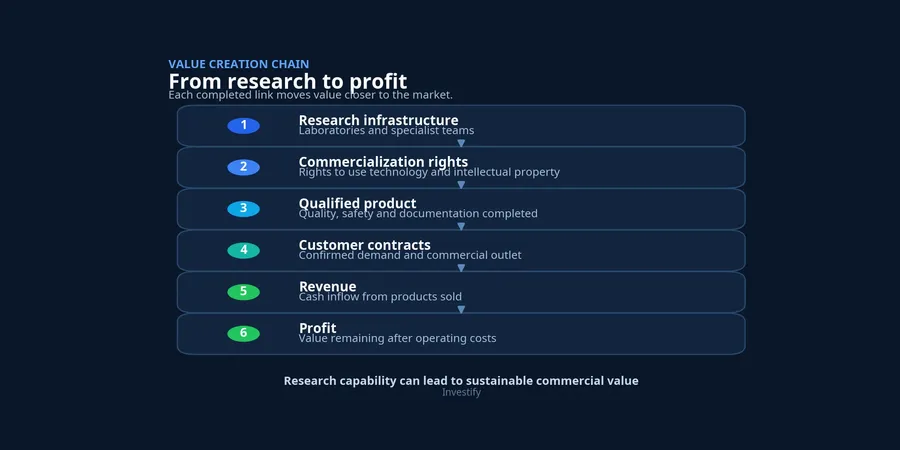
Vietnam's Decision 1483/QD-TTg has set an ambitious framework for strategic technology. More national laboratories, testing centres and domestic technology capability are welcome developments. For investors, though, a distinction matters from the outset: research infrastructure can strengthen the economy, while a company's profit only emerges when it has a product, paying customers and revenue that can be recorded.
Put simply, a new laboratory is like a new road. It can shorten the trip to market, but it does not automatically become revenue for a listed company. The central point is straightforward: Decision 1483 is worth following as long-term infrastructure policy, but it is not yet evidence for an earnings forecast on any particular stock.
Capacity first, not pre-allocated earnings
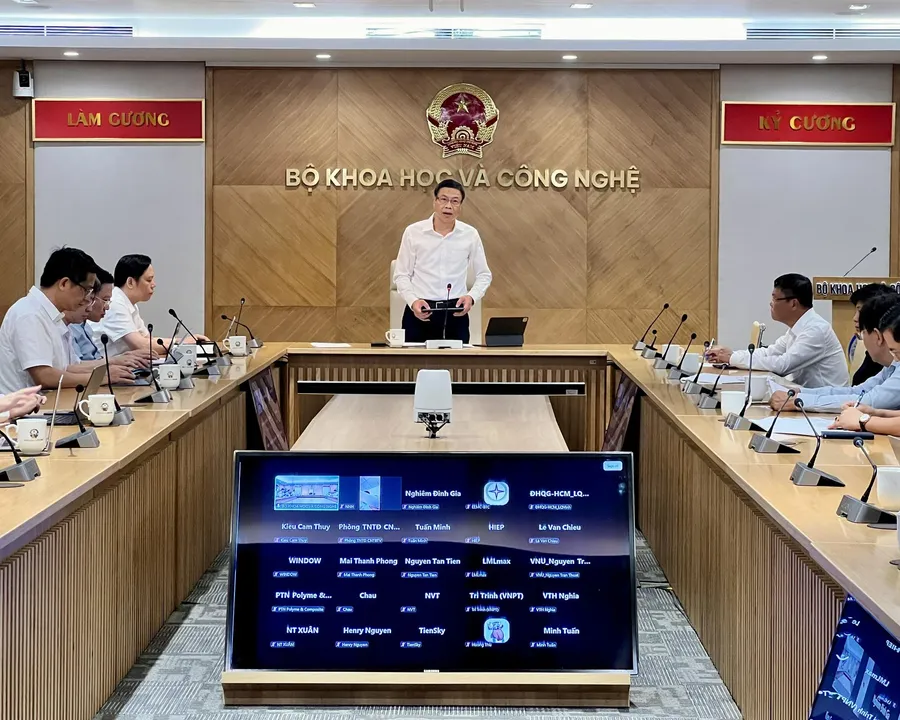
Issued on 4 August 2026, Decision 1483/QD-TTg approves a programme to develop national research, testing and key laboratory systems for strategic technologies. It calls for a connected path from core-technology research through development, integration, testing, verification, certification and product completion. That is a chain of work, not a shortcut from a policy announcement to corporate profit.Government of Vietnam
By 2030, the programme targets at least eight key national laboratories, four national research and testing centres, mastery of at least 10 core technologies, and at least 10 enterprises capable of commercialising technology.Government of Vietnam These figures describe the scale of capability the policy aims to build. They are not forecasts of revenue, profit or valuation for companies already listed on Vietnam's exchanges.
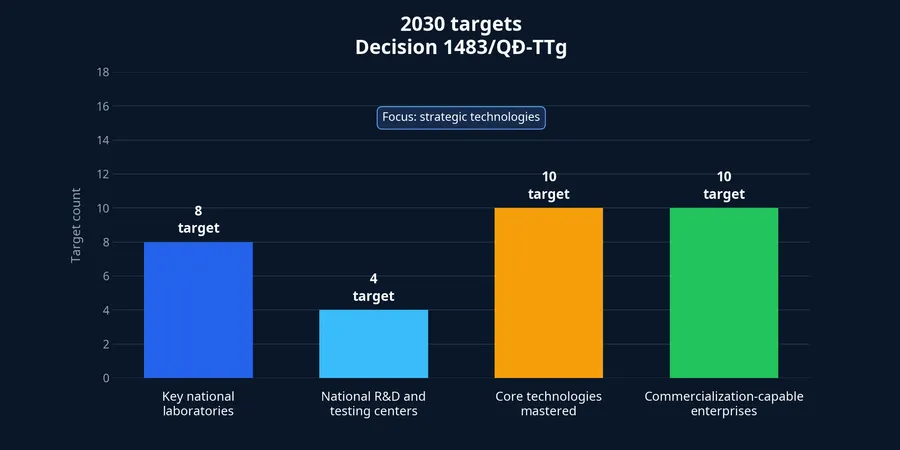
The phrase “enterprises capable of commercialisation” is particularly easy to overread. The decision refers to innovative start-ups or science-and-technology enterprises formed through commercialisation; it does not identify listed companies that have already secured a benefit. Moving directly from that policy target to a list of stocks therefore goes beyond the available evidence.
The programme also targets average annual growth of at least 18% in relevant patent applications and protection certificates, starting from the third year after a facility officially begins operating.Government of Vietnam A patent is intellectual property, not a sales invoice. It must still become a product, pass the relevant tests and find a buyer willing to pay.
Funding matters only when its recipient is known
The decision permits funding from central and local budgets, corporate resources, grants, aid and public-private partnerships. It also allows businesses to invest, commission research, conduct tests and exploit research outcomes and intellectual property.Government of Vietnam Yet it neither sets a national funding total nor allocates a defined amount to any named company.
That is the difference between a priority sector and a company with new income. Stronger evidence would be a formal task assignment, an approved project, a procurement contract, a co-investment agreement or funding recorded by the company. A memorandum of understanding says what parties intend to explore. It does not establish how much cash is committed, when it will be disbursed or how revenue will be accounted for.

Even once funds reach a project, the accounting impact can vary. Shared infrastructure may lower research costs. A commissioned project may generate service revenue. Commercialisation rights can support product sales or licensing income. Those routes differ in margin, timing of recognition and repeatability, so they should not be compressed into one label: “benefiting from policy.”
Commercialisation rights determine who captures value
Decision 1483 requires the protection of intellectual-property rights and assigns that duty to managing and operating entities. It does not pre-assign ownership or commercialisation rights over future research output to any specific company.Government of Vietnam A company's name at a conference, in a research group or in a cooperation announcement is therefore not enough to establish that it will capture economic value.
Think of commercialisation rights as the right to operate a shop on valuable land. Helping to develop the land does not itself grant the right to sell there. A company may contribute to research without owning the result. It may own part of a technology but share commercial rights with a research institute or lead organisation. The reverse is also possible: a company that did not create the patent can still commercialise it through a clearly defined licence.
Investors should look for the owner, the scope and term of rights, permitted markets and revenue-sharing mechanism. In financial statements, that narrative should align with research expense, intangible assets, customer advances and revenue after performance obligations are satisfied. A larger intangible-asset balance does not prove a technology is generating cash; customers, acceptance and actual cash flow are stronger evidence.
When a policy becomes a testable investment case
The decision's appendix provides several checkpoints. Evaluation and selection criteria are planned for completion in October 2026, while the performance scorecard and shared operating rules are planned for the first quarter of 2027. The compilation, assessment and selection of proposals is planned for 2026–2027, and the system-management digital platform is planned to operate in the first quarter of 2027.Government of Vietnam
Those dates show that the programme remains in its implementation phase. Before criteria are completed, it is not possible to know which facilities qualify. Before proposals are selected, it is not possible to know which projects will receive resources. Before contracts are signed, adding new revenue to forecasts remains an assumption. This is not pessimism; it is the sequence of evidence needed to keep expectations from being mistaken for facts.
The monitoring mechanism is another reminder that commercialisation takes time. A unit that achieves less than 70% of its committed performance indicators after three years of operation must prepare a remediation plan. If it still misses those indicators after five years, the competent authority may consider adjusting the plan or changing the operating organisation.Government of Vietnam Selection for participation is not the same as delivering sustainable profit.
A practical check before accepting a technology narrative
Rather than immediately asking which stock benefits, new investors can work through five questions. First, where will the money come from, and have the allocation decision and disbursement timetable been disclosed? Second, what is the company's role: operator, equipment supplier, research contractor, testing provider or buyer of the results? Third, who owns the technology and who has the right to commercialise it?
Fourth, look for paying customers. Binding contracts, orders, acceptance records and payments are more meaningful than statements of cooperation. Finally, measure the contribution to profit: is the new revenue material, is the margin credible and can the cash flow recur? These questions do not turn investing into a certainty, but they separate verifiable information from a compelling narrative.
Decision 1483 is best understood as a blueprint for expanding Vietnam's national technology capability. An investment case becomes more credible only when task assignments, clear commercial rights, accepted products, customer contracts and reported revenue appear. Until those signals arrive, the useful watch-list is not a speculative collection of stocks but the disclosures that can be checked at each link in the value chain.