
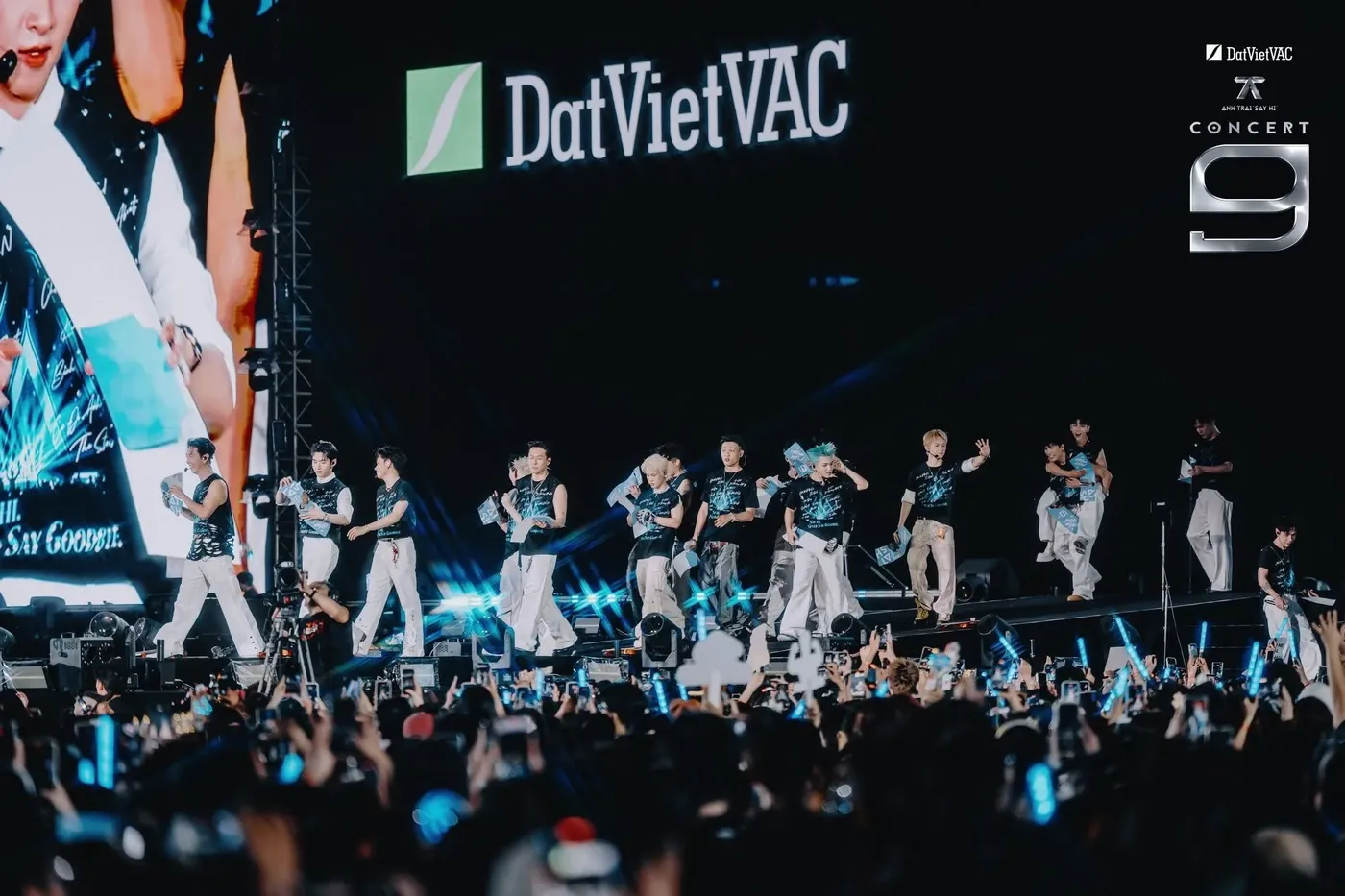

A familiar entertainment brand can make the DatVietVAC IPO easy to notice. For a new investor, though, the first decision before subscriptions open is not how many shares to request. It is understanding which stage the money pays for, how long it may be tied up, and what event actually turns a subscription into shares in an account.
Vietcap states that DatVietVAC is offering 11,150,000 shares at VND 54,800 each, with subscriptions and deposits accepted from 10 August until 4:00 pm on 7 September 2026.Vietcap The immediate task is not to forecast the first trading-day price. It is to decide whether the process, the valuation evidence and the wait for liquidity fit the investor’s own cash needs.
An IPO subscription is a sequence, not an ordinary buy order
An IPO works differently from pressing “buy” on a live exchange screen. For a listed stock, a price and the possibility of execution are visible immediately. Here, investors submit their requests first, await allocation, and only then know the exact share count they will purchase. A requested quantity is therefore not a quantity already owned.
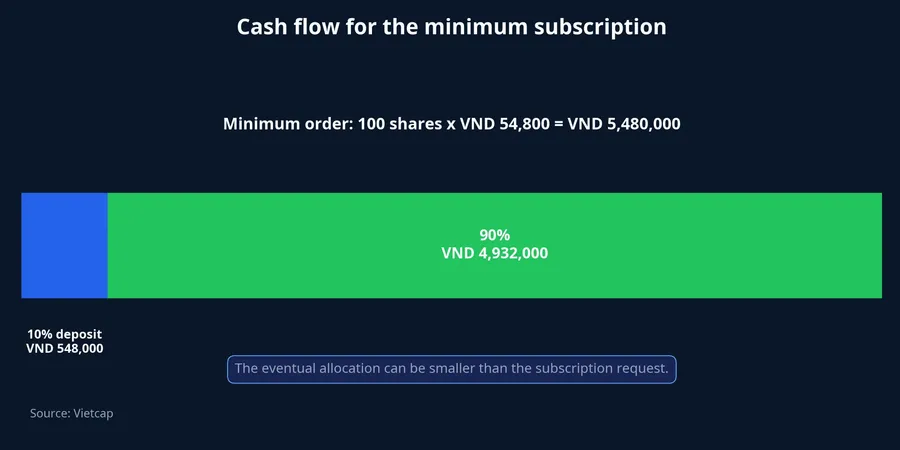
Vietcap sets a minimum subscription of 100 shares, in increments of 100. Applicants must deposit 10% of the total subscription value in order to be considered for allocation.Vietcap The smallest order is consequently worth VND 5,480,000, while the initial deposit is VND 548,000. That is a reservation payment for the request, not proof that 100 shares are guaranteed.
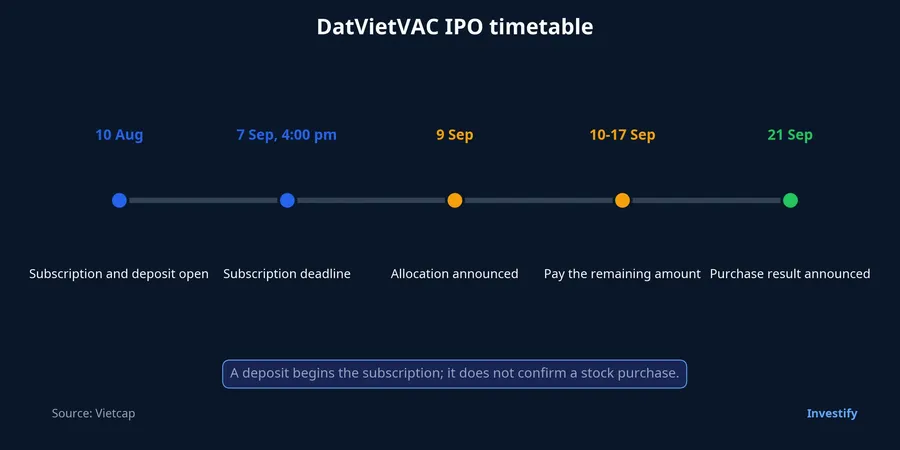
The next date that matters is 9 September, when allocation results are scheduled to be announced. Investors pay the balance based on that allocation from 10 September through 4:00 pm on 17 September, and the purchase result is expected on 21 September.Vietcap If the allocation is below the subscription request, the final amount due will also be lower. Cash planning should not assume a full allocation.
Follow the cash in order, rather than focusing only on the deposit
A deposit below the full order value does not remove the cash risk. It simply divides the funding obligation into two points in time. Once allocation is known, the investor needs the remaining funds for the allocated shares and must also accept that the deposit attached to any unallocated shares may not return on the allocation date.
Under the offering schedule, deposits for unallocated shares and any overpayment are to be refunded within 10 days after the State Securities Commission has issued a notice regarding the offering-result filing and DatVietVAC has completed the release of the escrow account.Vietcap In practical terms, the refund date depends on post-offering procedures; it is not a fixed day that investors can infer from the subscription calendar.
Before subscribing, it is sensible to keep IPO funding separate from an emergency reserve, bills due during the month and short-dated investment plans. A small initial deposit is not fully available cash. If the money has to meet a firm deadline, the wait for allocation and refund carries a real opportunity cost even though it does not appear as a trading fee.
The offer price is the start of valuation work
The VND 54,800 offer price is a concrete fact. It must sit alongside other concrete information: what the company sells, how many shares will be outstanding after the offering, which earnings measure underlies the ratios and how the proceeds are intended to be used. Without those answers, any valuation multiple, low or high, is just a compact label.
This is where a new investor can confuse price with value. Price is the amount paid for one share. Value is an assessment of future cash generation after allowing for risk and for the number of shares sharing those earnings. A company with a strong brand may have an advantage in recognition, but recognition alone says little about content-production costs, collection from customers or the durability of earnings.

The offering prospectus and the issuance documents linked in Vietcap’s announcement should be the first documents to read. Look for audited financial statements, the business plan, post-offering ownership and the use of proceeds. A ratio built on planned earnings should not become an automatic conclusion that the stock is “cheap”. A plan is an assumption that can later be tested, not an outcome that has already occurred.
A useful safeguard is to keep three separate columns in personal notes: audited historical data, company targets and calculations made by the investor. They should not be mixed together. Reported profit is an event, projected profit is a target, and a P/E calculated from inputs is a scenario. Keeping the distinctions visible makes it harder for an appealing but context-free number to decide the investment case.
Brand familiarity attracts attention; cash generation needs evidence
DatVietVAC operates in a business close to audiences’ everyday lives: programmes, artists, events, advertising and content rights. That familiarity can make the company easier to picture than many industrial businesses. Yet an investor owns a claim on cash flows, not merely goodwill toward a show or a performer.
When reviewing the documents, examine each revenue stream and ask whether it repeats through long-term contracts, returning customers or the success of individual projects. Receivables, collection terms and operating cash flow deserve their own review. A content business may report attractive margins in a period, while advertising, sponsorship, ticketing and intellectual-property income do not necessarily collect cash on the same schedule.

There is no need to assume that one industry or brand is automatically riskier than another. The appropriate response is to look for evidence in the documents: the concentration of major customers, the number of revenue sources, changes in receivables and how reported profit has converted into cash. Without those sections, the evidence is not sufficient for a strong valuation conclusion.
Liquidity begins only once the shares trade
An offer price is not a market price. Before the first trading day, there is no continuous market in which a shareholder can sell when cash needs or an investment view changes. The offering must still be completed, the securities registered and deposited, and the conditions for trading met.
That does not label this IPO as good or bad. It correctly describes the decision: an investor exchanges some cash flexibility for the right to wait for allocation, then continues waiting for market liquidity. For short-horizon funds, that belongs alongside the offer price. For long-term capital, it is time to test the thesis rather than chase a familiar brand.
The central view is straightforward: the DatVietVAC IPO should be treated as a decision that requires a complete file, not as a choice settled by brand recognition or the 10% deposit alone. The signals to follow through and after the offering are allocation results, the refund timing for excess funds, updated completion documents and the date the shares become tradable. Those milestones will give new investors a fuller basis for judging the opportunity.