


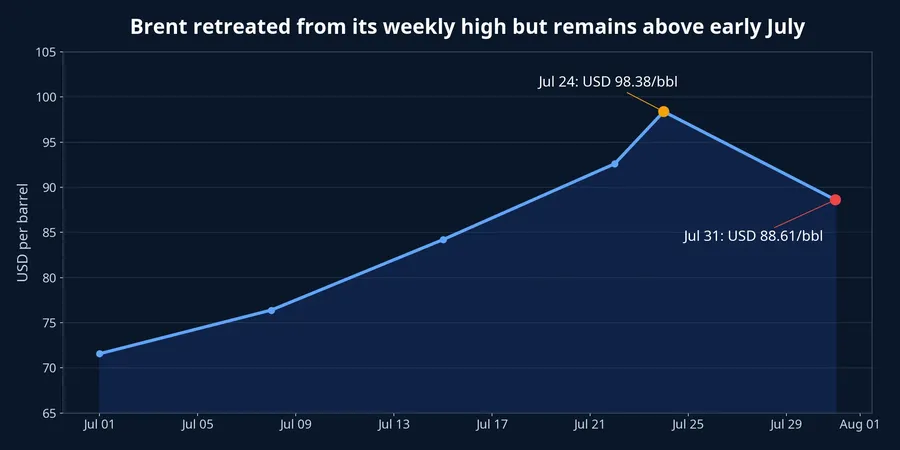
Brent ended the week at USD 88.61 a barrel, down 9.93% from July 24 but still 23.81% above the start of the month. That distinction matters. The market has reduced its war-risk premium; it has not established that oil supply has returned to normal. For newer investors, that is the difference between a pullback and a durable downtrend.
The next OPEC+ meeting may generate a quota headline. Yet a quota answers only part of the question. Oil prices have three layers: permitted output, actual production and the ability to deliver barrels to buyers. A blockage in any one of them can prevent a paper decision from producing a lasting decline in Brent.

The pullback reflects hopes of de-escalation
Early in the week, October Brent fell 6.3% to USD 85.87 a barrel after the United States and Iran paused attacks and resumed efforts to negotiate.AP The immediate response makes sense: when the odds of a supply disruption recede, the risk premium embedded in oil can shrink.
But the market did not return to its starting point. Brent closed at USD 98.38 on July 24 and USD 88.61 on July 31. That is a meaningful fall, while the price remains above its early-July level. Calling this a confirmed oversupply story would therefore go beyond the evidence; the data show traders repricing geopolitical risk.
It is also worth resisting a single-cause explanation such as “oil fell because of negotiations.” De-escalation is a plausible driver of the immediate move, but inventories, transport, demand and market positioning also matter. Physical data, rather than the headline alone, will determine whether the retreat lasts.
A quota is not usable supply
Put simply, a quota is permission to pump more oil. It is not a barrel delivered to a refinery. A producer may be permitted to raise output yet fail to do so because of technical capacity, compensation for prior overproduction or disrupted infrastructure. The oil then needs ports, pipelines, tankers and insurance before it becomes usable supply.
That is why a looser quota can pressure prices for hours without setting the direction for the full week. If production rises only on paper while exports slow, the physical market remains tight. If barrels are both pumped and transported normally, the same quota decision carries far more weight.
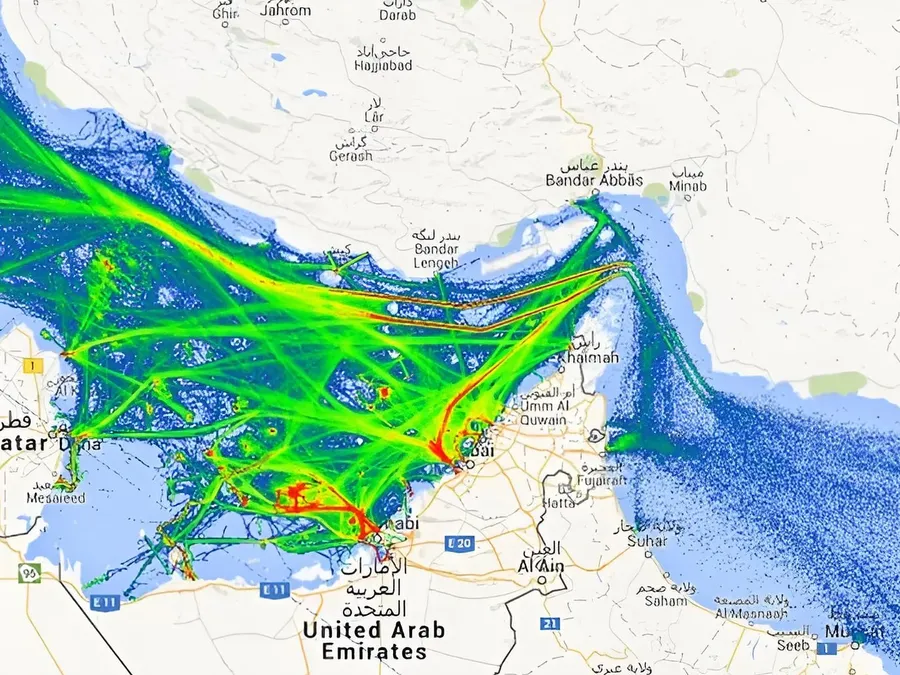
Hormuz is the critical link. The strait normally carries about 20% of the world’s oil, according to AP.AP Kpler data cited in the media recorded only six cargo vessels passing on July 27, although some vessels switched off tracking equipment, making public counts incomplete.The Print That does not quantify global supply, but it argues against assuming the route is fully normal.
Inventories provide a second check
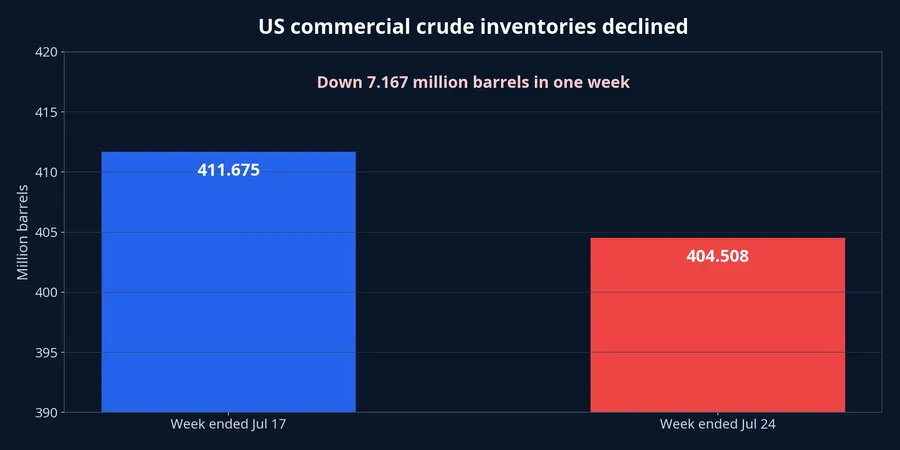
US commercial crude inventories fell from 411.675 million barrels in the week ended July 17 to 404.508 million barrels in the week ended July 24, a decline of 7.167 million barrels.EIA A draw does not automatically mean oil must rise: exports, refinery runs and seasonal factors also move inventories. It does, however, leave the market with a smaller buffer against another disruption.
Taken together, the signals are more nuanced than the price move suggests. De-escalation has lowered the premium, but shipping has not been fully confirmed and inventories do not point to abundant supply. A fall in Brent over several sessions also does not mechanically deliver an equal or immediate fall in Vietnamese retail fuel prices, which follow their own pricing cycle, taxes and formula.
Three post-meeting paths
A further decline requires a complete chain: a higher quota must become actual output, tanker traffic through Hormuz must improve for several days, and US inventories must stop falling or rise. If all three occur together, there is a sound basis for a further contraction in the risk premium. A single statement is not a substitute for that confirmation.
The range-bound path currently has the firmer footing. Quotas may signal looser policy while transport remains constrained and inventories offer little sense of surplus. Prices could then move sharply with each negotiation update or incident, without the conditions for a clear new downtrend.
The upside path returns if conflict resumes, tankers are threatened or energy infrastructure is disrupted. The mechanism is not merely fewer barrels. Higher insurance and freight costs make the barrels that can still move more expensive. One isolated incident may create a brief swing; repeated disruptions would alter the supply balance.
What this means for a Vietnamese reader
For Vietnam, the first transmission channel is not an oil-company share price but fuel and transport costs. A sustained fall in crude can eventually ease cost pressure for logistics, aviation, fisheries and manufacturers that consume fuel. A renewed climb has the opposite effect. Neither link is automatic, however, because domestic retail fuel prices are adjusted on a schedule and incorporate taxes, fees and the local pricing formula.
That delay is important for a new investor. It is easy to see a one-day move in Brent and assume that every oil-sensitive business should immediately revalue in the same direction. Companies have different inventory positions, purchase contracts, hedging policies and pricing power. Airlines, for example, may benefit from lower fuel only after existing fuel has been consumed or contracts reset; a distributor can face a different timing effect. The source material does not establish a single company-level outcome, so the safer analytical frame is to watch the physical oil market first.
The same caution applies to inflation. Lower oil can reduce pressure on transport and input costs, while a persistent supply shock can add to it. But the pass-through depends on domestic price administration, exchange rates and demand. The relevant question is therefore not whether an OPEC+ headline is “good” or “bad” for the whole market. It is whether the headline is followed by enough physical evidence to alter costs for long enough to matter.
Reading the next set of signals
The order of evidence matters. First, distinguish an announced target from a realised output figure. Second, look for several days of shipping data rather than one unusually quiet or busy day, especially when tracking signals can be switched off. Third, use the next inventory report as a check, not as a stand-alone verdict. A single inventory draw can reflect refinery activity and exports; a sequence of draws alongside constrained shipping would tell a more consequential story.
This framework also keeps confidence calibrated. A price decline after better diplomatic news is a confirmed market move, not proof that security risks have vanished. Likewise, lower inventories are a confirmed observation, not a guarantee of higher prices. The variables are connected, but the source does not prove that any one of them alone determines Brent. That is why the range-bound scenario remains the base case rather than a confident directional call.
Thesis: wait for physical confirmation
This week’s thesis is not that Brent will immediately fall or rise after a communiqué. The evidence supports a volatile range: the risk premium has eased, while the physical indicators do not yet agree. The bearish case strengthens only when actual output and transport improve together. The upside case returns when disruption becomes persistent.
The practical watch list is tanker movements through Hormuz, evidence of actual output and the next US inventory release. Those inputs say more about the oil market than simply counting barrels that producers are allowed to pump. That is the useful progression for commodity investors: from policy headline to physical flow.