
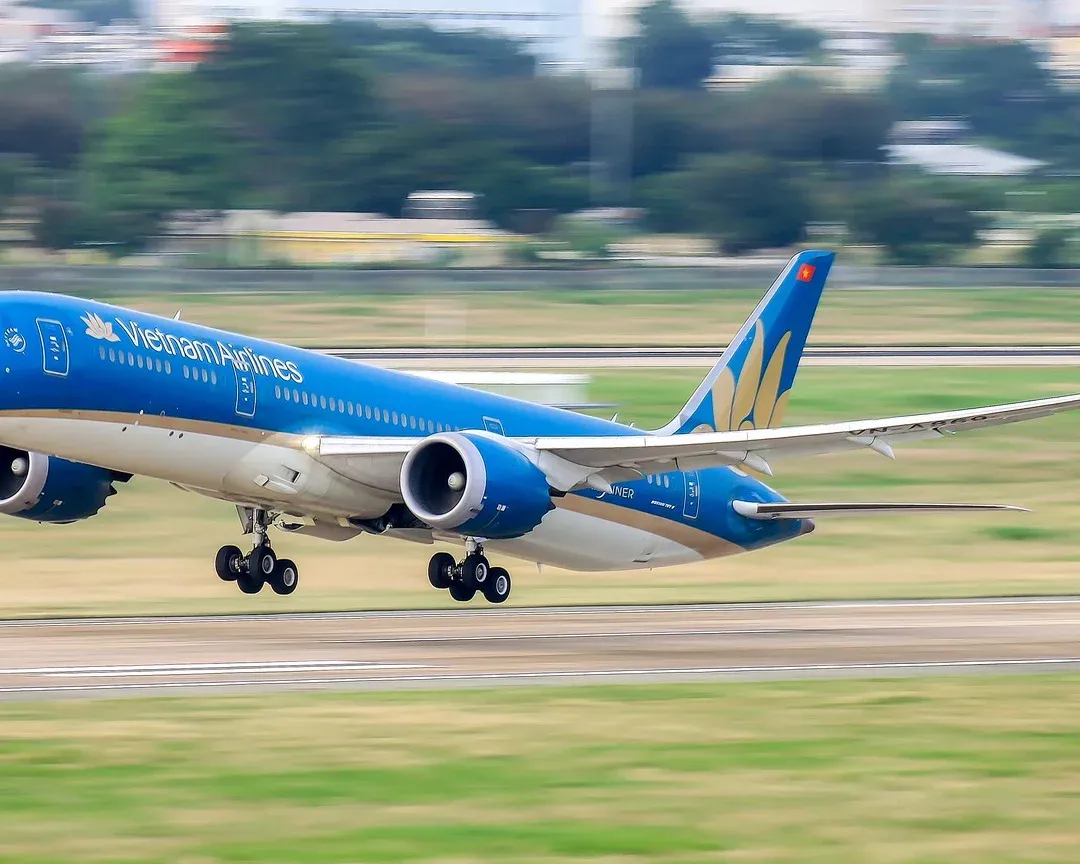

Vietnam Airlines' second quarter of 2026 offers a clear lesson in reading financial statements: a record quarter for revenue does not automatically turn into a profitable quarter. The airline reported consolidated net revenue of VND 38,303.4 billion, up 37% year on year, while consolidated profit after tax was a loss of VND 606.2 billion.Vietnam Airlines
Those figures are not contradictory. Revenue measures the money earned from tickets, cargo and related services; profit is what remains after the airline pays to operate its fleet. Demand and operating scale have recovered, but profitability is not yet durable because input costs grew faster than revenue.
Revenue grew through scale and several income streams
An airline's revenue is the sum of more than passenger fares. In the second quarter, air transport brought in VND 26,865.3 billion, up 20% from a year earlier. Sales revenue rose to VND 9,437.2 billion, more than 150% higher year on year.Thời báo Tài chính Việt Nam
Over the first half, Vietnam Airlines operated more than 80,000 flights and carried over 13 million passengers. Passenger volume increased 4%, while international passengers rose 18.8% to nearly 4.8 million.Thời báo Tài chính Việt Nam That is a real foundation for higher revenue: more capacity was put to work, and non-ticket income also contributed.

It would still be too simple to subtract passenger growth from revenue growth and attribute the entire difference to ticket prices. The reported mix also includes cargo, merchandise and ancillary services, and the available data do not isolate each contribution. What the evidence supports is a broader combination of higher operating volume and multiple revenue streams, not a single driver.
The bridge from record revenue to a loss
Cost of sales is the direct cost of generating revenue. For an airline, it includes fuel, aircraft operations, airport services, maintenance and other costs tied to each flight. More flights naturally raise this bill; the problem in the second quarter was that the bill rose far faster than money collected.
Consolidated cost of sales climbed 59% year on year to VND 36,601.3 billion. That left gross profit at only VND 1,702.1 billion even as quarterly revenue reached a record.Vietnam Airlines
Think of it as a busier ticket counter where each additional flight costs disproportionately more to run. In that setting, selling more can widen a loss rather than resolve it.
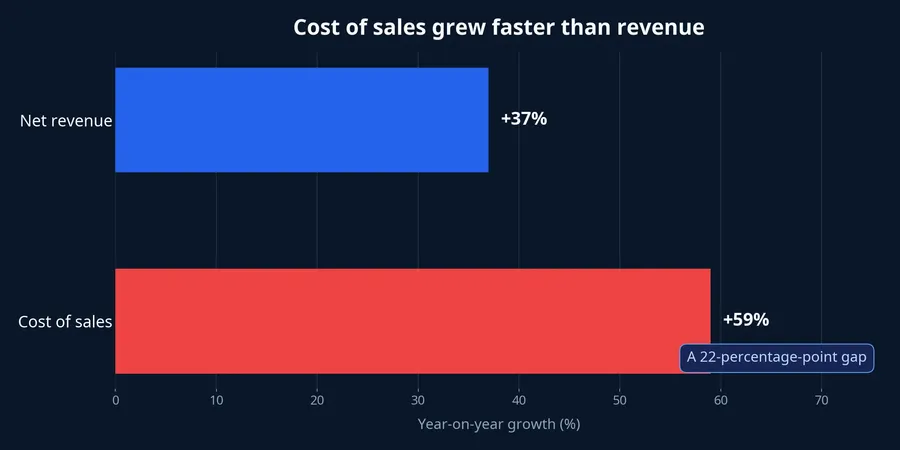
The 22-percentage-point gap between revenue growth and cost growth matters more than revenue growth on its own. It says the company did not turn its extra scale into a proportionate amount of gross profit. Selling, administrative, finance and tax costs still come after that, so a thin gross-profit cushion can readily produce a net loss.
The reporting perimeter also matters. The consolidated loss after tax was VND 606.2 billion, while the parent company reported a loss after tax of VND 1,014.9 billion.Vietnam Airlines Consolidated accounts include subsidiaries; parent-only accounts do not. They are not consecutive steps in one calculation, and they should not be used to infer the contribution of individual entities without the relevant notes.
Gross margin shows how thin the remaining cushion became
Gross margin helps new investors avoid being distracted by a large revenue number. It asks how much of every VND 100 in revenue remains after direct costs, before other expenses. In the second quarter last year, Vietnam Airlines retained VND 17.7 for every VND 100 of revenue; this year it retained only VND 4.4.Vietnam Airlines
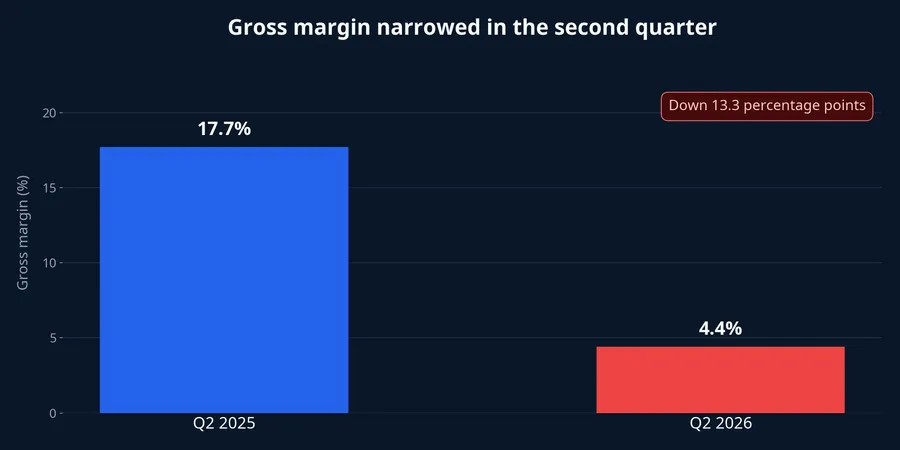
The 13.3-percentage-point decline is not a minor accounting detail. It substantially thins the buffer available to absorb costs beyond cost of sales. When a company's revenue rises sharply, putting that figure beside gross margin is essential: revenue describes selling scale, while gross margin shows whether that scale is building a base for profit.
Fuel was a major pressure, not the sole explanation
Fuel typically accounts for about 30% of Vietnam Airlines' operating costs. The airline planned around a Jet A-1 price of USD 85 a barrel, while the average price in the second quarter was about USD 182 a barrel.Thời báo Tài chính Việt Nam That gap explains why fuel carried particular weight in the margin squeeze.
The company also said that every additional USD 1 a barrel in fuel costs could add about VND 300 billion to annual costs.Thời báo Tài chính Việt Nam This is a full-year sensitivity, not a figure to mechanically apply to one quarter. Flight volume, purchase timing, supply contracts and hedging can all change the realized outcome.
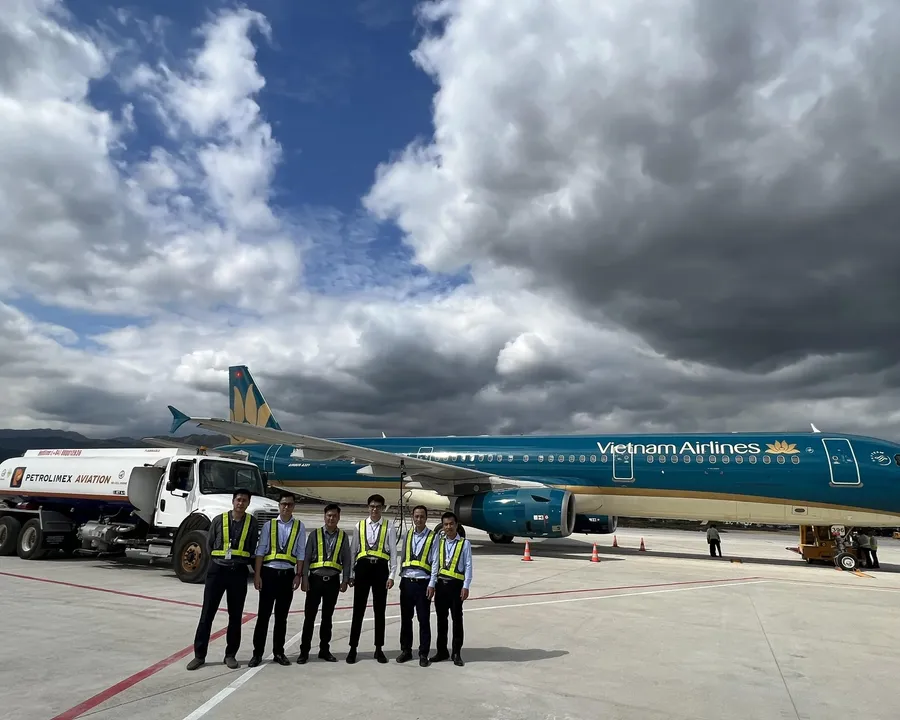
It would not be accurate to attribute the entire loss to fuel. Vietnam Airlines also flew more, carried more passengers and cargo, and therefore likely incurred higher ground-handling, maintenance and staffing costs. Foreign-currency expenses are another factor worth watching. The evidence supports a more measured conclusion: elevated fuel was an important pressure, and the larger operating scale made total cost of sales more sensitive to it.
First-half profit does not replace the second-quarter test
For the first half, Vietnam Airlines remained profitable thanks to a strong first quarter: consolidated net revenue was VND 75,186.2 billion, profit before tax was VND 4,183 billion and profit after tax was VND 3,852.3 billion.Vietnam Airlines That cumulative result is positive, but it does not erase the signal about profitability in the second quarter itself.
First-half gross margin declined from 19.1% to 12%. Net cash from operating activities was VND 3,627.8 billion, down 19.3% from a year earlier.Vietnam Airlines Positive operating cash flow remains supportive, but the decline is a reminder that higher revenue does not necessarily become stronger cash generation immediately.
Three signals for the second half
The thesis here is not that record revenue is bad news. It confirms Vietnam Airlines' demand and operating capacity. At this point, however, the evidence is insufficient to treat revenue growth as sustainable earnings growth; the answer lies in whether the company can rebuild what remains after direct costs.
First, track realized Jet A-1 prices against the planning assumption rather than crude oil alone. Second, track gross margin: continued high revenue becomes more constructive only if this margin recovers. Finally, monitor operating cash flow, because better earnings accompanied by stronger cash generation are more persuasive than an improvement confined to the income statement.
Those three signals need to improve together before the quality of earnings can be judged to have strengthened. If fuel prices ease, gross margin recovers and operating cash flow rises, greater operating scale has a basis to translate into better profit. If margin remains low despite high revenue, the second quarter will remain a useful reminder: in aviation, selling more does not necessarily mean keeping more.