
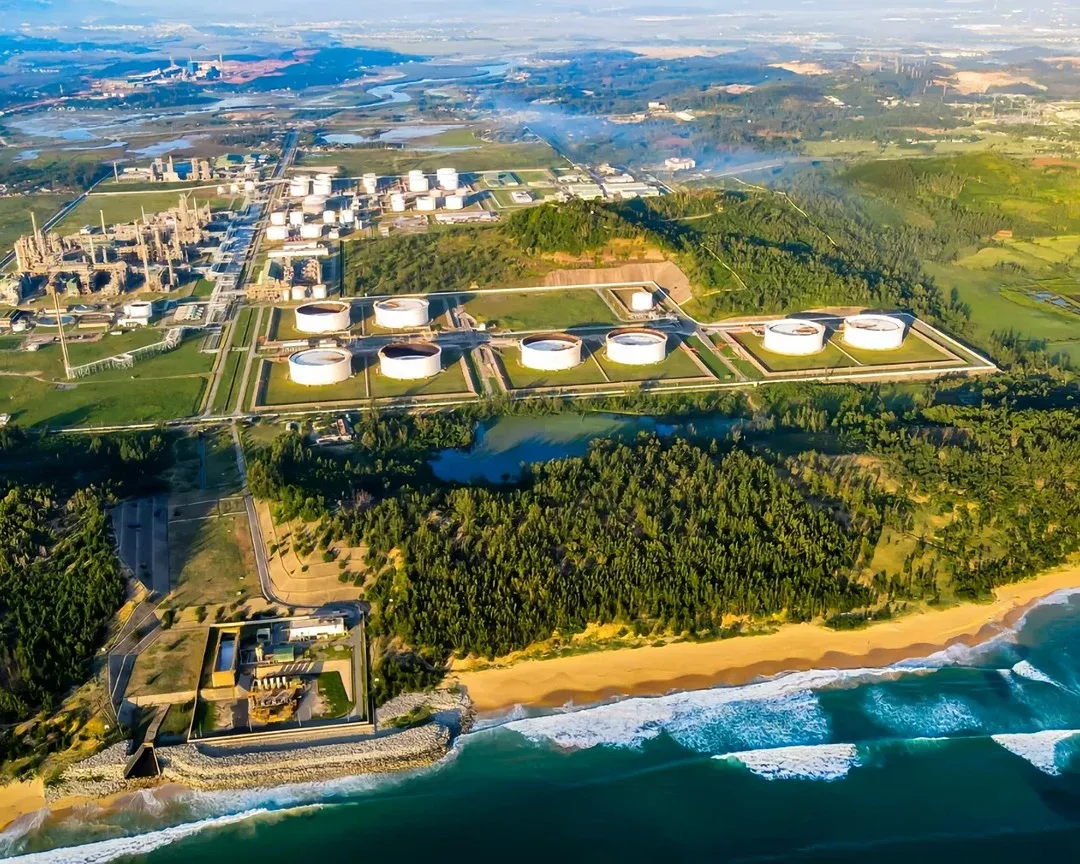

BSR has reported VND 58,716 billion in second-quarter net revenue and VND 7,461 billion in profit after tax. At the end of the period, it held VND 53,776 billion in cash and deposits, 16% more than at the previous quarter-end.VietnamBiz Put side by side, those numbers invite a quick conclusion: BSR must be earning primarily from bank deposits. That is intuitively appealing, but it is only one part of the picture.
The central point is straightforward. The cash pile gives BSR financial resilience and supplementary income, while the quality of current earnings is still determined mainly inside the refinery. For a new investor, separating those two sources matters more than focusing on the deposit balance alone. Misidentify the engine, and the indicators used to judge the next quarter will be wrong as well.
A large cash balance does not create a refining margin
Deposits can generate interest income. The mechanism is familiar: a company places temporarily unused cash with a bank and earns interest according to the term and prevailing rates. At a sufficiently large balance, that income can be meaningful. It can also strengthen liquidity and give the company more room to manage working capital and necessary spending.
Interest income, however, should not be treated as the same thing as profit from manufacturing. Financial income on an income statement sits alongside financial expenses and foreign-exchange movements. The disciplined approach is therefore not to multiply the deposit balance by an assumed interest rate and call the result corporate profit. Investors should assess the financial result after the related items have been offset, then compare it with the performance of the core business.
That distinction is material to earnings quality. Deposit income is supportive and depends on both temporarily available cash and interest rates. A refinery creates value by buying crude, processing it, selling output, and managing an operating chain. The two income streams differ in their repeatability, volatility, and risks.
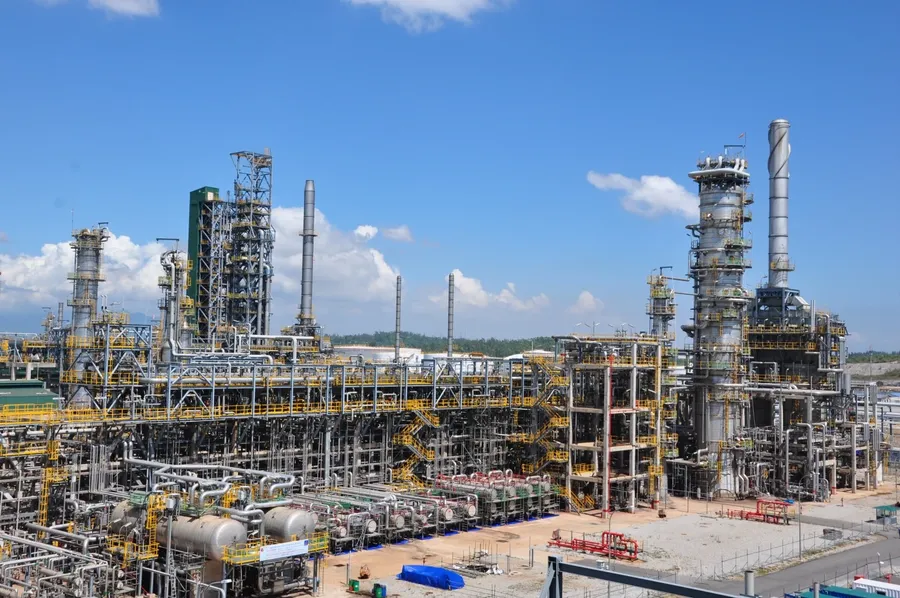
Refining margin is where the core earnings are made
In simple terms, a refining margin is the gap between the value of products sold and the cost of crude input, after the factors involved in processing are considered. When that gap is favorable, each processed barrel can create more value. When it narrows, reported revenue can remain high because oil prices have risen, while the underlying economics deteriorate.
BSR's latest report put its second-quarter gross margin at 14.65%, above 2.77% a year earlier.VietnamBiz This is closer to the core business than the deposit balance. It captures what remains after cost of goods sold, before the other layers of expense in the income statement. A high gross margin does not guarantee that profit will hold in the next period, but it does show the refinery is converting inputs into output more effectively than in the comparison period.
BSR said in its explanation that a higher average crude price than a year earlier and an improved spread between product prices and crude supported the second-quarter result.VietnamBiz That is a much clearer causal chain than assuming deposits were the principal profit source. Oil prices are only one input to that chain. The relationship between input costs and output prices is more informative than an isolated Brent quotation.

Oil prices are not a one-way signal
A common misconception is that a rising oil price automatically benefits a refiner. It does not. If crude rises faster than gasoline, diesel, and other product prices, input costs can outpace revenue and squeeze the margin. In that scenario, revenue measured in Vietnamese dong may still be large while operating economics worsen.
The reverse direction carries risk too. A rapid fall in oil prices can pressure results when inventory was bought at higher levels. The actual outcome also depends on inventory turnover, crude procurement, product mix, and accounting timing. There is not enough evidence to assign an entire quarter's result to Brent alone; refining margins and operations are more direct explanations.
In a recent article, BSR described monitoring oil-price movements and price spreads to adjust capacity, sales, and product mix.BSR That makes operating execution part of the investment reading, not an afterthought. The same crude backdrop can produce different outcomes when sales volumes, product mix, or utilization change.
The financial buffer still has real value
Holding VND 53,776 billion in cash and deposits is a balance-sheet strength for BSR.VietnamBiz It can give the company more flexibility in buying feedstock, managing working capital, and preparing for investment needs. It also provides a buffer when energy markets become less favorable. A buffer, though, is not a replacement for a profit engine.
The important caution is that cash should not be treated as a permanently fixed-income asset. The balance can change as the company funds feedstock, investment, debt service, or operations. Interest rates move as well. Other financial items can also make the net financial contribution different from the headline deposit interest that first catches a reader's eye.

A framework for the next quarter
The first priority should be gross margin. If it falls, investors should examine the movement in product-to-crude spreads and then check whether sales volumes or product mix have shifted. Revenue growth alone does not answer the quality question, because higher oil prices can lift both revenue and cost of goods sold.
Next comes actual utilization and production volume. High utilization helps only when it is paired with sales capacity and an adequate margin; producing more into a weak output market may not create corresponding value. BSR has said it aims to maintain safe, stable operations while optimizing costs and product mix.BSR Subsequent disclosures will show how that stated direction translates into reported numbers.
Financial indicators come after that: cash and deposits, interest income, financial expenses, and foreign-exchange effects. They are necessary to understand balance-sheet resilience, but they should not outrank refining margin when judging the earnings of an oil-processing company.
The conclusion remains clear: BSR has a meaningful cash buffer, but refinery performance is its profit engine. This interpretation would be challenged by a clear weakening in refining margin or an inability to sustain planned operations; deposits could soften that pressure but could not fully replace core operating profit. The next quarterly report should show whether input-output spreads and utilization are still protecting earnings quality.