

SK Hynix has just offered a useful lesson for anyone new to reading earnings. Its second-quarter 2026 operating profit reached KRW 60.5426 trillion, up 557% from a year earlier. That is a genuine leap in the business, not a flattering presentation choice.SK Hynix
Still, the market had expected KRW 64.1 trillion in operating profit. The reported figure was KRW 3.5574 trillion, or about 5.55%, below the consensus compiled by Yonhap Infomax from 14 securities firms.Yonhap “Very strong growth” and “an earnings miss” are not contradictory judgments. They answer different questions.
The key takeaway is straightforward: year-on-year growth shows how far a company has travelled, while the gap versus consensus shows whether the report delivered information that was better or worse than the market had already expected. In SK Hynix’s case, the business is clearly stronger, but quarterly revenue did not clear a very high bar.
Two measures of the same quarter
Think of a student who scored 30 last year and 90 this year. That is dramatic improvement. But if the class had expected a 95, a score of 90 still fails to provide a positive surprise. Stock markets use the same two layers of comparison, except that the expected score is built through research, estimates and trading before the results arrive.
SK Hynix’s operating profit rose from KRW 9.2129 trillion in the second quarter of 2025 to KRW 60.5426 trillion in the same quarter of 2026. The company said DRAM and NAND selling prices both rose from the prior quarter, while sales were increasingly concentrated in high-bandwidth memory, AI-server DRAM and data-center solid-state drives.SK Hynix
Those higher-value products helped lift operating margin to 76%. In practical terms, the company generated roughly KRW 76 of operating profit for every KRW 100 of revenue before non-operating items and tax, an exceptionally high level of profitability for a memory manufacturer.SK Hynix On a year-on-year basis alone, the report shows a major change in both scale and earnings quality.
Share prices, however, do not ask only whether a company is better than it was a year ago. They also ask whether the result is better than what buyers and sellers had already incorporated into the valuation. When good news is widely anticipated, even rapid growth may not be enough to lift expectations further.
The shortfall was mainly about revenue scale
To see what the market was demanding, put revenue beside margin. Before the release, consensus called for KRW 84.1 trillion in revenue and KRW 64.1 trillion in operating profit. Those two figures imply an operating margin of about 76.2%.Yonhap
Actual revenue was KRW 79.3187 trillion and actual operating margin was 76%. Revenue was KRW 4.7813 trillion, or around 5.69%, below expectations, while the realised margin was almost identical to the market’s implied assumption.SK Hynix Put simply, investors were not chiefly asking the company to earn more on each unit of revenue. They had expected more revenue at an already lofty level of profitability.
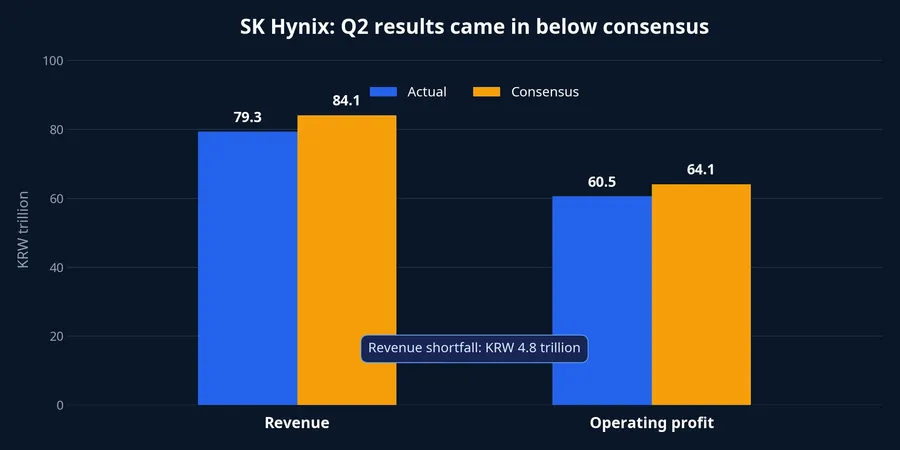
That distinction matters. If profit had missed because margin collapsed, the concern could have been weaker pricing, higher costs or an unfavourable product mix. Here, margin barely differed from the implied consensus margin. The available evidence points more to a revenue-scale gap than to a clear deterioration in the company’s ability to turn sales into profit.
The official release does not break the revenue gap into volume, pricing, product mix or the timing of contract recognition. It would therefore be premature to infer that AI-memory demand has weakened from one consensus miss. Delivery timing or differences in analysts’ assumptions are also plausible explanations. What the report establishes is that revenue did not reach the pace consensus had assumed, not a single definitive cause of the gap.
Consensus is not management guidance
New investors often hear “missed estimates” and assume a company failed to meet its own plan. Those are different concepts. Consensus is the midpoint of external forecasts; for SK Hynix, it was an aggregation of projections from 14 securities firms, not a target issued by the company.Yonhap
Different analysts can make different assumptions about memory prices, unit shipments, the DRAM-NAND mix, manufacturing costs or the timing of new-product revenue. A consensus miss therefore means only that the result fell short of the market’s average expectation. It does not mean the company failed an internal plan; equally, a consensus beat does not automatically prove that growth is durable.
One-off income, an easy comparison base or an overly optimistic shared assumption can all create a gap between reported results and consensus. The useful response is not to label the entire quarter “good” or “bad.” Separate growth from surprise, then ask whether the difference came from revenue, margin or non-recurring items.
What can test the second-half story
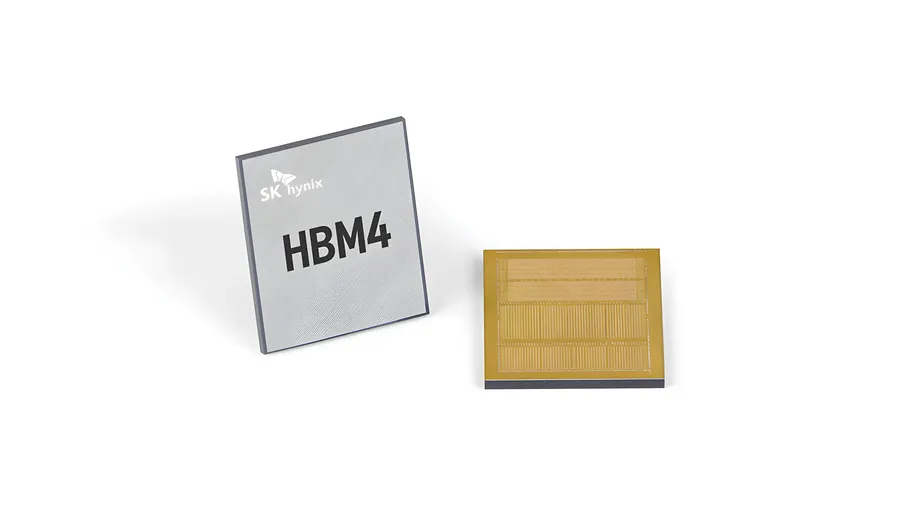
SK Hynix said it began mass shipments of HBM4 in the second quarter and expects production to rise in the second half. It also said it had completed long-term agreements with about 10 customers and remained in discussions with other major customers.SK Hynix These are supportive signals for demand visibility, but they are not a guarantee that the next quarter will beat every forecast.
The first item to watch is whether revenue narrows the gap to consensus. If HBM4 volume rises but total revenue remains below estimates, investors need to examine pricing, customer mix and the timing of recognition. If revenue improves while margin contracts, the increase may be coming from products or contracts with lower profitability.
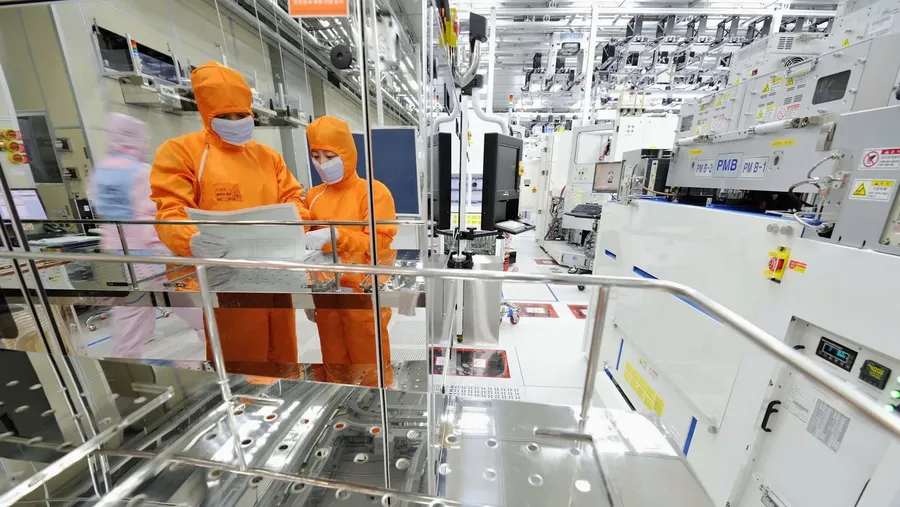
For NAND, the 321-layer product has become the largest share of production, and SK Hynix expects it to account for about 50% of domestic capacity by year-end.SK Hynix That transition becomes a financial benefit only when volumes are large enough, yields are strong and unit costs continue to fall. Investors do not need to forecast every variable, but they should check whether those indicators are moving in the same direction as revenue and margin.
A framework for every earnings report
SK Hynix’s second quarter is not a paradox. It was a strong report relative to the past, but not strong enough relative to expectations accumulated beforehand. Those two layers of information can coexist in any earnings season, from a global technology leader to a local listed company.
The thesis here is that the second-quarter miss is best read as a test of revenue scale, not standalone evidence that the AI-memory engine has broken. That conclusion holds only if revenue catches up with expectations while margins remain elevated. If revenue keeps missing and margins begin to contract as well, the market would have more concrete grounds to reduce its growth assumptions.
For the next report, keep three questions in view: how much did the company grow year on year; what level had the market expected; and did the difference come from revenue, margin or unusual items? They do not replace deeper analysis, but they help prevent a striking growth rate from driving an early conclusion.