

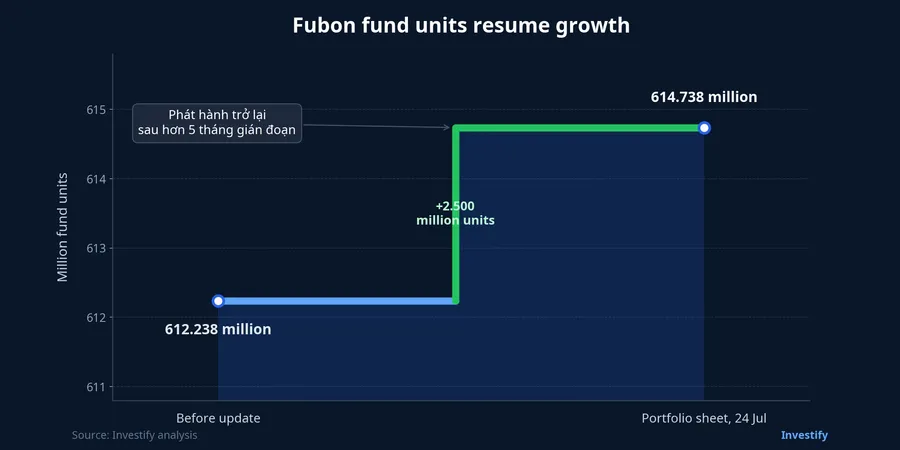
Fubon FTSE Vietnam ETF has resumed net issuance after a lengthy pause. That matters because outstanding ETF units rise only through primary-market creation, not when investors simply trade existing units with one another on the Taiwan exchange. Still, the scale puts the development in perspective: it is an encouraging data point for Fubon itself, not yet evidence of a turn in foreign capital flows.
For a newer investor, the distinction is worth keeping clear. A trading screen can show ownership changing hands, but it says nothing about whether the ETF has become larger. A higher outstanding-unit count does. Treating those two signals as interchangeable is how a positive fund update can become an overly broad market conclusion.
What the 2.5 million new units actually show
Fubon’s portfolio sheet for 23 July showed 612.238 million units outstanding. The sheet for 24 July showed 614.738 million, a net creation of 2.5 million units.Fubon That is approximately 0.41% of the pre-transaction unit count: observable, but modest relative to the size of the fund.Fubon
Fubon’s date convention needs careful reading. The date selected in its system is the trading date, while the portfolio sheet presents data for the following business day. In practical terms, activity on 23 July is reflected in the 24 July sheet.Fubon That is a reporting convention, not confirmation that the entire Vietnam equity basket was bought in one particular session.
At an NAV of TWD 17.49 per unit, the additional issuance equates to roughly TWD 43.725 million by simple multiplication of NAV and the new-unit count.Fubon It is a useful sense of the money entering the fund. It is not, however, a confirmed value of equity orders on HOSE, so allocating it mechanically across individual holdings would create false precision.
That restraint matters especially when an ETF update becomes a headline. A creation is a verified change in the fund’s primary market, whereas a company’s daily share price incorporates a much wider set of orders and expectations. The data support saying that Fubon’s investable pool expanded. They do not support saying which ticker it bought at which price, or that the creation drove a price move observed on the same day. Those are separate questions, and they require more granular disclosures.
How fresh cash reaches Vietnamese equities
Fubon units trade on the Taiwan Stock Exchange. When one investor buys from another, that is a secondary-market trade and the fund’s total unit count remains unchanged. New units are created, or old ones redeemed, only when an authorised participant transacts with the fund itself. The outstanding-unit figure captures that primary-market activity.
Fubon describes a cash-subscription mechanism for the ETF. Cash from creation activity is then managed in a portfolio designed to track the FTSE Vietnam 30 Index.Fubon Think of the ETF as a shopping basket with a prescribed list: when another basket is created, the manager replenishes items broadly in their target weights rather than freely choosing a stock that happens to be popular.
The path from creation cash to a specific stock order is not perfectly direct. The fund may hold cash, have unsettled trades, or adjust for price and currency movements. Taiwan and Vietnam also operate on different trading schedules. Net issuance therefore confirms fresh money at fund level; the timing and size of purchases in individual shares require the next portfolio disclosures.
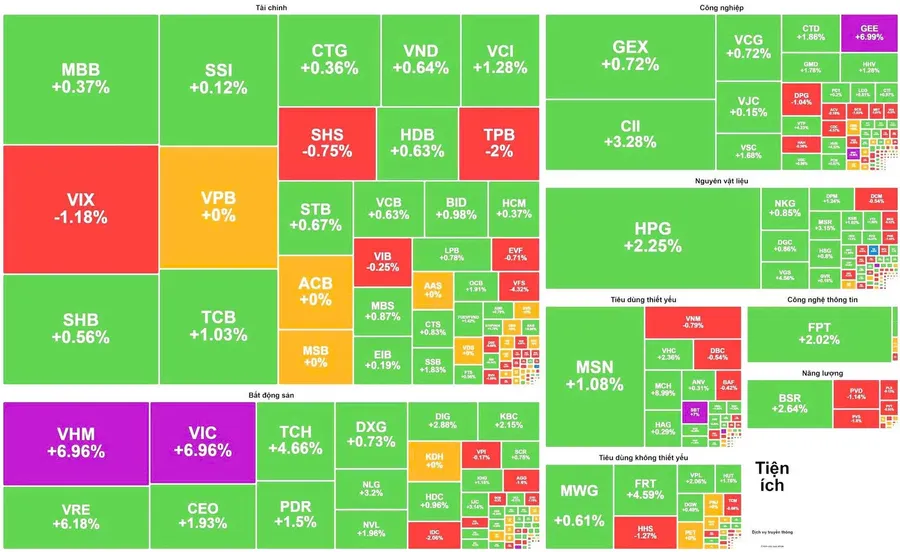
That is why “money into Fubon” cannot be equated with “foreign investors buying net on HOSE.” Fubon is one foreign investor among many funds and accounts. Foreign investors were still net sellers in Vietnam’s market on 24 July, even as Fubon showed fresh issuance.Vietstock Both can be true because one ETF does not represent the aggregate decisions of foreign investors.
Which stocks are most sensitive to Fubon activity?
Fubon’s 24 July disclosure listed NAV of TWD 10.692 billion and 614.738 million units outstanding.Fubon VIC was its largest holding at 20.09% of NAV, followed by VHM at 12.84%, HPG at 7.92%, VCB at 5.07%, and MSN at 4.77%.Fubon
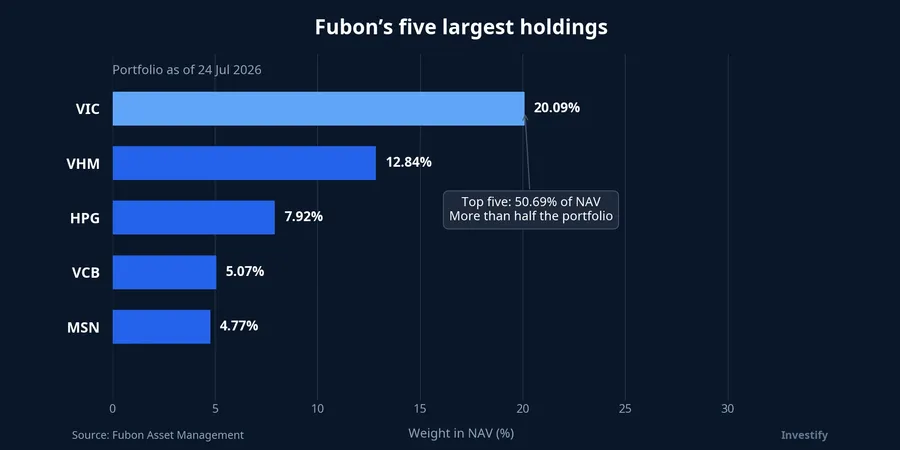
Together, those five positions represented 50.69% of NAV, while VIC and VHM alone made up 32.93%.Fubon If fresh cash is invested close to the existing weights, those names have greater exposure to Fubon creation and redemption activity. That is the appropriate use of the portfolio data: it identifies where the fund’s activity matters more, not which share price is destined to rise.
Share prices still reflect many other forces, including exchange liquidity, orders from other investors, proprietary trading, earnings and market sentiment. A small allocation from an ETF creation can be absorbed easily in a heavily traded stock. Conversely, changes in a fund’s share count can also reflect index rebalancing or price-driven weight changes, rather than new cash alone.
There is also an important distinction between concentration and causation. A high portfolio weight means that a holding should receive a larger share of a creation if the manager follows the prevailing basket. It does not tell us whether that stock will outperform its peers. A stock may be widely held by the ETF and still fall if broader selling, new company information or a weaker market dominates the day. Reading weights as a map of sensitivity is useful; reading them as a price forecast is not.
The confirmation needed before calling it a trend
The first test is repetition in the outstanding-unit series. Following the 24 July sheet, the count remained at 614.738 million units, so there has been no second increase to establish a sequence.Fubon A single creation can reflect one-off demand. Consecutive increases would be stronger evidence of a new allocation pattern.
The second test is to read NAV alongside the unit count. NAV can rise because fresh money enters, but it can also rise because the underlying shares appreciate. When both outstanding units and NAV expand, investors can better separate capital inflow from the market-value gain on assets the fund already owned.
The final test is breadth. The foreign-flow picture becomes more convincing when other ETFs also stop seeing redemptions or begin issuing units, and when foreign transactions in the underlying market move into more sustained net buying. Only then does the story extend beyond a single fund.
This framework is deliberately less dramatic than a one-day flow headline, but it is more useful. It separates a measurable fund event from a market conclusion, and it gives readers a repeatable checklist for future ETF disclosures rather than a reaction to one isolated number.
The thesis is straightforward: Fubon has resumed net issuance, and that is an early signal worth watching, not a market-wide buy signal. The next disclosures on units, NAV and the breadth of foreign trading can change that assessment. Until a sequence of confirmation emerges, the most accurate reading is that Fubon is testing renewed capital demand, not that foreign flows have already reversed.