
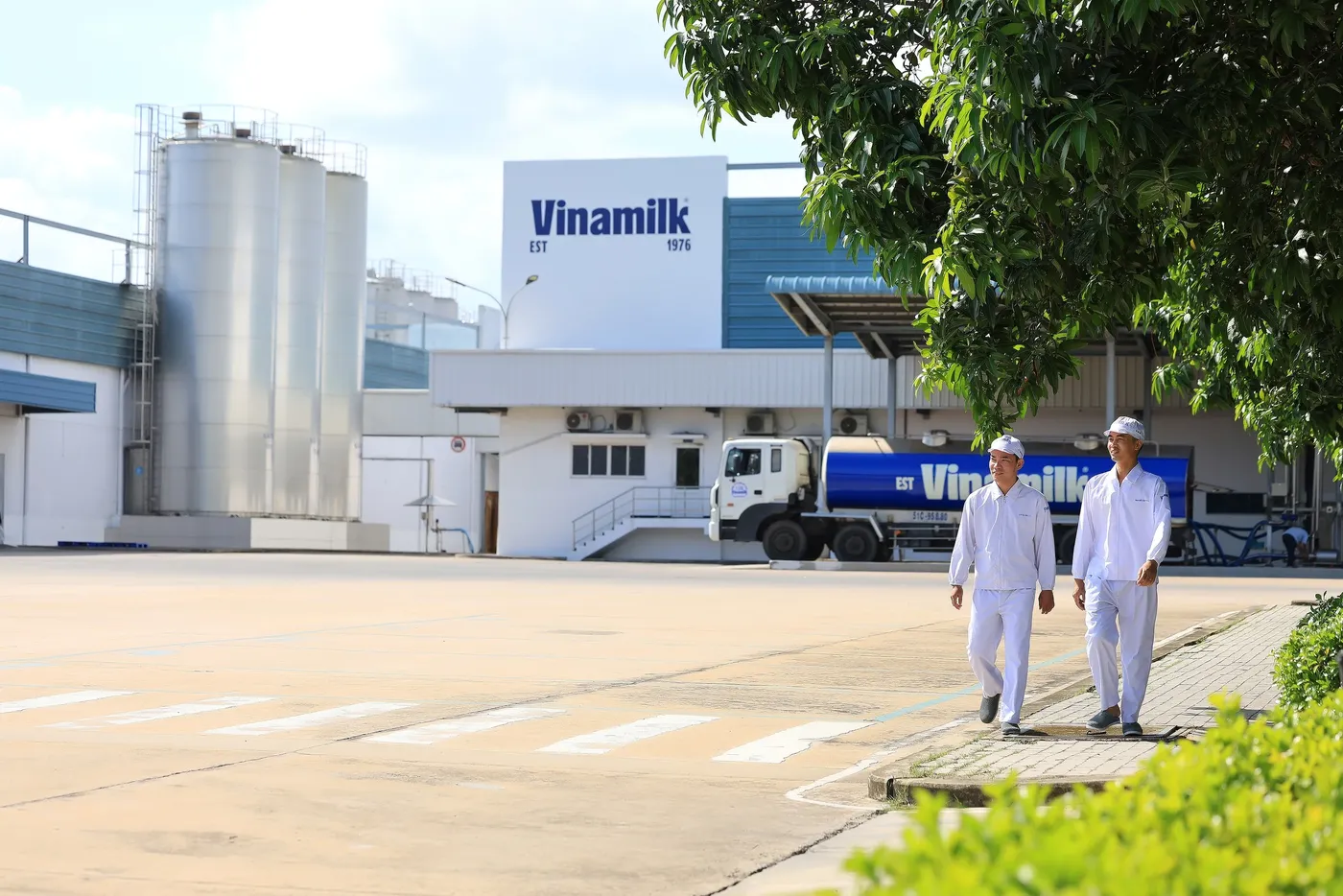

Vinamilk has delivered a notable quarter for more than one reason. Preliminary Q2 net profit was about VND 3,185 billion, up 28% year on year and the company's highest quarterly figure. The more useful takeaway is the structure behind it: the domestic market remains the largest revenue base, while exports accelerated and margins improved.VietnamBiz
These are still preliminary figures compiled by Vietcap, rather than the full Q2 financial statements. CafeF reported net profit of VND 3,184 billion, VND 1 billion below the VietnamBiz figure; the small gap is consistent with rounding in preliminary data.CafeF That makes the final digit less important than three questions: which business supplies scale, which one supplies growth, and what still needs to be verified.
The central view is straightforward. Q2 shows Vinamilk benefiting from several drivers at once, but the evidence supports calling it a stronger operating quarter rather than declaring a new growth cycle. The full financial statements and the next few quarters will test that distinction.
Domestic sales remain the consolidated base
Consolidated domestic net revenue reached VND 14,616 billion in Q2, up 6.5% year on year. For the first half, domestic revenue was VND 26,596 billion, up 12%.VietnamBiz The Q2 growth rate was not the fastest among the company's business lines. Yet because this is the largest revenue pool, even moderate growth adds a meaningful absolute amount to consolidated performance.
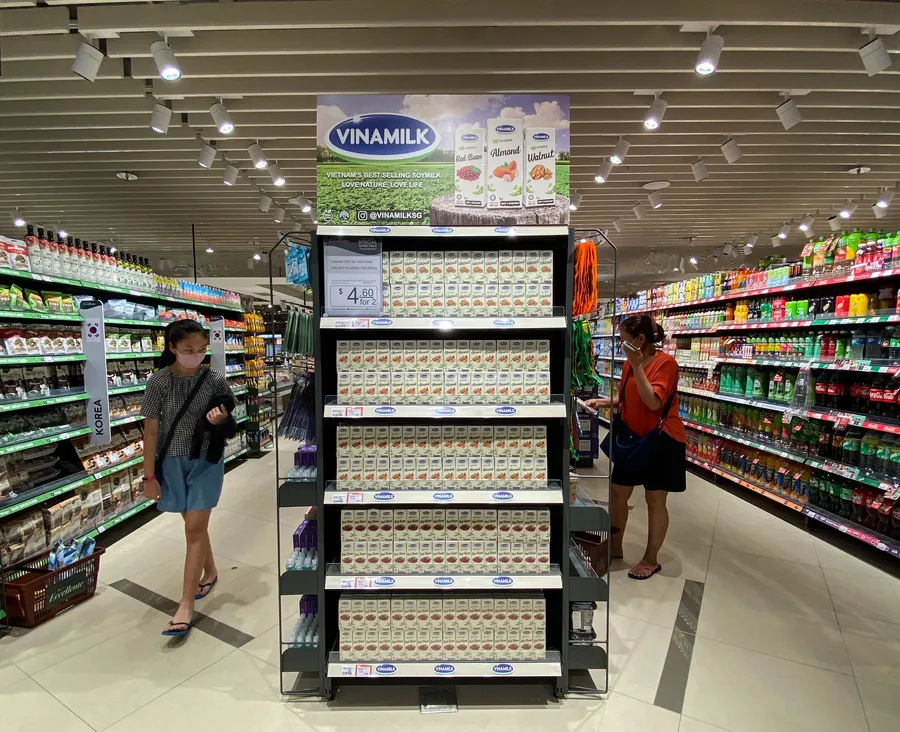
The domestic contribution came from liquid milk, yoghurt and adult nutrition products. Vinamilk also cited Green Farm, Vinamilk 100% fresh milk, high-protein products and plant-based products as positive contributors.CafeF That points to a broader product contribution rather than a single standout line, although the available sources do not quantify each product's share.
That distinction matters for earnings quality. A broader mix can make domestic growth less dependent on one promotion or one category, but it does not remove the need to watch consumer demand. The current sources identify the product groups, not their margins or exact contribution, so investors should not infer more precision than the disclosure supports.
For newer investors, domestic sales are best understood as the trunk of the business. It may not be the fastest-growing branch, but it determines the size of the whole tree. If that base stalls, faster growth from a smaller export business cannot immediately replace the lost absolute revenue. Conversely, continued domestic growth gives incremental gains elsewhere a better chance of translating into consolidated growth.
Exports provide speed, not yet proof of durability
Q2 export revenue was VND 2,664 billion, up 41% year on year. In the first half, exports generated VND 4,990 billion, up 42%.VietnamBiz The segment is still smaller than domestic sales, but the growth gap is wide. That is why exports deserve to be viewed as a growth engine in the report, rather than merely an additional revenue stream.
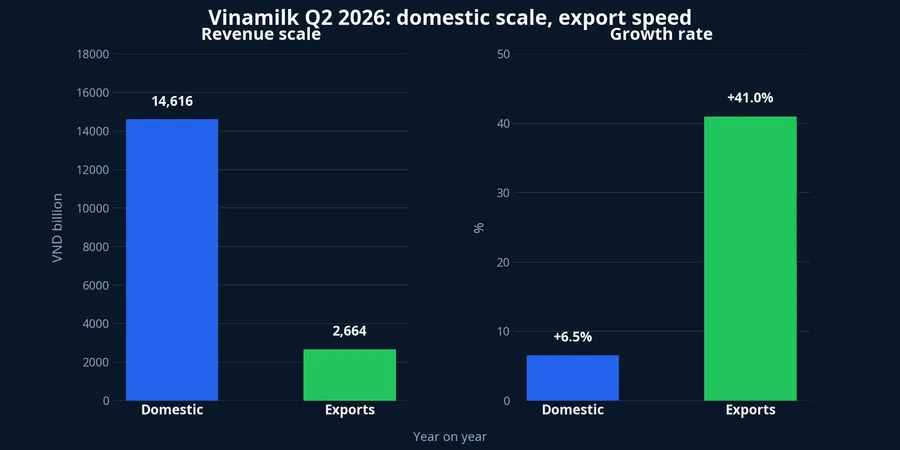
The company said it maintained supply in key markets through coordination with customers and partners, even as international freight and input costs rose. It also reported year-on-year revenue growth in several developed markets alongside the Middle East.VietnamBiz This is encouraging evidence of market reach, but it does not by itself establish that 41% growth can be repeated.
There are at least three plausible readings. Growth may reflect expanding underlying demand; it may also be affected by shipment timing, logistics costs or a lower comparison base. The available source does not allocate the effect among those factors. Q3 data should therefore be used to test whether export revenue remains strong once shipment timing changes.
This is not an argument that the export result is weak. It is an argument for separating a high reported growth rate from evidence that the rate is repeatable. A second period of strong sales would provide a much firmer signal than a single quarterly comparison.
Profit outpaced revenue as efficiency improved
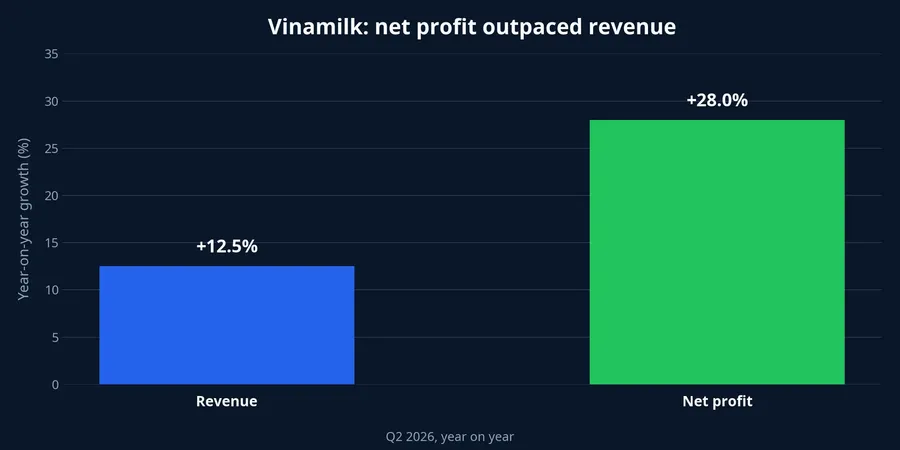
Preliminary Q2 revenue was VND 18,856 billion, up 12.5% year on year, while net profit rose 28%.CafeF This gap is the key feature of the quarter. Revenue is the amount sold; profit is what remains after costs. When profit grows much faster, it commonly suggests that a company is not only selling more but retaining more from each unit of revenue.
For the first half, consolidated revenue was VND 35,034 billion, up nearly 18%; pre-tax profit was VND 6,914 billion, up 37%; and net profit was VND 5,643 billion, up 38%. The pre-tax margin consequently reached 19.7%, from 17% a year earlier.VietnamBiz The important pattern is that margins expanded alongside revenue, rather than profit being visibly lifted by a specifically identified one-off gain.
Vinamilk attributed the improvement to product-mix optimisation, more efficient manufacturing and cost control.VietnamBiz The available figures are consistent with stronger operating efficiency, but they do not justify attributing all of the profit increase to one cause. Domestic sales, exports and subsidiaries were all growing at the same time.
For that reason, margin is more useful as a monitoring indicator than as a standalone explanation. It connects the revenue mix with the cost base and shows whether the operating gains visible in Q2 are surviving as conditions change.
Subsidiaries add two different mechanisms
Angkor Milk stood out for growth speed. Its Q2 net revenue rose nearly 242% year on year and net profit increased about 210%.VietnamBiz Those rates indicate that the Cambodian unit is contributing momentum. But since the source does not disclose its absolute revenue or profit, it is not possible to calculate its exact contribution in VND to consolidated profit.

Driftwood illustrates a different mechanism. Q2 revenue grew 3.2%, yet net profit rose 103.7%; in the first half, revenue was broadly flat while net profit increased 51.5%. CafeF cited improved margins and lower raw fresh-milk costs as the main reasons.CafeF It is a clear example of profit growing faster than sales when the cost captured by each revenue unit declines.
Moc Chau Milk also maintained double-digit net-profit growth in Q2 and the first half, according to preliminary data cited by CafeF.CafeF The source does not provide a specific rate or absolute figure, so the appropriate reading is a positive contribution, not a ranking against Angkor Milk or Driftwood.
Three signals after Q2
The highest quarterly profit has been recorded, but its durability remains unanswered. First is domestic revenue: can growth continue against a higher comparison base? This is the most direct gauge of demand for core products and the line that supplies scale to the consolidated result.
Second is exports. If high growth persists through subsequent quarters, the market-expansion case becomes firmer. If it drops sharply once shipment schedules change, Q2 may have contained more timing effect than investors expect.
Third is margin. The 19.7% first-half pre-tax margin is an observed result, but keeping profit growth ahead of revenue will require sustained cost control, product mix and manufacturing efficiency.VietnamBiz If the margin narrows, rapid profit growth will be harder to repeat even if revenue continues to rise.
For now, the coherent conclusion is that domestic sales supply the revenue base, exports and Angkor Milk add speed, and Driftwood demonstrates how operating efficiency can amplify profit. Export timing and cost pressure do not reverse that thesis, but they are conditions to monitor. The full Q2 statements and Q3 data should distinguish an excellent quarter from a more durable growth trend.