
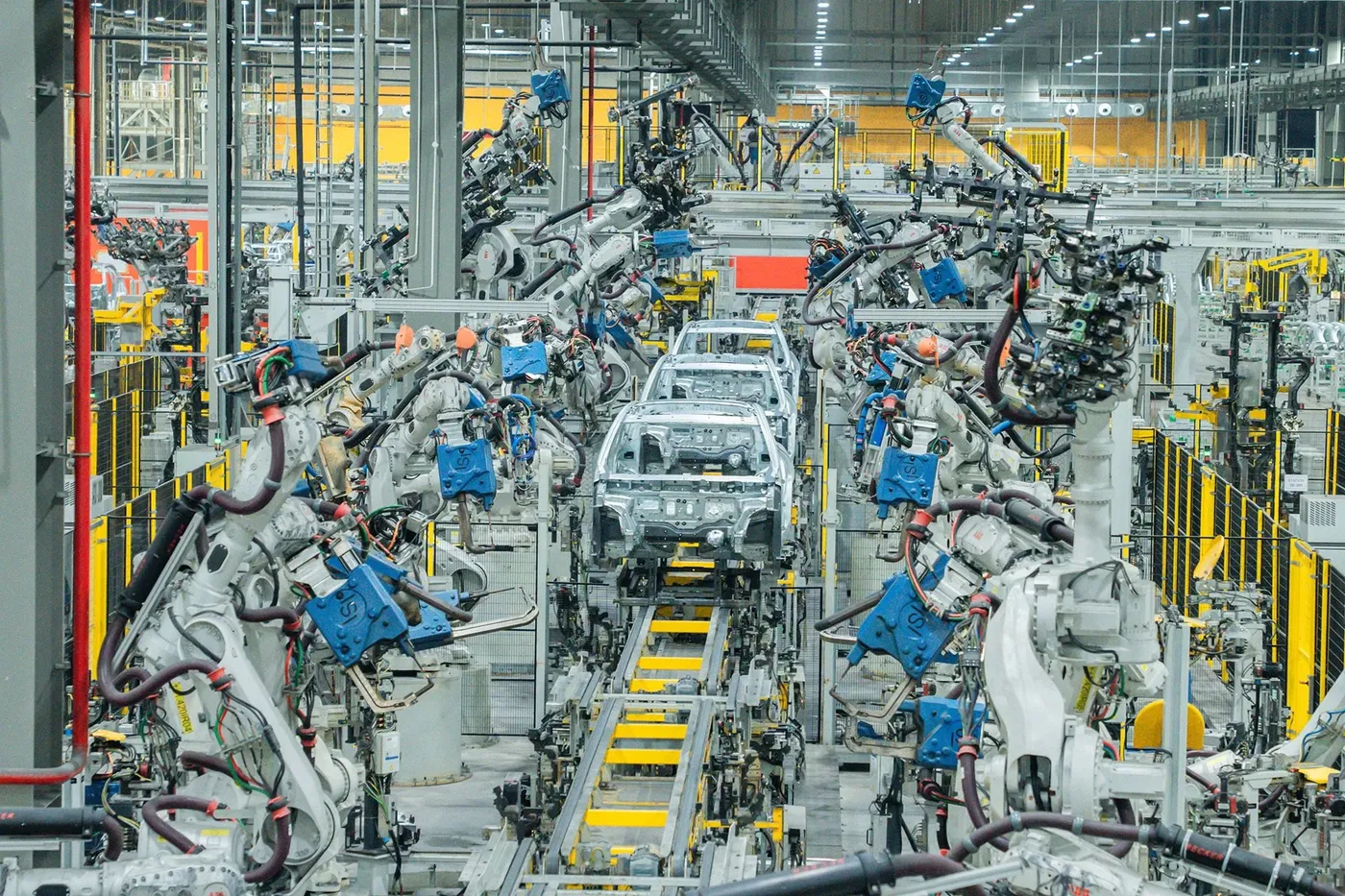

VinFast is targeting break-even in Vietnam in 2027. Anne Pham, Vice President of Investment at VinFast Auto Ltd. (VFS), outlined that direction at the Bloomberg Sustainable Business Summit in Singapore and said global profitability could follow not long afterwards.CafeF
That is a milestone to watch, not profit already secured. Think of it as a shop saying it now has enough customers to stop losing money: the important question is whether that calculation includes rent, interest expense and the cost of opening new branches. For VinFast, the metric behind the word “break-even” determines what the 2027 target really means.

Break-even has several layers
The most basic layer is gross profit: revenue from vehicles less the cost of building them. If every additional vehicle still adds to the gross loss, higher volume cannot provide a durable foundation for profitability. A sustained improvement in gross margin, by contrast, can indicate lower cost per vehicle, stronger average selling prices or a more favourable product mix.
EBITDA goes a step further by including operating expenses while excluding interest, taxes and depreciation. It helps show whether the core business can cover its own operating costs. Yet a non-negative EBITDA result is not net profit: factories, equipment, financing costs and taxes can still leave the final result in the red.
Operating income and net income are more demanding layers. Finally, operating cash flow answers a practical question: is selling vehicles generating cash, or does the business still require fresh funding to keep operating? Until VinFast specifies the layer it is using, the appropriate reading is that 2027 is a management target. It will be tested when reported metrics move towards non-negative territory.
Deliveries are an input, not the answer
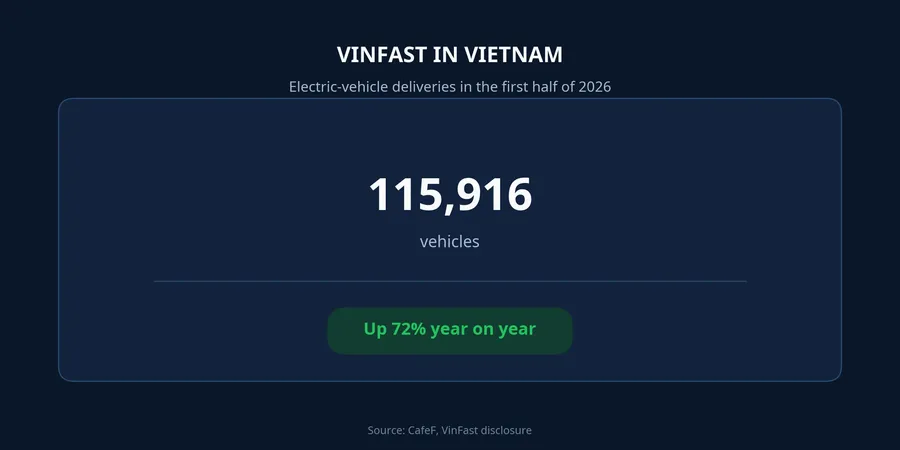
VinFast delivered 115,916 electric vehicles in Vietnam in the first half of 2026, up 72% year on year. That is an important signal of domestic scale.CafeF But delivery volume does not reveal how much revenue has been recognised, how deeply vehicles have been discounted, or whether each unit contributes gross profit or loss.
The VF 2, for example, was introduced at VND 188 million including the battery and drew approximately 29,000 orders in its first three days. A lower-priced model can broaden the customer base and improve factory utilisation. It can also lower average revenue per vehicle, while an order is still not a delivery or recognised revenue.CafeF
That is why a 72% increase in deliveries should not be converted mechanically into an equivalent move towards break-even. Scale is necessary. The quality of growth lies in revenue per vehicle, the cost to build it, and the cost to sell, warrant and service it.
Four lines to read together
For newer investors, the financial statements can be read through a simple chain. Start with revenue alongside deliveries. If deliveries grow faster than revenue, examine the model mix, incentives, average selling price and timing of revenue recognition. A company can hand over more vehicles without a matching gain in revenue.
Next comes gross profit and gross margin. This is where manufacturing scale must translate into efficiency: lower cost per vehicle, better plant utilisation, deeper local sourcing or a more favourable product mix. A one-off accounting item can make a single period look better, so a trend across several quarters is more informative than one isolated number.
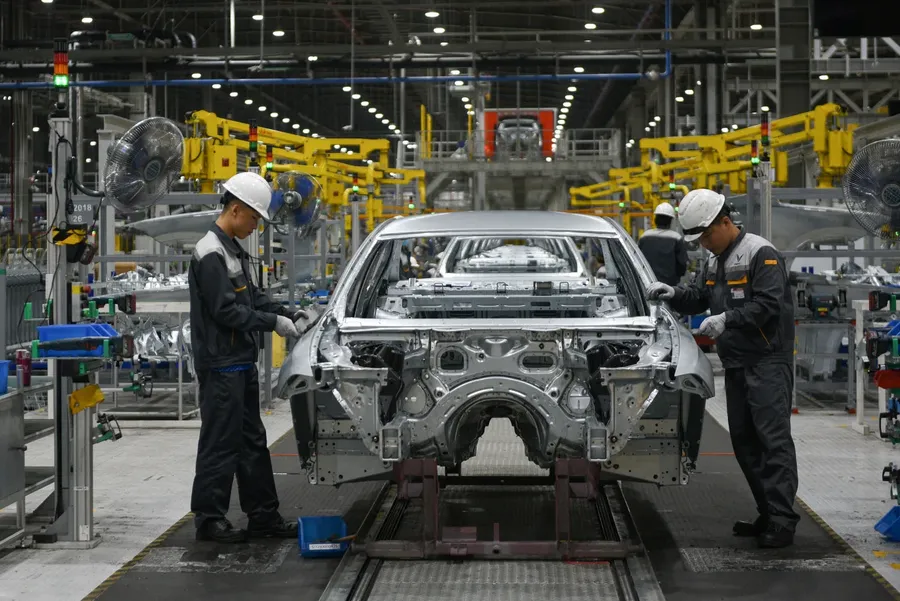
Third, compare EBITDA and operating loss with selling, general and administrative expenses and research and development costs. An automaker can improve gross profit and still remain far from break-even if the cost of expanding distribution, after-sales service and product development rises faster. That is also why domestic break-even can arrive before consolidated global profitability.
Fourth is cash. Operating cash flow needs to become less negative as revenue rises, while capital needs and fundraising should decline relative to the size of the business. Shareholders approved a proposal to transfer Vietnam factories to a separate entity, with expected proceeds of VND 13,300 billion. The transaction may alter the asset and debt structure, but it does not by itself demonstrate that vehicle sales have reached break-even.CafeF
What the loss says about the distance
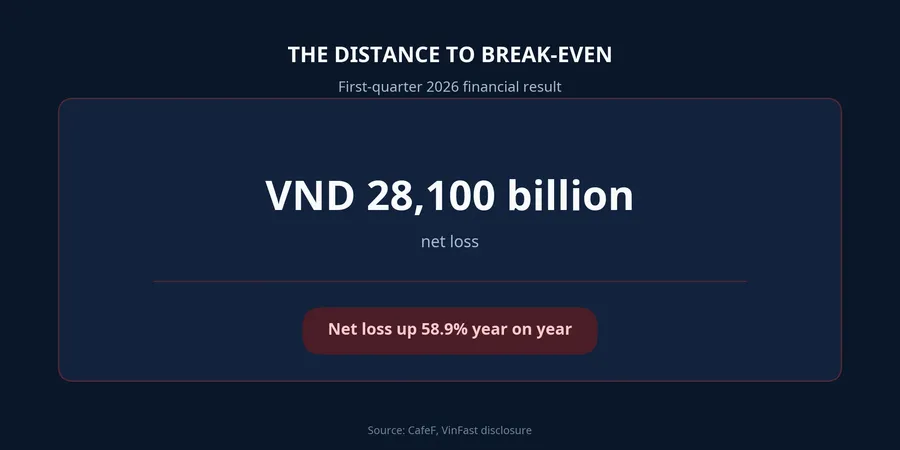
The recently cited figure is a VND 28,100 billion net loss in the first quarter of 2026, 58.9% higher than a year earlier.CafeF It is not evidence that the 2027 target cannot be reached. It does show that the current gap cannot be closed by a single indicator such as deliveries.
Results could improve through at least three channels: stronger gross margins from scale and costs, operating expenses growing more slowly than revenue, or lower funding needs. The cited report does not provide enough evidence to assign a precise contribution to each channel. The disciplined conclusion is therefore not to name one definitive driver, but to require those signals to appear together in the numbers.
Vietnam and the world are different equations
Vietnam offers advantages in brand recognition, a sales network and delivery scale. In newer markets, VinFast must still spend on distribution, service, market entry and production capacity. The company has built factories in India and Indonesia while continuing to increase local sourcing in both markets.CafeF
VinFast is targeting at least 300,000 global electric-vehicle deliveries in 2026, following approximately 200,000 in 2025.CafeF That is a scale objective. Break-even in Vietnam, however, does not automatically offset the cost of other markets. Global profitability requires new-market revenue to rise fast enough while cost per vehicle and network-building expenses fall in step.
The core thesis is straightforward: 2027 is a hypothesis that financial statements must confirm, not a number that can be placed directly into valuation. In the next reporting periods, the clearest signals will be revenue per vehicle, gross margin, operating loss and operating cash flow. When all four improve together, “break-even” will have sufficiently concrete financial content.