
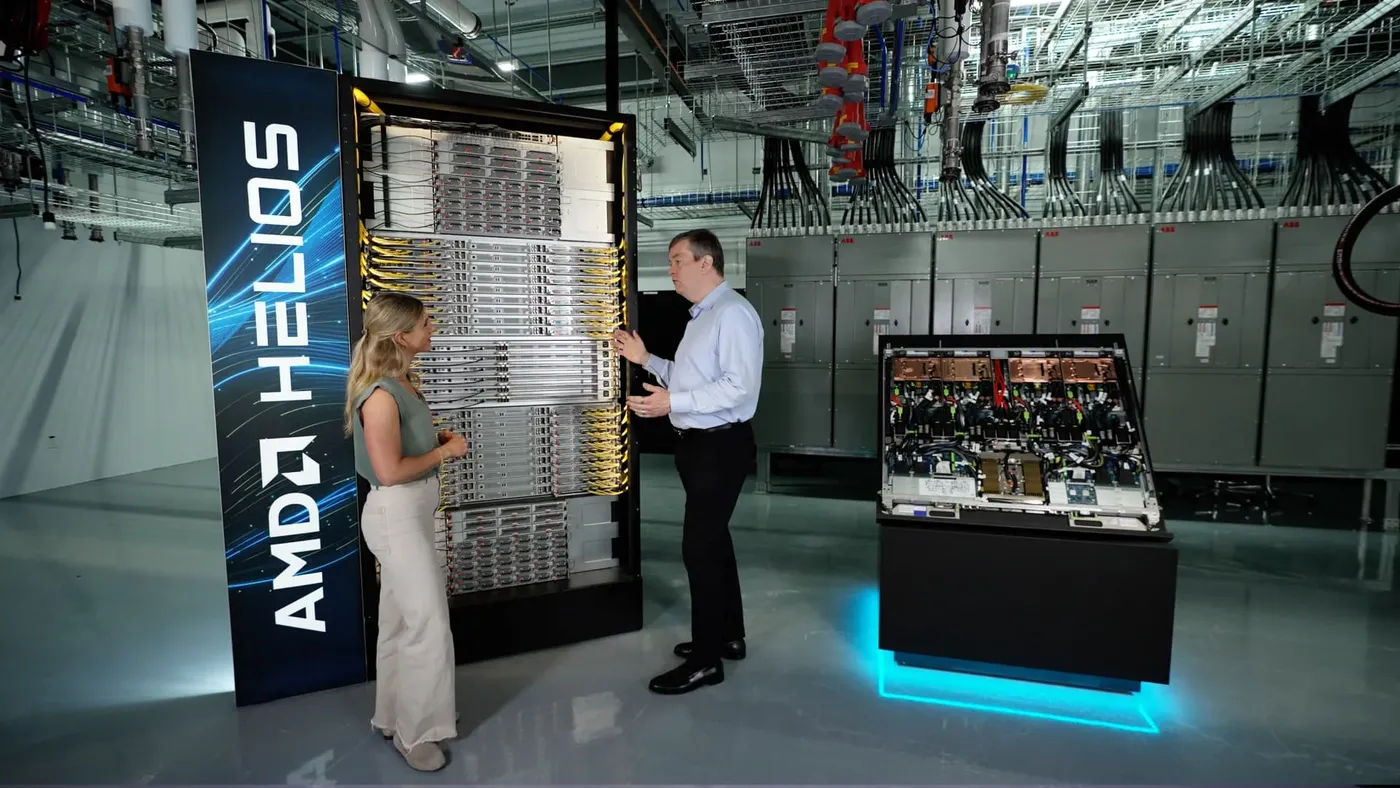

AMD has announced a partnership large enough to command attention: Anthropic plans to deploy up to 2 GW of compute capacity on AMD infrastructure, while AMD has committed to invest up to USD 5 billion of equity capital in Anthropic. Those figures appear in the same announcement, but they do not mean the same thing and they do not enter AMD’s financial statements in the same way.
The starting point for assessing the effect on AMD stock is straightforward. Two gigawatts is a ceiling for capacity the project may reach; USD 5 billion is a maximum equity-investment commitment. The announcement does not establish that all capacity will be deployed or how much revenue AMD will ultimately book. The central thesis is therefore this: the deal is a constructive signal for AMD’s product position, but shareholder value still needs to be proven through execution, cash collection and margins.
What the agreement confirms
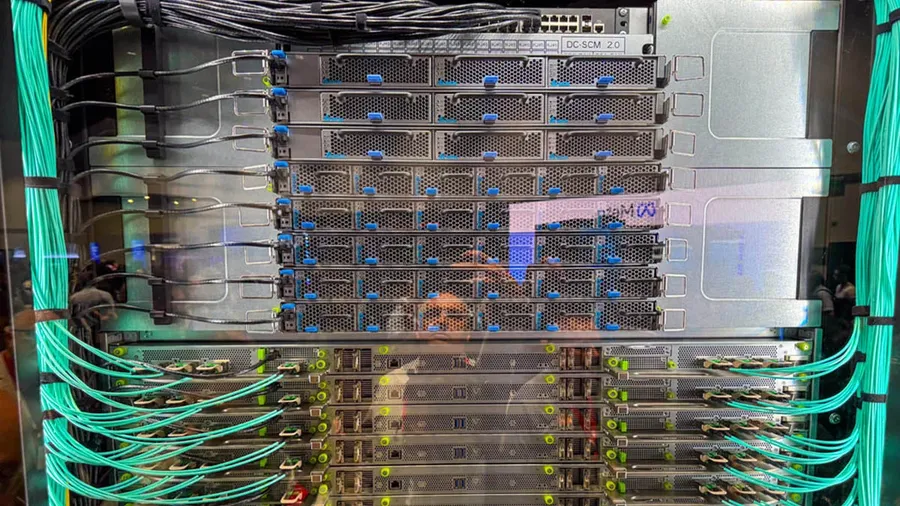
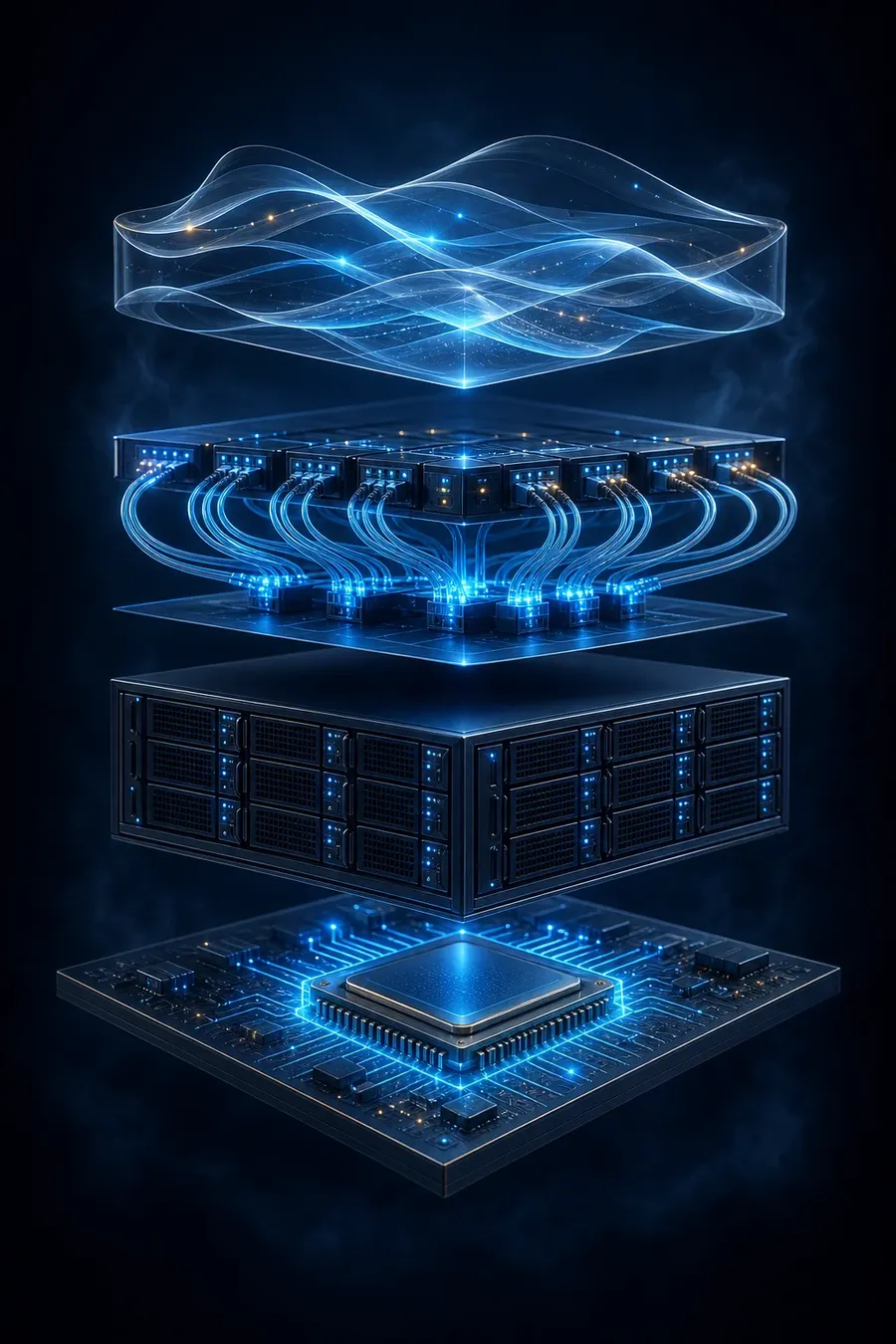
AMD says Anthropic plans to deploy up to 2 GW of compute capacity using AMD Instinct MI450-series products in its Helios systems. The initial 1 GW deployment is expected to begin in the first half of 2027. The configuration goes beyond MI455X GPUs, incorporating EPYC “Venice” CPUs, Pensando networking and ROCm software.AMD
Helios is better understood as a complete kitchen rather than a single appliance. GPUs may be the most visible part, but a large compute cluster also needs servers, networking and software. That matters because the agreement presents AMD as a supplier of an integrated system, not simply a maker of one component.
The companies also expect to work together technically for several years. Claude will support AMD software development, while the engineering teams will optimize Anthropic workloads for the Instinct ecosystem. This could strengthen AMD’s competitive position because a large customer deploying and optimizing software can help mature the broader platform. It is not, however, revenue already recognized.AMD
Two gigawatts describes capacity, not order value
A gigawatt is a measure of power. It indicates the scale of energy and infrastructure a project may require, but it does not tell investors how many processors AMD will sell, the price it will receive, which share of total project spending belongs to AMD or when revenue will land. Multiplying a rough cost per GW by 2 GW may produce an eye-catching number, but it is not a dependable revenue forecast.
The phrase “up to” is also a material condition. Actual deployment can fall short if compute demand, construction timing, power availability, component supply or operating efficiency changes. Even the initial 1 GW, expected to begin deployment in the first half of 2027, is a start date. It does not confirm that all equipment will be delivered, accepted and recognized as revenue in that reporting period.
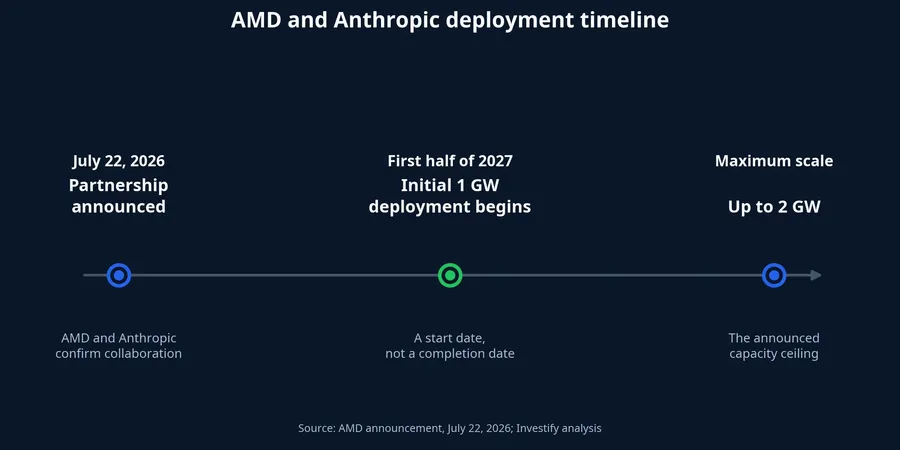
Viewed this way, the announcement offers a signal about potential demand and AMD’s ability to serve it. It does not offer a revenue schedule. New investors can easily mistake a large capacity announcement for a completed order. The two only converge when products are delivered, contractual obligations are fulfilled and revenue-recognition conditions are met.
The two cash flows are separate stories
AMD has also committed to invest up to USD 5 billion of equity capital in Anthropic in the future.AMD That is a financial-investment story. When AMD buys Anthropic equity, it holds an investment; that outlay does not automatically become infrastructure revenue.
On the other side, AMD may recognize revenue when Anthropic buys or uses AMD systems, according to the commercial terms and the obligations AMD has completed. That is the commercial flow. The more useful analytical approach is to place the two flows alongside each other rather than combine them into one “deal value.”
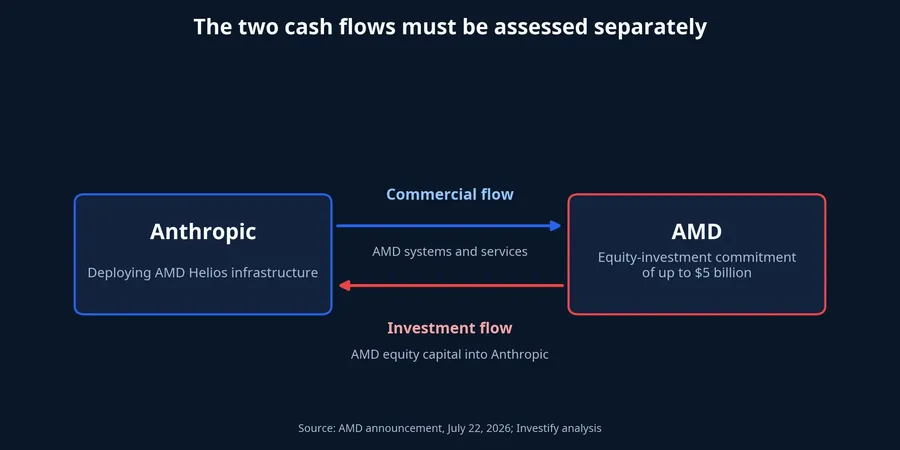
This structure does not prove that AMD is financing its own sales. Such a conclusion would require the selling price, payment terms, equity purchase price, ownership interest and the degree of linkage between the agreements. The announcement does not provide those details. What can be said is that the structure gives AMD two forms of exposure to the same partner: it may benefit if Anthropic expands on plan, but it also bears execution risk if the rollout slips.
That distinction is useful whenever investors read artificial-intelligence headlines. An investment figure may be large, but it describes a capital-allocation decision by AMD. A capacity figure may also be large, but it describes potential deployment. Revenue, gross profit, receivables and operating cash flow are the measures that show what has become operating performance.
Financial reports will answer the remaining questions
The first signal to watch is the language in subsequent updates. “Expected to deploy,” “ordered,” “shipped,” “installed,” “commissioned” and “in service” describe different states. A project may advance technically without meeting the conditions for revenue recognition, or it may have an order while deliveries remain constrained by supply-chain bottlenecks.
Next comes the data-center revenue AMD actually reports and its gross-margin trend. If revenue rises while gross margin falls sharply, that growth deserves closer scrutiny: implementation support, system configuration or pricing may be creating pressure. If both revenue and margins improve, the evidence that expansion is producing higher-quality earnings is stronger.
Cash flow is the next validation layer. Accounting revenue does not always arrive on the same timetable as cash. Receivables and inventories growing faster than sales may indicate that the company is funding the rollout in advance. On the investment side, later filings should show how much AMD has actually invested in Anthropic and how that stake is accounted for.
AMD also identifies execution risks including timely product delivery, supply from manufacturing partners, critical components, software compatibility and order volatility. These are not boilerplate to ignore. They are the links that determine whether an announced capacity ceiling becomes operating systems and future revenue.AMD
What investors can conclude now
The agreement shows that a major artificial-intelligence customer is prepared to build infrastructure on Helios and work on software optimization within the Instinct ecosystem. That is constructive for AMD’s product position, especially because competition in compute infrastructure is not only about processors but also about integrating components into a working system.
But the agreement does not prove that all 2 GW will be deployed. It does not disclose selling prices or margins, and it does not set out a detailed funding timetable for the equity commitment. Rather than valuing AMD on the entire headline capacity, the disciplined approach is to separate confirmed facts from items still awaiting evidence. The expected start of the initial 1 GW deployment in the first half of 2027, delivery updates, data-center revenue, margins and cash flow are the signals worth monitoring.
The conclusion is not that the agreement lacks value. It is that it belongs in the right category: a noteworthy commercial and strategic step, not revenue already sitting in a financial report. Only when deployment milestones become deliveries, cash collection and profit will investors have enough evidence to measure its value to AMD shareholders.