


The number 100% is easy to read as a powerful signal: foreign investors will soon be able to buy CTD without restriction. But Coteccons has only announced a roadmap toward that outcome. There are still several steps between a future legal entitlement and a buy order placed today.
Put simply, a higher foreign-ownership limit is like adding seats to a flight. More seats create capacity, but they do not tell us how many passengers will book, when they will book, or what fare they will accept. New investors should not treat a foreign-room headline as a promise of a rising share price.

What Coteccons has announced is a process
Coteccons plans to seek shareholder approval in writing in August. July 31 is the record date, while the consultation is expected to run from August 7 to August 17. Those dates support the approval process; they are not the date at which the foreign-ownership limit automatically becomes 100%.CafeF
The company has described the roadmap in two stages. First, it would adjust and clarify the scope of certain business lines to target a 50% maximum foreign-ownership ratio. Only after that would it continue adjusting its business lines to target a 100% maximum.CafeF
That distinction may sound procedural, but it is the heart of the story. A public company can register many business lines, while each line can carry different market-access conditions for foreign investors. Coteccons plans to exclude certain activities under wholesale trade, railway construction and road construction codes in order to meet those conditions.CafeF
So “targeting 100%” should be read literally: it is the destination of a later stage, not a legal status already in force. The General Meeting of Shareholders is expected to authorize the Board of Directors to choose the timing and implementation method in line with regulations and guidance from the authorities. That authority helps the company execute the roadmap, but it also means the completion date is not a trading promise.CafeF
Three ideas that investors often collapse into one
When reading news about foreign room, separate three questions. First, what is the maximum stake foreign investors are legally allowed to hold? Second, how much do they actually own? Third, do they want to buy more in the next trading sessions? The questions are related, but none answers the other two automatically.
The ownership cap is a legal boundary. Raising it broadens foreign investors' potential access to a share. That is structurally positive because it can remove a constraint. Still, a higher cap creates capacity; it does not create mechanical demand.
Actual ownership is a snapshot of shares foreign investors already hold. Net buying and selling, by contrast, records trading decisions over a period of time. A fund may choose not to buy even with more room because the valuation is not attractive, or because it prefers another market, sector or stock. The reverse is also true: where demand exists, more room can prevent buy orders from being blocked too early.
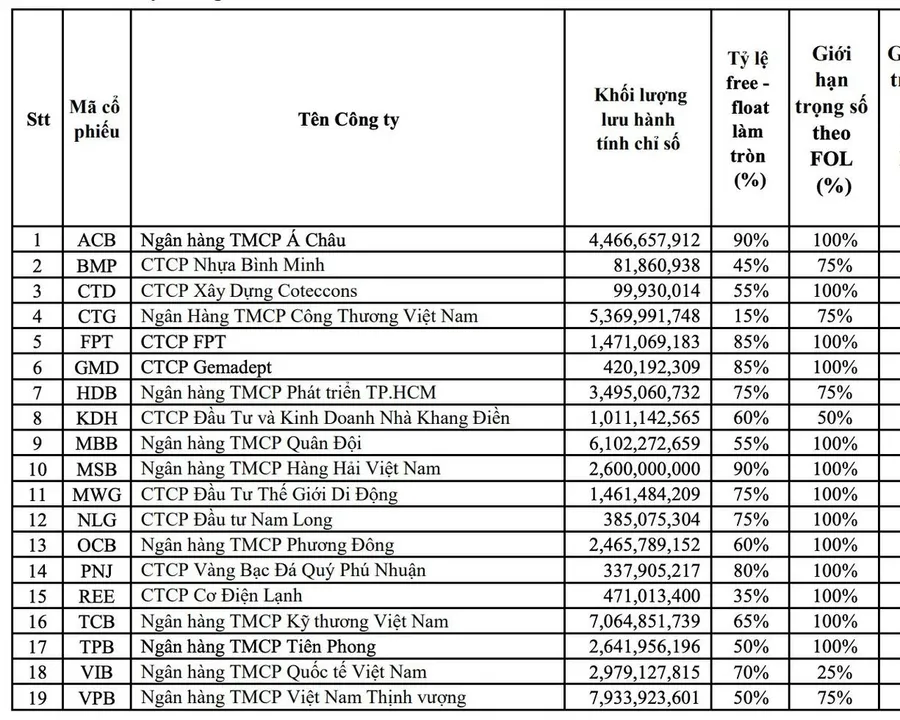
For index-tracking funds, demand typically arises when a stock's weight changes in an index they follow and a rebalancing date arrives. For active funds, the decision also turns on earnings prospects, governance, valuation, liquidity and the portfolio weight they want in CTD. The resolution offers no data that could determine these choices in advance for each pool of capital.
This is also why price moves should not be given a simple explanation. A rising or falling session may coincide with foreign-room news, but the broader market, earnings, short-term supply and demand, and sentiment toward construction shares can also matter. To say that a legal change has become real capital flow, investors need a run of data after the procedural steps take place.
What the price can show, and what it cannot
On July 21, CTD closed at VND 58,900 per share, down 0.34%, on volume of 309,800 shares. The roadmap article was published after the market closed, so that session cannot show how investors valued the resolution.CafeF
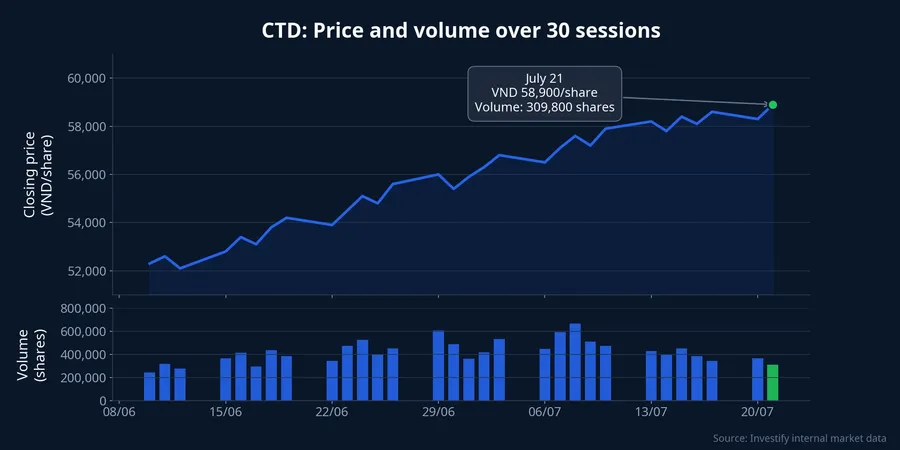
The 30-session chart puts one trading day in a wider context; it does not assign a cause to the price line. The stock has moved through several advances and pullbacks, while trading volume has varied from session to session. A fresh headline can attract short-term attention, but only subsequent transactions can show whether that attention becomes durable buying interest.
For newer investors, volume is useful evidence, not a seal of confirmation. Higher volume in one session can reflect both buyers and sellers, portfolio rebalancing, or short-term trades. Rather than focusing on a single candlestick, watch a sequence of sessions and compare it with actual foreign ownership when updated data become available.
Milestones to watch after the shareholder consultation
First comes the shareholder-consultation outcome. Investors need to know which proposals are approved, how far the Board's authority extends, and whether business-line changes begin to be implemented. That is evidence for the first legal step, not evidence of new capital entering the stock.
Next come disclosures or regulatory data showing a new maximum foreign-ownership ratio. Once a new status is actually recorded, the market can assess how the legal capacity has changed. Keeping “proposed,” “approved by shareholders,” and “in force” separate prevents investors from treating each procedural milestone as the same event.
Finally, watch the trading trail: whether actual ownership rises, whether foreign investors post net buying over multiple sessions, and whether liquidity improves in a sustained way. These signals do not need to appear simultaneously, but together they let investors test an initial assumption with data rather than expectation.
The central point is not that CTD will immediately receive a new source of demand. Coteccons is creating the legal conditions to widen foreign capital's potential access, and that is worth monitoring. The effect on the share can only be confirmed as the process is completed step by step, actual ownership changes, and trading shows that buyers are genuinely willing to transact at market prices.