


An aircraft can be registered in Vietnam, included in an airline's fleet count, and still produce no commercial flights at all. That is not a technical footnote. It is the gap between an asset on paper and an asset that can provide seats, carry passengers and earn revenue.
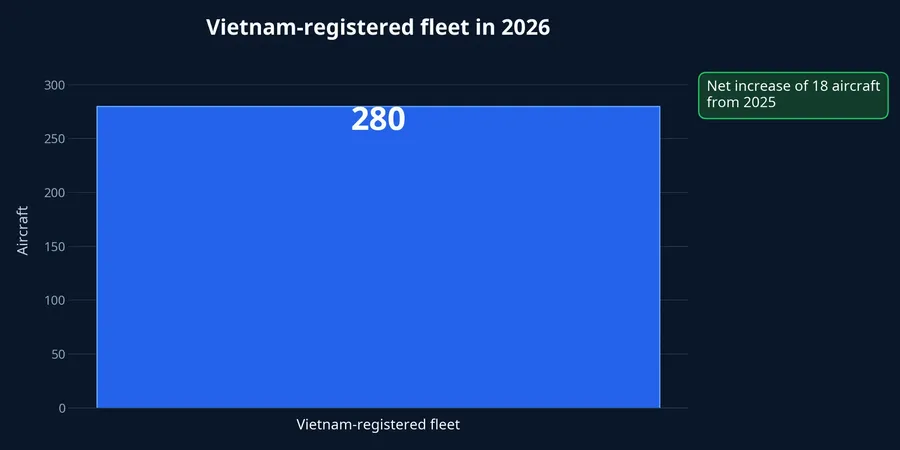
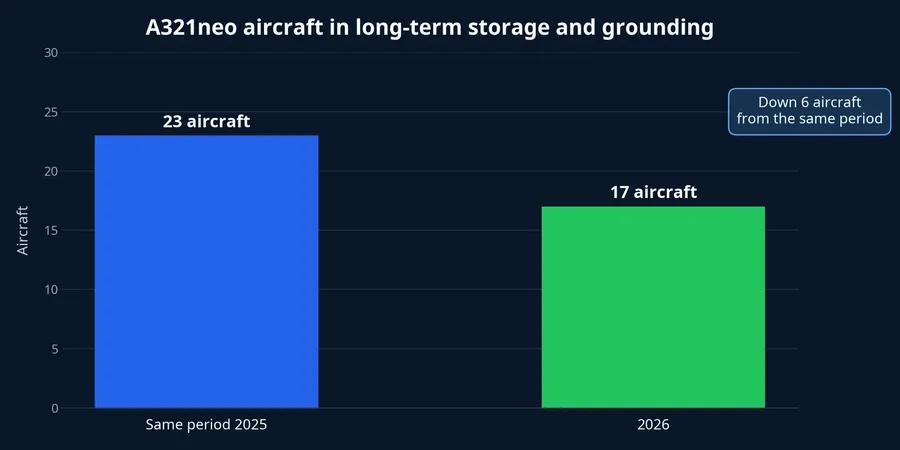
The Civil Aviation Authority of Vietnam's July 17 report captures both sides of that gap. The registered fleet has risen to 280 aircraft, while 17 A321neos remain in long-term storage and grounding because Pratt & Whitney engines are unavailable.Civil Aviation Authority Put simply, the registry measures the fleet's legal footprint; flying schedules and costs show how much of it is actually working.
A fleet of 280 is not operating capacity
Vietnam has 280 aircraft registered under its flag: 252 fixed-wing aircraft and 28 helicopters. The number is up by a net 18 aircraft from 2025, as new registrations exceeded deregistrations.Civil Aviation Authority It signals the industry's asset base, but it cannot substitute for the number of aircraft ready to depart on any given day.
Think of the fleet like a delivery company's registered vehicles. A vehicle in the workshop, not technically cleared, or without a driver cannot take an order. The same logic applies to aircraft, with much more demanding safety procedures before an aircraft can re-enter service.
That is why it would be wrong to simply net the 18 additional registered aircraft against the 17 grounded A321neos and conclude that capacity rose by one aircraft. The additions may belong to another airline, a different aircraft type or another use. Even after an engine returns, installation, inspection, maintenance and schedule integration must be completed before the aircraft generates revenue.
The bottleneck is the engine, not just the airframe
The A321neo is a narrow-body aircraft, but an intact airframe does not make it airworthy. When an engine is removed for remediation, a sizeable asset remains on the ground until the engine meets requirements and the full technical process is complete. The aviation authority specifically cited shortages of Pratt & Whitney engines and continued pressure from the supply of materials and spare parts.Civil Aviation Authority

The operational chain is straightforward. Grounded aircraft reduce the flight hours and departures an airline can offer. If passenger demand remains, the airline must work its remaining aircraft harder, alter schedules or source additional capacity. Those alternatives carry different cost structures: wet leasing may be quicker, while dry leasing requires the airline to prepare pilots, engineering support and time for induction.
These are possible responses, not evidence that every Vietnamese carrier is taking the same route. The sector-wide report does not allocate the 17 grounded A321neos by airline either. It should therefore not be used to assign a precise impact to Vietnam Airlines, Vietjet or any individual stock. Investors need each company's own operating disclosures and financial statements for that assessment.
Improvement is visible, but capacity is not yet fully restored
The number of A321neos in long-term storage and grounding is down by six aircraft from the same period in 2025, falling from 23 to 17.Civil Aviation Authority That is encouraging: the portion of capacity locked up by engines is smaller than before. It does not yet tell us how many seats have returned to the market.
The distinction matters because airline revenue does not rise the moment a technical count improves. Aircraft must stay in service long enough, seats must be sold, and recovery-related costs must be managed. An aircraft returning to service may also replace another aircraft entering maintenance, leaving net capacity largely unchanged.
Investors should also resist assigning a single cause to each airline's performance. Engine shortages can tighten operating capacity, but route networks, seasonal demand, exchange rates, fuel prices, competition and pricing policy also shape results. Several of those factors can be present in the same quarter without all being caused by the engine bottleneck.
International demand raises the test
In the first half of 2026, Vietnam's international market handled 26.2 million passengers, up 15.4% year on year. Domestic passenger traffic was 18.7 million, up only 0.3%. Vietnamese airlines carried 9.6 million international passengers, up 0.2%, and held 36.6% of international traffic.Civil Aviation Authority
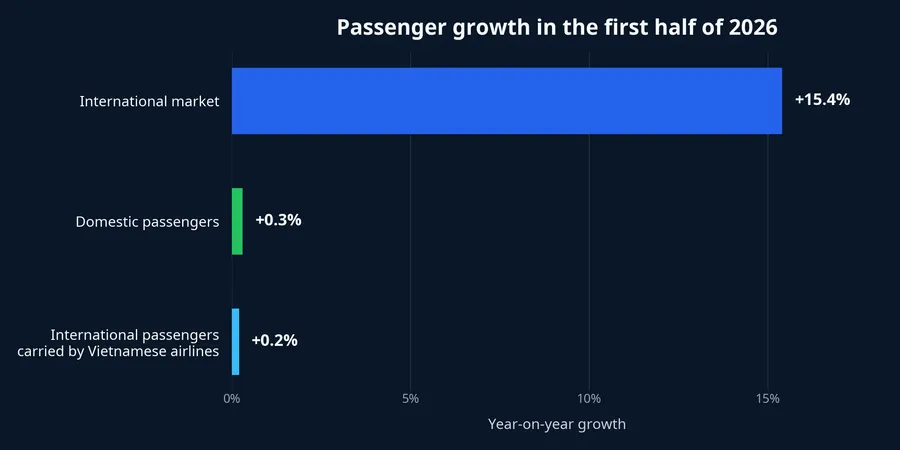
The difference between growth in the international market and growth among Vietnamese carriers needs careful reading. It does not prove that engine shortages are the sole cause: foreign carriers adding flights, route mix, seasonality and pricing strategy can all contribute. But it makes actual operating capacity more relevant. In a growing market, an airline without enough serviceable aircraft may struggle to turn demand into traffic.
For passengers, a thinner reserve fleet can make aircraft substitutions and extra peak-period flights harder to arrange. It would still be too quick to conclude that fares must rise. Fuel costs, route-level competition, booking timing and an airline's commercial policy also influence fares.
Reading airline stocks from operations to earnings
For newer investors, start by separating three layers of information. First comes the number of aircraft owned, leased or registered. Second comes the serviceable fleet, expected return dates for grounded aircraft and replacement capacity. Third comes the operating outcome: departures, flight hours, available seats, passengers carried and load factor.
Load factor should not be read in isolation. A high ratio can indicate strong demand, but it can also result from fewer seats being offered because the fleet is short. Conversely, a lower ratio while seats increase is not automatically negative: an airline may be opening routes or restoring capacity before the market absorbs it. The question is whether the measures improve together and persist across several reporting periods.
The final layer is cost. Comparing lease expense, maintenance, depreciation and operating cost per unit of available capacity shows whether higher revenue is also becoming more efficient. If departures recover but unit costs rise quickly, extra revenue may not fully reach profit. Any manufacturer compensation that a company discloses should also be separated from core flying performance.
The point is not that fleet growth is bad news. It is necessary for expansion, and the decline in long-term A321neo groundings is a tangible step forward. But a convincing recovery in capacity requires departures and flight hours to rise while unit costs do not deteriorate. Future operating reports will show whether registered assets are becoming revenue-generating capacity.