

Shareholders of Ho Chi Minh City Infrastructure Investment Joint Stock Company (CII) are being handed an unusual offer. The company is issuing nearly 67.2 million convertible bonds, VND 100,000 face value each, for a total of roughly VND 6.72 trillion, at a 10:1 ratio.Vietstock The ex-rights date is August 26, 2026, with the record date on August 27, 2026.CafeF
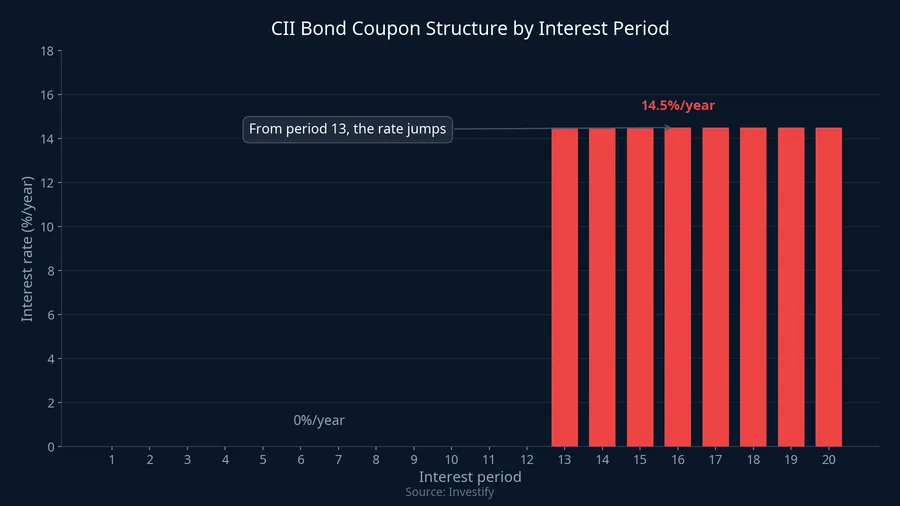
Most investors will stop at the headline rate: 0% for the first 12 interest periods (each 3 months, so exactly three years), then a jump to 14.5% per year, on a 25-year term.Tin nhanh chứng khoán The 14.5% rate is more than double the 12-month savings rate at state-owned banks, currently listed around 6.8% per year for online deposits.VnEconomy Read that way, the story collapses into "take the pain for three years, get paid richly after." That framing misses the one word that matters most in the product's name: convertible.
What buyers are actually paying for is the conversion right, not the coupon
Each VND 100,000 bond can convert into 10 common CII shares, putting the conversion price at VND 10,000 per share.MekongASEAN Conversion happens once a year on January 25, starting January 25, 2028 and running through January 25, 2051, across 24 windows in total. The decision sits entirely with the bondholder: how much to convert, in which window, or not at all.
Set against the market price, that VND 10,000 figure takes on meaning. On August 20, CII closed at VND 14,150 per share, down 2.08%. A conversion right priced at VND 10,000 sits roughly 29% below the market price. That gap — not the 14.5% coupon further down the line — is what buyers are actually paying for.
The price of that right is three years at 0%. A VND 100,000 bond, if instead placed in 12-month deposits at 6.8% and rolled over for three years, would earn roughly VND 21,800 in interest. Across the full VND 6.72 trillion issuance, the interest buyers are forgoing over three years comes to about VND 1.466 trillion. That is what shareholders are paying for the right to buy CII shares at VND 10,000, delivered starting in 2028.

Why CII needs exactly three interest-free years
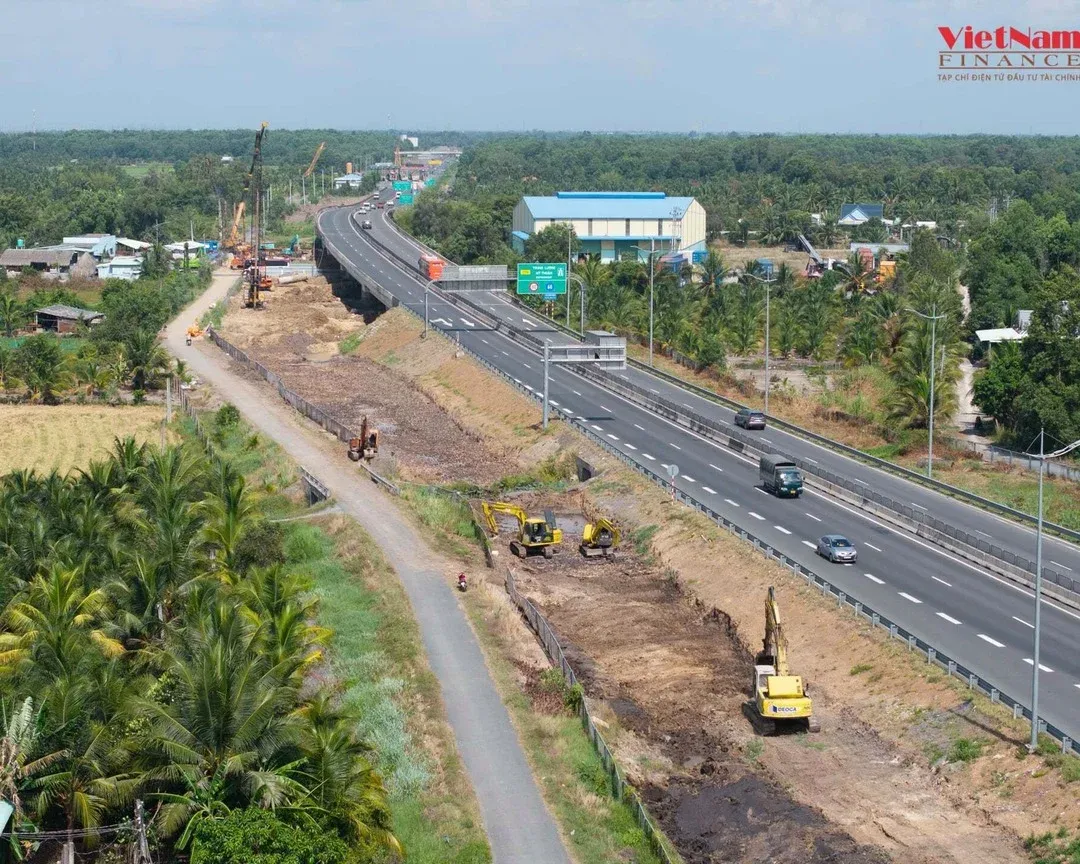
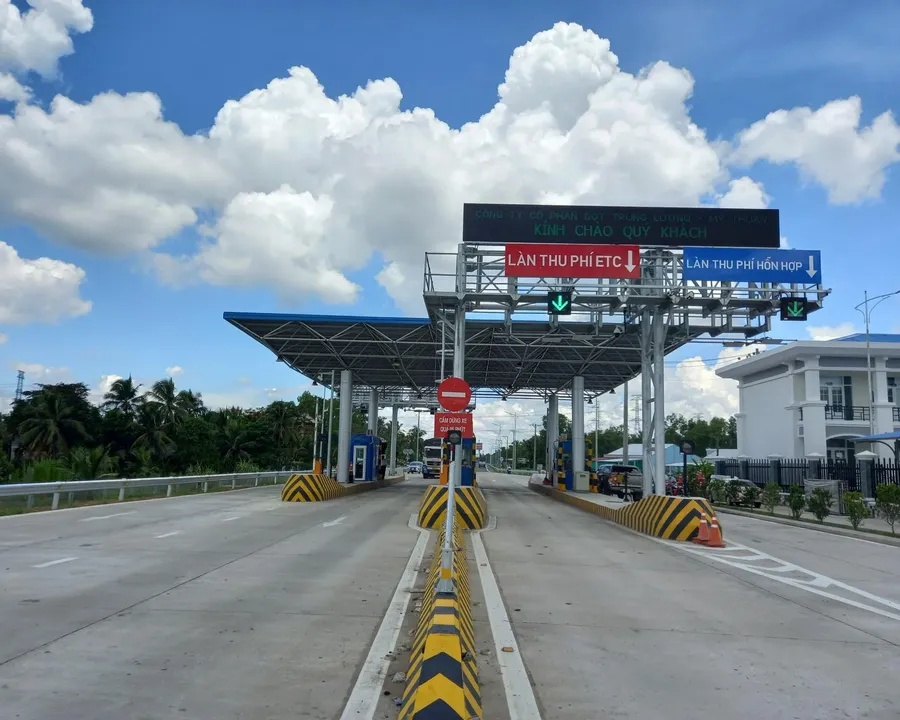
All proceeds go toward a business cooperation with Saigon - My Thuan Expressway BOT Co., financing the expansion of the Ho Chi Minh City - Trung Luong - My Thuan expressway. It is the largest highway BOT project to date, with total investment of VND 36.172 trillion, spanning more than 90 km, and no state capital involved.VnExpress Construction broke ground on December 19, 2025 and is expected to finish in early 2028, with disbursement weighted toward the back end: roughly 20% in 2026, 35% in 2027 and the remaining 45% in 2028.VietnamFinance
Line the two timelines up and the logic of the 0% rate becomes clear. For the first three years, the project only spends cash: it collects no toll revenue from the expanded lanes. A conventional loan during that window would land directly on the financing costs of a company that is already stretched thin.
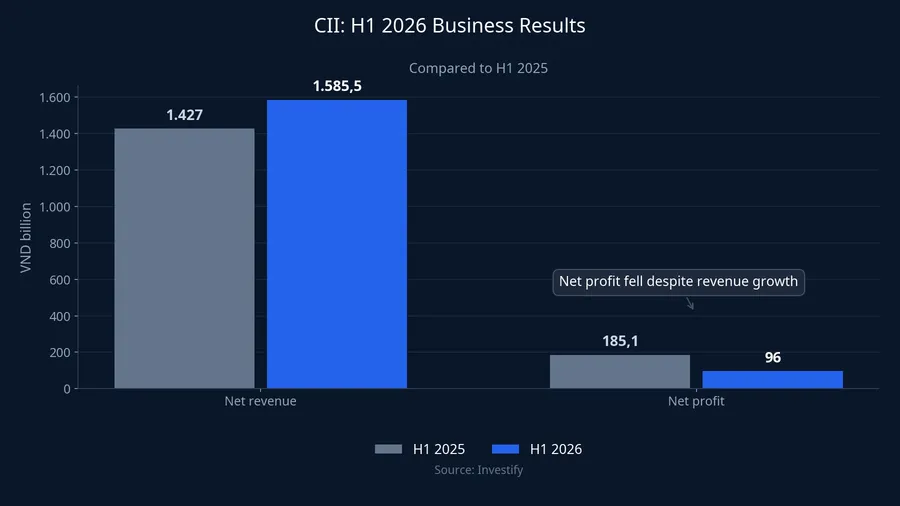
That strain shows up in the financial statements. In H1 2026, CII posted VND 1,585.5 billion in net revenue, up 11.1% year-on-year, but net profit after tax fell to just VND 96 billion, down 48.1%; the portion attributable to parent-company shareholders was VND 33.1 billion. Gross margin barely moved, while net margin fell from 13.0% to 6.1%. That gap is not coming from operations: it is coming from interest expense. Total borrowings at period-end stood at VND 24,534.1 billion, and the interest coverage ratio has been sliding steadily: 1.46x in 2024, 1.31x in 2025, 1.23x in H1 2026. Operating cash flow was negative VND 845.7 billion in just six months, deeper than the full-year 2025 shortfall.
The company has also cut other outflows to preserve cash. CII suspended cash dividends for the early-2026 periods, citing the early construction phase where bank loan disbursement had not yet begun.CafeF The April 2026 shareholder meeting went further, suspending the quarterly dividend plan altogether to concentrate capital on the project.Báo Đầu tư Against that backdrop, VND 6.72 trillion in interest-free capital for three years — equivalent to 27% of current total borrowings — is the cheapest funding CII can access.
The 14.5% rate is a fallback obligation, not a reward
This is where the structure is most often misread. The 14.5% coupon is not a bonus for patient holders: it is an obligation that only kicks in on whatever portion of the bonds remains unconverted after period 12.
If CII shares trade above VND 10,000 at a conversion window, holders have a reason to convert, and the converted portion carries no further interest. The scenario where CII actually pays 14.5% is the scenario where the share price falls below the conversion price, making conversion pointless. In other words, the heaviest obligation only activates exactly when the company is at its weakest.
The scale of that obligation deserves a plain look. If none of the bonds convert, 14.5% on VND 6.72 trillion works out to roughly VND 974 billion in interest per year. Net profit after tax for all of H1 2026 was just VND 96 billion. Even if only part of the issuance stays unconverted, the number is large enough to reshape the company's financing-cost picture.
It is worth being fair to the other side of the read: the 14.5% rate is also compensation for buyers in exactly that downside scenario, and it is the clause that keeps the bond worth something once the conversion right stops mattering. The first conversion window, on January 25, 2028, falls entirely within the 0% period, so for the first three years, buyers hold nothing but the option itself.
No collateral, 25 years, and the dilution math
This bond issuance carries no warrants and no collateral.MekongASEAN Unlike corporate bonds backed by pledged assets, buyers here are relying solely on CII's repayment commitment. A 25-year term stretches that credit risk across multiple interest-rate cycles and multiple cycles of the infrastructure sector itself.
For shareholders who sit out the offering, the story shifts to dilution. CII currently has 671.99 million shares outstanding. If all 67.2 million bonds convert, roughly 672 million new shares would be issued, doubling the shares outstanding. Under a theoretical calculation — assuming the market prices the raised capital exactly at face value and every bond converts — per-share value would settle around VND 12,100, about 15% below the current market price. Shareholders who exercise their full purchase right keep their ownership stake intact; those who skip it absorb that gap. It is the familiar mechanics of a rights offering, just packaged as a bond.
What to watch
For individual investors, the sensible read separates two different things. A conventional corporate bond is a loan at a fixed rate, its value tied to the issuer's ability to repay. This kind of convertible bond behaves more like a prepaid stock purchase right, its value tied to the share price at the moment of conversion. The coupon rate printed on the certificate is not the metric that matters most here.
The dates that will determine this instrument's value are already fixed. August 26, 2026 is the deadline for existing shareholders to exercise their purchase right. Early 2028 is when the highway project is expected to finish and start generating toll revenue. January 25, 2028 is the first conversion window: the first moment the market will see whether holders choose shares or choose the coupon. Between those two dates, the pace of project disbursement and the gap between CII's share price and the VND 10,000 conversion price are the signals worth watching more than the 14.5% headline rate.