
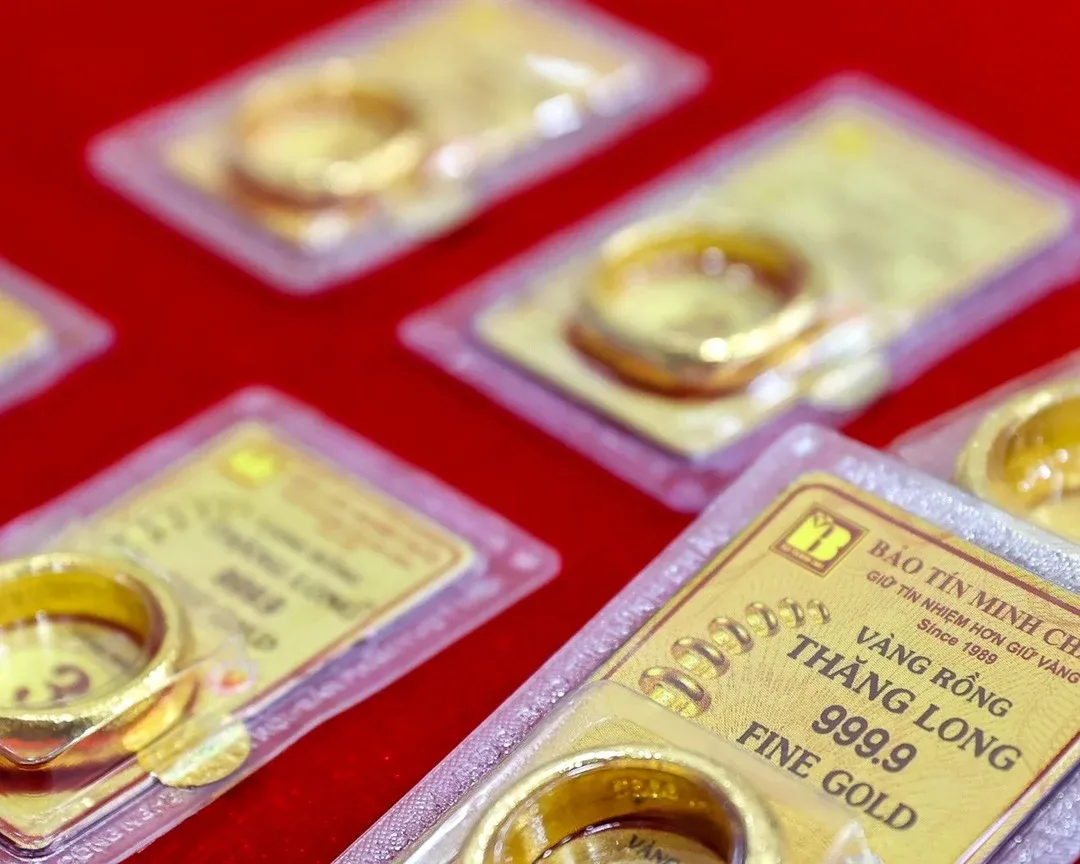

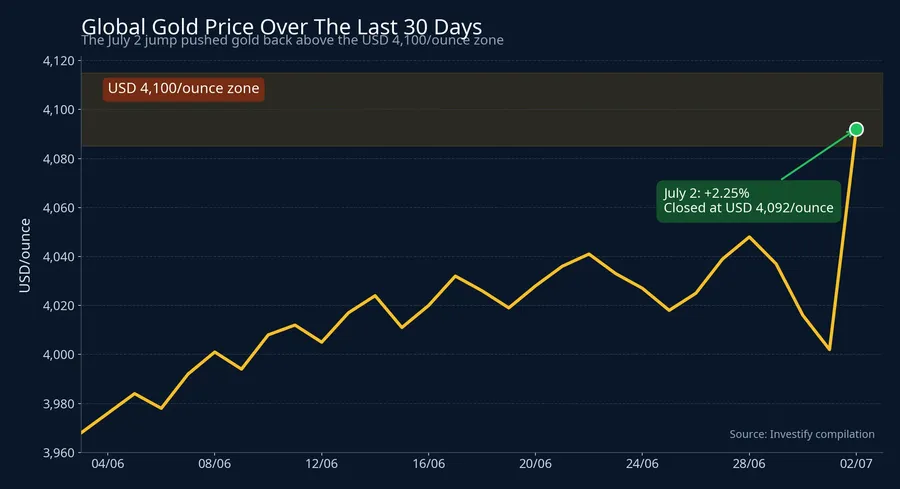
Gold clearing the USD 4,100-an-ounce mark was enough to heat up the market before Vietnam even opened on July 3. But for domestic holders, the international price is only the first layer of the story. Real gains and losses are filtered through USD/VND and through the unusually wide premium embedded in SJC prices.
That is the key point for new investors. Global gold can jump overnight, yet local prices do not have to move one-for-one. Sometimes the domestic market lags. Sometimes it overshoots on sentiment. And sometimes the decisive risk sits in the local premium itself rather than in the move in global bullion.
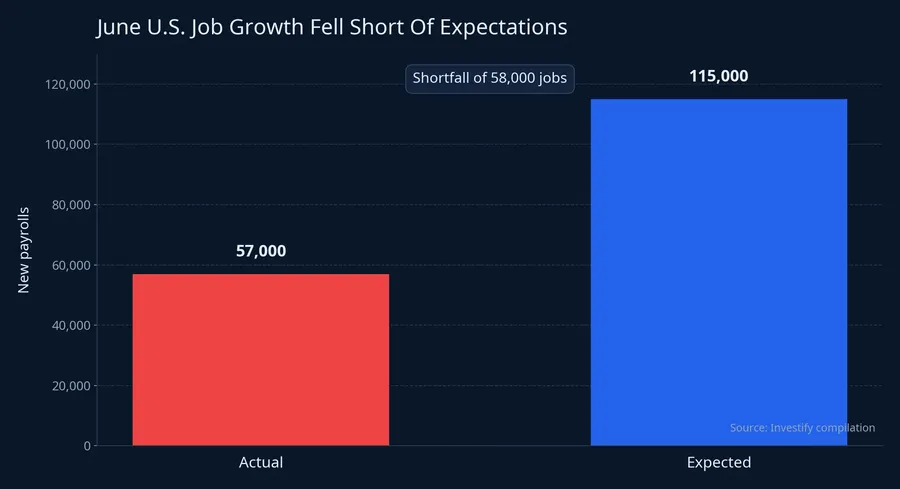
According to market data tracked by Investify, gold closed July 2 at USD 4,122.05 an ounce, up 2.25% from the previous session. At the same time, the June U.S. jobs report showed payroll growth of only 57,000 versus expectations of 115,000, while unemployment edged down to 4.2%.VietnamBiz Put those three facts together and investors have a more useful framework for the morning of July 3.
What USD 4,100 Actually Means
The simplest way to think about it is this: gold does not pay interest. So whenever markets believe the Fed may turn less hawkish on rates, the opportunity cost of holding gold falls. Money then has a better reason to move back into bullion, especially after a report that raises fresh doubts about the pace of the U.S. economy.
The June jobs report did exactly that. Payroll growth missed estimates by a wide margin even though the unemployment rate did not rise. That is not enough to say the Fed will definitely pivot, but it is enough for markets to start repricing how long rates may need to stay restrictive.VietnamBiz
This is where new investors often oversimplify the gold story. Gold does not rally just because the news is “bad.” It tends to respond when bad news changes expectations for real rates and for the U.S. dollar. In other words, the market is not paying for abstract fear. It is paying for the possibility that deposits, bonds, and the dollar become less attractive relative to gold.
Layer One: U.S. Rate Expectations
Seeing the 57,000 payroll number and assuming gold will now move straight higher is still too quick a read. Every jobs report has multiple layers: payrolls, unemployment, wages, labor-force participation, and the revisions to earlier months. Only if markets read the whole set of data as meaningfully softer do Treasury yields have a strong case to stay lower.
That matters directly to Vietnamese buyers because the global price is the first anchor for everything that follows in the domestic market. If rate expectations continue to cool over the next few sessions, the area above USD 4,100 an ounce could become a more durable reference point. If markets decide the report was only a temporary soft patch, the latest jump could fade just as quickly.
So the USD 4,100 level is best read as an important signal, not as proof that a new uptrend is already locked in. Gold holders should treat it as a shift in expectations, not as a guaranteed confirmation that prices will keep climbing in a straight line.
Layer Two: USD/VND
Even if global gold keeps moving in the “right” direction, Vietnamese investors still have to pass through the exchange-rate gate. International gold is quoted in U.S. dollars. Once it is translated into Vietnamese dong, the same move in bullion can produce two very different outcomes depending on where USD/VND sits.
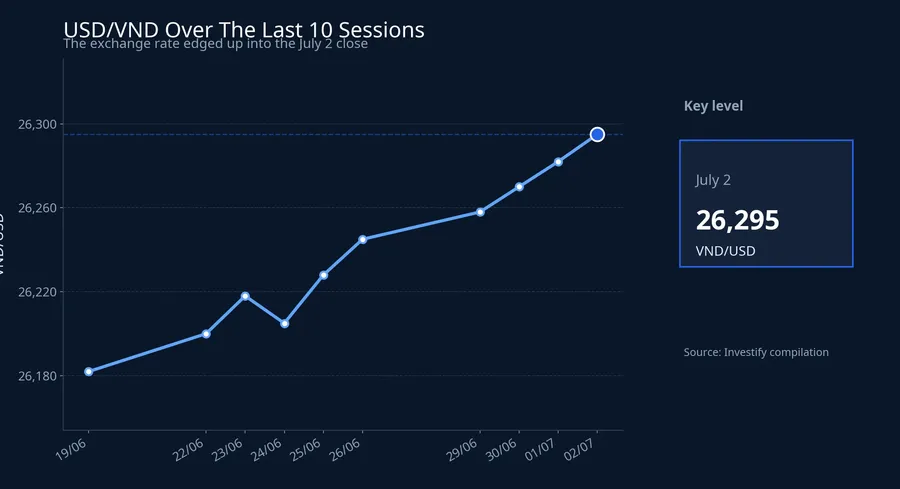
Data tracked by Investify put USD/VND at VND 26,295 per dollar on July 2. That number is not a shock on its own, but it is enough to remind investors that domestic gold exposure is always a two-variable trade: gold prices and the exchange rate. If global gold rises while USD/VND stays flat or eases, the move translated into dong will look less dramatic. If USD/VND also rises, local prices get an extra push.
That is why new investors often feel that “global gold moved a little, but local gold moved a lot,” or the other way around. They are watching one input and missing the other. Once you hold gold in Vietnam, you are not really following a single chart. You are following a product of global gold, the exchange rate, and the domestic premium.
Layer Three: The SJC Premium
This is the layer that most often makes retail investors pay tuition to the market. VietnamNet reported that SJC bar gold closed July 2 around VND 145.4 million to VND 148.4 million per tael, up VND 2 million on both sides. PetroTimes also said that on the morning of July 3, major brands were still quoting bars around VND 145.4 million to VND 148.4 million per tael, while top ring-gold selling prices reached VND 148.4 million.VietnamNetPetroTimes
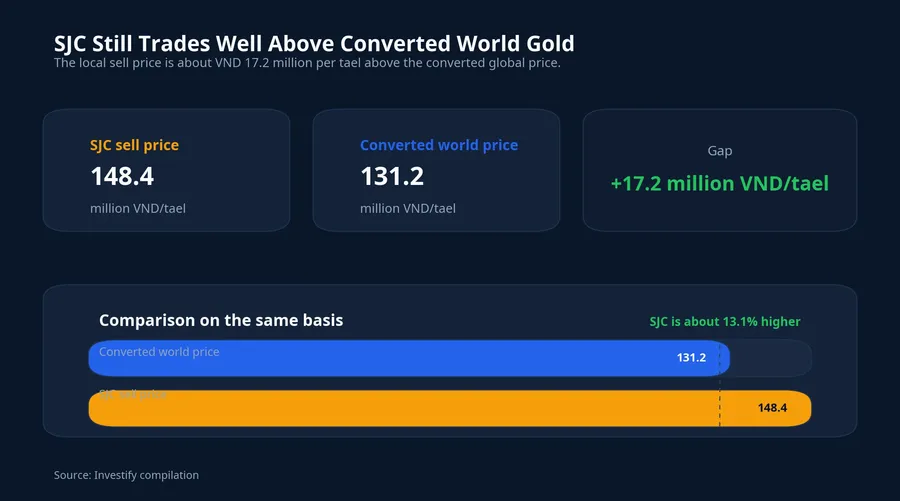
If you convert global gold above USD 4,100 at an exchange rate of VND 26,295 per dollar, the world price only comes out to roughly VND 131.2 million per tael before tax, fees, and transaction costs. Against an SJC sell quote of VND 148.4 million, the gap still sits near VND 17.2 million per tael. Put simply, anyone buying SJC at that level is not buying only gold. They are also paying for relative scarcity, brand weight, and domestic crowd psychology.
That premium cuts both ways. If you already own the metal, it can help local prices stay elevated over converted global levels for long stretches. But if you are buying fresh because you do not want to miss the move, that same premium becomes the biggest risk layer in the trade. A pause in global gold or a cooling of local sentiment can shrink the premium and make resale prices fall faster than expected.
How To Read The Morning Of July 3
A practical approach is not to react minute by minute just because gold cleared USD 4,100 an ounce. The better question is whether this new price zone can hold after U.S. markets fully digest the jobs report. If it does, gold is reasserting its role as a hedge against rate and currency risk. If it does not, the latest surge may turn out to be nothing more than a sharp reaction to a surprising data print.
For anyone considering a new entry, the hardest part is not forecasting how many more dollars global gold can add. The harder question is whether you are willing to pay an unusually wide domestic premium. When SJC still trades tens of millions of dong above converted world prices, the margin of safety for momentum buying becomes much thinner.
For investors using gold as part of a broader asset mix, the morning picture is fairly clear. Gold is behaving exactly like the asset it is supposed to be: sensitive to rate expectations, sensitive to the dollar, and highly responsive to defensive sentiment. That makes it useful in a portfolio, but it does not make it an automatic winner simply because it has crossed a round-number milestone.
That is the central thesis here. The real task for Vietnamese gold buyers is to separate three pricing layers before acting: U.S. rate expectations, USD/VND, and the SJC premium. If only the first layer is supportive while the other two remain unfriendly, the risk of chasing the move is already embedded in the price. The next signals worth watching are Treasury yields after the jobs report, USD/VND at home, and whether the SJC gap starts to narrow over the coming sessions.