
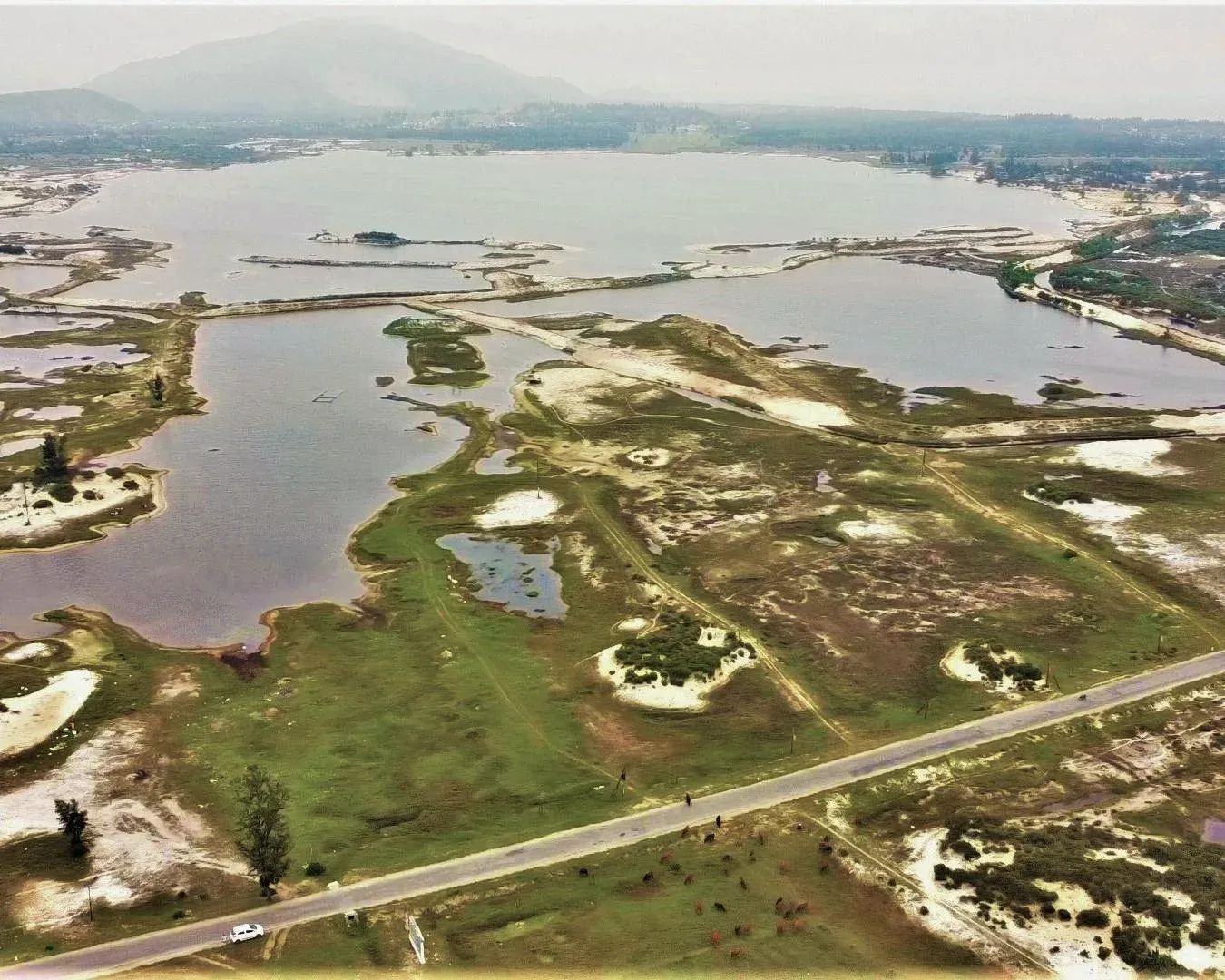

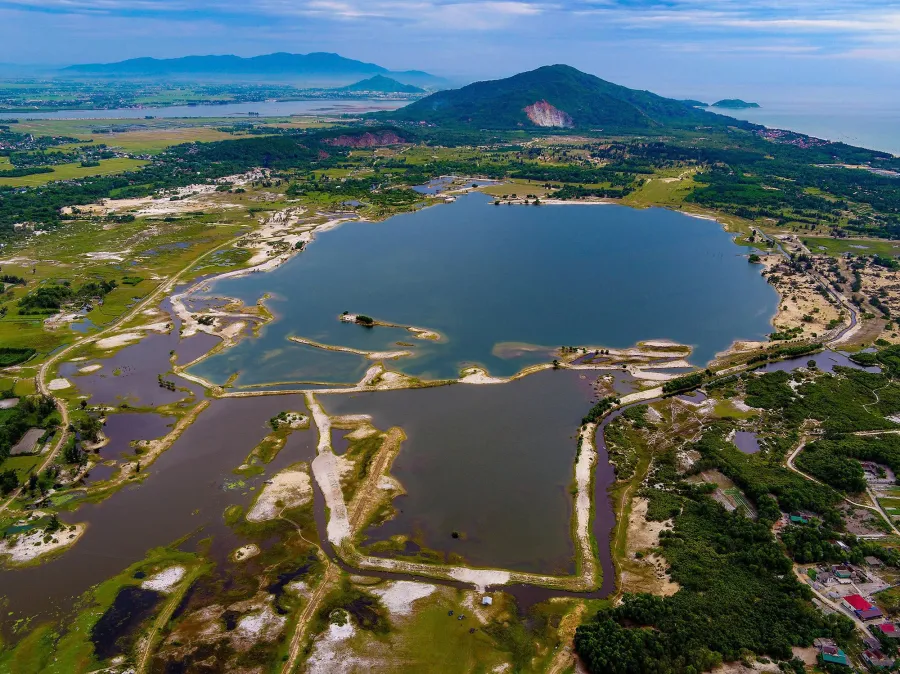
About 8 km east of Ha Tinh city and just 1.6 km from the coastline, there is an enormous open pit that has become a lake. Machinery rusts. Warehouse doors stay shut. Weeds creep across roads that once led to a busy construction site.VietnamNet Beneath that standing water lies 544 million tons of iron ore, Southeast Asia's largest iron deposit and roughly half of Vietnam's total national reserves. It has been sitting there, untouched, for nearly 15 years.
May 2026 is the deadline to decide what happens next.
The Richest Deposit in the Region, and the Problem Nobody Has Solved
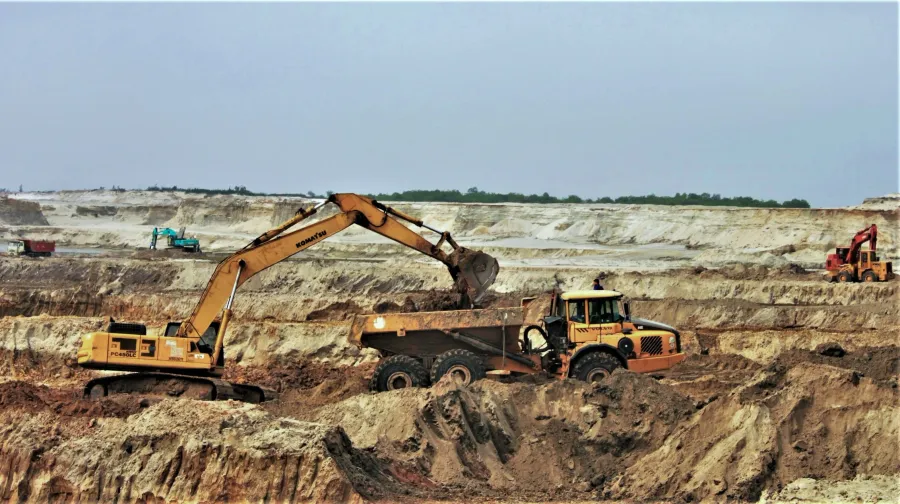
The Thach Khe deposit was discovered in 1960, but nearly half a century passed before any entity stepped forward to develop it. In 2008, the Thach Khe Iron Joint Stock Company (TIC) was incorporated with a total planned investment of approximately VND 14,500 billion.VietnamNet In September 2009, the project broke ground with topsoil stripping. Between 2009 and 2011, the developers removed approximately 12.7 million cubic meters of overburden before operations came to a halt. Since then, nothing has moved.
The real question is not how much ore is down there, but why — with reserves this large — 15 years have passed with no progress. The answer lies in the geology.
The ore body sits deep underground, right next to the sea. The water table is high, and deeper excavation creates a serious risk of seawater intrusion into the pit. Managing this requires large-scale dewatering systems and saltwater barriers, which carry enormous costs and technical risk. Environmental concerns about the coastline, the livelihoods of local fishing communities, and complex permitting requirements add further layers of difficulty. Each time a company showed interest, the cost equation shut down the conversation.
Even Hoa Phat — Vietnam's largest steel producer — once returned its mining stake because the deeper it dug, the more money it lost.Nguoi Quan Sat This illustrates that the barrier is not a shortage of capital or ambition in isolation, but a level of technical complexity that has exceeded any single company's capacity.
Why 2026 Feels Different
The shift began on the policy side. In July 2023, Decision 866/QD-TTg on mineral resource planning assigned the Thach Khe development mandate to Vietnam National Coal and Mineral Industries Group (Vinacomin).Bao Chinh Phu This was the first time in years the mine had a clear designated operator in a formal planning document.
The bigger catalyst on the demand side arrived in early 2026. On February 27, the Ha Tinh Economic Zone Authority granted an investment registration certificate to the Vinmetal steel plant — a project valued at nearly VND 80,000 billion, covering over 460 hectares in the Vung Ang Economic Zone.Bao Ha Tinh Vinmetal, incorporated in October 2025 with a charter capital raised from VND 10,000 billion to VND 15,000 billion, is a Vingroup subsidiary. Its CEO is Mr. Pham Nhat Quan Anh, the eldest son of Mr. Pham Nhat Vuong, Chairman of Vingroup's Board of Directors.CafeF The plant is designed for Phase 1 capacity of approximately 5 million tons per year, with a long-term expansion pathway to approximately 20 million tons.
A steel plant of this scale right in Ha Tinh Province naturally raises a question about feedstock. Where will the iron ore come from? The 544-million-ton deposit in the same province has re-entered the conversation.
A Government Deadline and a Four-Way Partnership Proposal
The sharpest element of the current moment is the deadline. According to VietnamFinance, General Secretary and State President To Lam directed the government to resolve all outstanding proposals related to the Thach Khe project by May 2026.VietnamFinance For the first time in many years, there is a clear political timeline attached to a decision on the mine's future.
Precisely at this moment, Hoa Phat stepped forward with a proposal. According to the Government Gazette, the company has proposed collaborating with Vinacomin, THACO, and Vingroup to jointly study the restructuring and development of the mine.Bao Chinh Phu The rationale laid out by Hoa Phat makes three substantive points.
First, given the scale and complexity of Thach Khe, only Vietnam's leading industrial conglomerates have the financial depth and technical experience to manage the project. A consortium spreads risk horizontally rather than concentrating it in one entity. Second, given the mine's strategic coastal location, ownership should remain in domestic hands to protect national security and defense considerations, ruling out foreign-invested operators. Third, independent international consulting firms specializing in metallurgy and mining should be invited to assess technology, environmental impact, and safety.
It is worth noting that Hoa Phat and Vingroup are simultaneously prospective partners in this coalition and competitors in building large-scale steel capacity in Ha Tinh. If a consortium takes shape, deciding how to allocate ore among its members will be a non-trivial governance problem.
What This Means for Investors Tracking HPG
Why does an iron ore mine matter this much for HPG shareholders? Iron ore is the single largest input cost in blast furnace steelmaking. For Hoa Phat's production model, iron ore typically accounts for roughly one-third to nearly half of cost of goods sold, depending on the quarter. The bulk of this is currently imported from Australia and Brazil, which means Hoa Phat's margins are directly exposed to global iron ore price swings and exchange rate movements.
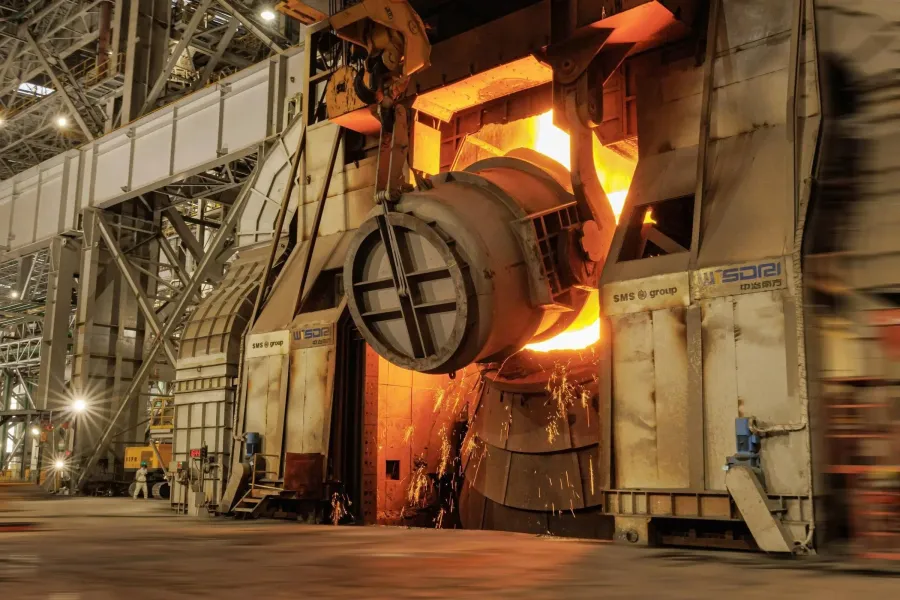
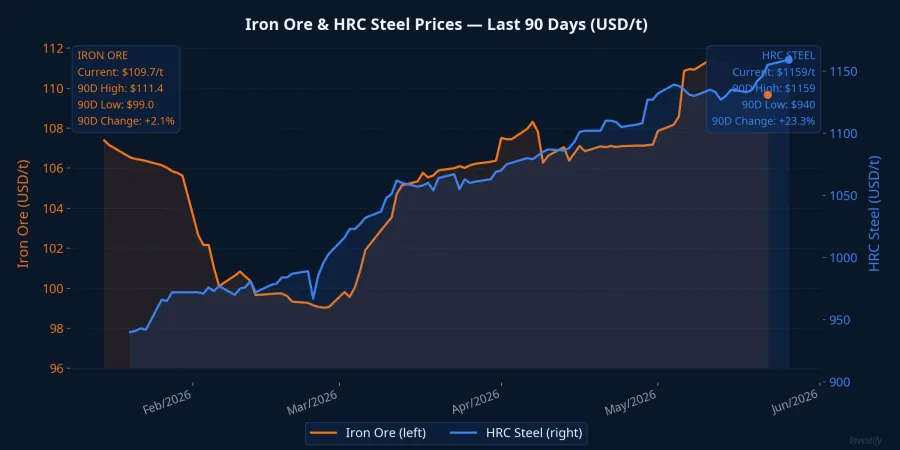
Global iron ore prices are currently around $110 per ton, while hot-rolled coil (HRC) steel — Hoa Phat's core product — stands at $1,159 per ton, up 23.3% over the past 90 days. HRC rising faster than iron ore indicates that margins are currently supported in the short term, though this dynamic can reverse as global supply and demand conditions shift.
If Thach Khe is developed successfully, Hoa Phat could source a portion of its iron ore domestically, reducing import dependency and insulating margins from international price volatility. In theory, this is a structural positive for long-term profitability. But it is important to treat this as a conditional scenario. Actual extraction economics will depend on the quality of the ore after beneficiation and the cost of processing impurities: precisely the same the technical factors that caused the project to stall for 15 years. The benefit only materializes if domestic extraction costs prove competitive against imported ore.
Even under an optimistic timeline, this is a three-to-five-year story. No May 2026 decision can compress the time needed to build mine infrastructure, install dewatering systems, and validate the beneficiation process.
Three Signals Worth Watching After May
The Thach Khe story is at its most important inflection point since 2011, but it remains at the proposal and review stage, not a final decision. The outcome of the May 2026 deadline will answer three core questions for investors.
First, what development model will the government choose: continuing with Vinacomin as the sole designated operator, or endorsing the multi-party consortium that Hoa Phat has proposed? Second, if it is a consortium, how will mining rights and ore allocation among members be structured? Third, what dewatering and processing technology will be selected, and which international consultants will conduct the independent technical and environmental review?
The May outcome will also signal how seriously this policy cycle differs from previous ones. If the government produces a clear directional decision rather than another round of deferrals, that is the foundation for a more substantive assessment of the long-term value this project could create for the companies involved.