
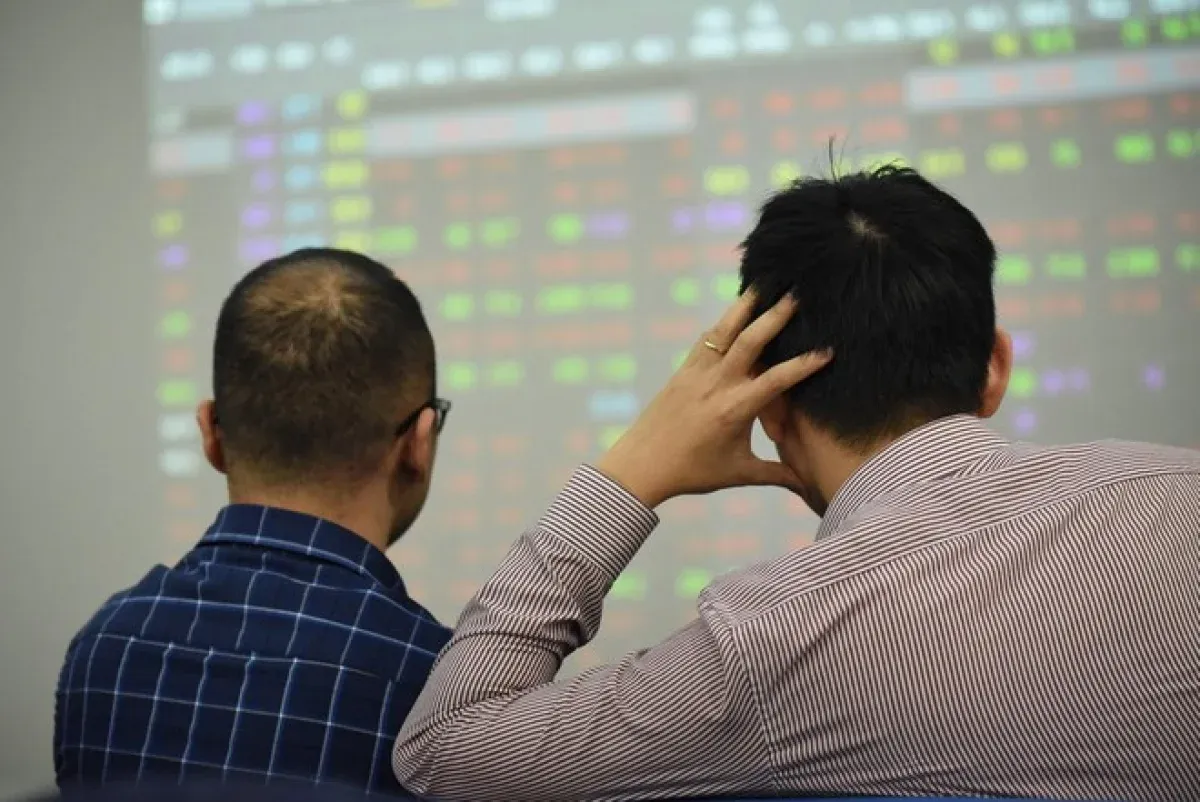

On Monday morning, May 25, if you hold HPG or TCX in your portfolio, your trading app will show an uncomfortable number: HPG's reference price will open roughly VND 2,400 below Friday's close, and TCX will be down approximately 17%. For newer investors, the immediate reaction is often "the market is getting worse" and the impulse to sell kicks in. The truth is, this is not a loss. It is the reference price adjustment that HOSE applies on dividend ex-dates, meaning the first session in which buyers of a stock no longer receive the declared dividend for that round.
The week of May 25-29, 2026 brings three simultaneous ex-dates: Hoa Phat Group (HPG) and Techcom Securities (TCBS, ticker TCX) on Monday May 25, and Taseco Land (TAL) on Wednesday May 27. This post explains HOSE's reference price formulas, works through the numbers for each stock, and shows how to separate purely mechanical price drops from genuine market movements.
How HOSE Adjusts the Reference Price on Ex-Date
The ex-date is the first trading session in which the buyer of a stock does not receive the dividend for that payout round. To prevent the company's market capitalization from appearing to change abruptly when the entitlement detaches from the price, HOSE recalculates the opening reference price using one of three formulas, depending on the payment type.
For a cash dividend: the new reference price equals the prior session's closing price minus the cash dividend per share. The cash does not vanish: it flows into the shareholder's account as cash.
For a stock dividend or bonus share issuance: the new reference price equals the prior closing price divided by (1 + the issuance ratio). The share price falls proportionally because the total share count increases, but the investor's proportional ownership — measured by the larger number of shares — is unchanged.
For a combined cash and stock payment: the new reference price equals (the prior closing price minus the cash dividend) divided by (1 + the issuance ratio). The cash subtraction always comes first, then division by the dilution factor.
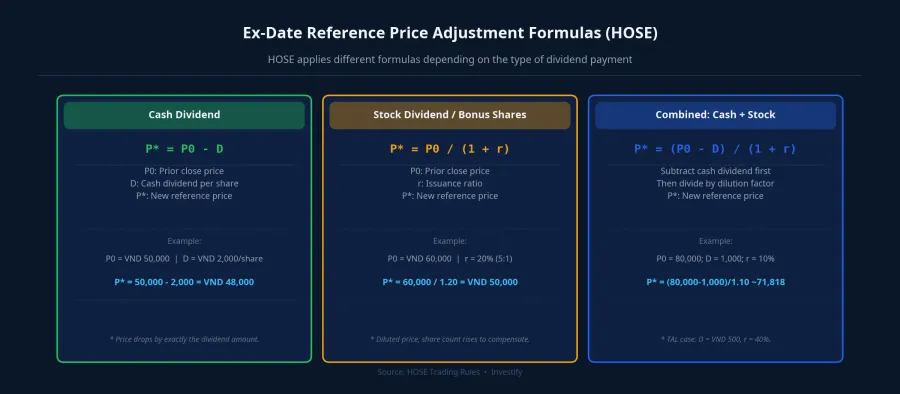
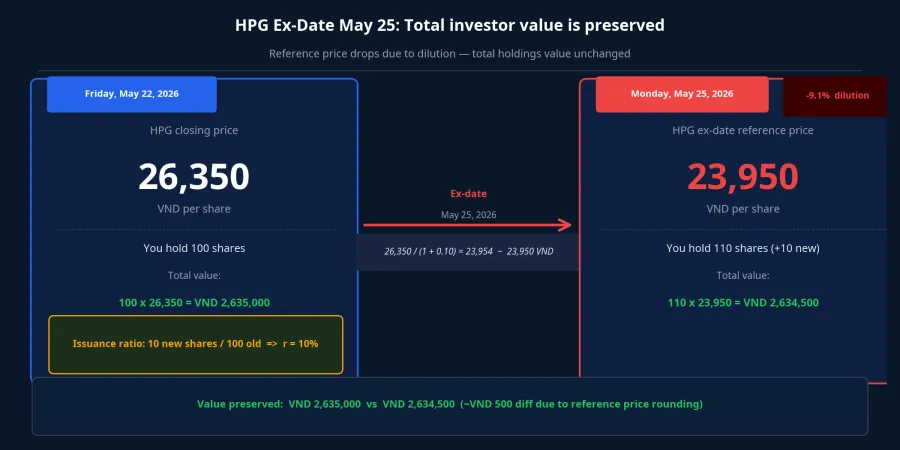
The key point: this formula ensures the shareholder's economic ownership is unchanged at the moment the entitlement separates. What "disappears" from the price has been converted into another form of value: either cash arriving in the account, or new shares arriving in the portfolio. Nothing is lost.
The Three Ex-Dates This Week (May 25-29)
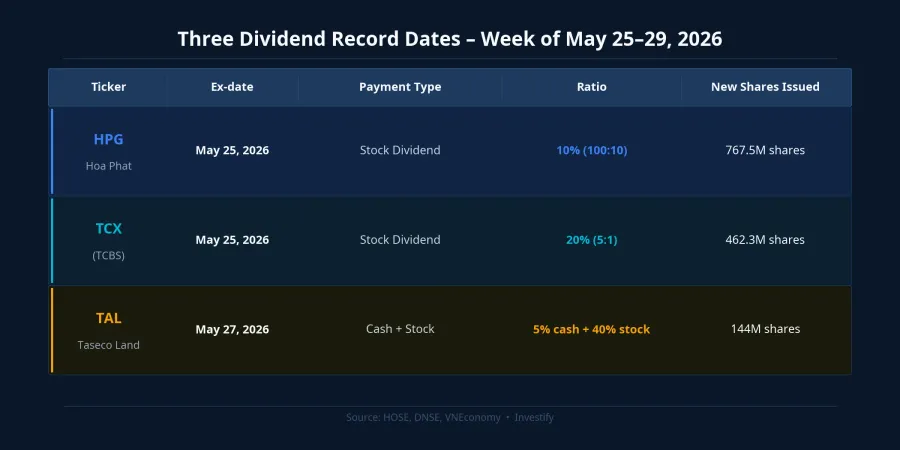
Hoa Phat Group (HPG), Monday May 25. The record date is May 26; the ex-date is May 25. Hoa Phat is issuing over 767.5 million bonus shares at a ratio of 100:10, meaning 10 new shares for every 100 held.Vietstock Charter capital rises from VND 76,755 billion to VND 84,430 billion. Applying the formula: Monday's reference price equals VND 26,350 (Friday's close) divided by 1.10, giving approximately VND 23,950. Screens will show HPG down roughly VND 2,400 from Friday, but every shareholder's account will have 10% more shares.
Techcom Securities (TCBS, ticker TCX), Monday May 25. The record date is also May 26. TCBS is issuing 462.3 million shares from retained earnings at a 5:1 ratio, a 20% stock dividend.CafeF Charter capital rises from VND 23,116 billion to VND 27,739 billion. Applying the formula: the reference price equals Friday's closing price divided by 1.20. Monday morning screens will show TCX down approximately 17%. That figure is alarming to any investor who has never experienced a large ex-date before. The reality: the share count in the account rises by 20%, and total portfolio value is preserved.
Taseco Land (TAL), Wednesday May 27. This is the most complex of the three, because TAL combines all three payment types simultaneously: a 5% cash dividend (VND 500 per share), a 10% stock dividend, and a 30% bonus share issuance from equity reserves. TAL is issuing a total of 144 million new shares,VnEconomy raising charter capital from VND 3,600 billion to VND 5,040 billion. The total issuance ratio is 40% (10% + 30%). Applying the combined formula: Wednesday's reference price equals (Tuesday's closing price minus VND 500) divided by 1.40. The screen on Wednesday morning will show TAL down roughly 29% from Tuesday's close, enough to look like a crash to someone unfamiliar with the mechanism.
Separating Mechanical Declines from Real Market Moves
The reference price adjustment assumes all other factors remain constant. In practice, the actual trading price on ex-date can differ from the theoretical reference price in either direction, driven by two distinct sources.
The first source is stock-specific supply and demand after the entitlement detaches: some investors take profits after receiving the right; others buy in expecting the stock is relatively cheaper. This variation typically stays within a few percentage points.
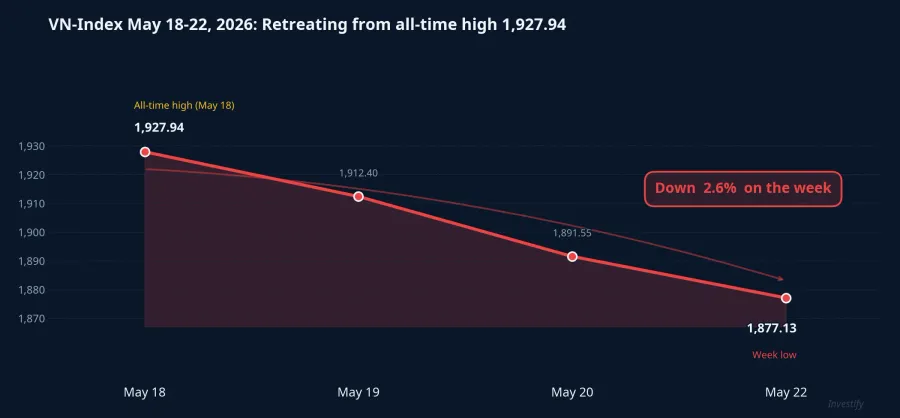
The second source is the broader market environment. The week of May 18-22, VN-Index fell 2.6% from its all-time high of 1,927.94 points set on May 18, closing the week at 1,877.13. If broader selling pressure continues into the new week, HPG's and TCX's actual trading prices could end up below even the theoretical reference.
A simple way to read the signals correctly: take Friday's closing price and subtract the theoretical reference price. That difference is the mechanical adjustment, fully offset by the dividend received. Any gap between the theoretical reference price and the actual trading price in the session reflects genuine market movement for that stock on that day.
To make it concrete: if HPG's theoretical reference price is approximately VND 23,950 but the stock actually trades at VND 23,700 during the session, the stock is absorbing an additional ~1% of market-driven selling pressure on top of the 9.1% mechanical dilution.
What to Watch During the Week
There are three observable checkpoints in the May 25-29 trading week.
First, Monday morning May 25: compare HPG's and TCX's opening prices with the calculated theoretical references. If actual prices are above the reference, selling pressure is contained and sentiment is positive. If prices come in more than 2% below reference, that is a signal worth monitoring more closely.
Second, Wednesday morning May 27: apply the same reading to TAL. This is the sharpest test of the three, since TAL combines all three payment types and carries the highest dilution ratio this week at 40%.
Third, by Friday close May 29: assess whether VN-Index holds the 1,870-1,880 support zone. One additional note: the three ex-dates will technically drag the index lower because HPG carries meaningful weight among large-cap constituents. This is an index adjustment driven by the dividend mechanism, not a genuine market weakness signal.
Understanding the Mechanism to Avoid Panic Selling
Monday morning's screens will be full of red numbers tied to HPG and TCX. This is not an abnormal event. It is HOSE performing its standard function of adjusting prices to reflect the fact that dividend entitlements have separated from the share price.
For investors holding any of these three stocks, the real question is not "is the price drop alarming?" but rather "does any decline beyond the mechanical adjustment tell us something about the stock's condition and the broader market?" The simple calculation above answers that question directly, without guessing.
The signals worth watching over the next two weeks: whether HPG and TCX recover their dividend gaps within two to four weeks; whether VN-Index holds the 1,870-1,880 support zone as a base for the next advance or continues to pull back; and whether the cash returning to investors from the dividend payouts flows back into equities or shifts toward other asset classes.