


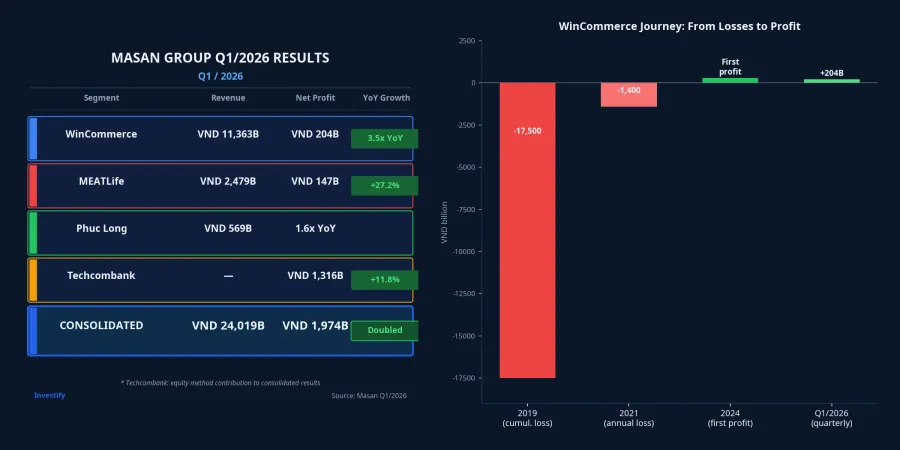
Look at WinCommerce's Q1/2026 numbers: revenue of VND 11,363 billion, up 29.4% year-on-year; net profit of VND 204 billion, 3.5 times the prior-year figure.Vietstock What makes the numbers interesting is not the absolute value, but the starting point: accumulated losses of roughly VND 17,500 billion when Masan took over VinCommerce from Vingroup at the end of 2019.DNSE
The gap between those two milestones did not close with a single big decision. It is the accumulated result of six years of distinct, incremental choices.
The Handover: Billion-Dollar Revenue, VND 17,500B in Losses
On December 3, 2019, Vingroup transferred 83.74% of VinCommerce to Masan through a share-swap agreement.Vietstock Vingroup recorded VND 8,502 billion in proceeds from the transaction.The Saigon Times
On paper, VinCommerce looked substantial: a retail chain with over USD 1 billion in revenue. In practice, only about 20% of nearly 3,000 stores were breaking even at the store-level EBITDA. The rest were burning cash steadily. Markets at the time questioned whether a consumer goods conglomerate could turn around a large-scale loss-making retail operation.
2020–2021: Contract First, Then Grow
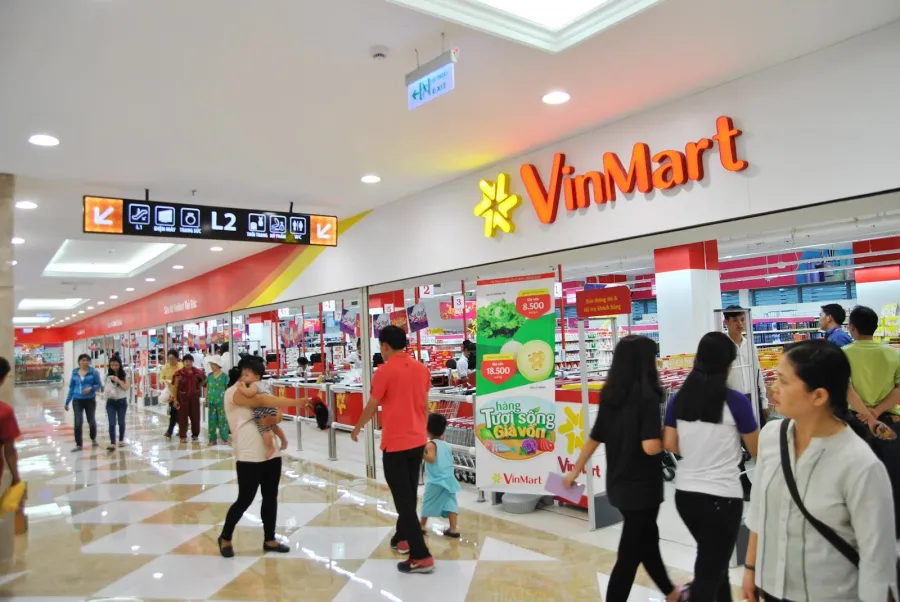
Masan did not respond by injecting capital to maintain scale. The first move was controlled contraction: closing more than 700 underperforming WinMart+ mini-supermarkets, renegotiating lease terms across the portfolio, reorganizing the product mix, and restructuring the supply chain.VietnamBiz
The logic, while straightforward in hindsight, required accepting short-term revenue loss to protect longer-term margin. Each store closure locked in one fewer loss-making line. By year-end 2021, WinCommerce's annual loss had narrowed to approximately VND 1,400 billion.VnExpress Still a loss, but the trajectory had reversed. That shift was enough signal for Masan to begin thinking about the next layer of value.
2022–2023: Multi-Touchpoint Integration and a Rural Pivot
Once the operational foundation stabilized, WinMart moved toward building an ecosystem. Phuc Long Coffee & Tea was brought in as in-store take-away counters. The Point Rewards loyalty app linked customer accounts across Techcombank and the Masan Consumer network. Each customer touchpoint was monetized more than once; acquisition costs were spread across multiple revenue streams instead of just one.
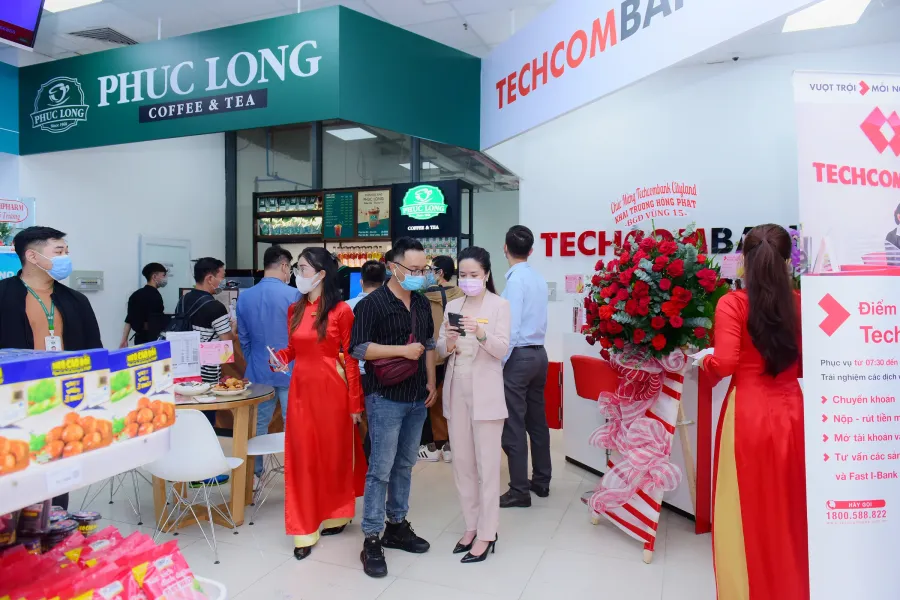
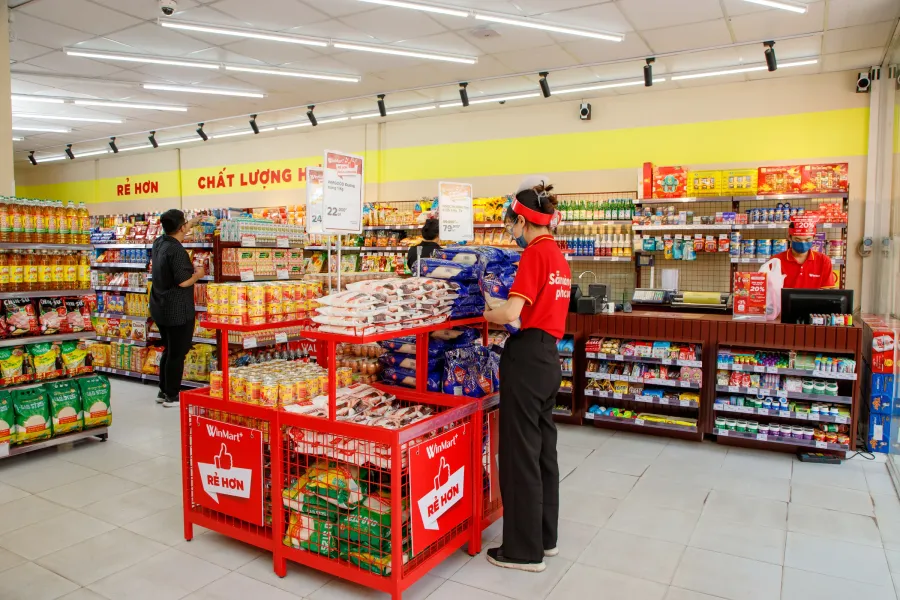
In parallel, the chain shifted its center of gravity outside major cities. The compact WIN format was designed specifically for small towns and townships, where the direct competitor is not AEON or Saigon Co.op, but traditional wet markets.CafeF Per-transaction margins in this segment are thinner than urban retail, but far fewer modern-format competitors operate there. That density advantage is what WinCommerce is now exploiting.
2024–2025: First Full-Year Profit and a New Expansion Discipline
The year 2024 was the inflection point: WinCommerce turned profitable on a full-year basis for the first time, with revenue of VND 32,961 billion.Vietstock That outcome was the direct payoff from three years of restructuring and integration.
In 2025, the chain carried that momentum forward, with revenue reaching approximately VND 39,000 billion, up roughly 18%.VnExpress WinCommerce returned to opening one new store per day on average, but with a different operating discipline: new locations were only approved when the model projected store-level EBITDA breakeven in the first month of operation. That filter serves as a natural gate against repeating the 2019–2020 cycle of rapid expansion followed by mass closures.
Q1/2026: All Segments Grow Together, Masan's Best Quarter on Record
Q1/2026 results showed all of Masan's business lines growing simultaneously for the first time. WinCommerce opened a net 225 new stores in the quarter, bringing the total network to 4,817 points of sale. All newly opened stores achieved store-level EBITDA breakeven within the same quarter they opened.Vietstock
MEATLife posted revenue of VND 2,479 billion, up 19.8%, with net profit of VND 147 billion, up 27.2%.Vietnam Finance Phuc Long reached VND 569 billion in revenue, up 34%, with profit 1.6 times higher than the prior year. Techcombank's equity-method contribution amounted to VND 1,316 billion, up 11.8%, accounting for nearly two-thirds of the group's consolidated net profit of VND 1,974 billion. Consolidated group revenue came in at VND 24,019 billion; the VND 1,974 billion net profit is the highest quarterly result in Masan's history.Phu Nu Online
"Dai Ket Noi" and the Consumer OS Bet
At the annual general meeting on April 24, 2026, Masan presented the "Dai Ket Noi" (Great Connection) strategy, centered on Consumer OS: a platform linking WinCommerce, Masan Consumer, Phuc Long, Techcombank, MEATLife, and Point Rewards on a shared customer data infrastructure.Bao Dau Tu
Mr. Nguyen Dang Quang, Chairman of the Board of Directors of Masan Group Corporation, framed Masan's competitive edge as building a world-class retail platform, with the ambition of reaching approximately one million traditional grocery stores nationwide.Vietstock Mr. Danny Le, CEO of Masan Group Corporation, argued that Vietnam's retail consumer market is highly fragmented, which inflates the cost of essential goods by 15–20% above what an efficient supply chain would require,An Ninh Thu Do with Consumer OS positioned as the solution to compress that value chain.
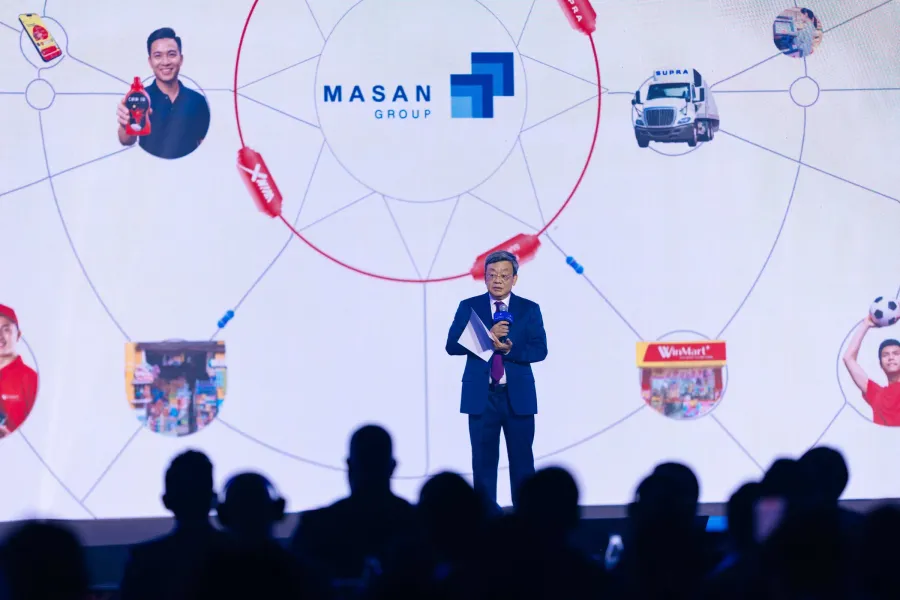
Mr. Danny Le also stated at the AGM that MSN shares are undervalued by roughly 60% versus fair value, citing three drivers: WinCommerce entering a "harvest cycle" after six years of investment; Masan Consumer gaining FMCG market share faster than the industry average; and Phuc Long expanding from integrated WinMart counters into standalone operation.CafeF This is management's own assessment. Markets need additional data to validate it.
For the full year 2026, Masan targets revenue of VND 93,500–98,000 billion and net profit before minority allocation of VND 7,250–7,900 billion. For H1 alone, the company expects revenue of VND 51,500 billion and net profit of VND 4,600 billion.VietBao Q1 has already fulfilled approximately 43% of the H1 profit target. The execution pace is on track.
Risks in the Next Growth Cycle
The picture is not uniformly optimistic. WinCommerce's net margin in Q1/2026 sits at approximately 1.8%, thin by most industry standards and leaving little room to absorb pricing pressure. Modern retail in Vietnam is entering a more competitive phase: AEON continues opening large-format supermarkets in major cities; Bach Hoa Xanh has completed its own restructuring and is resuming expansion; Saigon Co.op is defending its urban core market share. If price competition intensifies in the townships where WinCommerce has planted its flag, that thin margin is the first casualty.
On Consumer OS, the ambition to connect one million traditional grocery stores is an untested proposition at that scale in Vietnam. The capital requirements, the operational mechanics of onboarding and retaining neighborhood stores as partners, and the payback timeline have not been publicly specified. These are the open questions for the next several quarters.
What Q2/2026 Needs to Answer
The six-year journey from VND 17,500 billion in accumulated losses to a quarter of profit 3.5 times higher than a year ago has answered the original question from 2019: the restructuring worked. The thesis for the next phase rests on three pillars: WinCommerce margin holds as the network expands rapidly; Consumer OS moves from concept to operating reality; and Techcombank's contribution sustains double-digit growth as the banking sector polarizes.
Q2/2026 will begin providing data on all three: can WinCommerce hold its approximately 1.8% margin while opening hundreds of new stores? How many traditional grocery partners have actually joined Consumer OS? Does Techcombank's contribution grow or slow in a bifurcating banking environment? Those data points will either confirm or force revision of the "harvest cycle" thesis that Masan's leadership is publicly backing.