
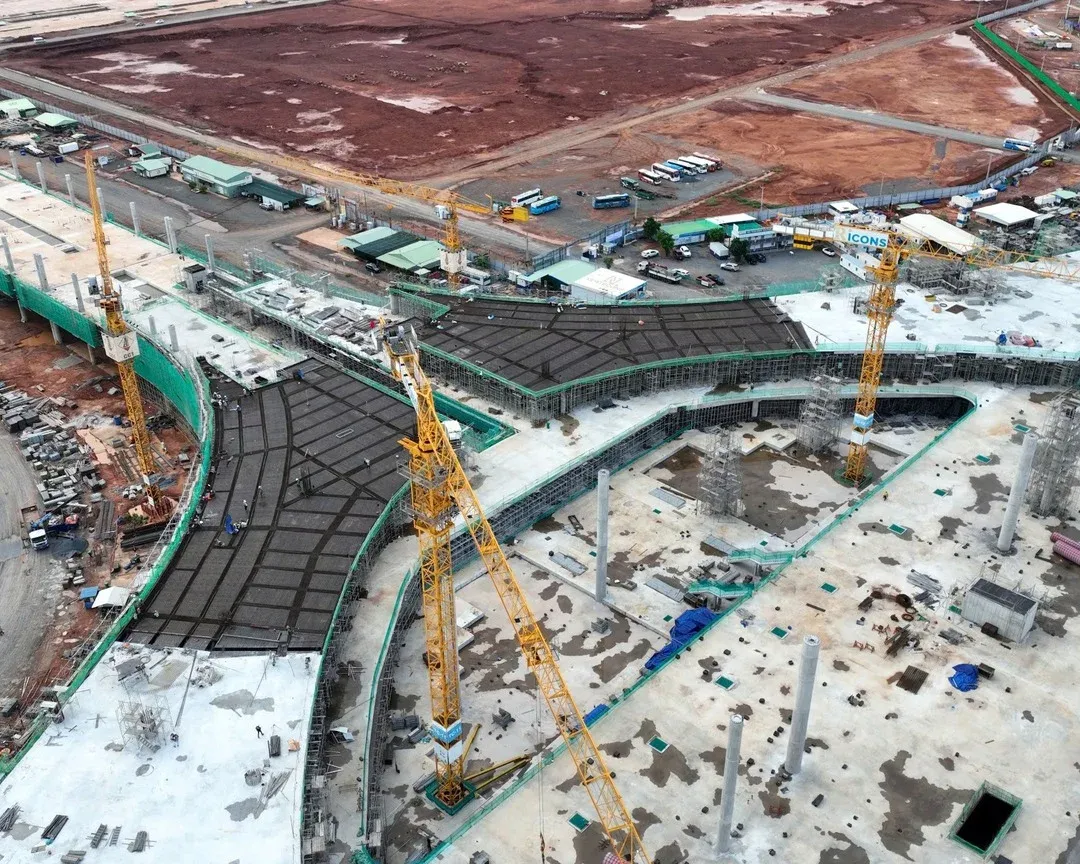

ACV enters the second half of 2026 with a tension that is easy to misread. It estimates first-half pre-tax profit at VND 5,862 billion, while Long Thanh Airport, the asset at the centre of its long-term story, has not yet generated commercial revenue. That profit matters, but it describes the earning power of ACV's existing airport network much more than it describes the new project. The useful question is therefore not how much Long Thanh has contributed, but whether ACV can turn current earnings into a durable funding base for the project's final stretch.
For newer investors, this is a practical way to separate three things that are often treated as one: accounting profit, cash actually received or spent, and the value of an asset still under construction. They are related, but they are not interchangeable. The central thesis here is that current profit gives ACV an important operating base, while the Long Thanh investment case still needs confirmation through cash flow and commercial operations.
A large profit with an uneven run rate
On July 10, ACV estimated first-half revenue of VND 10,745 billion, up nearly 2% year on year. Pre-tax profit was estimated at VND 5,862 billion, down 17% but equivalent to almost 84% of the full-year plan.VietnamBiz The high completion rate signals a substantial existing earnings base. It does not establish that earnings are accelerating.
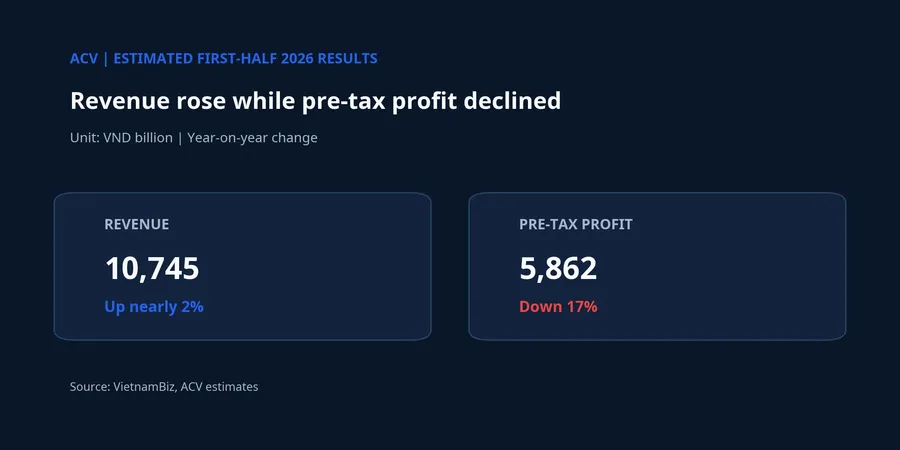
The detail worth examining is the divergence between revenue and profit. Revenue edged higher while pre-tax profit declined. ACV estimated second-quarter pre-tax profit at VND 1,716 billion, nearly 47% below the year-earlier period.VietnamBiz It would therefore be premature to annualise the 84% completion rate and assume that the full year will exceed plan at the same pace.
The coming financial statements should be read for more than their final profit line. Investors need to see how much came from core operations, deposit interest, foreign-exchange movements or other financial items. The half-year estimates do not establish a single cause for the decline in profit. Assigning one without fuller disclosures would turn a timing correlation into an unsupported causal claim.
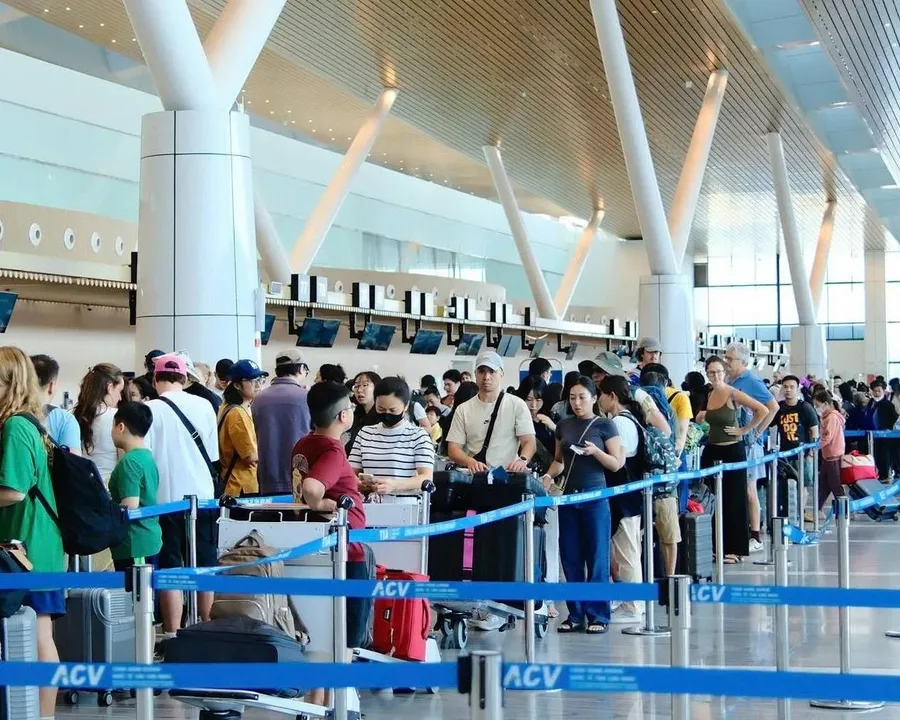
ACV's operating airports remain its immediate revenue base. That matters because a major infrastructure project cannot be financed by an opening-day narrative alone. Yet revenue growth of nearly 2% also shows that higher activity does not automatically become proportional profit growth. Service pricing, passenger mix, non-aeronautical income and operating costs all influence the value that remains for shareholders.
Profit and cash flow are not the same
Put simply, profit records the value a company has created under accounting standards during a period. Cash flow tracks the cash that has actually entered or left its accounts. A company can recognise revenue before it collects payment, or pay for construction before that expenditure becomes a period expense because it is first recorded as an asset under construction.
This distinction is especially important for ACV. Long Thanh needs cash for contractors, equipment and the work required to bring the airport to operational readiness. The VND 5,862 billion profit figure shows earnings capacity, but it does not answer how much usable cash remains after movements in receivables, deposits, payables and capital expenditure.
That is why the second-quarter cash-flow statement should be read alongside the income statement. Net operating cash flow, changes in receivables and spending on construction in progress will offer a clearer view of internal funding capacity. If accounting profit remains high while operating cash flow is persistently weak, the ability to fund the project internally will be lower than the profit headline suggests.
This is not a claim that ACV has a cash problem. The half-year estimates do not support that conclusion. It is a reason to wait for the complete accounts rather than turning a strong profit headline into an implicit call on the stock.
A construction site becomes an asset only when it operates
Long Thanh does not begin producing revenue simply when the construction work looks nearly finished. Its systems need to be tested, integrated and put into service; flights, passengers and ground services then need to operate in practice. Financially, that is the line between an investment that continues to consume funding and an asset that can begin producing cash flow.
Nguyễn Đức Hùng, Acting General Director of Airports Corporation of Vietnam - JSC (ACV), said the company is maintaining its target of putting Long Thanh into operation in December 2026. ACV plans partial testing from September through November with consultants from Incheon Airport and 55 operating scenarios.VietnamBiz This is an operating plan, not revenue that has already been booked.
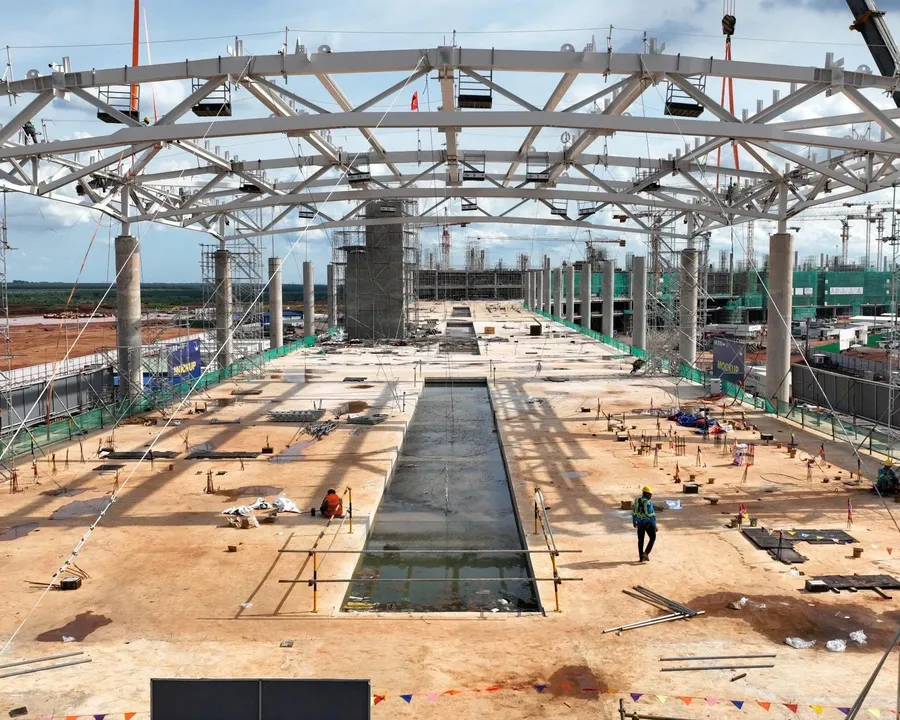
For assessing when the asset may start earning, the testing sequence matters more than a broad construction-completion percentage. A systems-integration issue can require adjustments, whereas successful tests only clear the way for the later transfer of flights, people and services. There is no evidence here to say the December target is certain to be met. The accurate framing is that ACV maintains the target, while the September-to-November milestones will provide the first practical test of it.
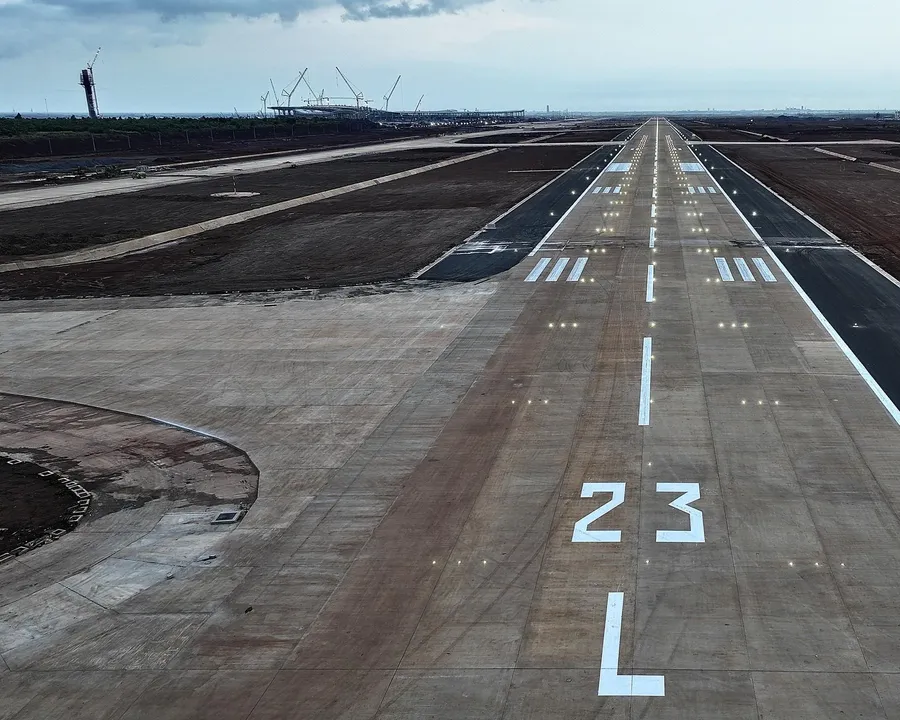
The analysis does not end on opening day. A new airport introduces depreciation, maintenance, staffing and potentially financing costs into the accounts. Its value to ACV will be demonstrated only if traffic and service revenue rise fast enough to absorb those new costs. That takes quarters of evidence, not a conclusion drawn from construction images or the first day of service.
Three signals that can test the thesis
Investors do not need to forecast every number now. Instead, they can follow three milestones directly connected to ACV's thesis. First comes the second-quarter financial report: whether profit is accompanied by operating cash flow, and how capital spending is changing.
Second is the planned September-to-November testing period. The relevant evidence will be progress on system integration, any disclosed issues and preparations for operations, rather than a single high-level construction update. Third is the period after operations begin. New revenue, new costs and the speed at which traffic is transferred will show whether Long Thanh is becoming a cash-generating asset or remains chiefly an investment that needs funding.
ACV closed July 10 at VND 42,500 per share. That price alone cannot tell an investor whether Long Thanh is cheap or expensive, because the market may be embedding different expectations for execution and post-opening returns. The larger picture is that ACV has an existing earnings base while it crosses a heavy investment phase. The thesis becomes stronger only if cash-flow reporting, test results and post-opening revenue all point in the same direction: the old network's profit is genuinely helping convert Long Thanh into a cash-producing asset.