

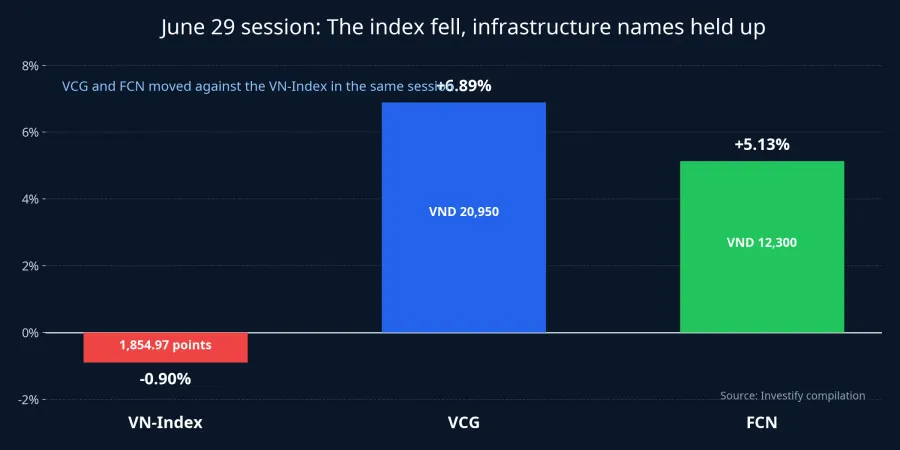
June 29 left the market with a contradiction that newer investors can easily misread. The VN-Index closed at 1,854.97, down 16.94 points, or 0.90%. Yet VCG still rose 6.89% to VND 20,950, while FCN gained 5.13% to VND 12,300. On the same day, Hanoi unveiled its 100-year capital master plan and a list of 276 investment projects, immediately putting infrastructure-linked stocks back on traders' screens.Tiền Phong
In plain English, the market is paying for a fresh expectation, not for revenue that already exists. A strong candle can appear in a matter of hours. Turning a planning story into signed contracts and then into earnings usually takes far longer.
Why VCG and FCN drew the bids
The first reason is simple pattern recognition. When a city talks about strategic infrastructure, new development corridors and a concrete project list, speculative money tends to move toward companies with a visible track record in that area. Hanoi's investment promotion event on June 29 was not just another policy headline. It came with 276 projects open for investment across key sectors.Thời báo Tài chính Việt Nam
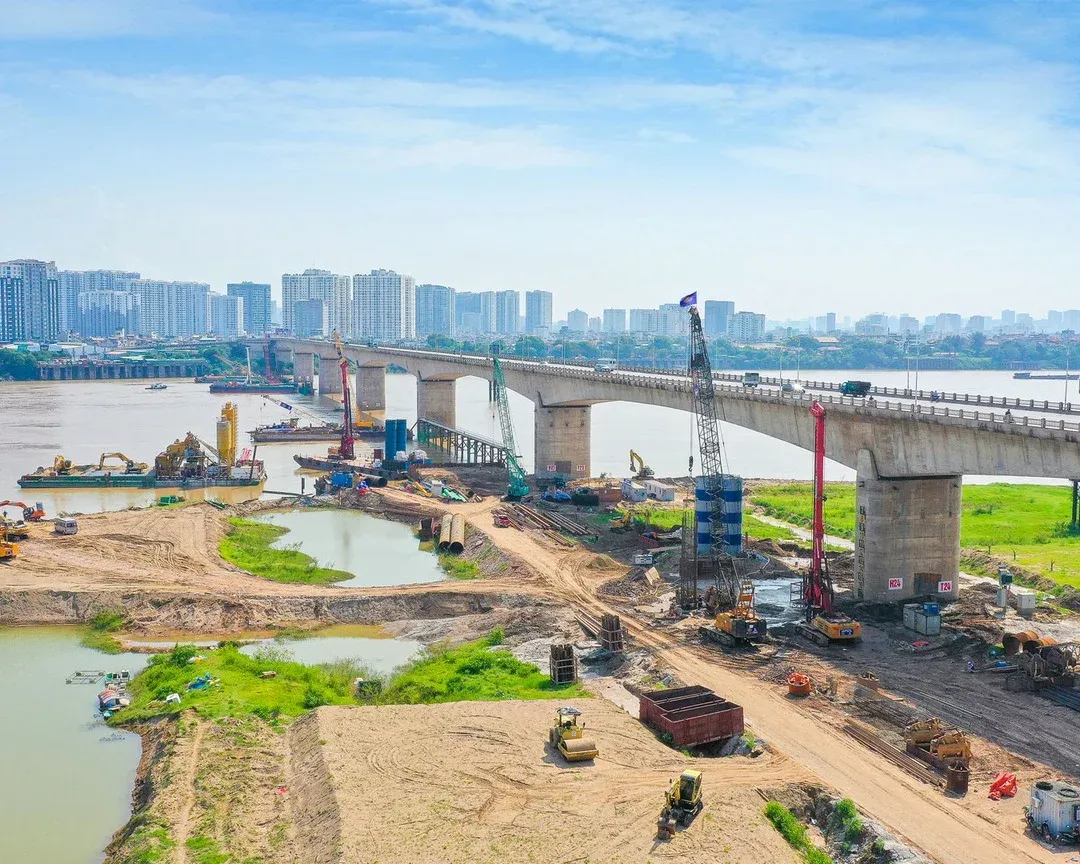
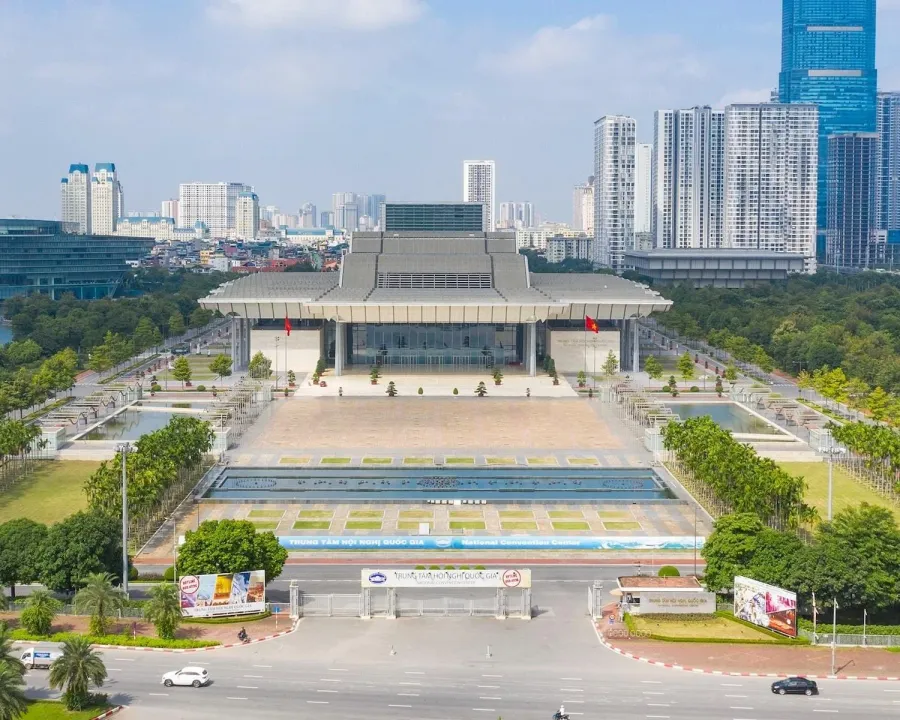
For VCG, the market connection is fairly intuitive. Vinaconex's construction profile highlights major projects in Hanoi and northern Vietnam, including the Hanoi Museum, the National Convention Center, the Trung Hoa - Nhan Chinh urban area and the T2 passenger terminal at Noi Bai Airport.Vinaconex Another company profile article also points to its role in the Hanoi - Lao Cai expressway and Nhat Tan Bridge, which helps explain why traders instinctively place VCG inside any large-scale urban infrastructure narrative.Vinaconex
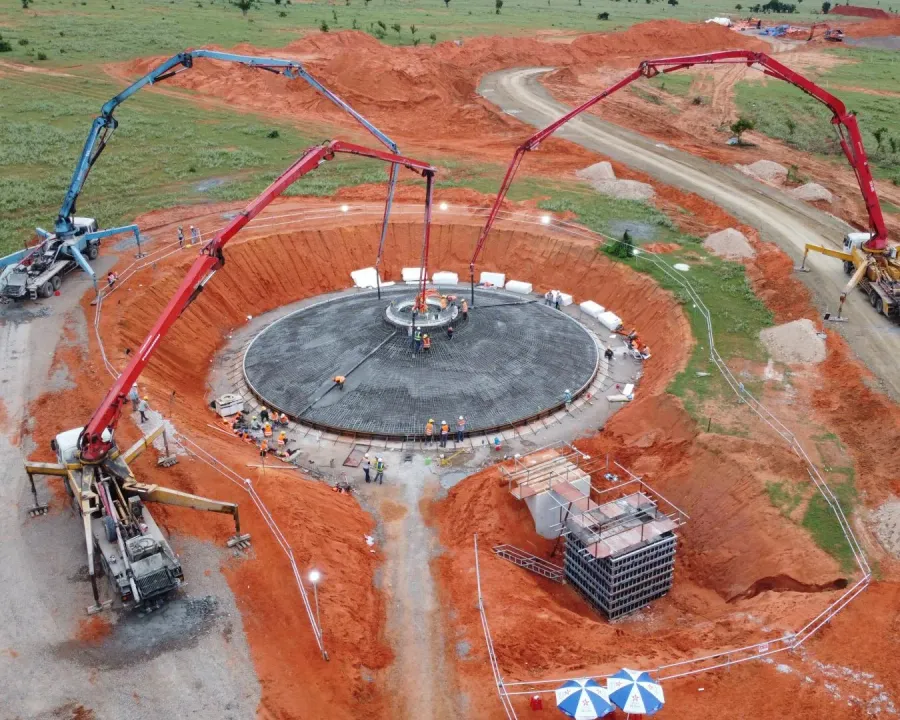
FCN sits in a different part of the chain. FECON's own corporate history frames the business around foundations, underground works, infrastructure and industrial construction.FECON In a planning story that may eventually feed ring roads, metro lines, technical infrastructure and new urban zones, traders naturally connect FCN to the part of the work that happens below ground and usually has to come first.
What this green tape actually tells us
If you only watch the price board, it is easy to jump to the conclusion that infrastructure stocks have already entered a new uptrend. A closer look suggests something narrower: the market's attention has clearly shifted, but the trend itself is not yet proven. VCG's 6.89% jump came after the stock had closed at VND 19,600 in the previous session. FCN's 5.13% rise followed a 1.68% decline on June 26. That is strong enough to matter. It is not enough to declare the theme confirmed.
The key point is that a sharp price move does not automatically mean the odds of winning contracts changed on that same day. A master plan is a map of opportunities. Corporate revenue sits at the end of a much longer chain: projects must be prioritized, capital has to be allocated, implementation steps need to begin, tenders have to open, companies must win meaningful portions of the work, and only later can revenue be booked. Markets move quickly at the expectation stage. Financial statements move slowly at the confirmation stage.
That matters most for first-time investors because these split sessions often create a strong fear-of-missing-out response. June 29 only shows that the market is testing the price of a new theme. It does not yet prove the theme is broad enough or close enough to earnings to sustain a multi-session run.
The real test is liquidity and breadth
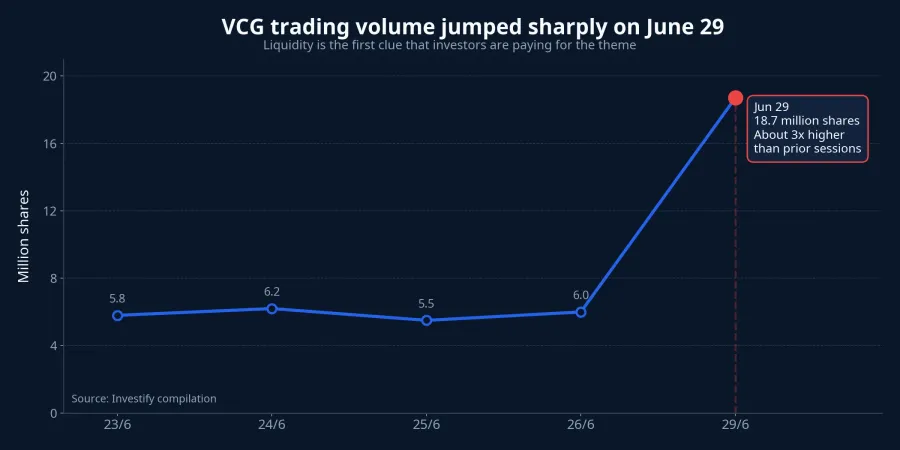
If there is one early signal worth watching more than price itself, it is liquidity. VCG traded 11,361,900 shares on June 29, far above nearby sessions. In the recent run, it traded 2,405,200 shares on June 26, 1,526,100 shares on June 25 and 2,602,300 shares on June 24. When volume expands sharply alongside price, the market is signaling that the move is no longer about a few late-session lifting orders.
Still, liquidity is only the first condition. The second is breadth. A credible infrastructure theme usually does not stop at one or two names. It should also pull interest toward related contractors, materials suppliers and foundation specialists. If the money stays concentrated in VCG and FCN alone, the market is trading familiar names more than it is embracing a fully formed sector theme.
The third condition is whether prices can hold most of the initial gain after the first burst of excitement fades. A stock that rallies on news and gives back much of it the next day often reflects short-term trading appetite more than conviction in a new allocation story. For the June 30 session, the better question is whether buyers are willing to stay once the first emotional reaction is over.
What expectations are being priced in
The market may be trading three layers of expectation at once. The first is policy expectation: Hanoi has just put forward a planning framework and project list large enough to support a multi-year narrative rather than a one-quarter trading headline.Tiền Phong The second is company selection: businesses with a visible record in Hanoi infrastructure, or with capabilities in foundations and underground works, become the obvious mental shortlist for traders.VinaconexFECON
The third layer is the hardest one, and it is the one the market has not proved in a single session. That is the leap from theme to actual contract flow. Not every contractor that gets mentioned will necessarily win work, and not every project on an investment call list will move at the pace the tape is currently imagining.

That is also why investors should resist telling themselves a story that is too neat after one rally. VCG and FCN rising on the day Hanoi announced the plan is a reasonable correlation. But claiming that the whole move came from a higher probability of new contracts would go beyond the evidence available now. Other explanations remain plausible as well, including theme-chasing speculation, short-term buying on the headline, or a search for pockets of relative strength during a weak index session.
How to read June 30
The most constructive scenario is one where buying broadens and liquidity stays elevated. In that setup, infrastructure is no longer just a pair of green names on a red screen. It starts to look like a real thematic allocation. What matters more is whether the stocks hold their ground and whether participation spreads.
The neutral scenario is that VCG and FCN remain active while the rest of the chain fails to follow. That would show that the expectation is real but still narrow. For newer investors, this is often the easiest trap because the tape still looks like the story is working, while sector-wide confirmation is missing.
The weaker scenario is that the broader index softens again and infrastructure names give back much of their gains. On June 29, the market still had 202 advancers against 139 decliners, which suggests selling pressure had not become universally broad by stock count. But if breadth worsens in the next session, downside liquidity grows and the lead names lose the price floor they just built, the June 29 move will look more like a one-session reaction than the start of a new trend.
What investors should keep from this red session
This matters to your portfolio in a very practical way. Buying the few bright green names during a red session is often driven by the fear of missing out, not by a clean reading of market structure. The more useful lesson from June 29 is to separate three layers: a policy development that activates expectations, a one-session price response, and the much harder process of turning those expectations into contracts and then into profits.
The cleanest thesis right now is that infrastructure money has appeared, but it is still at the first layer of expectation. The bullish path remains open if liquidity holds, related names begin to participate and project-level details gradually become more concrete. If that breadth never arrives, the planning story can remain important while the stock move fades into a quick market test rather than a durable trend.
The signals worth watching over the next one to two sessions are straightforward: whether VCG and FCN can keep volume elevated, whether participation expands across the infrastructure chain, and whether the June 29 gains survive once the first wave of excitement cools. Only when those conditions line up is the market paying for more than a blueprint.