
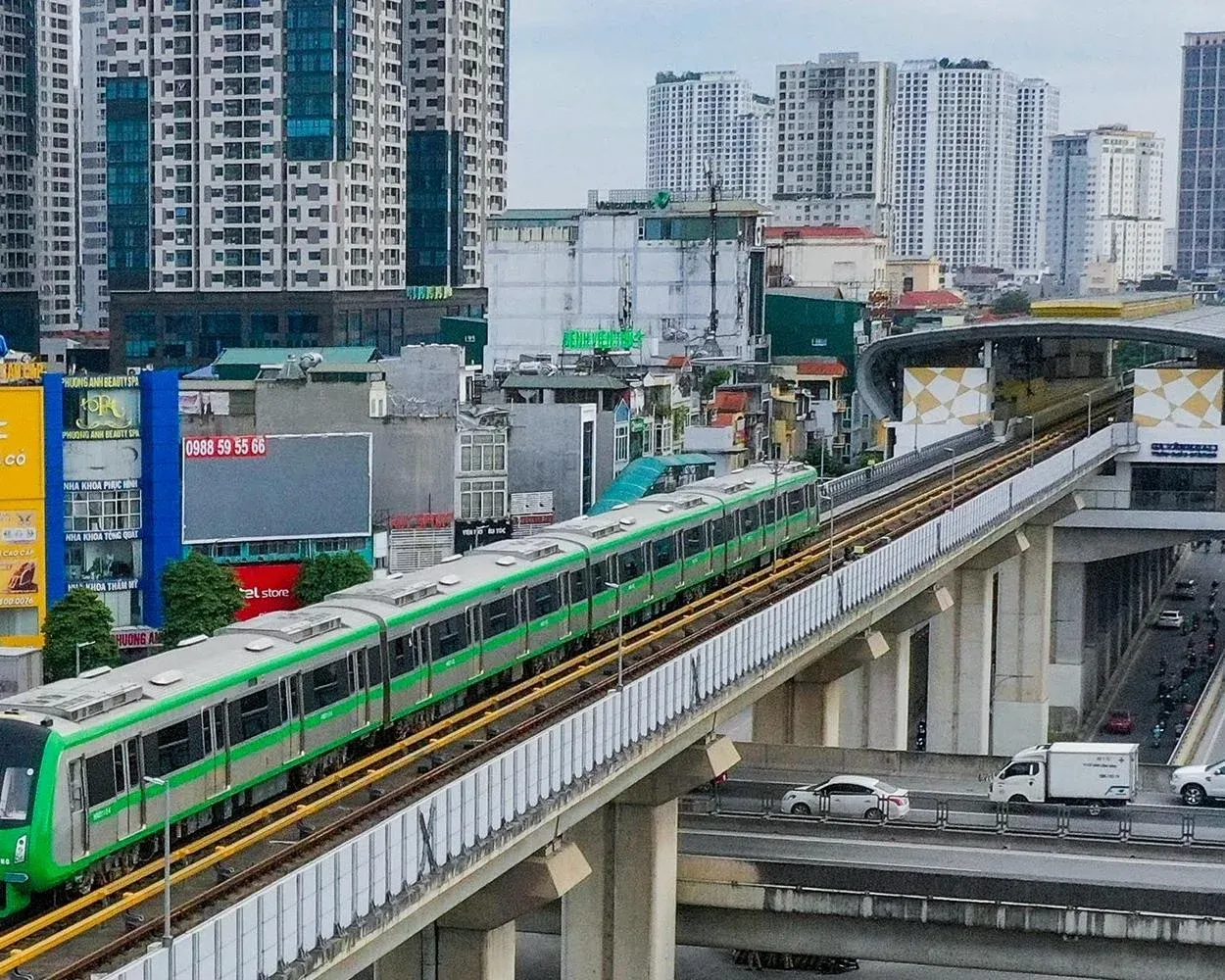

On the morning of June 22, Hanoi broke ground on five urban railway lines and three rental housing projects. For the Vingroup complex, this was more than a big infrastructure headline. It introduced a fresh layer of expectations around project execution, transit-linked urban development, and the way the market may reprice the group in real time.Tuổi Trẻ
The key distinction is straightforward: a stock move that happens within hours does not mean earnings will materialize within quarters. Investors are assigning more value to Vingroup's infrastructure narrative, but that premium will only hold if execution milestones, contract details, and cash-flow visibility eventually catch up.
How large is this infrastructure push
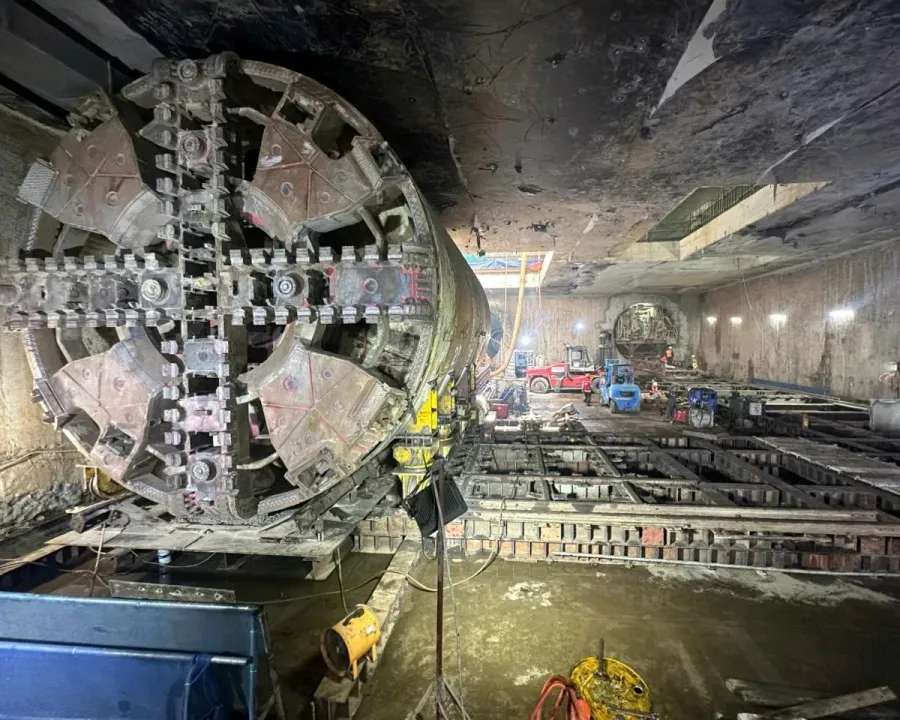
According to information released at the ceremony, the five new Hanoi metro lines span roughly 303.5 kilometers, with preliminary investment of about VND 1.3 quadrillion.Tuổi Trẻ A local report cited a more detailed figure of VND 1,315,256 billion, underlining the scale of one of the largest batches of urban infrastructure projects launched simultaneously in Hanoi in recent years.Báo Lào Cai
What caught the market's attention was not just the headline number. Tuổi Trẻ reported that the city assigned the Vinhomes-VinSpeed consortium as the engineering, procurement and construction contractor for all five lines. If that role survives later implementation milestones, investors may start looking at Vingroup through a wider lens than real estate alone, with added value tied to the urban development that tends to form around major transit infrastructure.Tuổi Trẻ
The three layers of expectation now entering the price
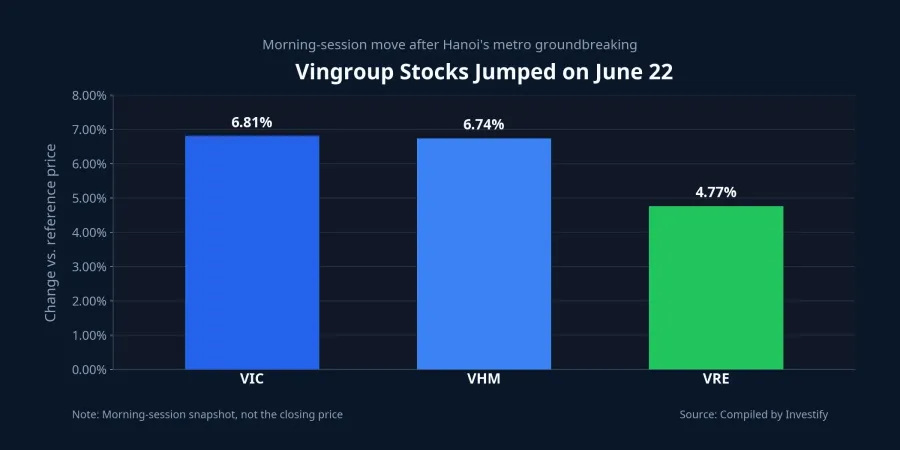
Mid-morning on June 22, VIC traded at VND 219,500 per share, up 6.81%; VHM reached VND 155,100, up 6.74%; and VRE climbed to VND 30,750, up 4.77%. Trading volume was also active, with 2,013,200 shares in VIC, 3,759,500 in VHM and 5,722,700 in VRE. These were not closing figures, but they were enough to show that capital reacted almost immediately to the infrastructure news.Investify
The first layer is the infrastructure role itself. VIC benefits at the holding-company level, while VHM is more directly linked through land-bank valuation and the potential repricing of urban projects if transit connectivity improves over time.
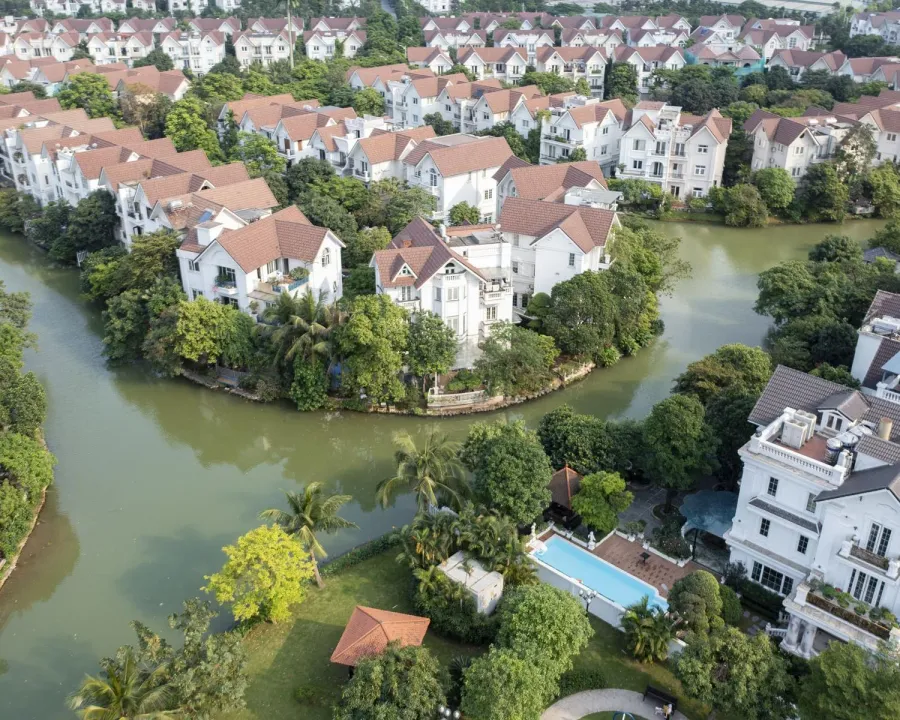
The second layer is corridor real-estate value. This is the part the market often reacts to early, because transport infrastructure can change the way homebuyers and investors assess a district. Even so, it would be too aggressive to conclude that every related land parcel will immediately rise in value or convert quickly into booked revenue. Between planning and monetization lies a long chain of approvals, site clearance, construction progress and real demand.
The third layer is short-term excitement on the trading screen. When a large, concrete headline appears in the middle of a session, fast money can push prices up before anyone has a precise model for the economic value the companies will ultimately capture.
Is this only about metro optimism, or also about index leadership
If investors jump straight from the headline to a one-to-one causal claim, they risk oversimplifying the move. The metro groundbreaking is the most obvious and most credible catalyst for the Vingroup rally on the morning of June 22. But it is not the only plausible explanation.
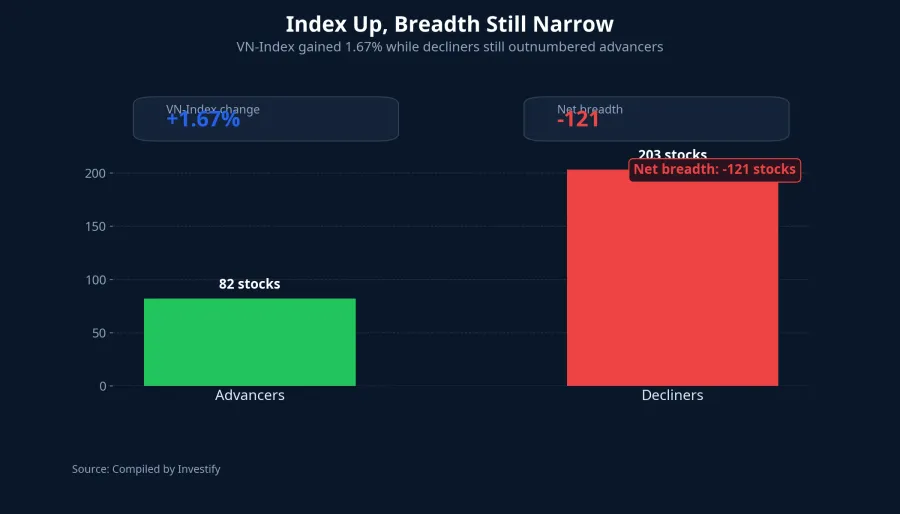
At the same time, VN-Index stood at 1,855.08, up 1.67%. Market breadth, however, was clearly negative, with 82 gainers and 203 decliners. That means the index was being supported by a limited set of large-cap stocks rather than by a broad-based improvement across the board.Investify
So there are three explanations that should sit side by side: the market is reacting to Vingroup's new infrastructure role, money is rotating into heavyweight names that can lift the index, and short-term traders are chasing a large headline while momentum is still strong. The current evidence best supports a blend of the first and third explanations. The infrastructure story is real, but the first few hours of price action still look more like expectation than confirmed economic output.
What would turn expectation into real value
This is the key question for newer investors. Urban railway projects can stretch across years, and reports from the groundbreaking pointed to a 2030 completion target.Tuổi Trẻ That alone tells us current share-price strength cannot be explained entirely by near-term earnings. What the market is pricing in today is future positioning.
To judge whether that premium deserves to stay, investors should watch four signal groups. The first is the actual work scope of the Vinhomes-VinSpeed consortium on each line, because a headline contractor role and recognized revenue are not the same thing. The second is the pace of design approvals, site clearance and construction equipment deployment, since those are usually the real bottlenecks. The third is the indirect effect on core assets, especially VHM's land-bank narrative and VRE's potential retail traffic story. The fourth is post-headline discipline in the trading flow: high liquidity matters more if prices can hold their gains after the first burst of attention.
Conclusion: the market is paying for the future, not the present
The most coherent conclusion for now is that the Vingroup complex has been awarded an additional valuation layer tied to infrastructure, but that extra premium still leans far more on expectation than on earnings already locked in. This is not an empty rumor, because the project launch and the consortium's role were publicly reported. It is also not a profit stream that can simply be plugged into next quarter's financial statements.
That is why the balanced reading is to separate the story into two speeds. The first is the trading screen, where VIC, VHM and VRE may remain volatile as sentiment and capital flows shift. The second is the implementation file and the construction site, where real value will only emerge as design, land clearance, equipment and timetable become visible.
Over the next few weeks, the most useful signal will not be one more green session or one more red one. It will be whether the market keeps this higher valuation after the first wave of excitement fades, and which implementation updates are concrete enough to turn a huge infrastructure headline into a sturdier investment case.