


A sharp green session can easily create the impression that the worst is over. In DGC's case, that instinct is even stronger because the 6.4% jump came right after the company finally released its audited 2025 financial statements and delivered the filing the market had been waiting for. But the uncomfortable part of the story is this: getting the report out is not the same thing as proving that every risk inside the report has already been cleared.Đức Giang
Two very different signals are now coming from the same stock. The share price reflects renewed belief that the disclosure bottleneck may start to ease, while the audit report reflects how much evidence the auditor was actually able to verify. Once those two signals are separated, it becomes much easier to understand why one strong session is nowhere near enough to turn a qualified audit opinion into an all-clear signal.CafeF
What the rally is really pricing in
DGC closed on June 22 at VND 51,500 per share, up 6.4% from the previous session. On the surface, that kind of move can tempt investors into believing that the bad news has been fully absorbed and that a new valuation phase has begun. A more defensible reading is narrower: the market is responding to the fact that the audited report is finally out, not declaring that every issue inside that report has already been resolved.CafeF
In other words, the market is pricing a reduction in procedural risk. When a company misses a key filing, the stock sits inside a cloud of uncertainty around trading status and disclosure discipline. Once the report is published, at least one practical overhang is reduced, and some capital can return simply because the next step is easier to map out.
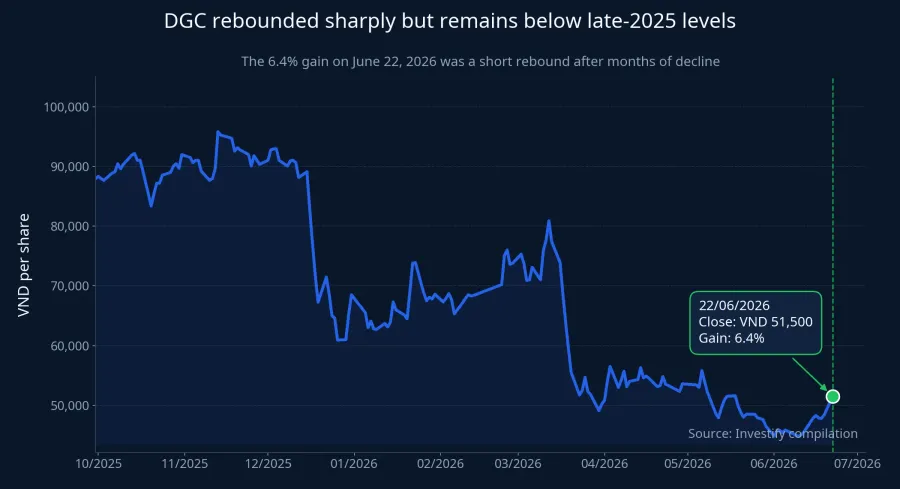
That makes the rally understandable. The analytical mistake comes when investors leap from the first conclusion to the second: from "the company has filed its audited report" to "the audit risk is gone." Those are not the same claim. The market can price the easing of a procedural bottleneck in advance, while a cautious investor still has to ask the more important question: what exactly has the auditor verified, and what remains unproven?
The two qualified opinions still matter
According to the figures cited by CafeF, the first qualified opinion involves more than VND 950.9 billion of inventory on DGC's consolidated statements. UHY was appointed after December 31, 2025, which meant it could not directly observe the year-end inventory count. The issue is not that the auditor concluded the inventory was misstated. The issue is that alternative procedures did not provide enough reliable evidence to confirm the existence, completeness, accuracy, and valuation of that balance.CafeF
That distinction matters, especially for newer investors. A qualified opinion is not the same thing as a proven violation. But the opposite reading is equally dangerous. It is not a harmless technical footnote either. When an auditor says it still lacks sufficient reliable evidence for an inventory line item worth nearly VND 1 trillion, that means the level of verification is still below the threshold where investors should feel fully comfortable.

The second qualified opinion is even more sensitive because it relates to an ongoing legal case. CafeF reported that several former key executives of DGC were prosecuted on March 17, 2026, and that the case was still under investigation when the consolidated financial statements were issued. UHY therefore said it did not yet have enough basis to assess whether the issues could lead to material misstatements in the financial statements.CafeF
This is where the real overhang sits. When a legal matter is still open, any accounting impact does not necessarily show up immediately in the current profit line. It may ultimately affect liabilities, provisions, remediation costs, or later adjustments once the authorities reach a formal conclusion. So the fact that the audited report has been published does not mean every possible consequence has already been measured.
Why the VND 35.21 billion cut is not the main point
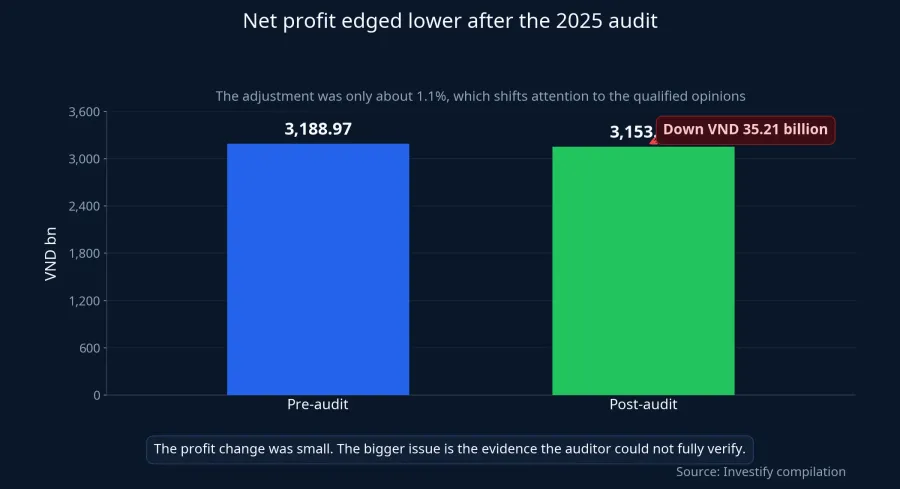
One reason investors may grow complacent is that DGC's net profit after tax was only reduced by about VND 35.21 billion from the self-prepared statements, leaving the audited figure at VND 3,153.76 billion. Net revenue for 2025 remained at VND 11,262 billion, up 14% year over year. If those are the only numbers an investor looks at, the instinctive conclusion is that the audit changed very little about the company's financial picture.CafeF
That conclusion is only half right. It is right in the narrow sense that the adjustment already visible on the page is small relative to the company's full-year earnings. It is wrong because it encourages investors to forget that audit risk is not limited to what has already been adjusted. It also lives in the areas the auditor could not fully verify or could not yet quantify. The VND 35.21 billion cut is the number that is already on paper. The evidence gap is the part the market may have to reprice if new information emerges.
That distinction becomes more important when a stock is trading more on sentiment than on newly confirmed fundamentals. If investors are focused on the possibility that the stock can move beyond an abnormal trading status, the price can react first. But if the company later needs to provide deeper clarification on the inventory line, or if the legal case develops in a less benign direction, the risk that was temporarily pushed aside can come back very quickly. Price action does not move in a straight line just because the audited report has been filed.
What investors should keep watching next
Three signals matter more than whether DGC adds another green session or two. First, watch post-rally liquidity. If turnover fades quickly after the initial jump, the market is effectively saying that the move was mainly event-driven rather than a more durable vote of confidence in the information quality behind the stock.
Second, watch whether the company releases additional explanations or documents that narrow the current evidence gap. In audit-driven stories, durable confidence does not come from a one-day price spike. It comes from hard questions being answered through filings, notes, reconciliations, and concrete clarifications. If the inventory issue and the legal matter remain stuck at the stage of "awaiting conclusion," the market will eventually have to revisit that uncertainty.
Third, keep following the legal status of the ongoing case. This is not a side detail. It is the variable that could determine whether the current qualified opinion remains only an evidence warning, or whether it later turns into actual adjustments on the financial statements. As long as that variable is still open, saying the risk has passed would go further than the documents themselves allow.
The conclusion should stay disciplined. DGC's 6.4% jump shows that money is pricing the easing of a procedural bottleneck, not certifying that the audit overhang has disappeared. The reported earnings adjustment was small, but the two qualified opinions still leave a meaningful evidence gap. For DGC right now, the green price move is something to watch. The audit evidence is still what determines whether that renewed confidence can hold.