
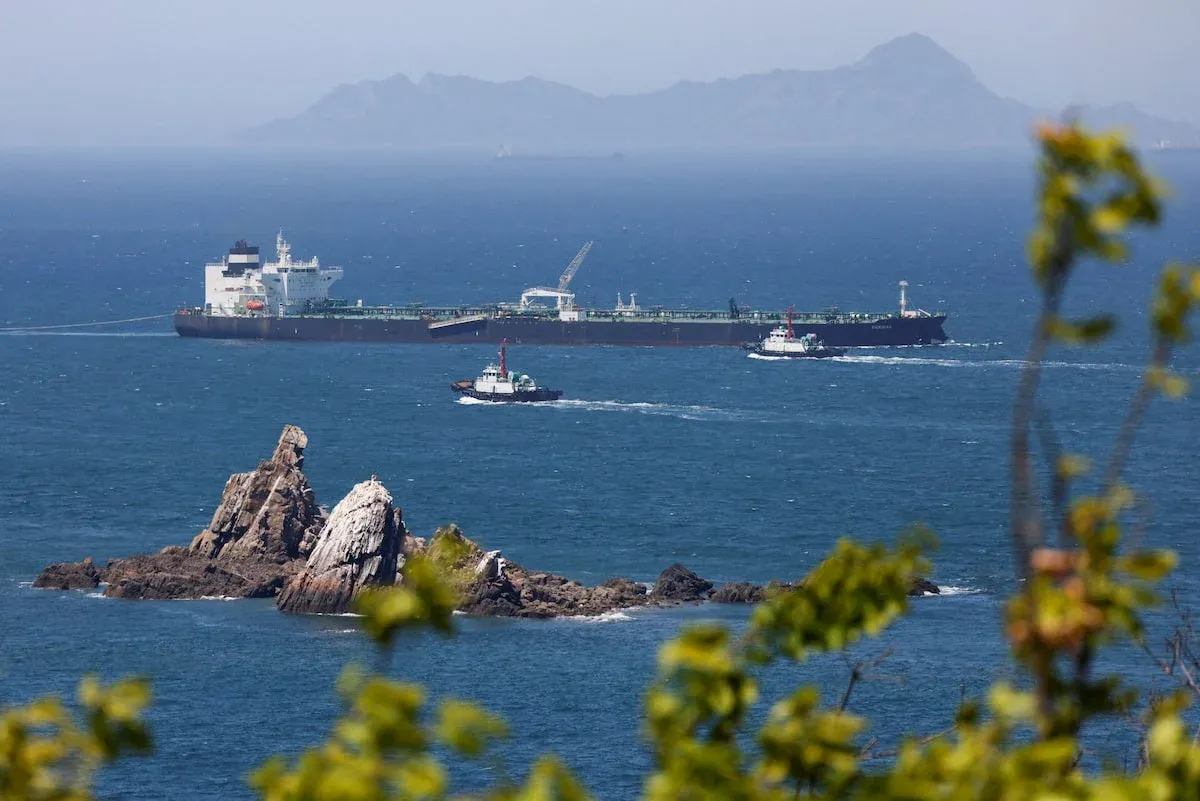

On the night of May 20, WTI crude settled at $98.26 per barrel. This was the first time it had fallen below the $100 threshold since the US–Israel–Iran conflict broke out on February 28 and the Strait of Hormuz was blockaded.CNBC The more-than-5% single-session decline came alongside two concurrent events: satellite data confirmed that three VLCC supertankers carrying a combined 6 million barrels had cleared the strait for the first time after being trapped in the Persian Gulf for over two months, and US President Donald Trump stated that negotiations with Iran were in their "final stages."
The big picture is shifting. The Iran risk premium that has accumulated in global oil prices over two months is beginning to unwind. For investors holding Vietnamese oil and gas stocks ahead of the 9 a.m. market open, this has direct implications. Below are three things worth re-reading, not to react hastily, but to understand the mechanics clearly.
The Hormuz Signal: Operational, Not Political
Unlike earlier rumors of individual tankers slipping through, this time there are specific vessel names, verified cargo owners, and contracts tied to actual ports. The Universal Winner, sailing under South Korean colors, is carrying 2 million barrels of Kuwaiti crude toward Ulsan, scheduled to offload at SK Energy's refinery on June 9. The Yuan Gui Yang under a Chinese flag is hauling 2 million barrels of Iraqi Basrah crude chartered by Unipec, headed for Guangdong with an estimated arrival of June 4. The Ocean Lily under Hong Kong registry is carrying a combined 2 million barrels from Qatar and Iraq.OilPrice
This is an operational signal, not diplomatic theater. President Trump also stated that he had postponed a new military strike on Iran at the request of Gulf Arab allies, allowing more time for diplomacy.CNBC If the US and Iran reach an agreement and Hormuz fully reopens before June, Wood Mackenzie forecasts that Brent could return to approximately $80 per barrel by end-2026, roughly a quarter below current levels around $105.

Item 1: Vietnamese Oil Stocks Are Carrying a Heavy Risk Premium
Between April 24 and May 20, as Brent climbed from around $100 to $112, Vietnam's oil and gas stocks posted a clear rally. BSR surged from VND 25,000 to VND 31,800 per share, a gain of 27.2%. GAS rose from VND 78,300 to VND 89,700, up 14.6%. PLX climbed from VND 39,700 to VND 43,850, up 10.4%. Meanwhile, PVS edged up just 3%, and PVD and PVT were essentially flat.
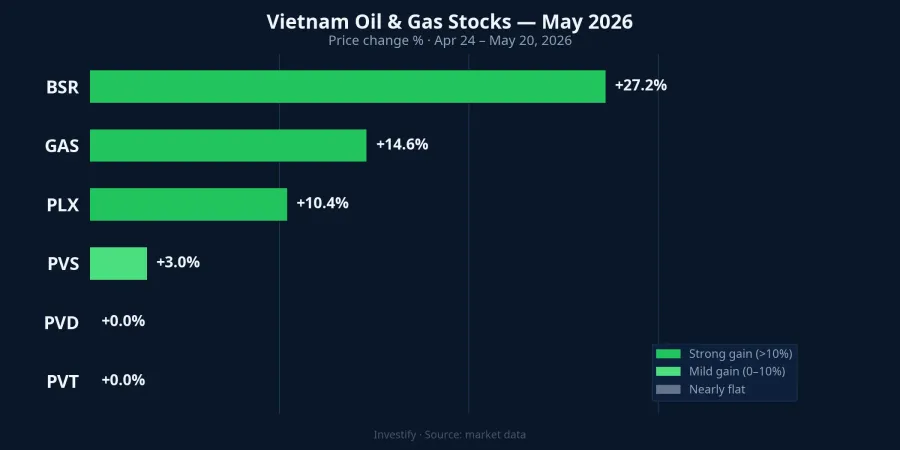
The divergence is not coincidental. BSR is a refinery that directly benefits when refined product prices track crude. GAS is priced in line with global LNG markets. Both stocks are most sensitive to oil prices and therefore carry the thickest Iran risk premium. PLX sits in the middle: its distribution business captures short-term spreads but does not benefit from sustained high oil prices. PVD and PVT stayed flat because drilling rig rates and marine freight rates do not move in lockstep with crude in real time.
The most telling data point came in the May 18–19 sessions. On May 18, the entire group hit their upper price bands as Brent spiked to $112.10. The very next day, a 1.58% drop in Brent was enough to send the whole group to their lower price bands. This is the hallmark of an overpriced risk premium: a small move in oil translates into an outsized move in equities, regardless of any change in company fundamentals. The stocks' sensitivity to oil was speaking louder than the businesses themselves.
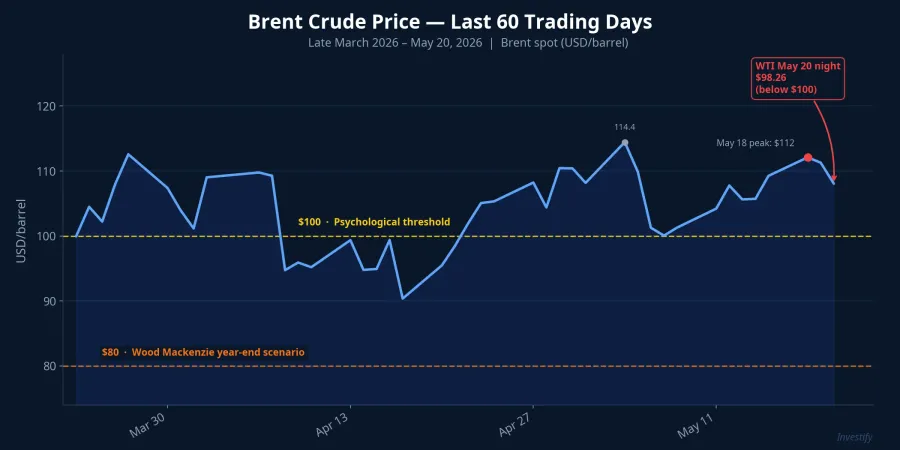
If Brent retreats toward $95 in the coming weeks, the gains accumulated over the past month could reverse almost entirely. If the Wood Mackenzie end-of-year scenario at $80 materializes, early April price levels serve as a reasonable historical reference: BSR around VND 25,000, GAS around VND 78,000, PLX around VND 39,000.
Item 2: Domestic Fuel Prices Will Rise Today, Not Fall
This is the easiest point to misread today. The overnight WTI drop will not push domestic fuel prices down in this afternoon's pricing review.
The mechanism lies in how the reference price is calculated: the Ministry of Industry and Trade uses a 10-day average of global oil prices before each pricing cycle. In the window from May 11 to May 20, Brent traded mostly in the $104–$112 range, well above the prior cycle's average.CNBC The drop below $100 only occurred at the very end of that calculation window, which is not enough to pull the average down.
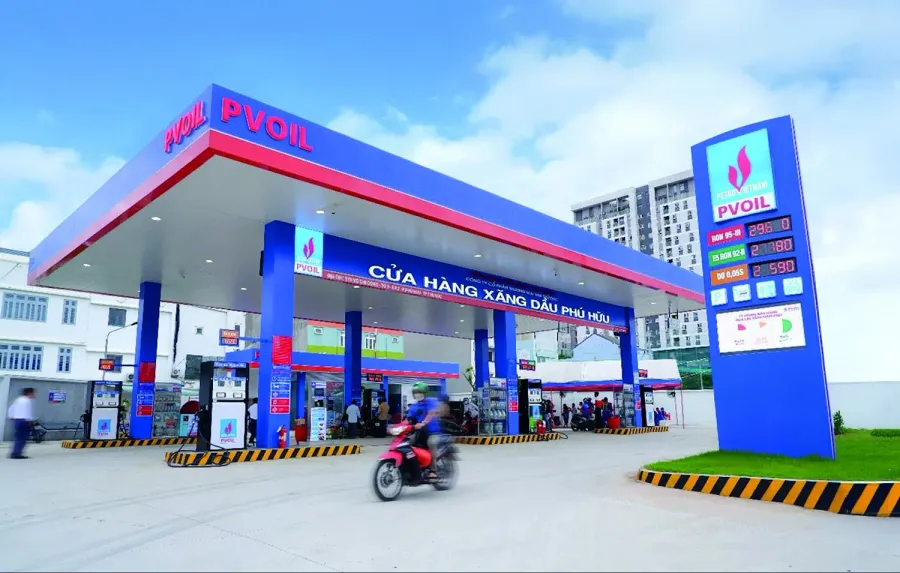
Per estimates from fuel distribution companies, RON95 petrol may increase by up to VND 1,500 per liter, while diesel could rise by around VND 1,000 per liter.Techz.vn The price stabilization fund is currently in a net deficit, making it unlikely to be tapped to cap any increases. Current price ceilings stand at VND 24,078 per liter for RON95-III and VND 27,226 per liter for diesel 0.05S.
The practical implication for fuel-intensive sectors: airlines (HVN, VJC) and shipping companies (HAH, GMD) will not see the benefit of lower oil prices in their May costs. That benefit arrives at the May 28 review and later cycles, when the averaging window genuinely covers the lower price range.
Item 3: VN30F2505 Expires Today, Adding Intraday Volatility
Today, May 21, is also the expiry date for the VN30F2505 futures contract. Two forces are layering on top of each other. The overnight oil news will drive sharp early moves in heavyweight oil stocks, particularly GAS, which holds a meaningful weight in the VN30 index. At the same time, position rolls and derivatives close-outs typically cause the ATC (closing auction) session to whipsaw more than on ordinary trading days.
This confluence is not itself a buy or sell signal. It is a warning about order execution mechanics: market orders placed on an expiry day carry a higher risk of filling at prices well away from expectations. For individual investors who do not trade derivatives, the appropriate adjustment is to use limit orders rather than market orders when transacting in VN30 stocks today, especially during the final 30 minutes of the afternoon session.
What to Watch After Today's Session
The Iran risk premium has been building for more than two months. The first clear signal of an unwind appeared last night, more convincing than any previous hint because it comes with vessel names, verified contracts, and a political statement. Vietnam's oil and gas sector — particularly BSR and GAS — is carrying a heavy premium that will need to correct if the geopolitical picture continues to improve.
That said, the Iran–US talks could still collapse, Hormuz is not fully open, and today brings an additional layer of volatility from the VN30F expiry. This is not the moment to call a directional trend. It is the moment to review your positions.
Three signals worth tracking over the coming week: the trajectory of Iran negotiations (will the "final stage" claim be confirmed or fall apart?), the May 28 domestic fuel pricing cycle (will the new averaging window reflect lower oil prices?), and satellite reports on Hormuz traffic (are more tankers passing through, or is the route blocking up again?). Those three questions will determine whether last night's move marks the beginning of a sustained premium unwind, or a large swing within an even larger range of uncertainty.