
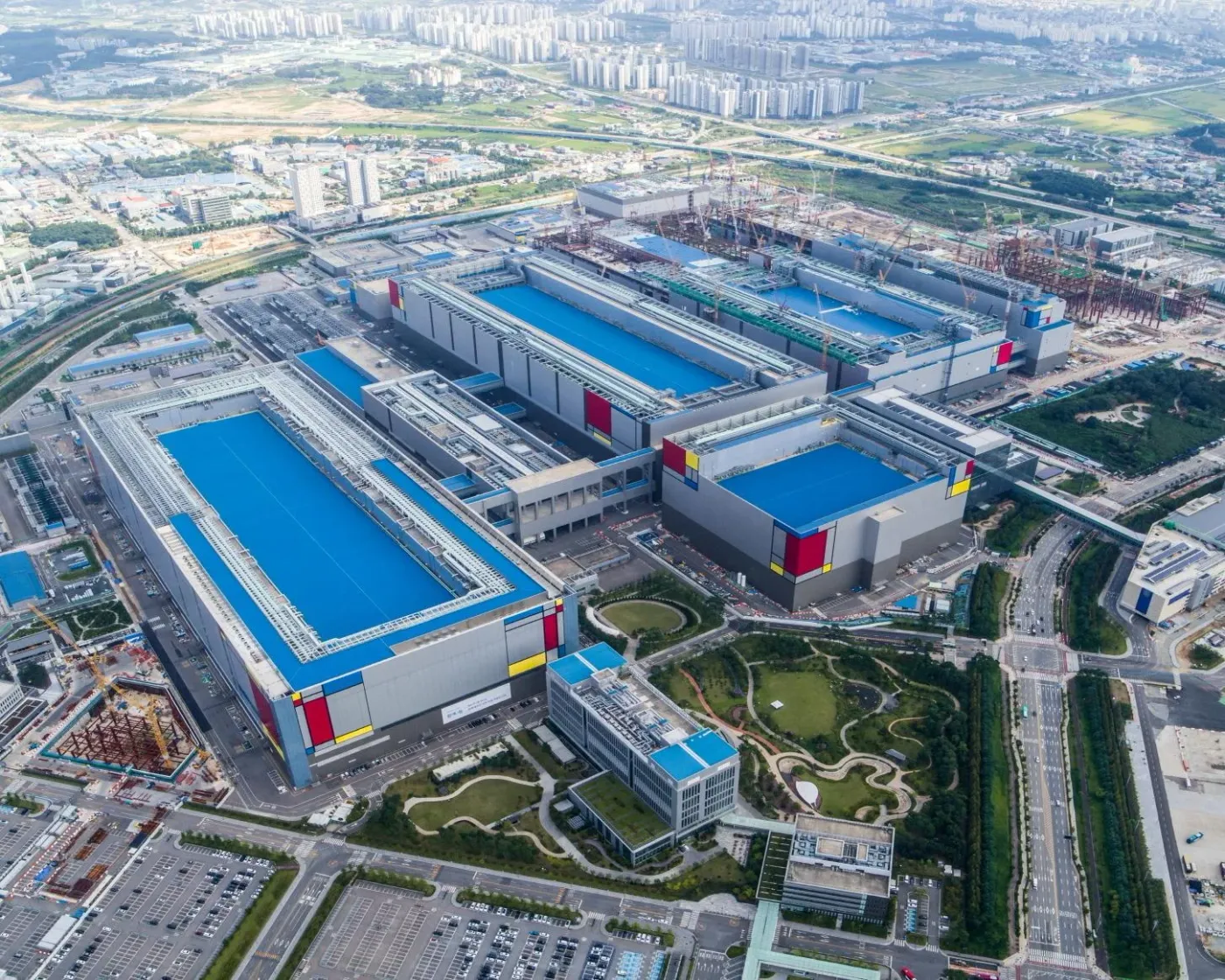

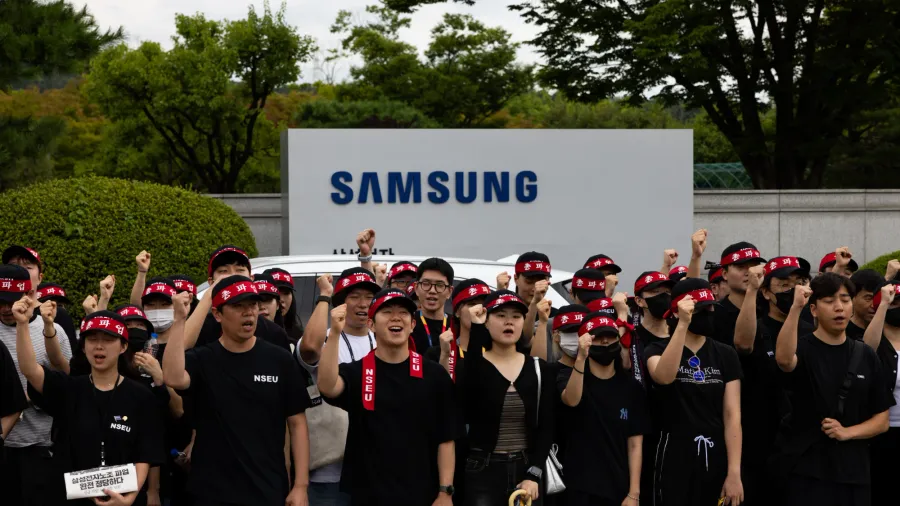
Samsung's entire HBM4 memory chip production capacity for 2026 is already under contract with Nvidia and major data centers. Every wafer on this year's production schedule has been pre-ordered, with no buffer remaining. That same week, more than 45,000 workers from the National Samsung Electronics Union (NSEU) announced an 18-day strike beginning the morning of May 21, the largest labor action in the company's history.Fortune The two events are not a coincidence: the very commercial success of HBM4 created a profit-distribution gap wide enough to break labor negotiations.
The data tells the story clearly. Samsung's semiconductor division contributed more than 90% of operating profit in the most recent quarter. HBM4 is fully sold out. Yet that profit growth had no long-term structural mechanism to pass a share back to workers. This marks the first time in the current AI cycle that the hardware supply side — not valuation or demand — has become the dominant short-term variable across the entire memory chip industry.
SK Hynix Set a New Industry Benchmark
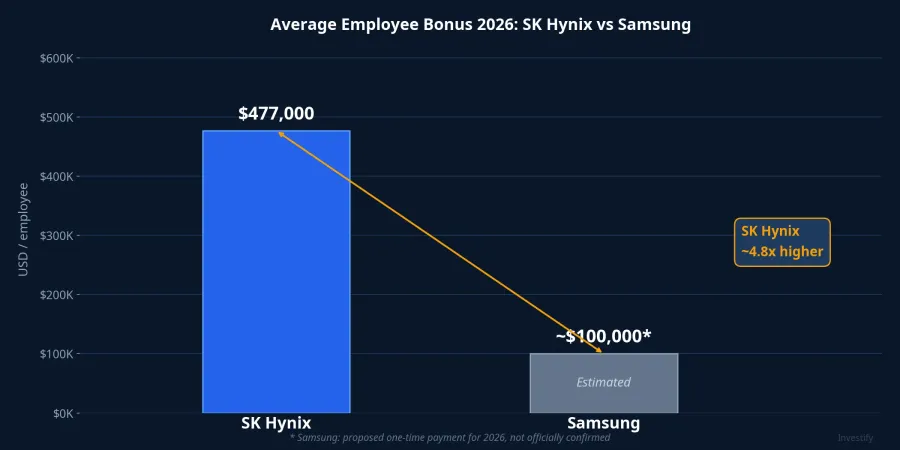
In September last year, SK Hynix signed a labor agreement with a structurally transformative clause: it scrapped the existing 1,000%-of-base-salary bonus cap and instead committed to distributing 10% of annual operating profit directly to employees, locked in for 10 years. The critical point is that this mechanism does not depend on management's annual discretion. It is written into the collective agreement as a legally binding commitment for a decade.Tom's Hardware
The numbers are concrete. With SK Hynix's 2026 operating profit forecast at approximately KRW 250,000 billion, the 10% profit-sharing pool equals roughly KRW 25,000 billion, distributed across approximately 35,000 employees, averaging around $477,000 per person. The February 2026 payout alone came to approximately KRW 140 million (roughly $95,000) per employee. Macquarie estimates that if SK Hynix's 2027 profit reaches KRW 447,000 billion, the average bonus could exceed KRW 1 billion per person. For Samsung workers — same industry, same AI cycle, same production-line pressure — those numbers became a direct reference point in their own negotiations.
The Gap Was Never About the Percentage
Samsung's union put forward three main demands: distribute 15% of each division's operating profit into the bonus pool, eliminate the 50%-of-base-salary bonus cap, and raise base salaries by 7%.Tom's Hardware Management counter-proposed approximately 13% of operating profit, but as a one-time payment for 2026 only, with no long-term structural commitment. Government-mediated talks collapsed on May 13.
The breakdown was not about the percentage gap (13% vs. 15%). It was about durability. With semiconductors contributing over 90% of Samsung's operating profit, a one-time payout cannot lock in a share of the next AI cycle's gains. SK Hynix workers have a 10-year agreement on paper; Samsung workers would be back at the negotiating table from scratch after 2026. That is why the union rejected management's offer despite the near-term numbers not being far apart.
Pyeongtaek: A Factory with No Buffer
Samsung began mass production of HBM4 in February 2026, getting ahead of SK Hynix on delivery timing for the new generation of AI GPUs.TechTimes With full-year capacity already contracted, Nvidia and major data centers have their delivery schedules planned down to the wafer, with no slack in the system to absorb a production disruption.
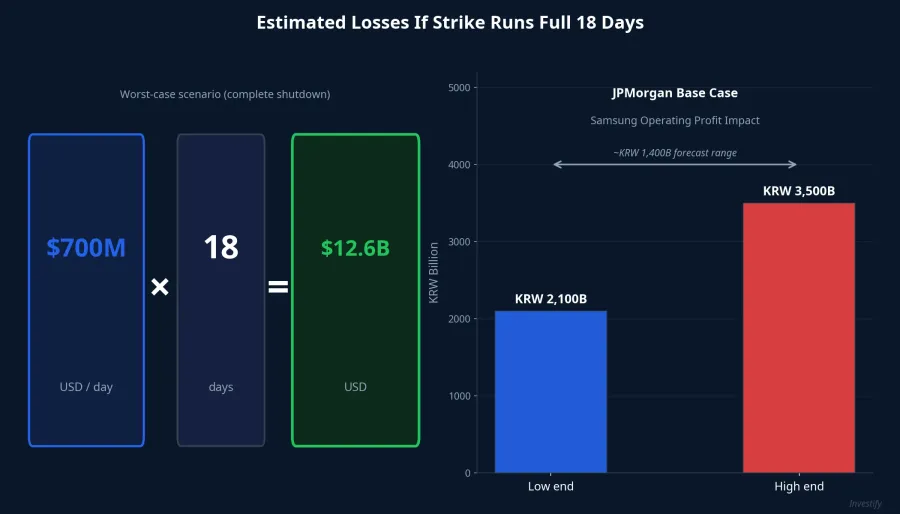
Pyeongtaek is not a secondary facility. It is where Samsung concentrates its most advanced DRAM capabilities, including HBM4. Based on internal Samsung analysis cited by Tom's Hardware, each day of disruption could cost approximately $700 million; if the strike runs the full 18 days with a complete production halt, the worst-case loss scenario could reach approximately $12.6 billion. JPMorgan's base case is more measured: an operating profit impact of KRW 2,100–3,500 billion (approximately $1.5–2.5 billion), reflecting partial rather than total disruption.Tom's Hardware
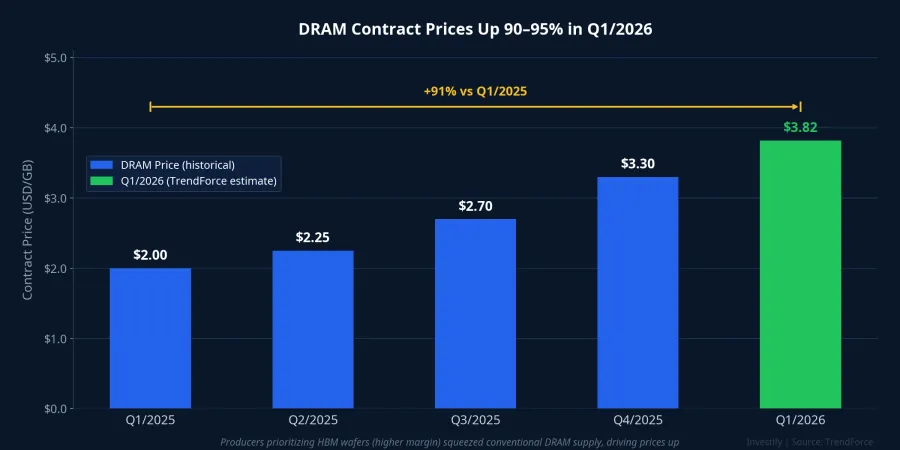
In global terms, Pyeongtaek accounts for approximately 4% of worldwide DRAM output.Fortune With DRAM contract prices already up approximately 90–95% in Q1/2026 per TrendForce — as manufacturers have prioritized high-margin HBM wafers at the expense of conventional DRAM supply — any disruption at Pyeongtaek risks adding further pressure to global memory prices.TrendForce
Market Reaction and What It Means for Vietnamese Investors
On May 15, Samsung Electronics (005930.KS) fell as much as 8.6% after news broke that talks had collapsed.Tom's Hardware Capital flows showed signs of rotating toward SK Hynix (000660.KS) as a relative refuge in a memory-supply-constrained environment. It is worth noting that this is not a signal that SK Hynix wins outright. Both stocks have rallied substantially over the past 12 months driven by the HBM cycle. What the market is doing is repricing near-term operational risk on the supply side.
For Vietnamese investors, there are several layers worth examining. Those accessing global AI equities through U.S. tech ETFs need to recognize that not every AI risk is about stretched valuations. Supply-side operational risk is a different category, and one that traditional valuation models do not fully capture. Vietnamese tech stocks such as FPT benefit indirectly from the AI cycle but have no direct exposure to HBM supply-chain risk, since FPT's services business does not depend on memory chip availability. For electronics assemblers, DRAM prices rising 90–95% in Q1 is a component cost inflation signal. Gross margins at end-product assembly companies could come under pressure if memory prices remain elevated through the second half of the year.
Three Signals to Watch After May 21
The Samsung strike is the first event in the current AI cycle where the hardware supply side has become the dominant short-term variable. Three developments will resolve the scenario over the next two weeks.
Negotiation progress in the first week. If both sides return to the table and Samsung adjusts its position on the structural durability of the bonus commitment, an early end to the strike is plausible. The track record of past Samsung labor disputes shows that sufficient economic pressure tends to bring both sides back to negotiation.
South Korean government intervention. The semiconductor industry is a national strategic infrastructure. The government could invoke a "strategic industry" mechanism requiring workers to return, and that would be the fastest path to ending the strike. South Korea has used similar mechanisms in past labor disputes in critical infrastructure sectors.
June DRAM/HBM contract price data. Monitor updates from TrendForce and DRAMeXchange. If the strike extends, the pressure from HBM4 supply shortfalls for Nvidia in the second half of 2026 will show up in contract prices, confirming real-world impact on the global supply chain beyond short-term sentiment swings.
The Samsung strike does not reverse the long-term thesis on AI chip demand. The data center investment cycle is still accelerating. However, this is the first stress test for a new structural risk: when the commercial success of AI chips creates a profit-distribution gap large enough to trigger labor conflict, the very supply chain that markets had treated as a given becomes the most vulnerable link. Whether this resolves in a few days or runs the full 18-day schedule — that answer will come before the end of May.