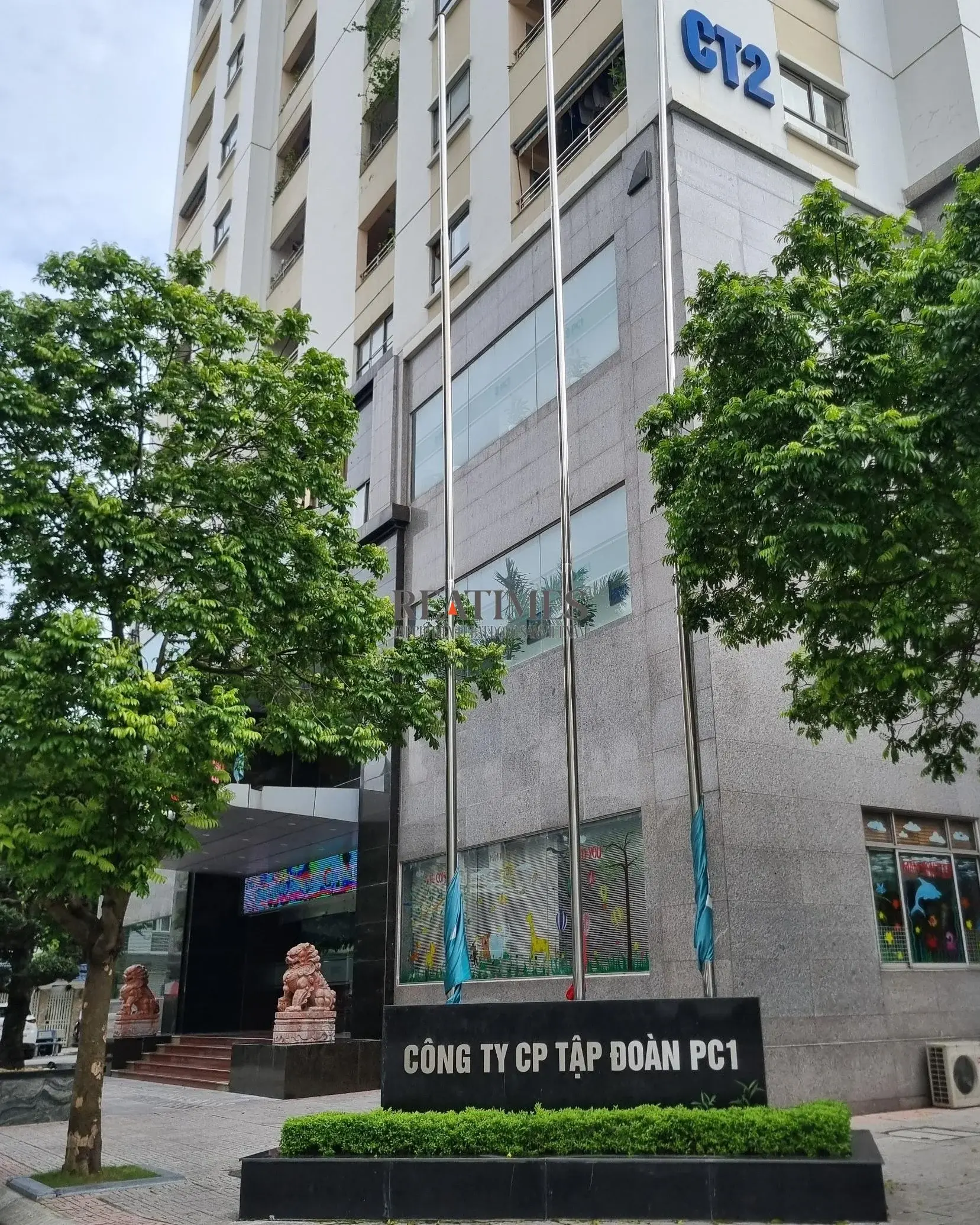

On the evening of May 16, PC1 Group disclosed that seven executives and key personnel had been prosecuted and detained by the Ministry of Public Security’s Criminal Investigation Agency the day before, on charges of violating accounting regulations causing serious consequences and embezzling assets.Tuổi Trẻ Among those detained were Chairman of the Board of Directors Trịnh Văn Tuấn, Board Member and CEO Vũ Ánh Dương, Deputy CEOs Trịnh Ngọc Anh and Đặng Quốc Trường, and Chief Accountant Trần Thị Minh Việt.
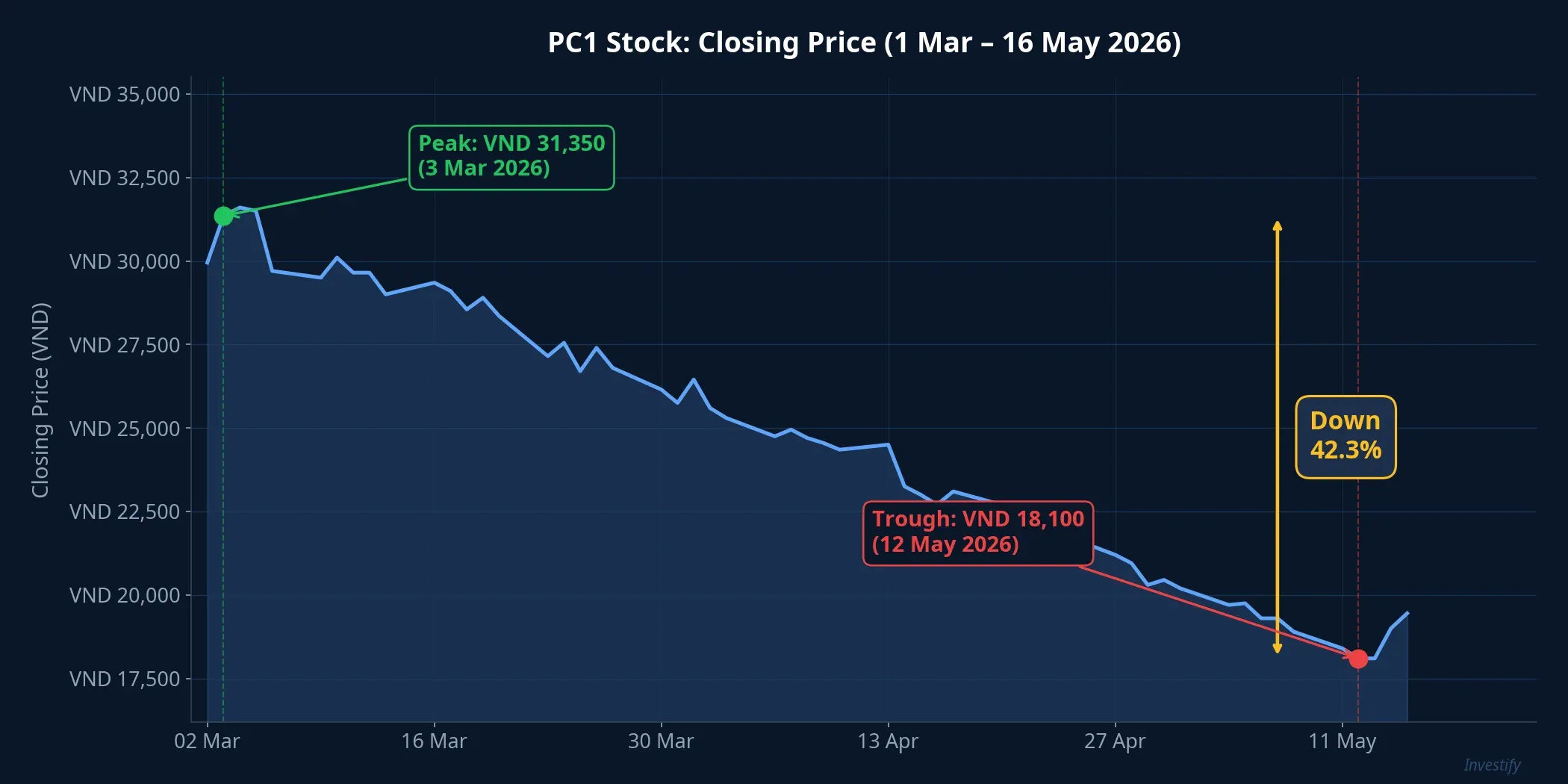
For PC1 shareholders, though, the real story had begun much earlier. From a peak of VND 31,350 on March 3, the stock fell steadily over more than two months and bottomed at VND 18,100 on May 12, a total decline of 42.3%. The prosecution news came on May 16, after the drawdown was already complete. In other words, the market had priced in the risk before any official announcement arrived. The question worth asking: what signals were available, and could an ordinary retail investor have read them?
The Financial Statements Looked Fine: That Was the Wrong Place to Look
When investors hear “hidden risk in a stock,” the instinct is to open the financial statements and check the standard trio: debt-to-equity ratio, the gap between reported profit and actual cash flow, and related-party transactions. Applied to PC1, none of these three metrics sent a meaningful warning.
PC1’s long-term debt-to-equity ratio fell from 115% in 2022 to 84% by end-2025. That is a trend in the right direction, nothing alarming. Net profit after tax in 2025 came in at VND 1,356 billion, while operating cash flow reached VND 2,272 billion. Cash flow exceeding net profit is a sign of earnings quality, not a red flag. The balance sheet, viewed from the outside, looked unremarkable.
The fundamental limitation of these metrics is that they summarize the past. After each quarter or year, accounting teams compile the figures, auditors sign off, and the company publishes. By the time investors read the numbers, the underlying reality they describe may be six months old. Meanwhile, a different kind of signal operates in near-real time. That signal was publicly accessible to anyone willing to spend five minutes on the exchange’s website.
Two Warnings in Less Than Two Weeks
On April 24, HoSE sent a formal reminder to PC1 for late publication of the resolutions and minutes from its Annual General Meeting of Shareholders.VietnamBiz On May 5, HoSE issued a second reminder because both the Vietnamese and English versions of PC1’s Q1 2026 financial statements had still not been filed on time.Thời báo Tài chính
A point worth stressing: every time HoSE issues a reminder, that notice is posted publicly on the exchange’s disclosure portal. No subscription required. No fee. Two reminders in under two weeks is not normal for a billion-dollar listed company. One reminder can be an administrative slip. Two consecutive reminders in a short window is a pattern that demands a closer look.
When PC1 finally disclosed the prosecution on the evening of May 16, it also explained why the Q1 financial statements had been delayed: the personnel responsible for approving the report were cooperating with the investigating authority. That explanation, in hindsight, laid out the mechanism precisely. Who signs off on statutory financial statements? The CEO, the Chief Accountant, and the Deputy CEOs overseeing finance. If those specific people are engaged with a criminal investigation, the company loses the authorized signatories required to publish the report. The content of the report was not the problem. The approval chain was broken.
This is a distinction retail investors rarely make: a delayed report because internal governance has been disrupted is fundamentally different from a delayed report because numbers need to be restated. The short-term impact on the share price may look similar, but the nature and severity of the risk are very different.
The Market Read It First: What Volume Told Us
Trading data shows that a segment of the market was already acting on these signals. On April 23, one day before HoSE’s first reminder, PC1 hit the floor price limit (down 6.95%) on volume of 16.3 million shares. On April 29, the stock fell another 6.46% to the floor on volume of 41.9 million shares, nearly ten times the average for the preceding sessions. Neither session was accompanied by any official announcement from the company or the exchange.
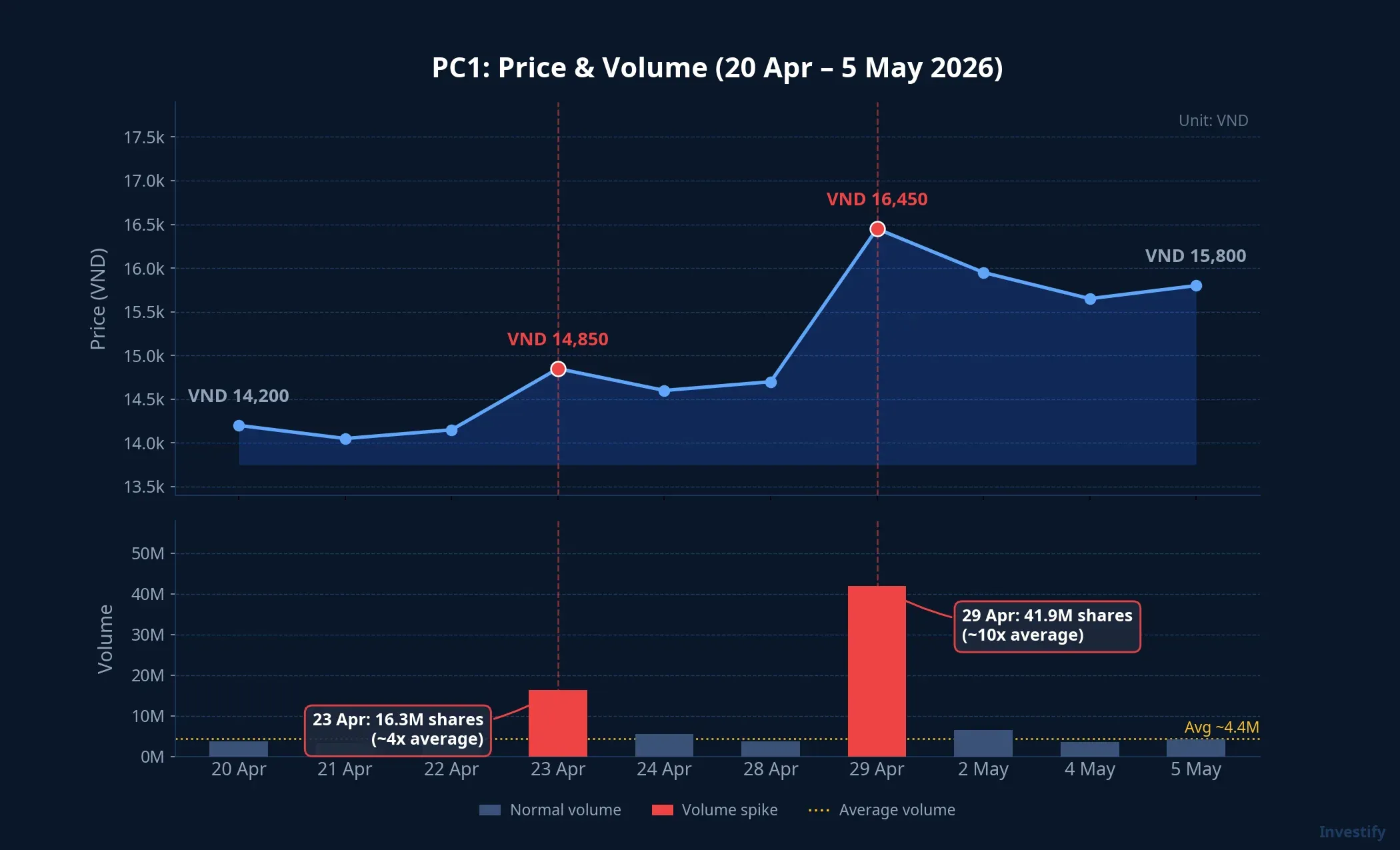
When a stock hits its daily floor price on volume spiking many times above average, with no news attached, it generally means a group of investors is acting on information the broader market has not yet accessed. A retail investor does not need to know what that information is. The volume signal alone, combined with the active disclosure delays happening at the same time, was enough to prompt a straightforward question: what is happening inside this company right now?
A Strong Q1, Yet Still No Report on Time
There is a detail worth pausing on. According to the May 16 announcement, PC1’s Q1 2026 preliminary results showed revenue of approximately VND 2,300 billion, up 26% year-on-year, and pre-tax profit of approximately VND 264 billion, up 82%.VietnamBiz That is a strong quarter by the preliminary numbers.
This raises an obvious question: if the results were good, why not publish them early and reassure the market? The answer is that the content of the report was never the issue. A statutory financial statement requires the signatures of the CEO and Chief Accountant. When those individuals are engaged in a criminal investigation, those signatures cannot appear. The company could only offer preliminary figures in a press release tied to the prosecution announcement, not a legally valid full financial report.
The practical lesson: when the reason for a delay involves the signatories themselves rather than a technical process, the risk profile reads differently.
Three Checks Before Placing an Order
The PC1 story is not an indictment of the power construction or energy sector broadly. The company’s financial leverage was improving and its preliminary Q1 results were strong. The failure was in internal governance, not in the business model. What emerges from this case is a practical filter, not a sectoral verdict.
First: Check the exchange’s disclosure portal before buying. Every time HoSE or HNX formally reminds a listed company for late publication of board resolutions, AGM minutes, or periodic financial statements, that notice is posted publicly and for free. One reminder can be an administrative oversight. Two consecutive reminders within a few weeks is a pattern that warrants further investigation before committing capital.
Second: Read the reason given for the delay. “Still finalizing notes to the financial statements” or “pending technical confirmation” carries a different weight from “personnel responsible for approval are cooperating with the investigating authority” or “figures under review.” The more directly the reason implicates the signatories themselves, the more carefully the situation deserves to be considered.
Third: Watch volume alongside price. A session at the floor price accompanied by volume five to ten times above average, with no official announcement attached, signals that someone is acting on information you do not yet have. You do not need to know what that information is to conclude: this requires more investigation before buying.
When the Board Has One Member Left
As of now, PC1’s board of directors has just one member remaining, after four of its five board members were detained.Tuổi Trẻ That number falls below the statutory minimum required to convene a valid board meeting. The Supervisory Board has called an Extraordinary General Meeting of Shareholders, expected in July, to elect a new board and executive team.
Until new leadership is in place, PC1’s major financial and business decisions lack approval authority at the highest level. The outcome of the July extraordinary AGM is the first monitoring milestone: who joins the new board, and whether the governance structure can be restored to allow normal operations to resume. The Q2 financial report, if and when it appears signed on time, will be the first signal that operational order has returned. Both of those events will show up on HoSE’s public disclosure portal before they appear anywhere else.