
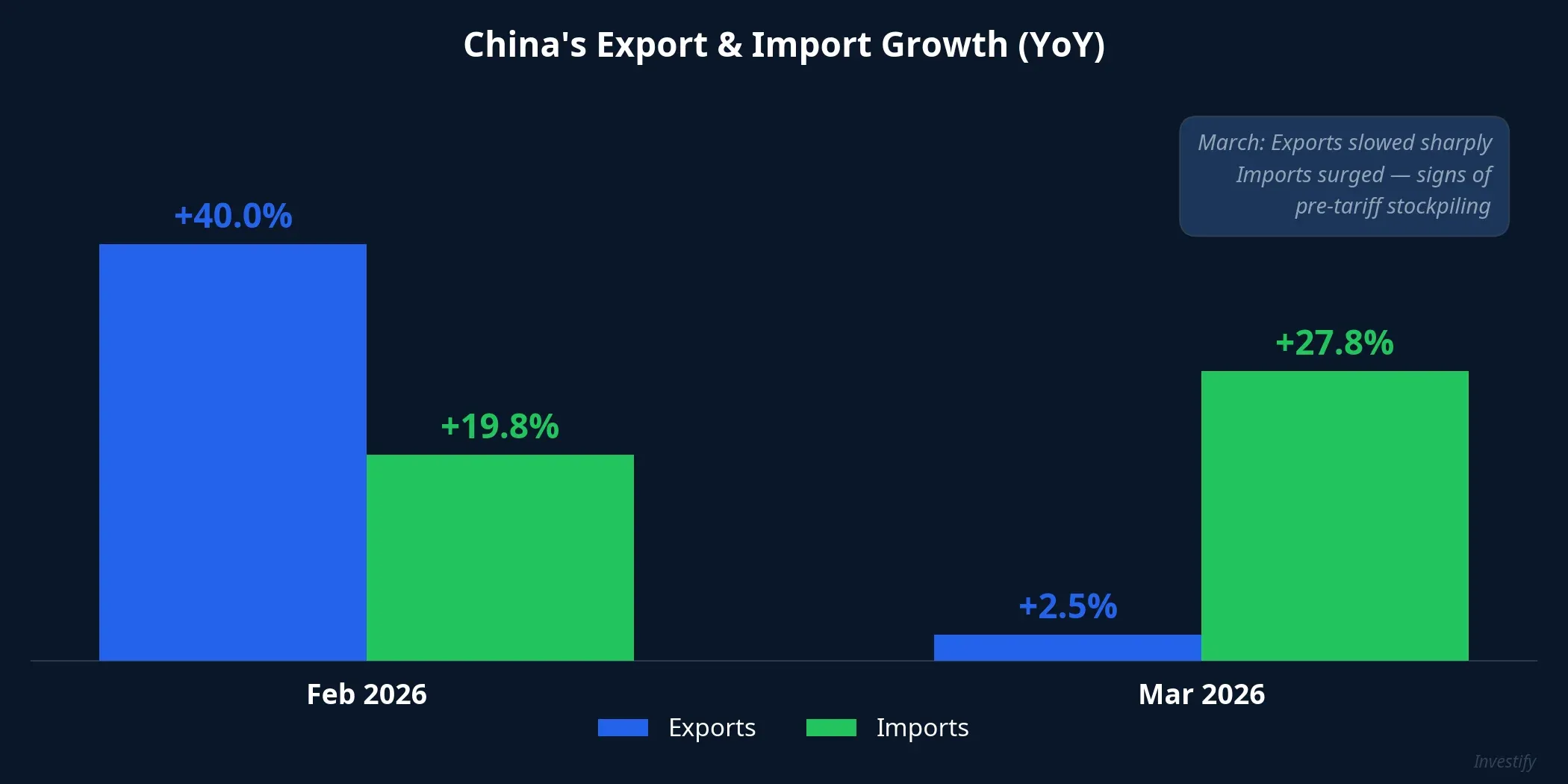
China’s trade surplus in March 2026 came in at just $51.1 billion, down roughly 52% from the approximately $107 billion monthly average in the first two months of the year.Bloomberg Exports grew just 2.5% year-on-year — well below the 8.6% consensus and a steep drop from the nearly 40% growth recorded in February.CNBC Imports, by contrast, surged 27.8%, the highest rate in over four years.
The big picture suggests this is no random fluctuation. At least three overlapping layers of impact are at work, and each carries distinct implications for investment flows in Vietnam.
Logistics Disruption from the Hormuz Crisis
The most direct factor slowing China’s exports is the Strait of Hormuz crisis. Before the conflict, China received approximately 5.35 million barrels of oil per day through this route; after the blockade, that figure dropped to roughly 1.22 million barrels per day.Foreign Policy
The impact extends well beyond energy. Shipping costs rose significantly as trade routes between China, Europe, and the Middle East were rerouted. War risk surcharges became widespread, increasing delivery costs and extending transit times. Many export orders were delayed or cancelled as FOB prices lost competitiveness.

The key distinction here is that this is a supply shock, not a demand shock. China’s production capacity remains intact; the problem is the significantly higher cost of moving goods to global markets. This matters for investors: when logistics normalize, exports could recover faster than in a scenario of genuine demand weakness.
Semiconductor Imports Surge on AI Demand
While exports slowed on logistics constraints, China’s imports surged on an entirely different driver: the global AI race.
South Korean data paints the clearest picture. Korea’s semiconductor exports in March 2026 jumped 151% year-on-year to $32.84 billion, crossing the $30 billion monthly mark for the first time. Exports to China specifically rose 62.4% in March.Korea Herald Samsung Electronics posted record Q1/2026 profit of $38 billion, driven primarily by AI chips.IBTimes
Three factors are driving China’s semiconductor imports. First, the AI investment cycle is in its infrastructure expansion phase — data centers and high-performance computing buildout; Chinese chip companies hit record revenue in 2025 and the trend continues into 2026.CNBC Second, DRAM and NAND memory prices have recovered, pushing up import values. Third, as the US continues tightening chip export controls, Chinese firms are front-loading imports from South Korea and Taiwan before new restrictions take effect.
In other words, the 27.8% import growth does not signal strengthening domestic consumer demand — it’s primarily technology investment and strategic stockpiling. Investors should separate these two signals when assessing China’s economic health.
Capital Flows Are Shifting: Opportunities for Vietnam’s Exporters
This is the most important layer for Vietnamese investors. As China’s imports rise and exports slow, regional trade patterns are shifting in favor of countries exporting to China — and Vietnam stands out.
Vietnam’s total exports in Q1/2026 reached $122.93 billion, up 19.1% year-on-year.Times of Saudi Agricultural exports to China hit $3.68 billion, up 37.6%. China accounted for 50.97% of Vietnam’s total agricultural exports in Q1, up from 44.73% in the same period of 2025.VnEconomy
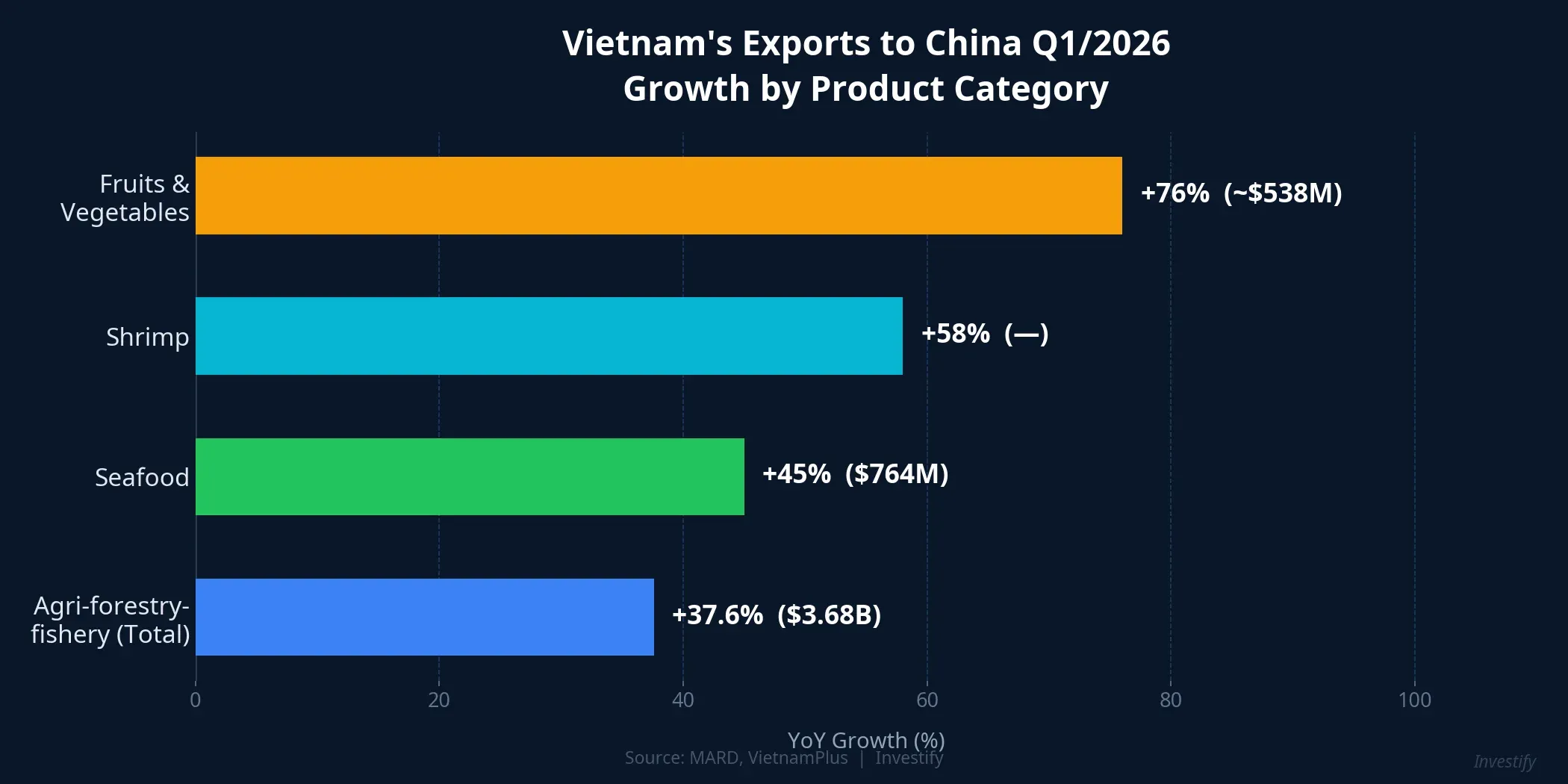
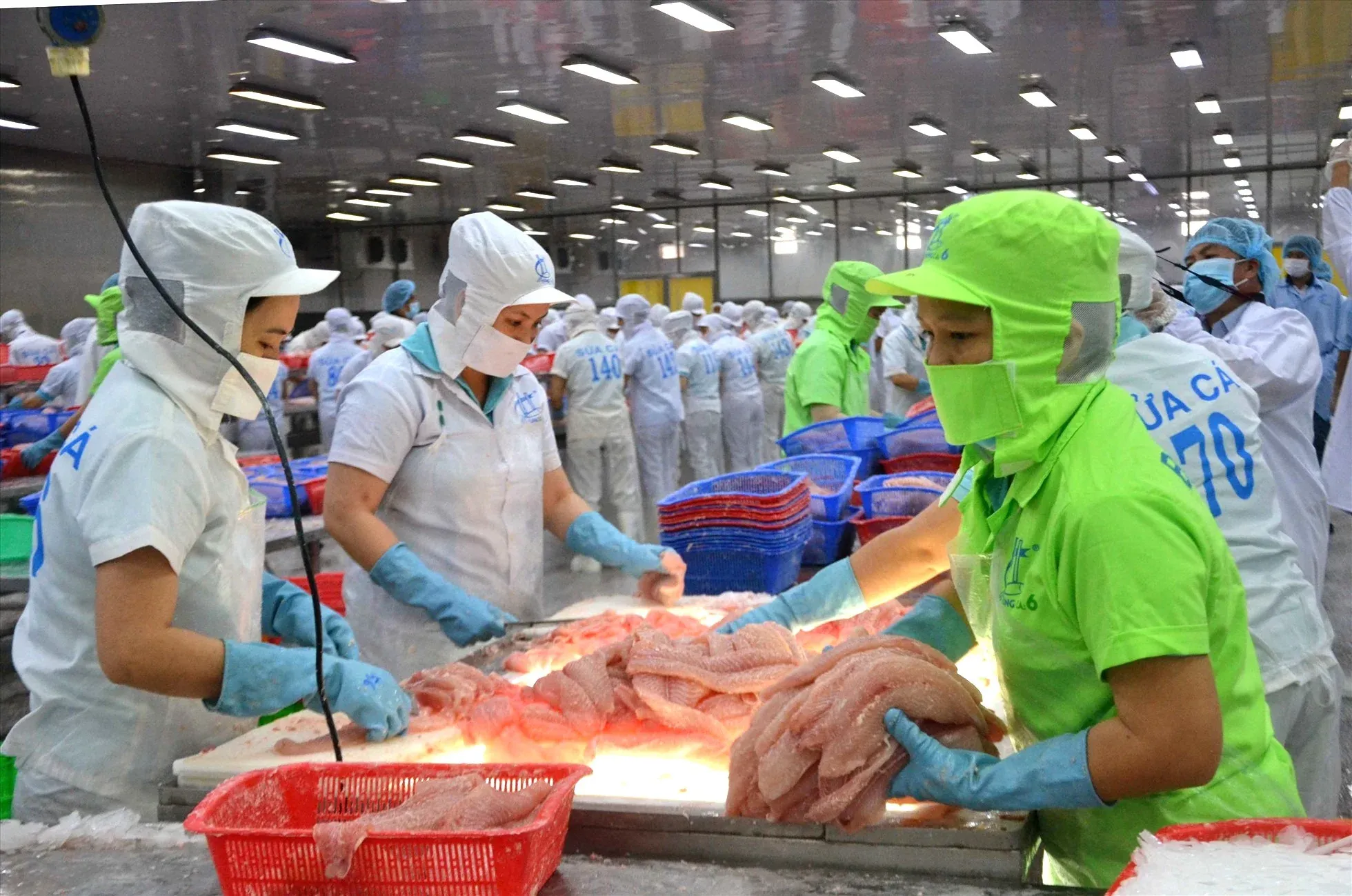
Seafood is a standout. Vietnam’s seafood exports in Q1/2026 reached $2.64 billion, up nearly 8%. China led the way with approximately $764 million in purchases, up nearly 45% year-on-year; March alone exceeded $250 million, up over 50%.VietnamPlus Other major markets — the US, Japan, and South Korea — all declined, highlighting China’s role as the growth engine for the sector. Shrimp exports to China in the first two months rose 58%.Mekong ASEAN
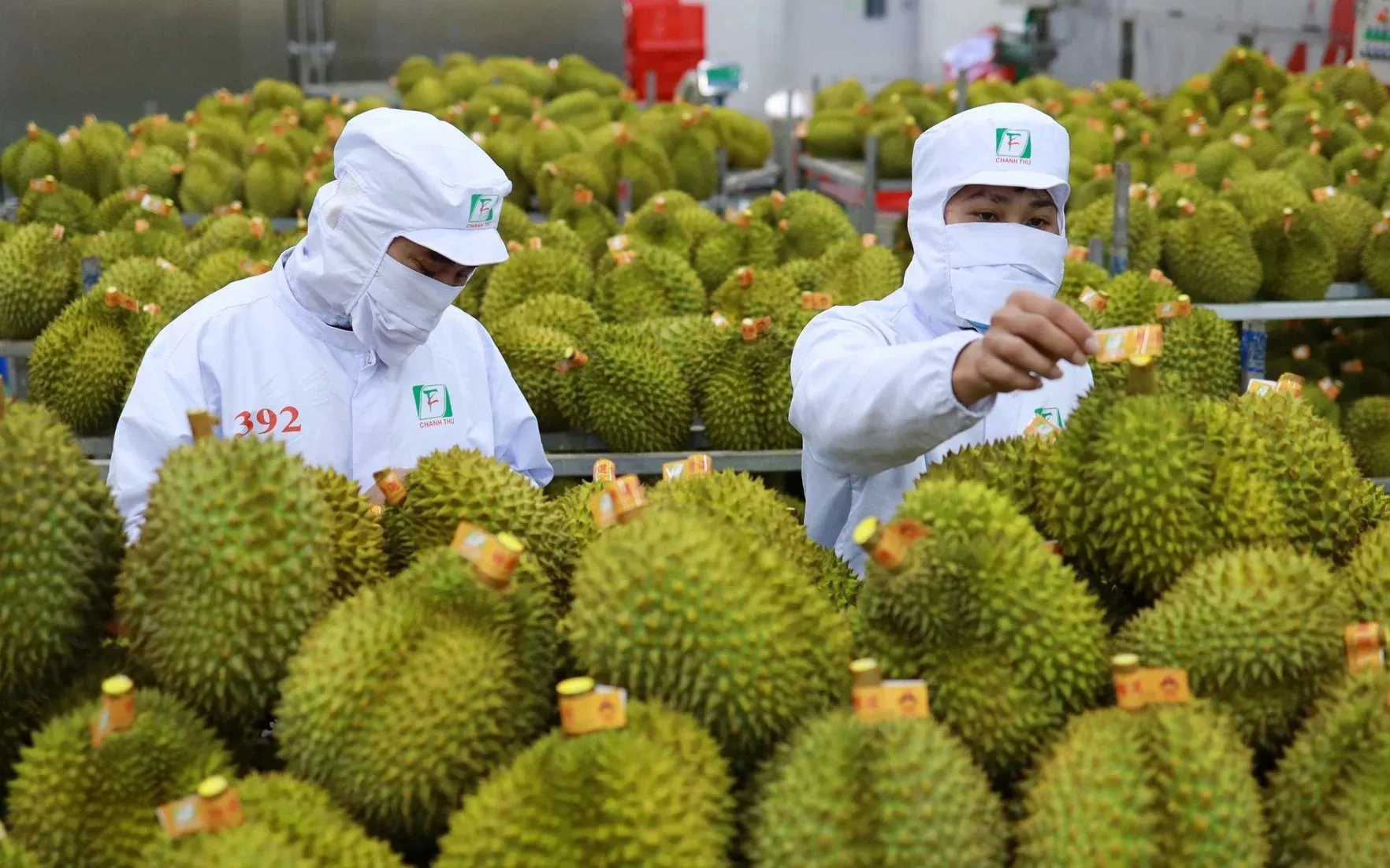
Fruits and vegetables also posted strong growth. Exports in Q1/2026 reached nearly $1.5 billion, up 27%.KTTC Journal Exports to China in the first two months surged 76.2%, with durian jumping 398% and accounting for over 92% of Vietnam’s total durian exports. China accounts for over 54% of Vietnam’s total fruit and vegetable exports.SGGP
Electronics benefit indirectly through supply chains. Vietnam’s computer and electronics exports in Q1/2026 rose over 40% year-on-year.VietnamPlus As China imports chips for equipment assembly, demand for intermediate components from Vietnam rises in tandem. This is an indirect but substantial channel.
Stocks Worth Watching
On the stock market, several groups stand to benefit from China’s rising imports:
Seafood exporters: VHC (Vinh Hoan) is trading at VND 60,800, up 0.50% in the morning session on April 14, with January 2026 revenue from China up 27% year-on-year.DNSE ANV (Nam Viet) at VND 24,450, up 0.41%, specializes in pangasius exports and benefits directly from rising Chinese seafood demand. FMC (Sao Ta) at VND 37,600, down 0.79%, specializes in shrimp exports.
Chemicals and agriculture: DGC (Duc Giang) at VND 54,700, up 0.74%, exports phosphorus and chemicals to China. HAG (HAGL) at VND 16,450, up 0.61%, produces bananas and fruits for Chinese export.
Stock prices are from the morning session of April 14, 2026 and may change during the afternoon session.
VN-Index in the morning session on April 14 is trading at 1,769.65 points, up 0.61% with 166 gainers versus 138 decliners.
Three Risks to Monitor
Despite the positive picture, three risks warrant attention:
Market concentration risk. With China accounting for over 50% of Vietnam’s agricultural exports, any import policy change from Beijing could trigger significant volatility. This figure rose from 44.73% to 50.97% in just one year, indicating rapidly increasing dependence.
Sustainability of chip imports. Semiconductor imports are partly driven by preemptive stockpiling ahead of new US restrictions. Once stockpiling reaches its threshold, this driver could weaken, reducing demand for intermediate components from Vietnam.
Elevated logistics costs. The Hormuz crisis remains unresolved. High shipping costs may affect Vietnam’s exports to the US and EU, although the Vietnam-China route is less impacted thanks to overland and short-sea transport.
Looking Ahead
March 2026 trade data shows China in a transitional phase: exports slowing from Hormuz logistics disruptions, imports surging on AI chip demand and strategic stockpiling. For Vietnamese exporters targeting China, this environment is favorable in the near term. Agriculture and seafood benefit directly; electronics benefit indirectly through supply chains.
The main risk lies not in the current trend, but in the rapidly increasing dependence on a single market. If the Hormuz conflict persists and the AI investment cycle hasn’t cooled, Vietnamese exporters may continue benefiting in Q2. April trade data (expected mid-May) will be the critical checkpoint. Three factors to watch: Hormuz developments, US chip import policy, and China’s share in Vietnam’s agricultural exports.