
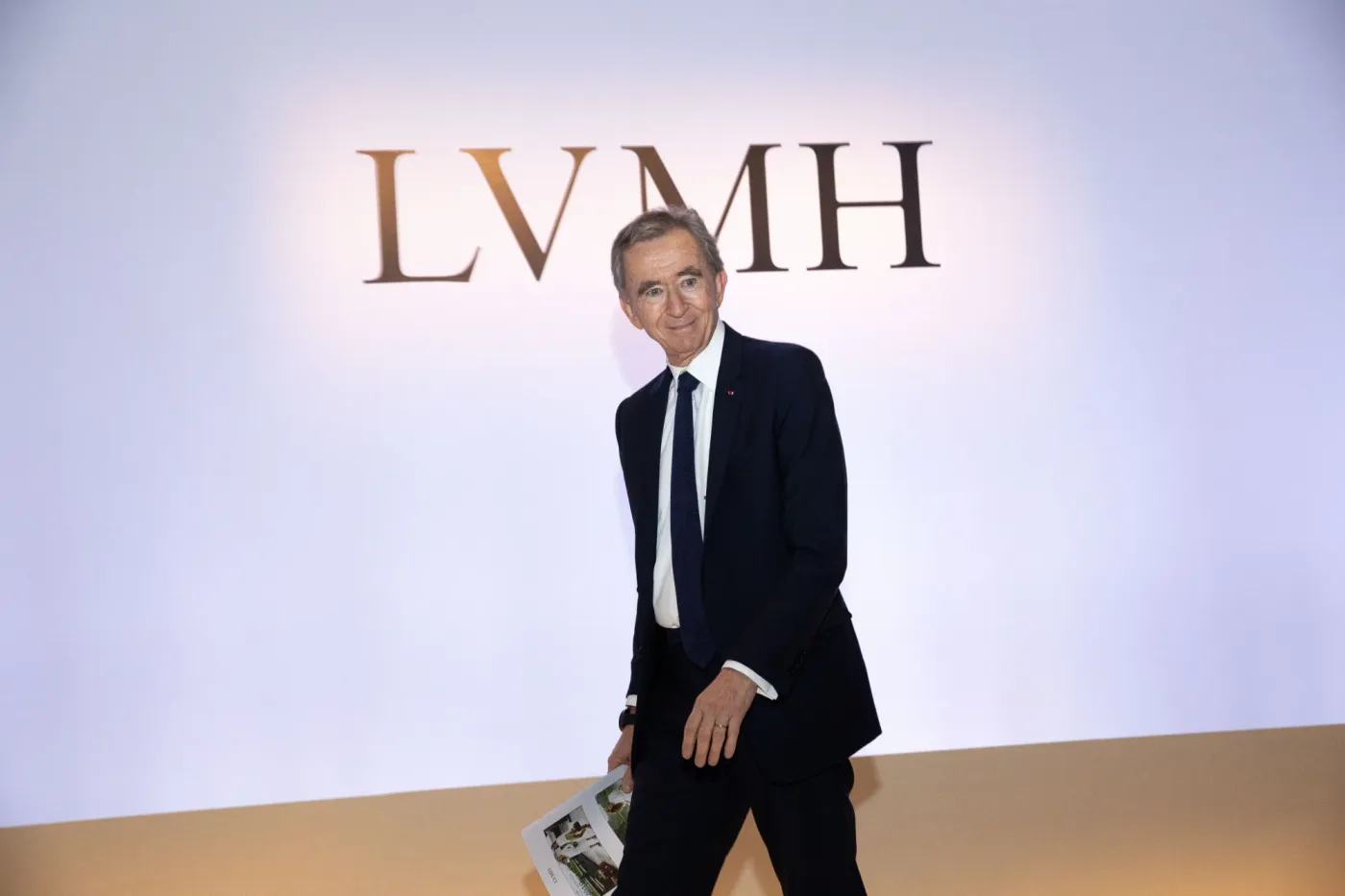

LVMH's Q1/2026 revenue fell 6% year-over-year while shares lost 28% since the start of the year. This is not just the story of one luxury conglomerate — it is a barometer measuring global consumer health amid the Middle East conflict, surging inflation, and an unusually strong euro.
The big picture shows: when the world's wealthiest consumers start tightening their wallets, the ripple effects won't stop at Paris or Dubai.
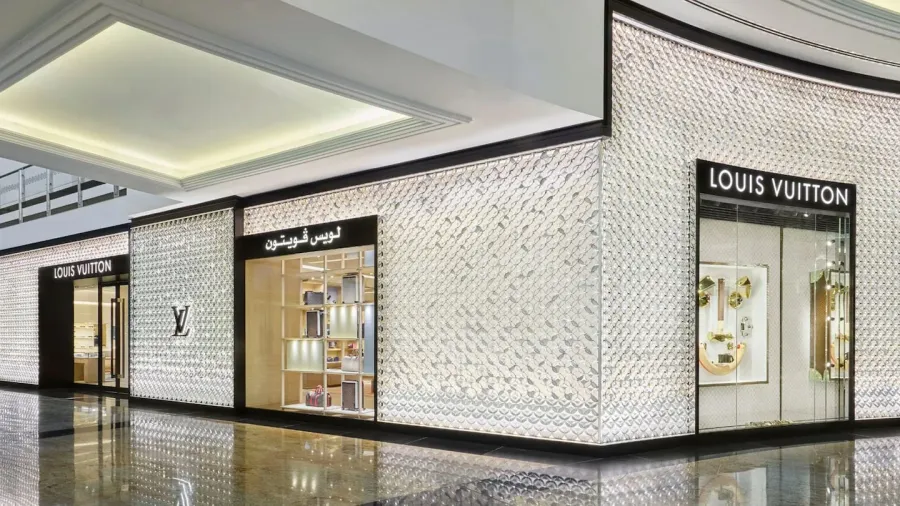
LVMH Q1/2026: positive organic growth, but reported revenue drops sharply
LVMH Moët Hennessy Louis Vuitton, the conglomerate behind over 75 brands from Louis Vuitton and Dior to Tiffany & Co., reported Q1/2026 revenue of €19.1 billion, down 6% from €20.3 billion in the year-ago period.CNBC Organic growth (excluding currency effects) came in at just +1%, below the +1.5% analyst consensus per FactSet.LVMH
The gap between organic growth (+1%) and reported revenue (−6%) reflects a rare currency shock: the strengthening euro created an approximately 7% negative impact, while the Middle East conflict knocked an additional 1 percentage point off organic growth.CNBC With roughly 77% of revenue generated outside the eurozone, LVMH is particularly vulnerable to currency fluctuations.
Sharp divergence across business segments
Not all segments faced equal pressure. The chart below reveals a clear divergence in Q1/2026 performance.
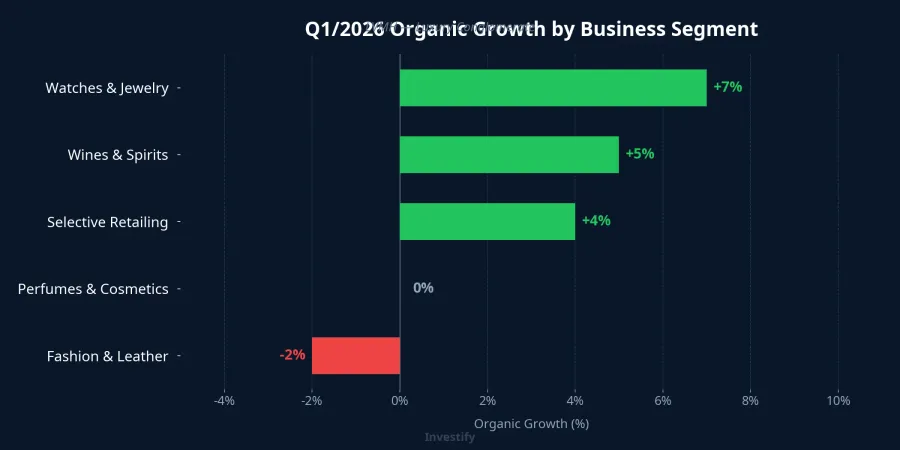
Watches & Jewelry led with +7%, achieving €2.44 billion in revenue. Tiffany & Co., acquired by LVMH for $15.8 billion in 2021, continues to drive growth through its new product positioning strategy and Asia expansion.LVMH
Wines & Spirits recovered +5% at €1.27 billion, boosted by solid Champagne sales and Lunar New Year effects across Asian markets. However, Cognac Hennessy remains under pressure from China's slow recovery.
Fashion & Leather Goods, the largest segment at nearly 50% of revenue, recorded a 2% organic decline at €9.25 billion. Louis Vuitton and Dior maintain their appeal among top-tier clientele, but more cautious spending sentiment and uneven international travel recovery pulled growth into negative territory.
Asia rescues, Middle East collapses
Capital flows are shifting visibly across regions. Asia (excluding Japan) led with +7% organic growth, driven by recovering demand in mainland China and Southeast Asia.CNBC This is a positive signal, confirming the improving trend from the second half of 2025.
Conversely, Europe and Japan both declined 3% organically. Persistent inflation in Europe and a partially recovering yen in Japan reduced shopping tourism appeal.CNBC
But the most severe picture lies in the Middle East.
Dubai: the luxury consumer barometer shatters

Dubai, the region's premier luxury shopping hub, is taking a direct hit from the conflict. Luxury brands at Mall of the Emirates reported sales declines of 30–50% in March 2026 year-over-year, with foot traffic down 15%.BoF At Dubai Mall, foot traffic fell approximately 50% over the same period.The Star
Three main transmission channels drive this decline. First, tourism has frozen as major aviation hubs including Dubai, Doha, and Abu Dhabi operate at reduced capacity or face disruptions. Second, shipping and marine insurance costs have surged due to Strait of Hormuz risks, pushing airfares and travel costs significantly higher. Third, Gulf consumers have shifted toward defensive assets (gold, real estate) and cut discretionary spending, including luxury goods.
The UAE accounts for approximately 60% of luxury retail activity in the Middle East, and the region contributes roughly 5–6% of the global luxury market.The Star While the share is modest, this was one of the fastest-growing regions before the conflict, making its decline a broader warning signal.
LVMH shares down 28% in Q1: worst start on record
LVMH shares (MC.PA) closed at €483.3 on April 13. The reaction on earnings day was mild (−0.32%), but the broader picture is concerning: shares fell 28% in Q1/2026, marking the worst start to a year since listing.Oui Speak Fashion
This decline exceeds both the 2008 financial crisis and COVID-19 in 2020. Bernard Arnault, LVMH's Chairman and CEO, acknowledged that "the global environment is impacted by the conflict in the Middle East" during the earnings call, while emphasizing the group "continues to achieve organic growth."CNBC The market appears to be pricing luxury consumer risk at a far more severe level than the +1% organic figure suggests.
What does this signal for Vietnam's retail sector?
If LVMH — with unmatched brand power and the world's wealthiest customer base — faces pressure from rising living costs, Vietnam's retail sector confronts a similar equation at a different scale.
Vietnam's March 2026 CPI rose 4.65% year-over-year, a 5-year high. Q1/2026 average CPI increased 3.51% YoY.Báo Văn HóaVietstock The primary driver was transportation costs rising 12.85%, with diesel up 57.03% and gasoline up 29.72% — a direct consequence of the Middle East conflict pushing oil prices higher.
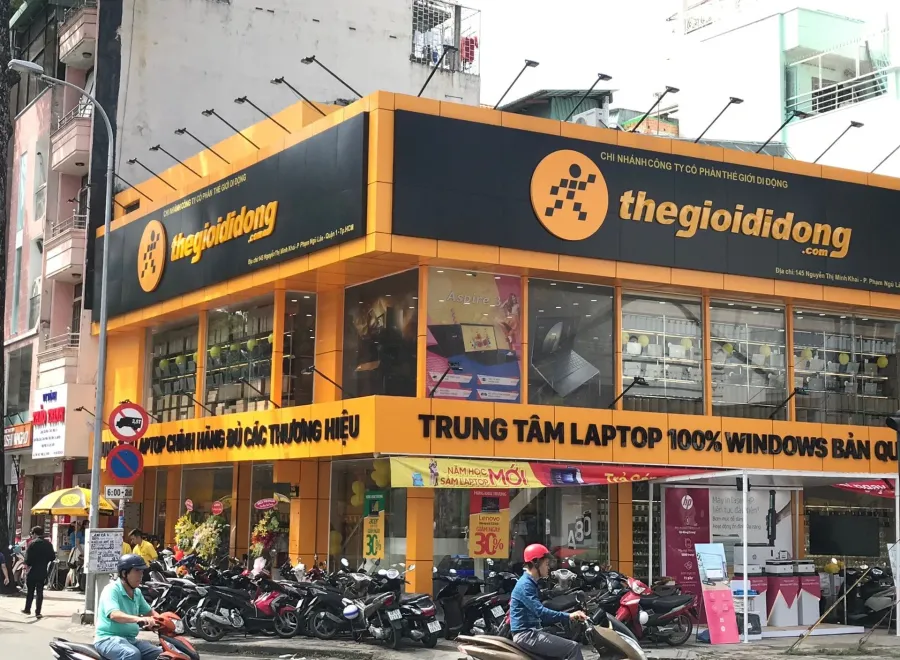
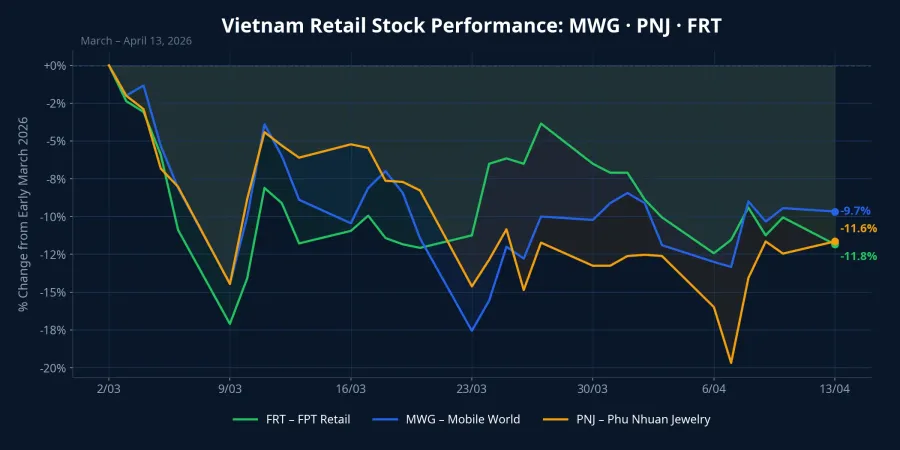
The transmission chain is clear: rising transport costs → higher consumer goods prices → reduced purchasing power, particularly for non-essential items. All three representative retail stocks have corrected sharply over the past 6 weeks.
MWG (Mobile World): current price VND 81,300, down approximately 9.7% from early March. Market cap VND 119,400 billion. MWG's diversified model — with Bach Hoa Xanh (grocery) being less CPI-sensitive than electronics — provides a cushion during periods of weakened purchasing power. Stable gross margins and lower leverage than FRT help MWG absorb cost pressures more effectively.
PNJ (Phu Nhuan Jewelry): current price VND 110,000, down approximately 11.6%. Market cap VND 37,500 billion. PNJ occupies a unique position: rising gold prices may support gold bar revenue, but fashion jewelry — the higher-margin segment — remains sensitive to purchasing power. PNJ has the lowest net debt/EBITDA in the group.
FRT (FPT Retail): current price VND 149,000, down approximately 11.8%. Market cap VND 25,400 billion. FRT carries the highest P/E and greatest leverage (highest net debt/EBITDA), making it the most vulnerable when consumers postpone smartphone and laptop purchases during inflationary periods.
Different contexts, shared pressure
LVMH and Vietnam's retailers don't compete directly, but they share a common pressure: when living costs rise, consumers cut non-essential spending first. LVMH faces direct impact from the Middle East tourism collapse; Vietnam's retail sector faces indirect impact through cost-push inflation, with CPI at 4.65% and gasoline prices up nearly 30%.
What LVMH's Q1 confirms: global consumer spending has not collapsed. Organic growth remains positive, Asia continues to grow strongly, and Tiffany and Sephora keep expanding. Risk concentrates on two factors worth monitoring: (1) the Middle East conflict trajectory — prolonged conflict will spread impact beyond Dubai; and (2) euro strength — continued appreciation will erode reported revenue for multinational conglomerates.
For Vietnam's retail sector, the real test lies in the upcoming Q1/2026 earnings from MWG, PNJ, and FRT. Three factors to watch over the next two weeks: April CPI trends (the government's sub-4.5% full-year target is under challenge), the impact of fuel tax exemption from April 16, and Q1 profit margins from these three companies. Within this group, MWG with its Bach Hoa Xanh division and PNJ with low net debt are better positioned to absorb pressure than FRT, which depends heavily on discretionary consumer spending.