

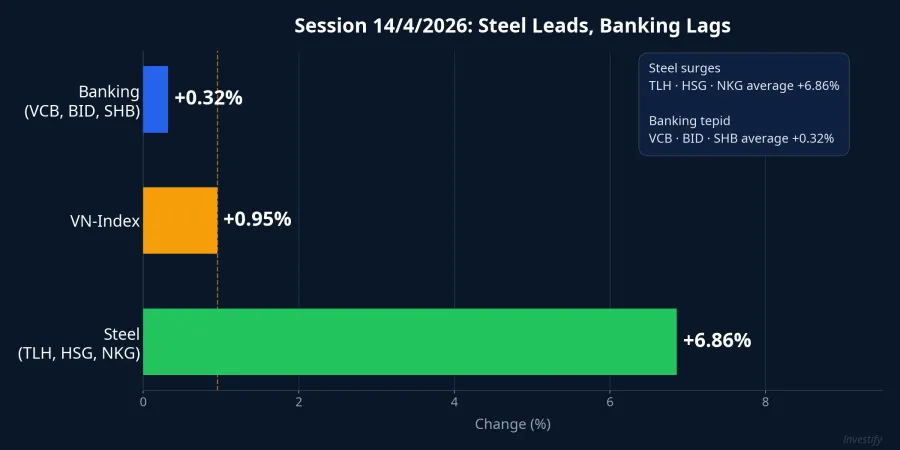
On April 14, the VN-Index gained 16.69 points (+0.95%) to close at 1,775.65, with 183 gainers and 141 losers. But the +0.95% headline masked a deeply divergent picture underneath: steel stocks averaged +6.86%, while banking stocks recovered just +0.32%. A performance gap of over 6 percentage points within the same session shows capital flows are selectively chasing individual catalysts, not spreading evenly.
Three Steel Stocks Hit Price Ceiling with 3-4x Volume
Three steel stocks simultaneously hit their price ceiling on April 14 with extraordinary volume spikes:
- TLH (Tien Len Steel): VND 4,900 (+6.99%), volume 673,800 shares, roughly 4x the 5-session average.
- HSG (Hoa Sen): VND 16,400 (+6.84%), volume 12.5 million shares, roughly 4x the previous session.
- NKG (Nam Kim Steel): VND 15,050 (+6.74%), volume 13.1 million shares, nearly 4x the previous session.
Additionally, VCA (VICASA Steel) also surged 6.62% to VND 7,250, and sector heavyweight HPG (Hoa Phat) gained 2.70% to VND 28,550 on 61.9 million shares.
What stands out is not just the price gains but the volume. When all three galvanized steel stocks hit ceiling with 3-4x average volume, it signals organized capital inflow rather than spontaneous trading.
The Catalyst: 27.83% Anti-Circumvention Tariff on HRC
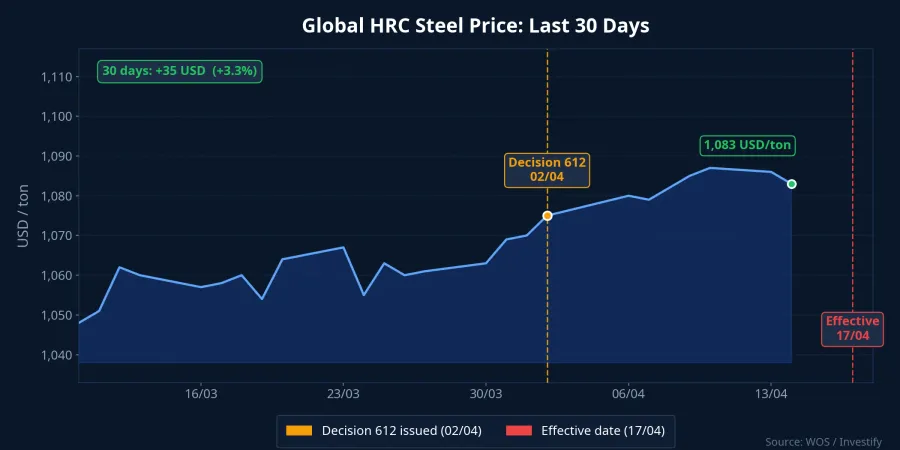
The trigger for this surge was Decision 612/QĐ-BCT by the Ministry of Industry and Trade, issued April 2, 2026, imposing a temporary 27.83% anti-circumvention tariff on hot-rolled coil (HRC) steel with widths from 1,880mm to 2,300mm originating from China, effective April 17, 2026.CafeF
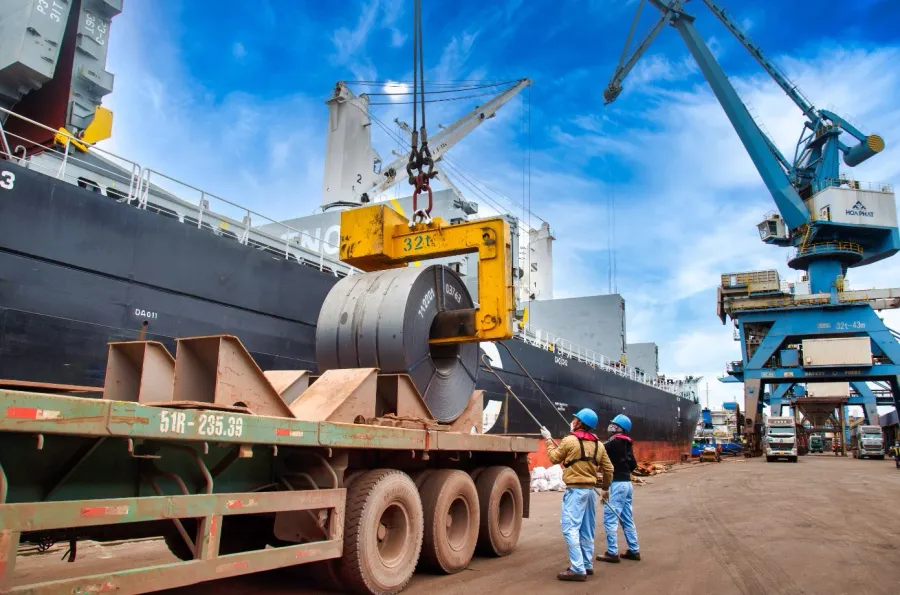
The context: in H1 2025, Vietnam imported nearly 650,000 tons of wide-format HRC from China, a roughly 15x increase year-over-year. Chinese manufacturers had been adjusting product dimensions (widening beyond 1,880mm) to circumvent previously imposed anti-dumping duties. Hoa Phat and Formosa Ha Tinh had petitioned the Ministry to investigate.Thoi bao TCVN
Who Benefits, Who Bears the Medium-Term Risk?
Two distinct groups of steel companies are affected differently by Decision 612.
Domestic HRC producers (HPG, Formosa) benefit directly. With cheap imported HRC facing a 27.83% tariff, domestic products face less competitive pressure, improving sales margins. Global HRC prices currently stand at USD 1,083/ton, up approximately 5.9% from early March (USD 1,023/ton). Rising international prices combined with the anti-circumvention tariff will push domestic HRC prices higher.
Galvanized steel makers (HSG, NKG, TLH) saw positive short-term price action driven by expectations of higher finished product prices. However, this group also faces medium-term risk: if domestic HRC prices rise due to reduced import competition, input costs will increase, potentially compressing profit margins — unless they can pass the additional costs through to end consumers.
In other words, capital is betting on the scenario where "selling price increases outpace input cost increases." This scenario may hold in the short term as cheap HRC supply is abruptly cut, but Q2/2026 earnings will need to confirm whether margins actually held up.
NKG Insider Trading: Signal from the Chairman's Family
Ho Minh Phat, son of NKG Chairman Ho Minh Quang, has registered to purchase an additional 5 million NKG shares during April 17 – May 15, 2026. If fully executed, this would raise his holdings from 5 million to 10 million shares, approximately 2.23% of charter capital. He had already completed purchasing 5 million shares during February-March 2026.Tin nhanh CK
Large-scale insider purchases in two consecutive rounds from a family member of the chairman are generally viewed as a positive signal. However, investors should note that NKG also has plans for additional share issuance (rights offering and ESOP), which could cause dilution.
Banking: Weak Recovery, OMO Pressure Lingers
After a heavy red session on April 13 (SHB -2.60%, LPB -2.74%, VPB -1.47%, VCB -1.00%), banking stocks recovered weakly on April 14. VCB gained just 0.17%, BID +0.12%, CTG +0.29%, SHB +0.67%. VPB recovered best in the group at +1.67%. Notably, STB (Sacombank) bucked the trend with a 1.78% decline, showing that selling pressure persists in select names.
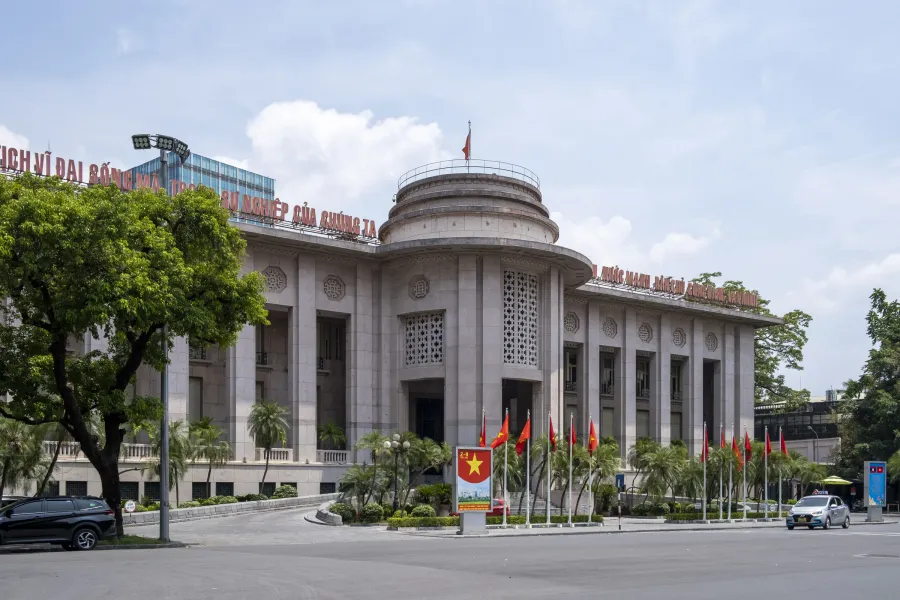
The backdrop for banking weakness comes from open market operations. During the week of April 6-10, the SBV drained a net VND 66,258 billion through collateralized lending. Overnight interbank rates fell from 8.58% at the start of the week to 5.79% by week's end, showing liquidity cooling but still elevated relative to the average.Thoi bao TCVNDan Tri
This was a normalization move after the SBV had injected heavily the previous week to cool interbank rates from 8.58%. However, with credit growth outpacing deposit mobilization and 46 banks committing to lower lending rates per SBV guidance, concerns about net interest margins (NIM) in coming quarters remain relevant.Thoi bao TCVN
The Bigger Picture: Industrial Metals Rally Broadly
Steel was not alone. LME aluminum prices also rose sharply, climbing from USD 3,432/ton to USD 3,636/ton over two weeks from March 30 to April 14, a 5.95% gain. Key drivers include supply disruption risks in the Middle East and rising energy costs.
The approximately 5.9% increase in international HRC prices over 6 weeks, combined with the 27.83% anti-circumvention tariff, will push domestic Vietnamese HRC prices even higher. This supports revenue for domestic HRC producers while adding further input cost pressure on galvanized steel makers.
Four Factors to Watch This Week
The April 14 session shows capital chasing specific catalysts (HRC tariff, insider transactions) rather than flowing evenly into the market. Banking lacks fresh catalysts while facing OMO liquidity tightening and the mandate to lower lending rates. This divergence trend may persist unless a new catalyst emerges for banks.
Four factors worth monitoring this week:
- April 17: HRC tariff becomes effective. The actual response in domestic HRC prices and galvanized steel orders will reveal whether the market has fully priced in the impact.
- OMO and interbank rates. Will the SBV continue draining or switch to injecting? Will overnight rates stabilize or rise again?
- Q1/2026 steel sector earnings. HPG, HSG, and NKG are expected to report in April. Actual profit margins will answer whether selling price increases outpaced input cost increases.
- NKG insider purchases begin April 17. Volume and price action in NKG will reflect the market's reading of the chairman's family buying signal.