
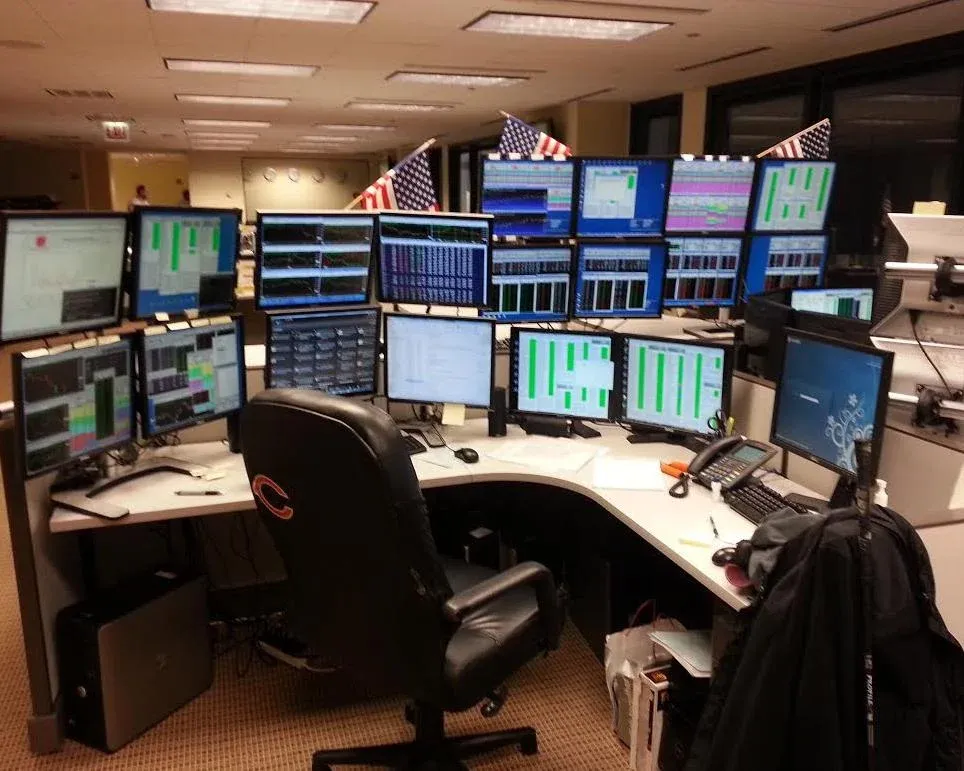

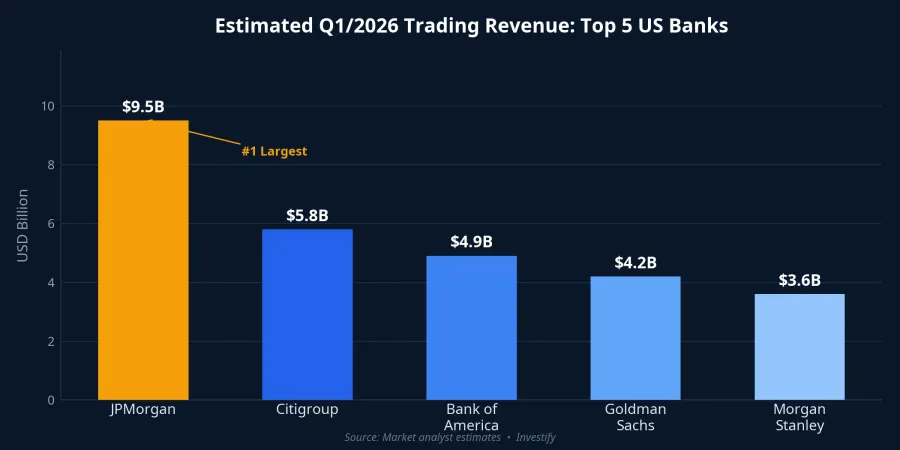
Next week, the 5 largest Wall Street investment banks will release their Q1/2026 earnings in quick succession. Analysts estimate the group's total trading revenue at approximately $40 billion, the highest level in years.Financial Times Yet the same Iran war-driven volatility that fueled those gains inflicted billions in losses on physical commodity traders. The big picture reveals a stark divergence between two business models, and a critical lesson for anyone participating in financial markets.
The Most Volatile Quarter in Years
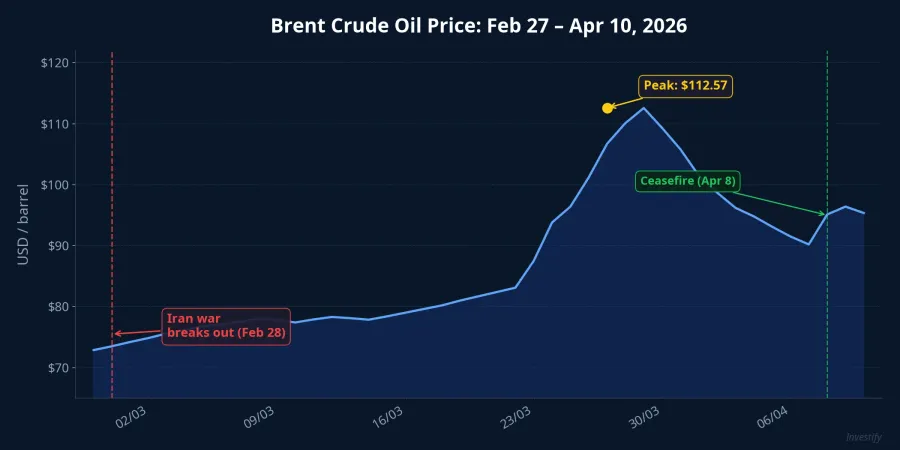
The Iran war, which erupted in late February 2026, fundamentally reshaped the global market landscape. The VIX volatility index surged from an average of 16.1 in February to 24.3 in March, peaking at 31.05 on March 27.CBOE VIX Report Brent crude jumped from $72.87/barrel (Feb 27) to a peak of $112.57/barrel (Mar 27), a 54.5% surge in just one month, before pulling back to $95.35/barrel (Apr 10).
In equities trading alone, the 5 banks are expected to post approximately $18 billion in total, up about 14% from Q1/2025 and double the level from 10 years ago.FinancialContent In 2025, total trading revenue for the major Wall Street banks hit a record $134 billion.TradingView If Q1/2026 estimates prove accurate, the growth trajectory suggests 2026 could break that record once again.
Bank-by-Bank Breakdown: Who's Leading?
Goldman Sachs: Reports April 13
Goldman Sachs reports first, with total revenue estimated at approximately $17 billion, up about 13% from Q1/2025.FinancialContent FICC (bonds, currencies, commodities) is projected at approximately $5.01 billion; equities at about $5 billion, up roughly 19.2% year-over-year. EPS is estimated at $16.14–$16.48 per share, versus $14.12 in Q1/2025.TradingView
Goldman is expected to benefit the most, given that trading revenue represents the highest share of total revenue among the group. Equity Capital Markets (ECM) and IPO activity have also recovered strongly, offsetting weakness in M&A due to geopolitical tension.

JPMorgan Chase: Reports April 14
The largest US bank is expected to post total revenue of approximately $48.5 billion, with EPS estimated at $5.38–$5.50 per share.Yahoo Finance Investment banking fees are expected to increase by mid-to-high teens percent year-over-year, driven by accumulated M&A and IPO volume from late 2025.
For reference, in Q4/2025 JPMorgan reported equities trading revenue up 40% to $2.9 billion, with FICC up 7% to $5.4 billion.CNBC If that growth momentum carries into Q1/2026, JPMorgan could set a new single-quarter trading revenue record.
Morgan Stanley, Citigroup, and Bank of America
Morgan Stanley (reports April 15) is expected to post total revenue of approximately $19.7 billion, up about 11%.Barchart Citigroup (also April 15) is estimated at about $23.6 billion, with EPS up 34% year-over-year.AlphaStreet Bank of America expects net interest income to rise at least 7%, with investment banking fees up about 10%.BankingTerminal
The common thread across all 5 banks: trading desks are the primary growth driver, while M&A advisory has weakened as geopolitical uncertainty caused many deals to be postponed.
Three Mechanisms That Turn Volatility into Profit
Why is volatility a trading desk's best friend? Three core mechanisms explain the revenue source:
Market-making: When markets are volatile, trading volumes surge and bid-ask spreads widen. Banks act as market makers, continuously quoting two-way prices and earning the spread. Higher volatility means wider spreads and greater revenue.
Flow trading: When markets are in turmoil, investment funds, pension funds, and corporations rush to rebalance portfolios or hedge risk. Trading desks execute thousands of orders daily, collecting fees and leveraging order flow information. Q1/2026 saw surging demand for commodity, currency, and interest rate hedging.
Inventory gains: Banks maintain positions in securities, bonds, and commodities for market-making. When prices move favorably, these inventory positions generate profits. This is a double-edged sword, but sophisticated risk management systems with real-time VaR (Value at Risk) monitoring allow rapid loss-cutting when risk exceeds thresholds.
The Other Side: Commodity Traders Hit Hard
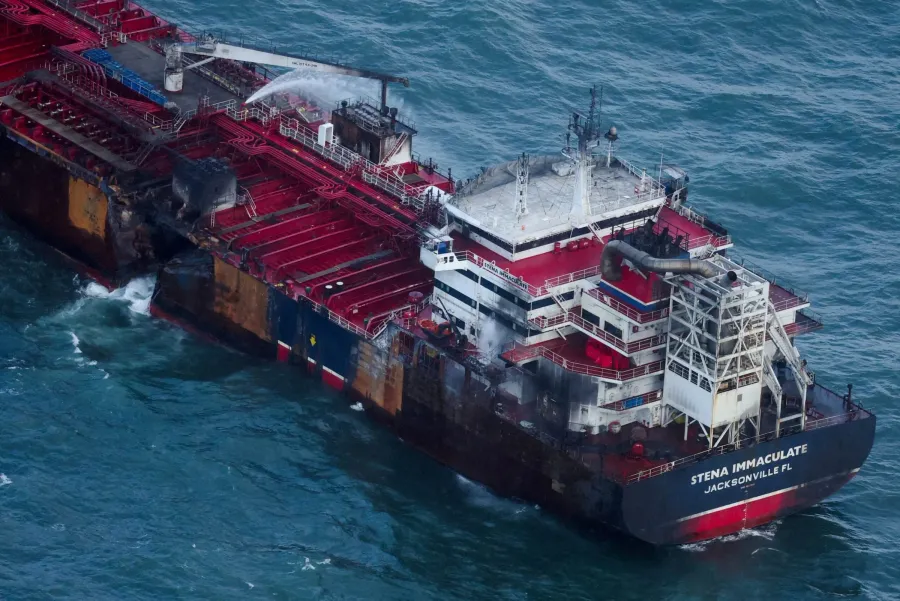
While bank trading desks prospered, the world's largest physical commodity traders suffered significant losses. According to the Financial Times, both Mercuria and Trafigura recorded losses during the early phase of the conflict, though some losses were offset later.Agenzia Nova Vitol suffered the heaviest damage: more than 10 ships were stranded, and 2 naphtha tankers were destroyed in the Gulf with crew casualties.Caliber.az
To cope, trading houses urgently raised approximately $7 billion in new credit lines: Trafigura completed a $3 billion loan on March 11, 2026, with Vitol and Gunvor negotiating similar facilities.ShareCafe Maritime insurance costs in the region surged sixfold.
The fundamental difference lies in business models. Investment banks earn from transaction flow: they are intermediaries, collecting fees and spreads regardless of whether prices rise or fall. Commodity traders hold physical positions: oil tankers, warehouses, delivery contracts. When Iran blockaded the Strait of Hormuz and approximately 20% of global oil supply was disrupted, cargo was destroyed and ships were stranded. This is physical risk that no hedge can fully offset.
Jamie Dimon's Warning: "The Skunk at the Party"
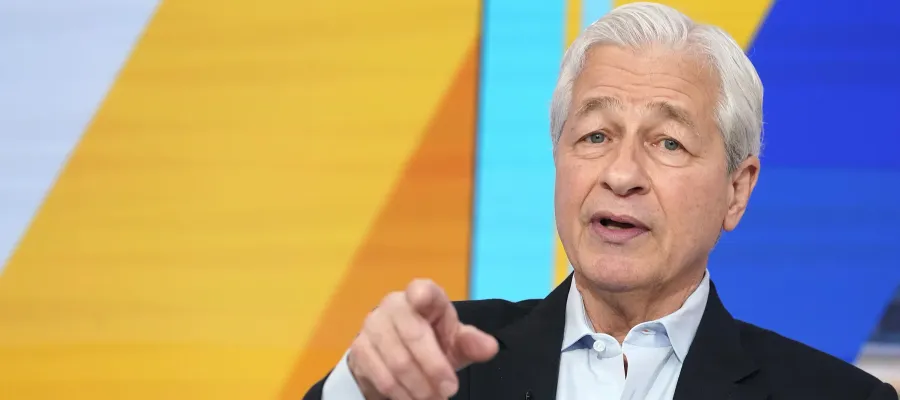
In his annual shareholder letter published April 6, 2026, JPMorgan Chase CEO Jamie Dimon issued a serious warning.CNBC He ranked the Iran war as the top risk to global economic stability, surpassing both the Ukraine conflict and US-China tensions. Sticky inflation could force the Fed to keep rates higher for longer, or even raise them, which he called "the skunk at the party." Asset prices across many sectors are elevated, creating an environment vulnerable to sudden repricing if a systemic shock occurs.
Capital flows are shifting rapidly between asset classes, and it is precisely this movement that generates trading desk profits. But Dimon warned that favorable trading conditions also mean systemic risk is accumulating.
Lessons for Investors
The Q1/2026 picture reveals an important principle: volatility is not the enemy; emotional reactions are the enemy. Wall Street does not fear volatility because it has risk management systems, clear loss limits, and earns from transaction flow rather than one-directional bets.
The divergence between investment banks (intermediaries earning from flow) and commodity traders (holding physical positions) is the clearest illustration. When participating in markets, investors should ask themselves: am I acting as an intermediary or making a one-directional bet? Do I have stoploss levels and a risk management plan in place before events unfold, or am I reacting emotionally?
Actual Q1 results begin with Goldman Sachs on April 13 and JPMorgan on April 14. The real numbers will confirm or adjust these estimates, while revealing the true scale of the Iran war's impact on the global financial system. Three factors to watch next week: (1) actual trading revenue growth versus estimates, (2) credit risk provisioning levels, and (3) management guidance for Q2 amid a fragile ceasefire.